
Dc-dc converter
a converter and converter technology, applied in the direction of electric variable regulation, process and machine control, instruments, etc., can solve the problems of noise and ripple in output, inferior vfm control to its counterpart in terms of operational stability, and less efficient pwm control in terms of power consumption
- Summary
- Abstract
- Description
- Claims
- Application Information
AI Technical Summary
Benefits of technology
Problems solved by technology
Method used
Image

Examples
Embodiment Construction
[0024]In describing exemplary embodiments illustrated in the drawings, specific terminology is employed for the sake of clarity. However, the disclosure of this patent specification is not intended to be limited to the specific terminology so selected, and it is to be understood that each specific element includes all technical equivalents that operate in a similar manner and achieve a similar result.
[0025]Referring now to the drawings, wherein like reference numerals designate identical or corresponding parts throughout the several views, examples and exemplary embodiments of this disclosure are described.
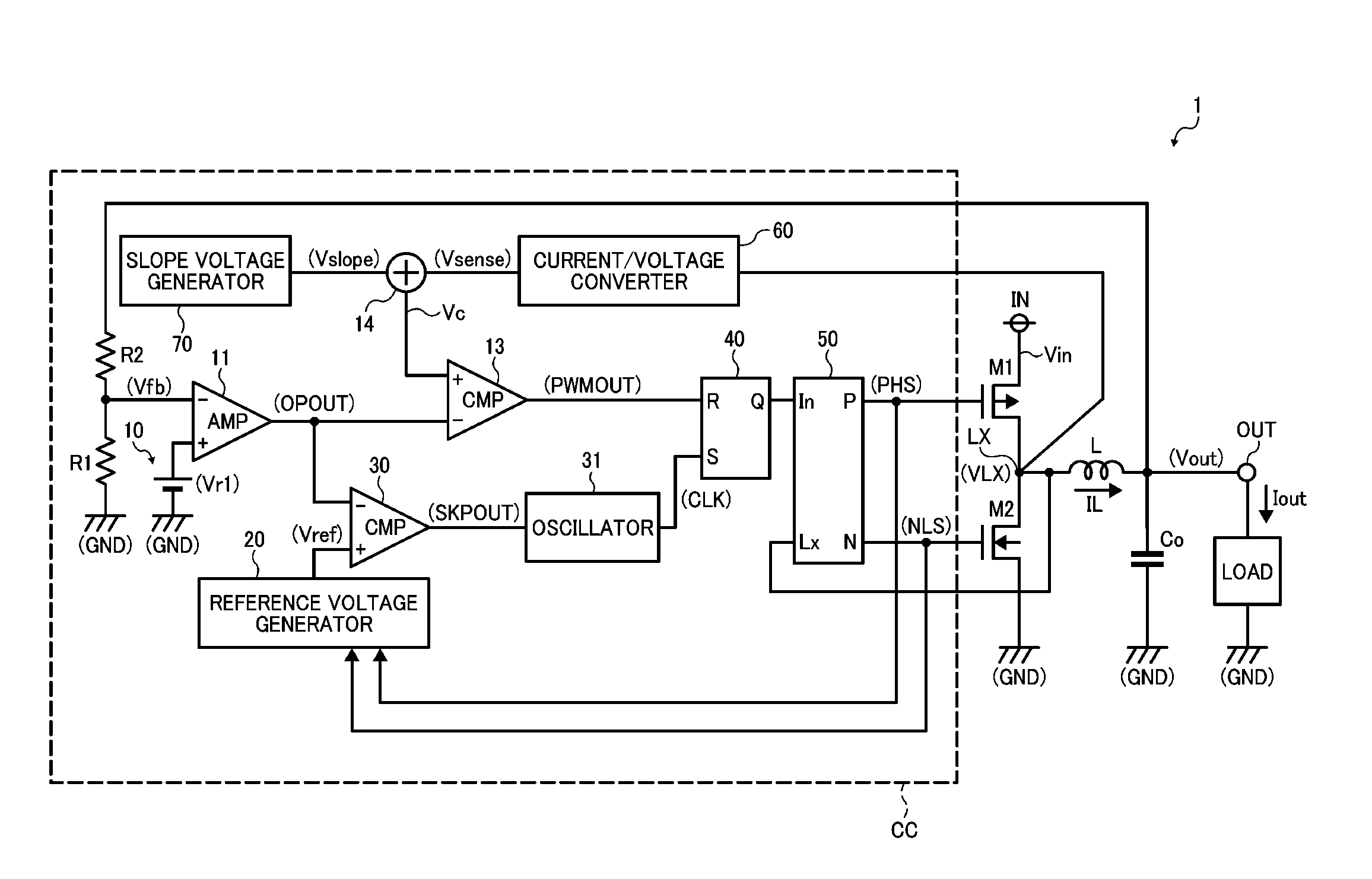
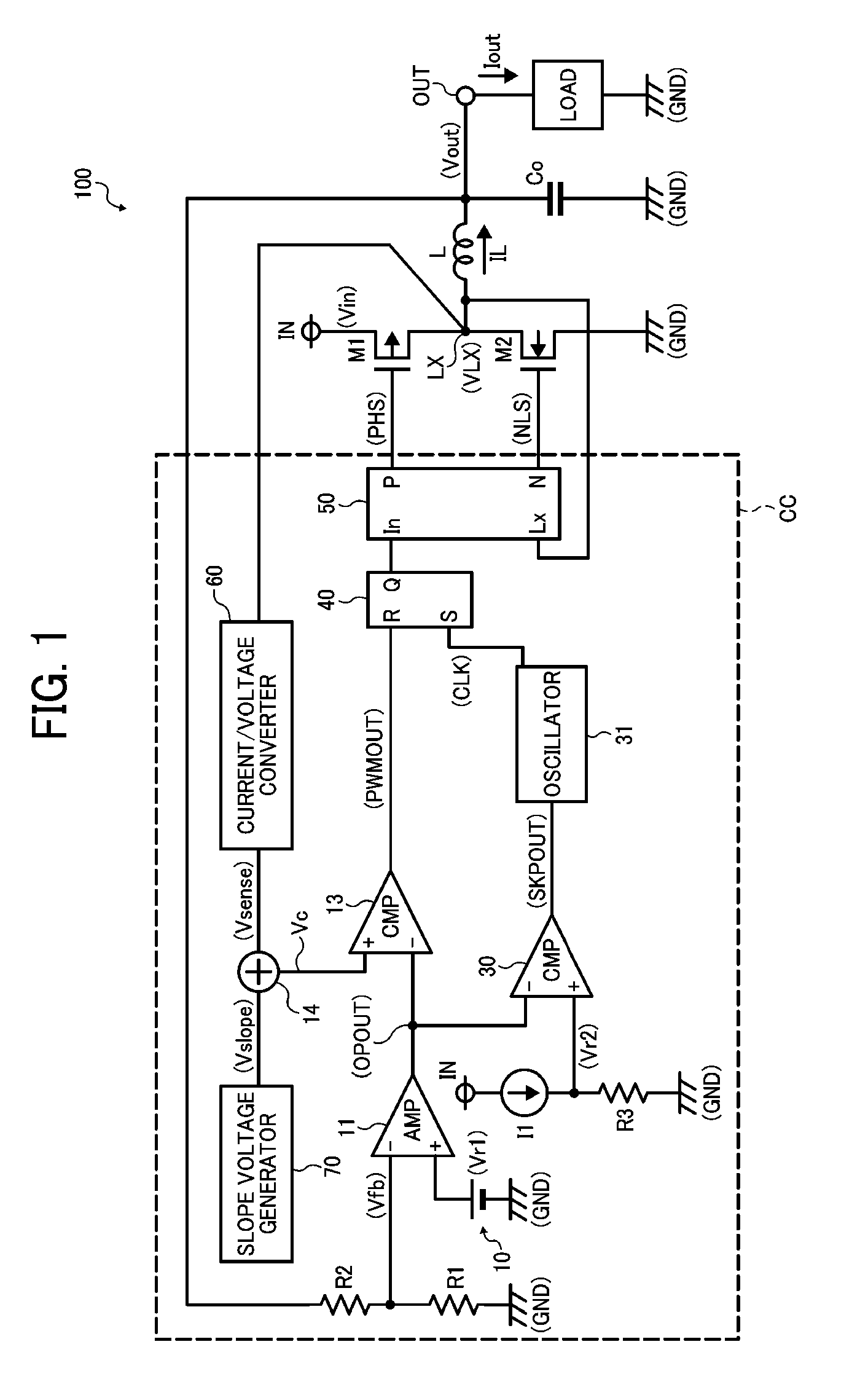
[0026]FIG. 1 is a circuit diagram illustrating a non-isolated current-mode-controlled DC-DC converter 100.
[0027]As shown in FIG. 1, the DC-DC converter 100 is a step-down or buck voltage regulator with synchronous rectification, which converts a voltage Vin input to an input terminal IN to output a constant voltage Vout lower than the input voltage Vin to an output terminal OUT fo...
PUM
 Login to View More
 Abstract
Description
Claims
Application Information
 Login to View More