Fuel cell system

a fuel cell and system technology, applied in secondary cell servicing/maintenance, electrochemical generators, instruments, etc., can solve problems such as disassembly and assembly of cells that constitute battery devices, and achieve the effect of avoiding unnecessary processing for determining ac impedance measurement permission

US20100127710A1Active Publication Date: 2010-05-27TOYOTA JIDOSHA KK
3 Cites 14 Cited by

Patent Information

Authority / Receiving Office
US · United States
Patent Type
Applications(United States)
Current Assignee / Owner
Publication Date
2010-05-27

Smart Images

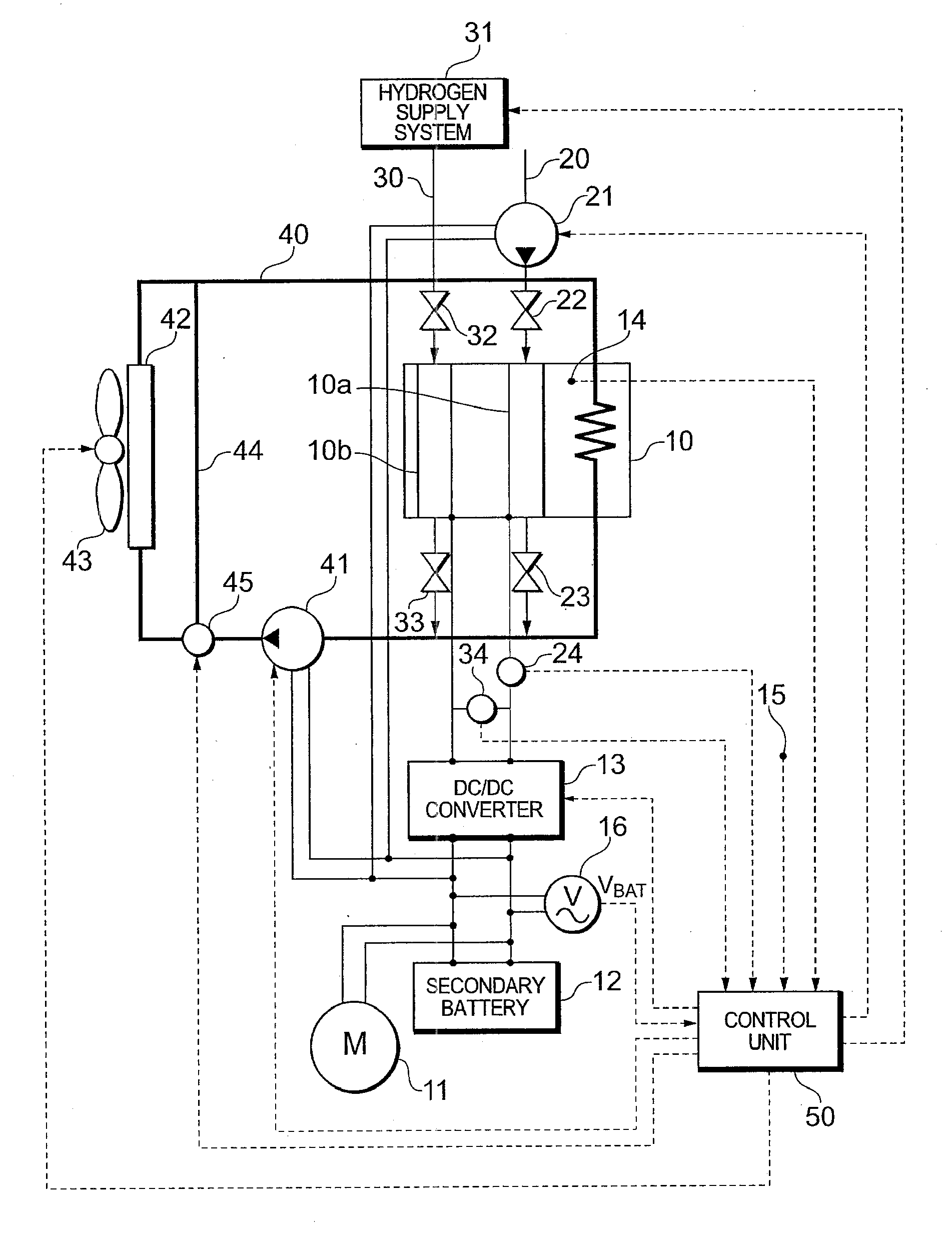
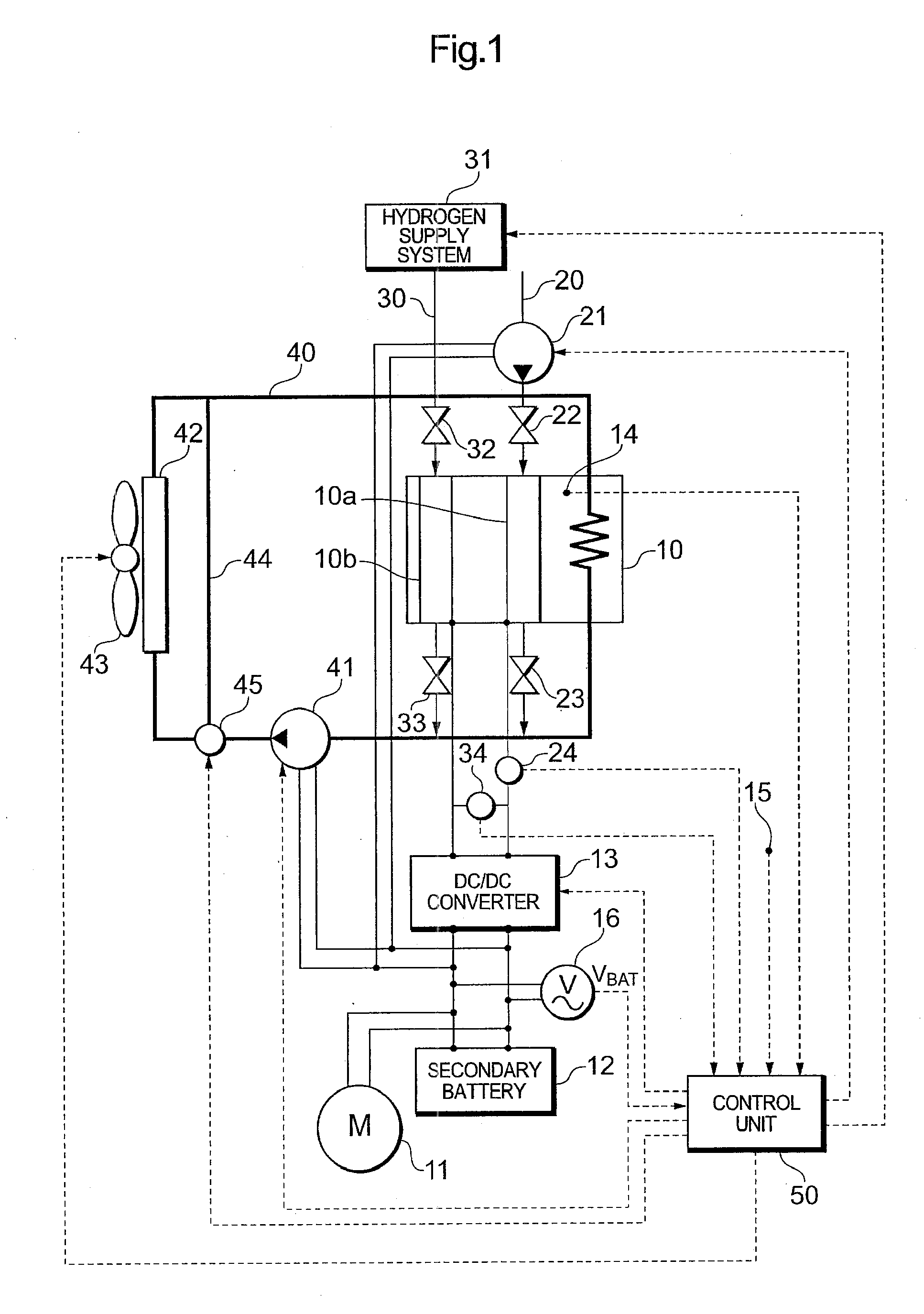
  • Figure 1
    Figure 1
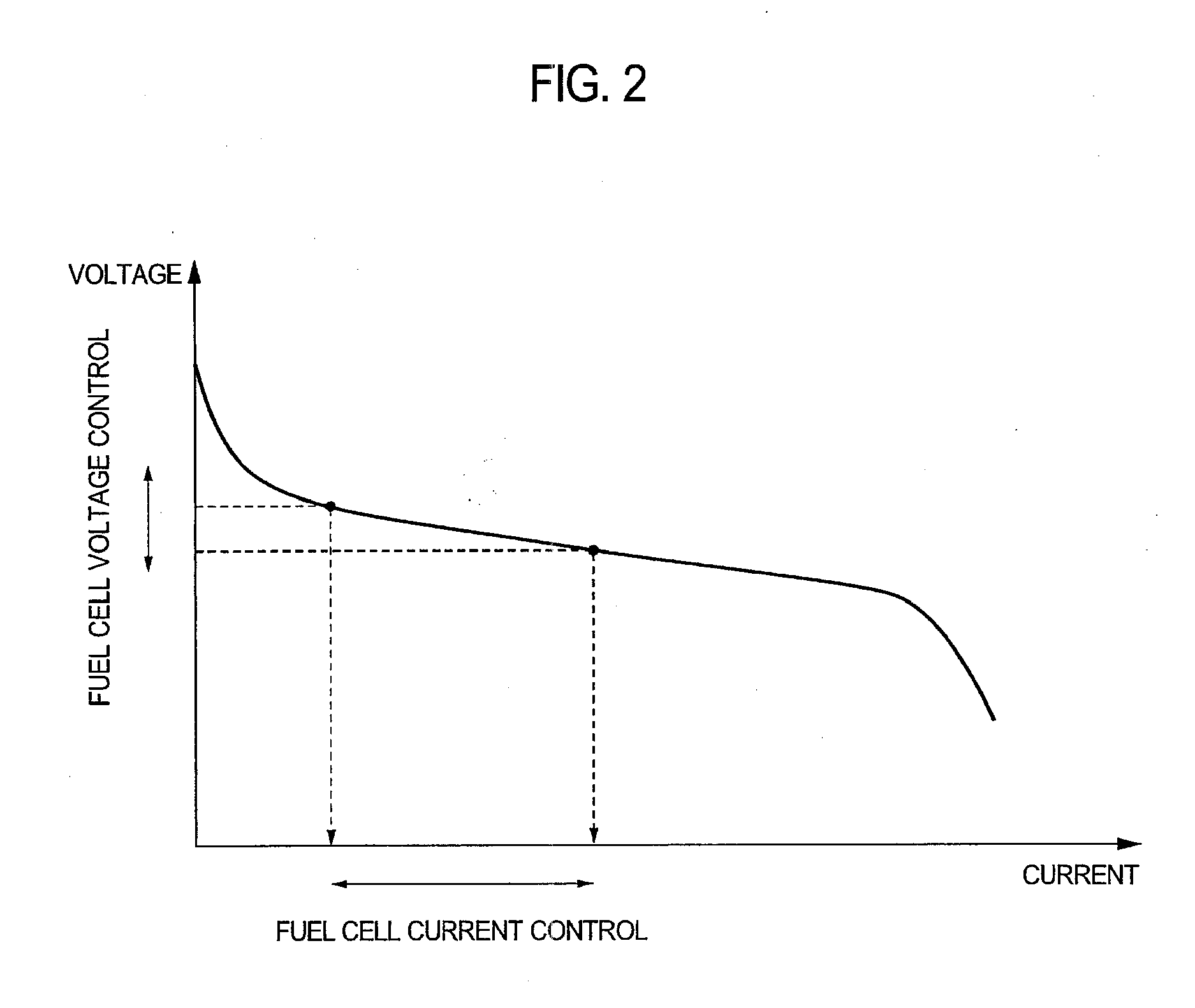
  • Figure 2
    Figure 2
  • Figure 3
    Figure 3
Patent Text Reader

Abstract

A fuel cell system is configured to have: a voltage superimposing unit that superimposes a predetermined AC signal on an output voltage of a fuel cell; a unit that detects an output voltage value of a battery device, the output voltage value varying as the fuel cell output voltage value on which the AC signal has been superimposed varies; a battery device voltage comparison unit that compares the detected battery device output voltage value with a predetermined threshold voltage; and a measurement permission determination unit that determines whether the AC impedance measurement is permitted or not based on whether or not the battery device output voltage value exceeds the threshold voltage. The fuel cell system can protect the battery device in the impedance measurement of the fuel cell based on an AC impedance method.
Need to check novelty before this filing date? Find Prior Art

Description

TECHNICAL FIELD

[0001] The present invention relates to a fuel cell system having a fuel cell, and particularly to a fuel cell system with an improved method for measuring the impedance of a fuel cell.BACKGROUND ART

[0002] In a fuel cell system having a fuel cell that produces power through the electrochemical reaction between hydrogen and oxygen (air) for use as a drive source of a mobile object, such as a vehicle or a ship, if it is in a cold state at a temperature of 0° C. or lower, water present near the electrodes freezes, and could inhibit diffusion of reactant gas or reduce the electric conductivity of an electrolyte membrane. More specifically, if a fuel cell is activated in a cold environment at a temperature of 0° C. or lower, freezing could cause clogging of a reactant gas flow path and inhibit reactant gas (hydrogen and air) from flowing and reaching an electrolyte membrane, and consequently, the electrochemical reaction would not proceed even if the fuel cell is supplied wi...

Examples

Embodiment Construction

[0029]The most preferred embodiment of the fuel cell system according to the present invention will be described below in detail with reference to the drawings. In this embodiment, the fuel cell system is utilized in an electric vehicle that runs using a fuel cell as its power source (fuel cell vehicle).

[0030]FIG. 1 is a diagram illustrating the configuration of the main parts of an electric vehicle equipped with a fuel cell system according to an embodiment of the present invention.

[0031]As illustrated in FIG. 1, the fuel cell system according to this embodiment has a fuel cell 10 that produces power through the electrochemical reaction between fuel gas (e.g., hydrogen gas) and oxidant gas (e.g., air that contains oxygen). In this embodiment, the fuel cell has a stack structure formed of a plurality of layered cells, each cell having a basic structure where a solid polymer electrolyte membrane is interposed between an oxygen electrode (positive electrode, cathode) 10a and a hydroge...