
Cage-Like Bifunctional Chelators, Copper-64 Radiopharmaceuticals and PET Imaging Using the Same
a bifunctional chelator and copper-64 technology, applied in the direction of drug compositions, peptide sources, therapies, etc., can solve the problems of unfavorable high retention in liver, limited stability of copper chelate in vivo, and affect the use of these chelators in preparing biomolecules, etc., to achieve stable in vivo
- Summary
- Abstract
- Description
- Claims
- Application Information
AI Technical Summary
Benefits of technology
Problems solved by technology
Method used
Image

Examples
Embodiment Construction
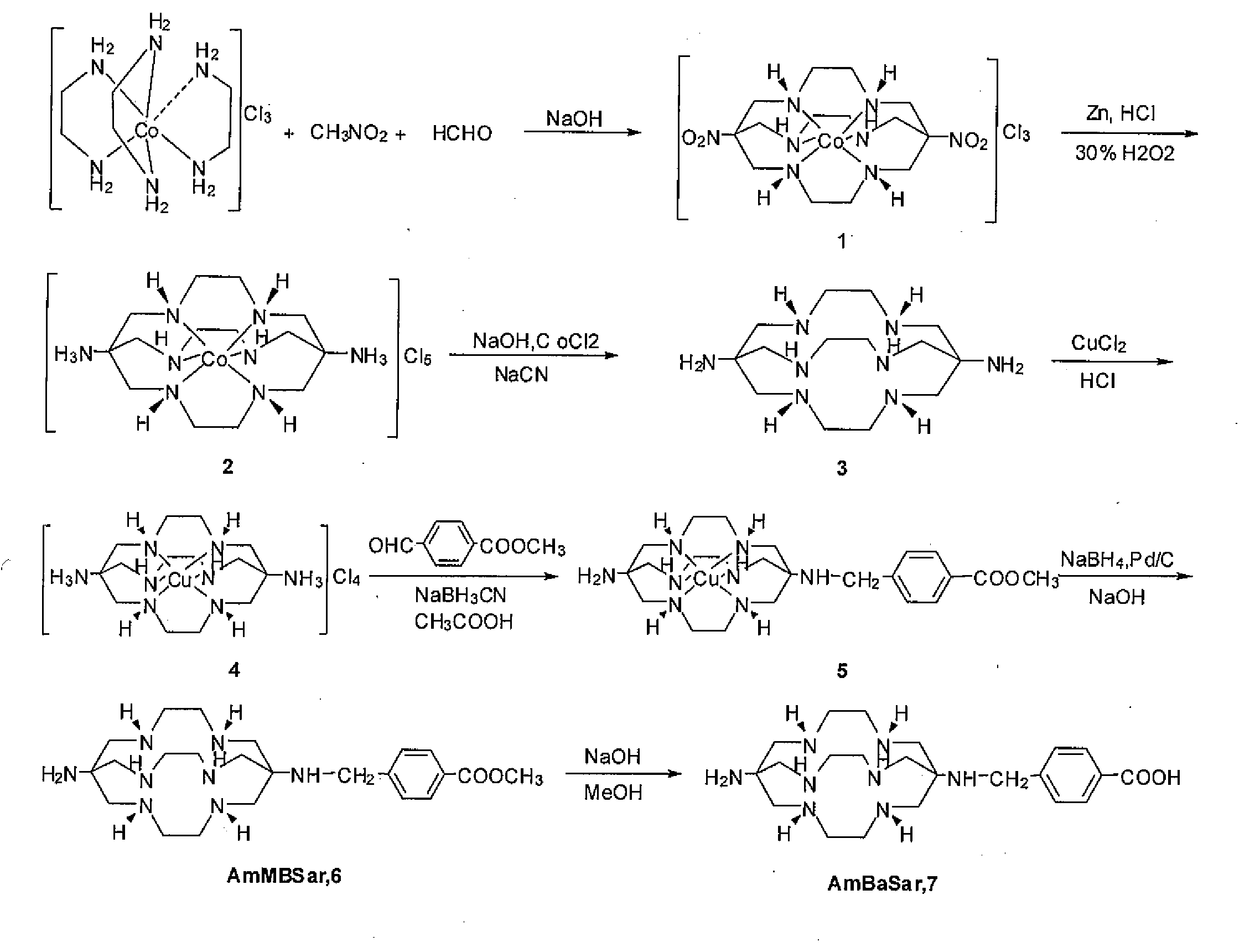
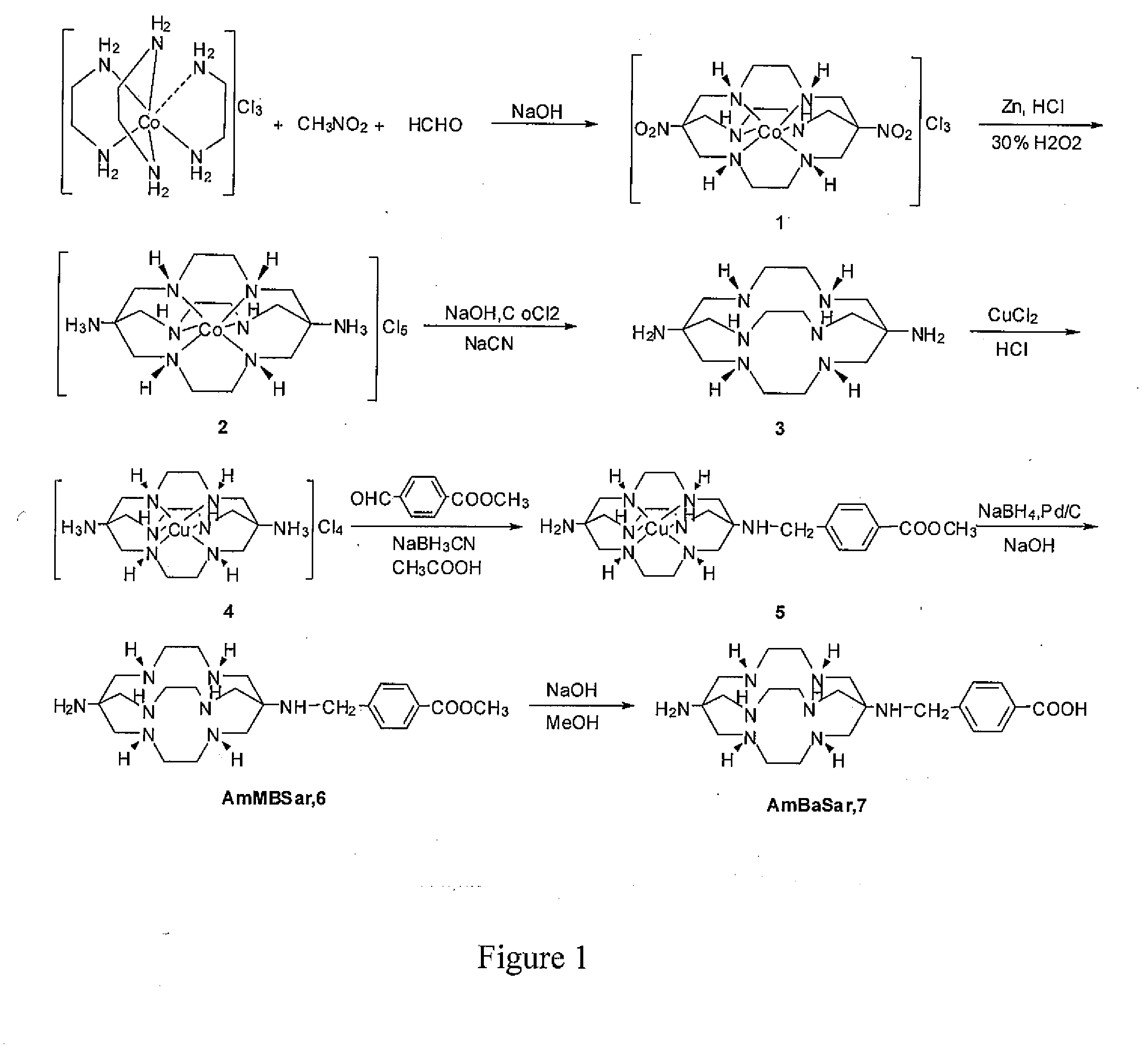
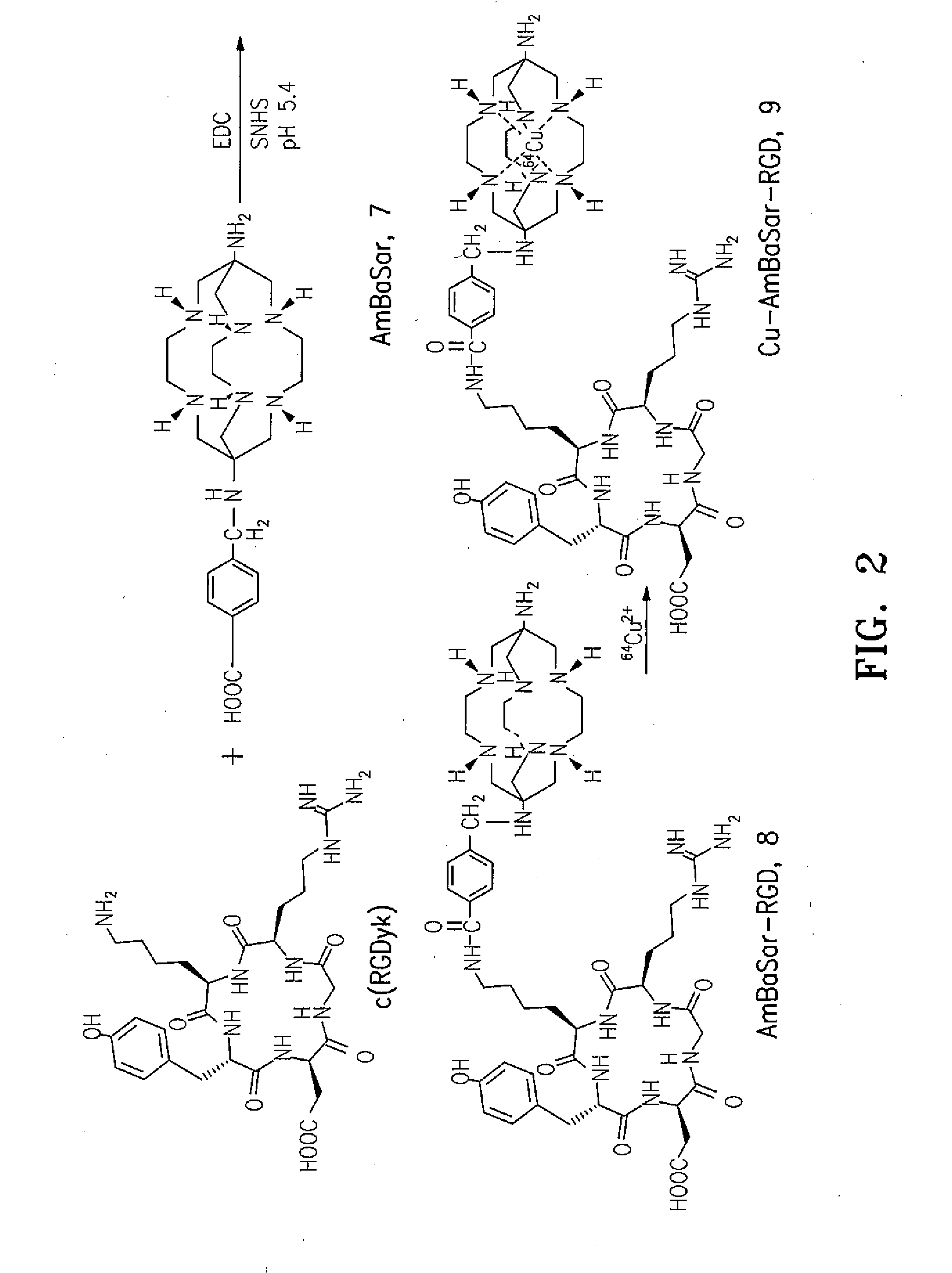
[0048]One embodiment of the present invention is directed to a class of versatile Sarcophagine based bifunctional chelators containing a hexa-aza cage for labeling with metals having either imaging, therapeutic or contrast applications radiolabeling and one or more linkers (A) and (B). The compounds of the present invention have the general formula
[0049]where A is a functional group selected from group consisting of an amine, a carboxylic acid, an ester, a carbonyl, a thiol, an azide and an alkene, and B is a functional group selected from the group consisting of hydrogen, an amine, a carboxylic acid, and ester, a carbonyl, a thiol, an azide and an alkene. Suitable linker group A and B should be of sufficient length (˜6 atom lengths) and should incorporate a reactive group that can be readily attached to a range of target agents, but not interfere with efficient and selective complexation of a metal ion like Cu2+ to the sarcophagine cage, as well as the target agent's biological act...
PUM
| Property | Measurement | Unit |
|---|---|---|
| pH | aaaaa | aaaaa |
| temperatures | aaaaa | aaaaa |
| retention time | aaaaa | aaaaa |
Abstract
Description
Claims
Application Information
 Login to View More