There remains a need for systems, methods and devices for the cleaning of endotracheal tubes that are effective and efficient so that the tube cleanings can be reasonably carried out on a regular and preventative basis, rather than only when a particular problem arises. There also remains a need for systems, methods and devices for the cleaning of endotracheal tubes that prevent the build up of materials, perform the cleaning quickly, and that permit sufficient
airflow through the endotracheal tube during use.
According to some embodiments, a non-
inflatable, mechanically-actuated cleaning device for removing
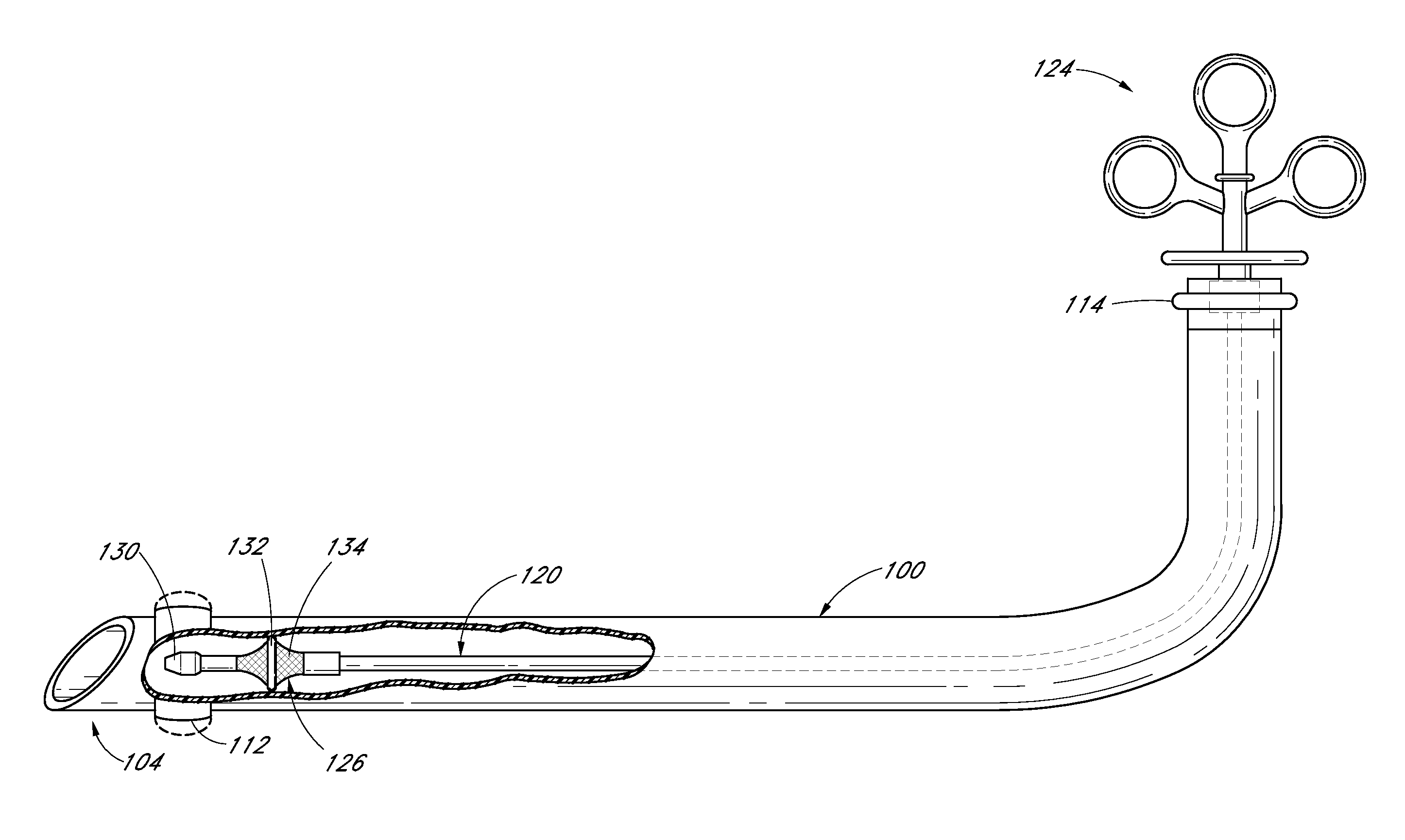
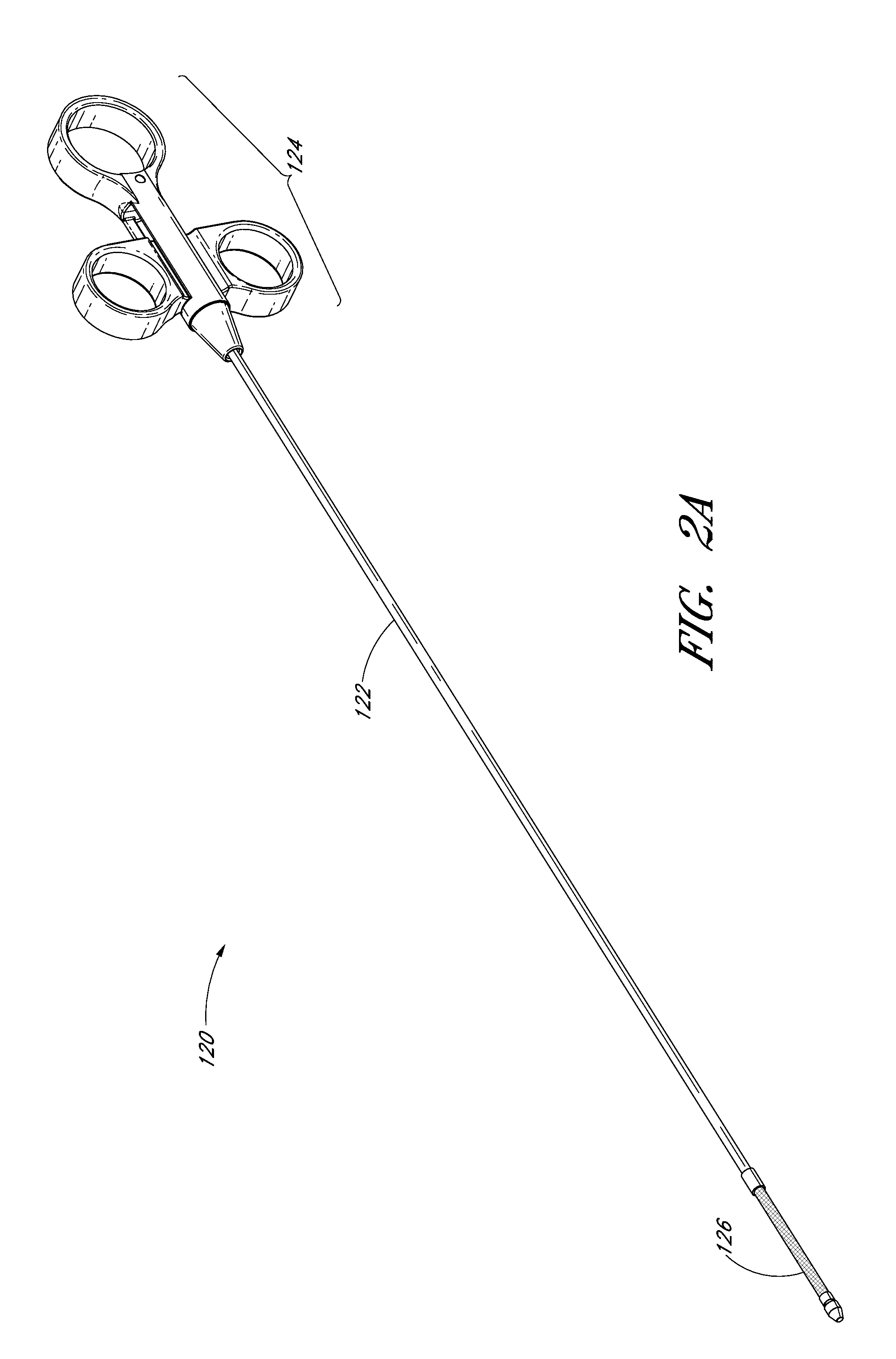
biofilm from an interior wall of an endotracheal tube or other conduit comprises an elongate body having a distal end, a proximal end, a longitudinal axis and a
diameter in the range of about 1 mm to about 5 mm. The cleaning device further comprises a
scaffold (e.g., mesh
scaffold) positioned at the distal end of the elongate body. In some embodiments, the
scaffold is positioned near the proximal end of the elongate body or at any other location along the elongate body. In one embodiment, the cleaning device comprises one or more O-rings or other removal members coupled to the scaffold (e.g., mesh scaffold) and a non-
inflatable actuation
assembly coupled to the proximal end of the elongate body for mechanically-actuating the expansion of the scaffold. In some embodiments, the scaffold is radially expandable between a collapsed position and an expanded position by manipulation of the actuation
assembly. In one embodiment, the level of expansion and / or collapse can be precisely controlled between fully-expanded and fully-collapsed positions. In several embodiments, the O-ring or other removal member is configured to engage an interior surface of an endotracheal tube when the scaffold is in the expanded position. In some embodiments, the O-ring is configured to remove
biofilm collected on the interior surface of an endotracheal tube when said O-ring is moved along the longitudinal axis of the elongate body. In one embodiment, the scaffold comprises a porous architecture configured for facilitating the in-flow of said biofilm into an interior of the scaffold, thereby
trapping at least a portion of the biofilm within the scaffold. In other embodiments, one or more portions of the scaffold are non-porous or substantially non-porous so as to prevent or reduce the likelihood of biofilm and / or other materials from passing therethrough. In several embodiments, the scaffold (e.g., mesh scaffold) is configured to allow airflow through the endotracheal tube in the collapsed position and the expanded position. In some embodiments, the actuation
assembly is configured for one-handed manipulation of the cleaning device during a cleaning procedure.


 Login to View More
  Login to View More