
Verification Of Data Stream Computations Using Third-Party-Supplied Annotations
a data stream and annotation technology, applied in the field of verification methods for third-party computations, can solve the problems of large working memory, severe computation restrictions that define the data stream model, and inability to be used in most situations, so as to reduce the space utilization of data stream algorithms
- Summary
- Abstract
- Description
- Claims
- Application Information
AI Technical Summary
Benefits of technology
Problems solved by technology
Method used
Image


Examples
Embodiment Construction
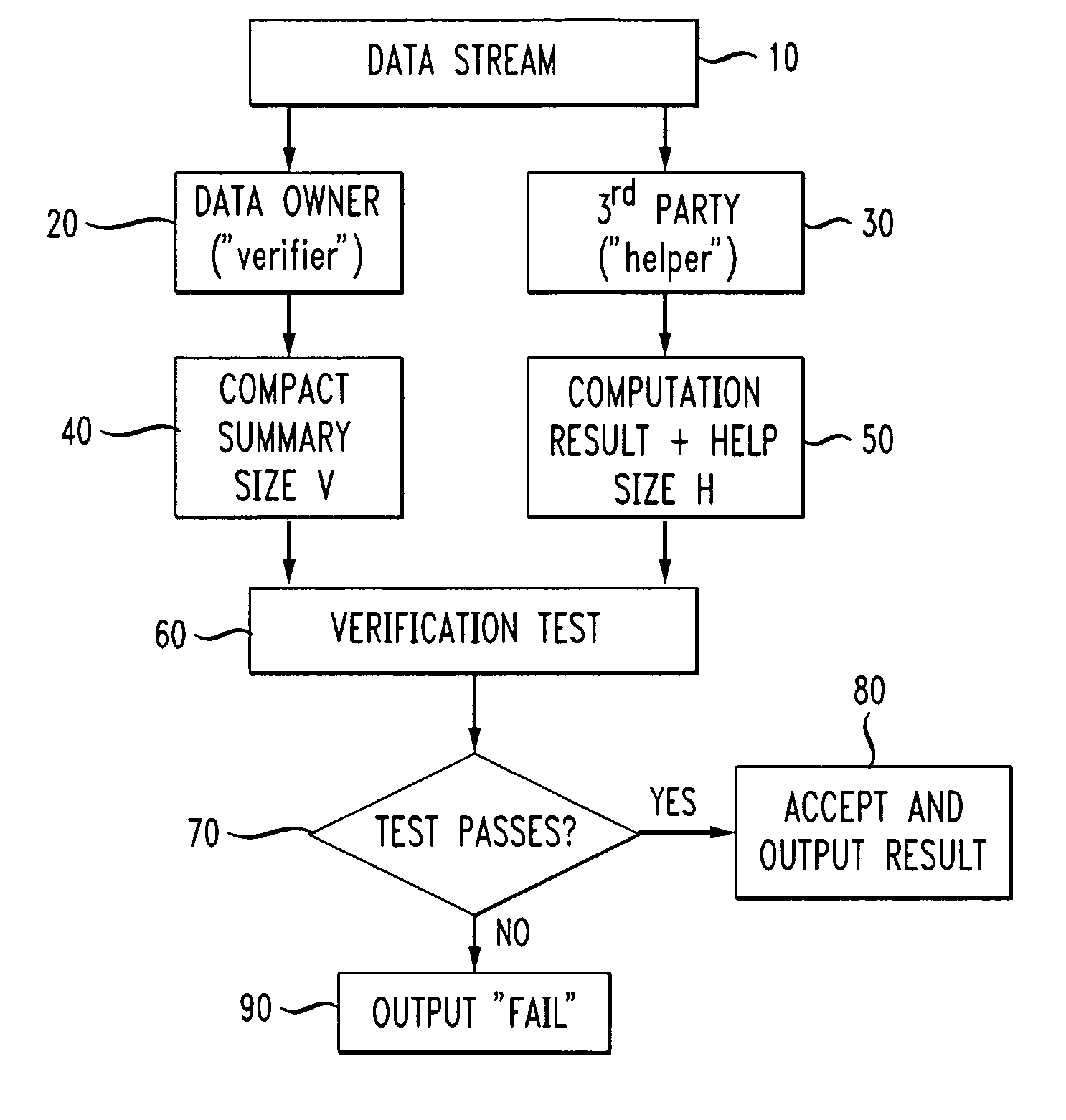
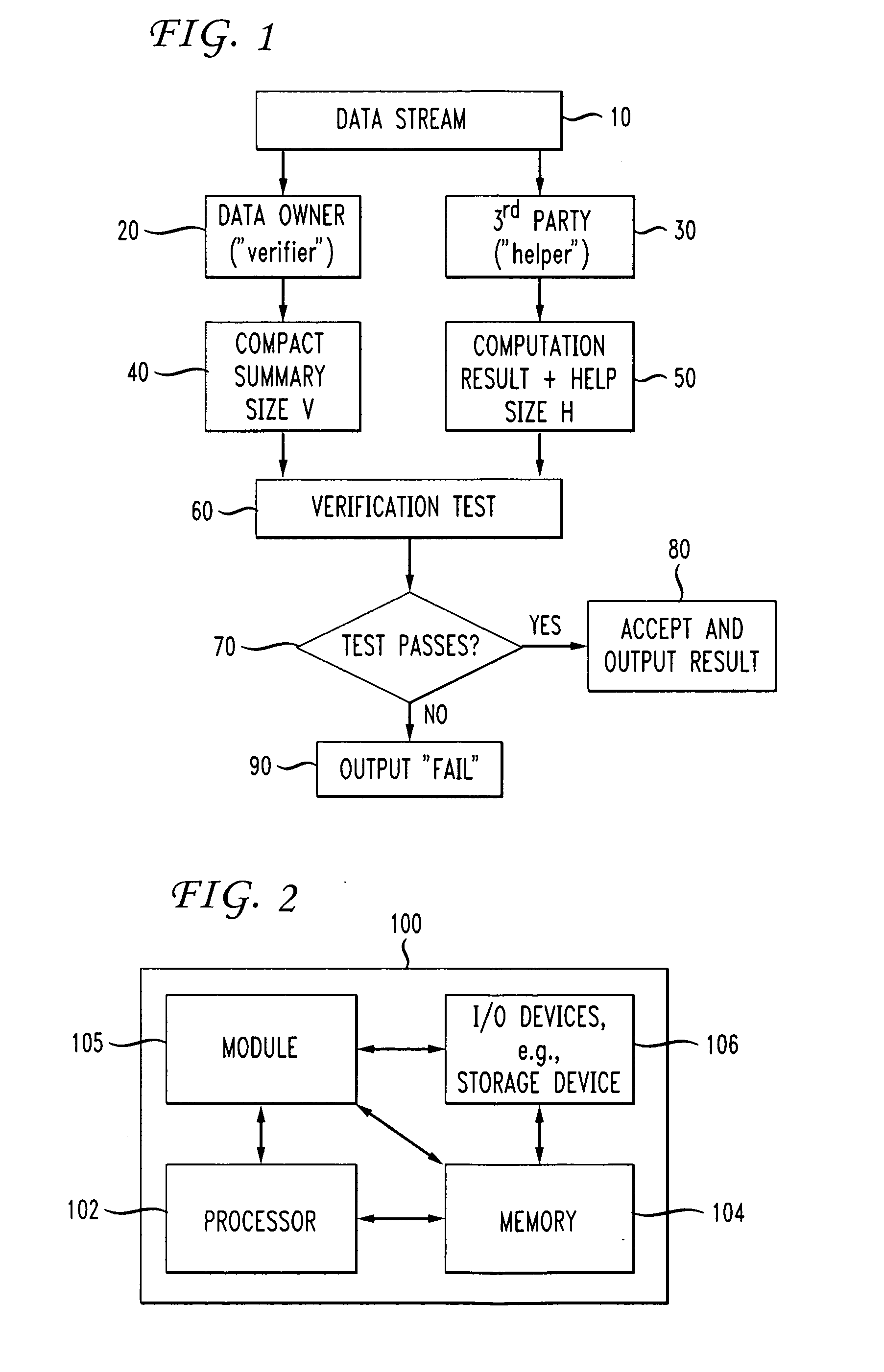
[0013]Massive data streams often require a third party to engage in processing the large quantities of data on behalf of the data owner. However, as noted above, the data owner would like to be assured of the correctness of the results of the various types of processing that may be performed by such third parties. The present invention addresses the feasibility of off-loading data stream computation to a third-party (hereinafter referred to as a “helper”) so that single pass, small-space stream computation is possible even for various “hard” computational functions.
[0014]A fundamental question, therefore, is how to be sure that the helper is being honest. In accordance with the present invention, the helper is instructed to annotate the data stream as it is being read. The annotated data stream, along with the processing results, are then supplied to and reviewed by the data owner (hereinafter referred to as the “verifier”) to determine if the helper has correctly computed the answe...
PUM
 Login to View More
 Abstract
Description
Claims
Application Information
 Login to View More