Use of sigma ligands in opioid-induced hyperalgesia
Inactive Publication Date: 2013-06-20
LAB DEL DR ESTEVE SA
View PDF3 Cites 15 Cited by
Summary
Abstract
Description
Claims
Application Information
AI Technical Summary
This helps you quickly interpret patents by identifying the three key elements:
Problems solved by technology
Method used
Benefits of technology
Benefits of technology
The present invention relates to the use of a sigma ligand as an adjuvant in opioid therapy to prevent and treat opioid-induced hyperalgesia (OIH) associated with opioid therapy. The sigma ligand acts as a neutral antagonist, inverse agonist, or partial antagonist of the sigma-1 receptor. The use of a sigma ligand in combination with an opioid or opiate compound can also be used for simultaneous, separate, or sequential administration. The technical effect of this invention is to provide an improved treatment for OIH by reducing the risk of opioid-induced hyperalgesia and promoting pain relief in patients undergoing opioid therapy.
Problems solved by technology
Somewhat paradoxically, opioid therapy aiming at alleviating pain may render patients more sensitive to pain and potentially may aggravate their preexisting pain.
Increases in pain intensity can occur upon discontinuation of opioid therapy but such an abnormal increased pain sensitivity including hyperalgesia or allodynia can occur also in the absence of overt opioid withdrawal in subjects that have been administered opioid drugs.
However, no information is available regarding inhibition of OIH by sigma-1 receptor ligands.
The treatment of OIH can be time-consuming and, at times, impractical.
Weaning patients from high dose opioids usually requires time and patience.
While reducing the opioid dose, patients may experience transient increases in pain or exacerbation of pain and the hyperalgesic effect may not be mitigated until a certain critical dose of opioid is reached.
Method used
the structure of the environmentally friendly knitted fabric provided by the present invention; figure 2 Flow chart of the yarn wrapping machine for environmentally friendly knitted fabrics and storage devices; image 3 Is the parameter map of the yarn covering machine
View more
Image
Smart Image Click on the blue labels to locate them in the text.
Viewing Examples
Smart Image
Click on the blue label to locate the original text in one second.
Reading with bidirectional positioning of images and text.
Smart Image
Examples
Experimental program
Comparison scheme
Effect test
example 1
Synthesis of 4-{2-[5-Methyl-1-(naphthalen-2-yl)-1H-pyrazol-3-yloxy]ethyl}morpholine (compound 63) and its hydrochloride salt
[0177]
[0178]Compound 63 can be can be prepared as disclosed in the previous application WO2006 / 021462. Its hydrochloride can be obtained according the following procedure:
[0179]Compound 63 (6.39 g) was dissolved in ethanol saturated with HCl, the mixture was stirred then for some minutes and evaporated to dryness. The residue was crystallized from isopropanol. The mother liquors from the first crystallization afforded a second crystallization by concentrating. Both crystallizations taken together yielded 5.24 g (63%) of the corresponding hydrochloride salt (m.p.=197-199° C.).
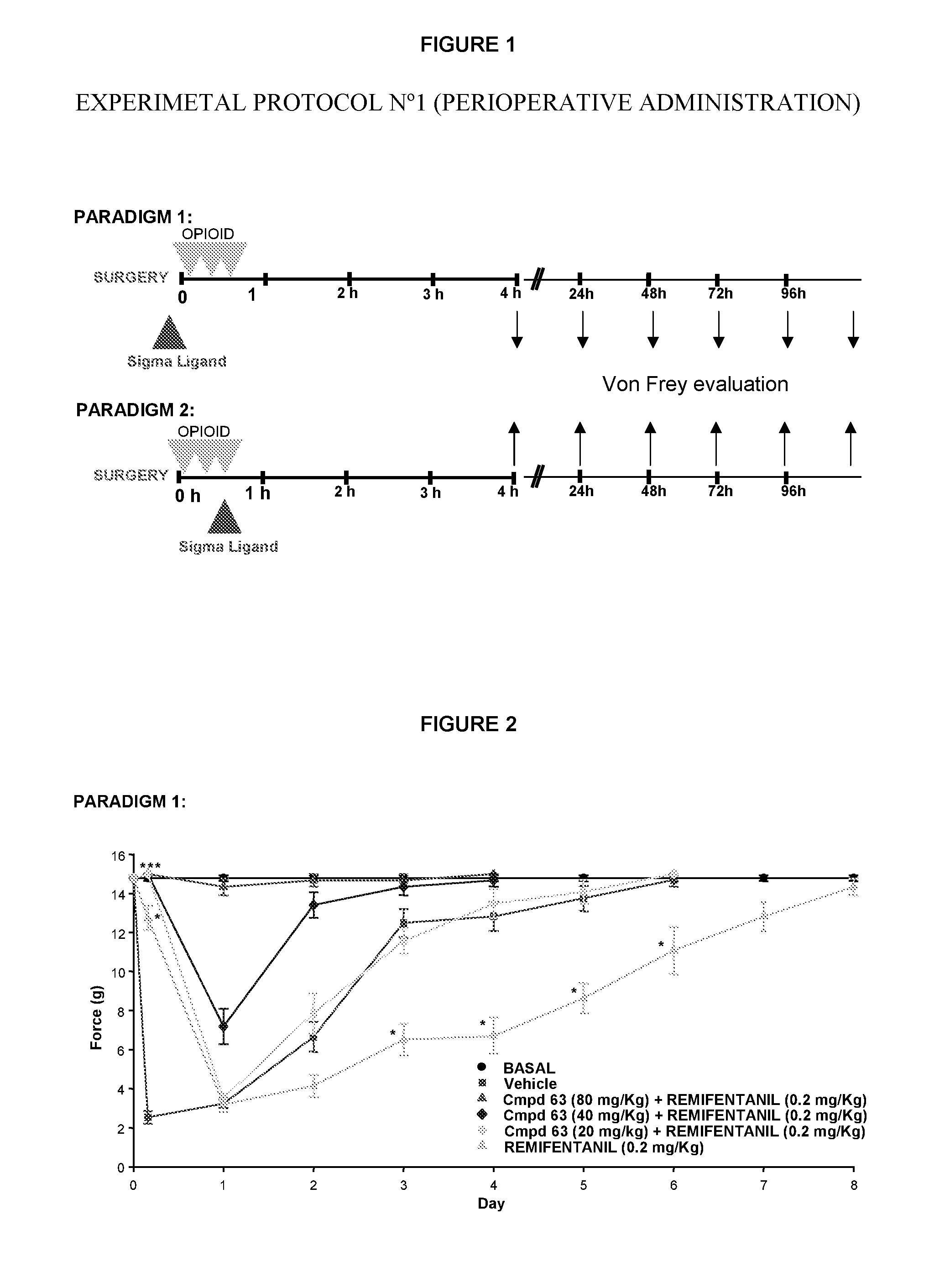
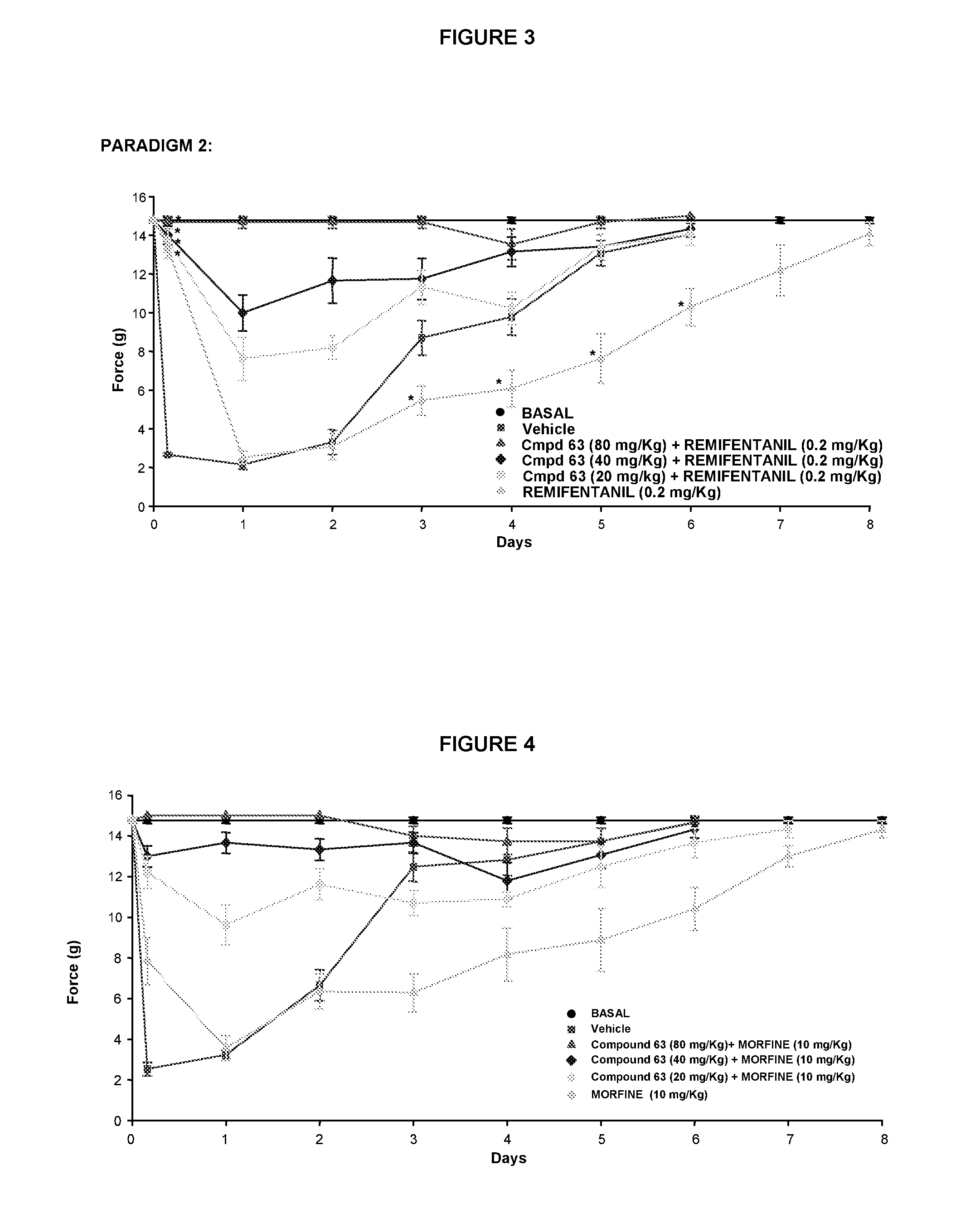
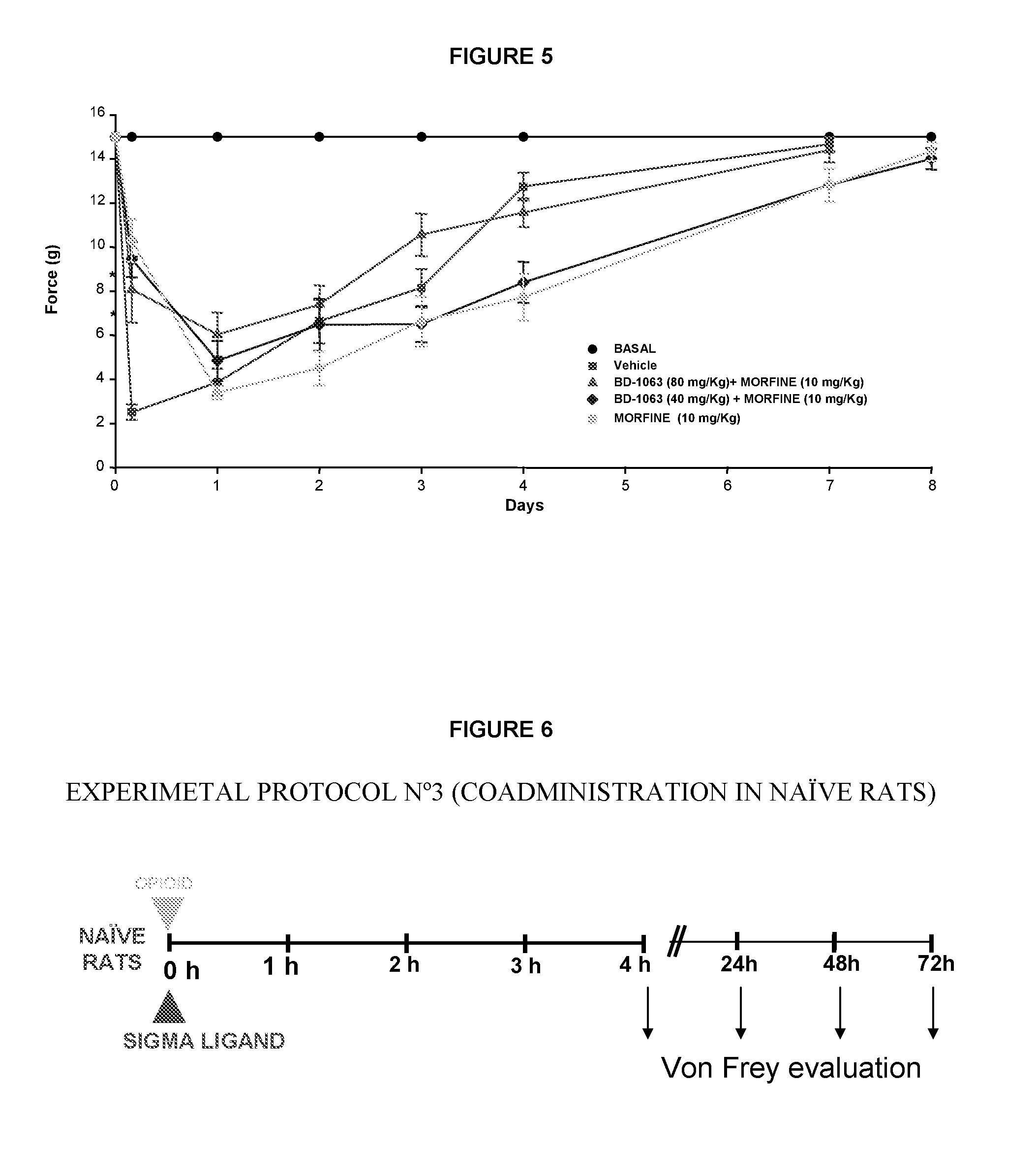
[0182]The incisional pain model was adapted from Brennan et al. (1996). The induction of anaesthesia in rats was performed with 3% isofluoran for veterinary use, employing an Ohmeda vaporizer and an anaesthesia chamber. Anaesthesia was kept during the surgical operation by a tube which directs the isofluran vapours to the animal's snout. Once the rats were anaesthetised, they were laid down in a prone position and their right hindpaws were cleaned out with alcohol.
[0183]Then, a skin incision in the hind paw of about 10 mm was made by means of a scalpel, starting about 5 mm from the heel and extending toward the toes. Fascia was located and by means of curve scissors muscle was elevated and a longitudinal incision of about 5 mm was made, thus the muscle origin and insertion remained intact. Therefore, both superficia...
the structure of the environmentally friendly knitted fabric provided by the present invention; figure 2 Flow chart of the yarn wrapping machine for environmentally friendly knitted fabrics and storage devices; image 3 Is the parameter map of the yarn covering machine
Login to View More
PUM
Login to View More
Abstract
The invention refers to the use of a sigma ligand, particularly a sigma ligand of formula (I) to prevent and / or treat opioid-induced hyperalgesia (OIH) associated to opioid therapy.
Description
FIELD OF THE INVENTION[0001]The present invention relates to the use of sigma receptor ligands in the prevention and / or treatment of opioid-induced hyperalgesia (OIH) associated to opioid therapy, including the combination of opioids with a sigma receptor ligand for the treatment and / or prevention of OIH.BACKGROUND[0002]Opioids and opiates are potent analgesics widely used in clinical practice. Opiates refer to alkaloids extracted from poppy pods (Opium Poppy; Papaver Somniferum) and their semi-synthetic counterparts which bind to the opioid receptors. Basically to be called an opiate one has to either be a natural opioid receptoragonist or start the refining process with one of the natural alkaloid molecules. Once chemically altered, such as the process of converting morphine into heroin, the drug is then labeled as a semi-synthetic opiate or semi-synthetic opioid—the terms can be used interchangeably. Semi-synthetic opiates (or semi-synthetic opioids) include heroin (diamorphine)...
Claims
the structure of the environmentally friendly knitted fabric provided by the present invention; figure 2 Flow chart of the yarn wrapping machine for environmentally friendly knitted fabrics and storage devices; image 3 Is the parameter map of the yarn covering machine
Login to View More
Application Information
Patent Timeline
Application Date:The date an application was filed.
Publication Date:The date a patent or application was officially published.
First Publication Date:The earliest publication date of a patent with the same application number.
Issue Date:Publication date of the patent grant document.
PCT Entry Date:The Entry date of PCT National Phase.
Estimated Expiry Date:The statutory expiry date of a patent right according to the Patent Law, and it is the longest term of protection that the patent right can achieve without the termination of the patent right due to other reasons(Term extension factor has been taken into account ).
Invalid Date:Actual expiry date is based on effective date or publication date of legal transaction data of invalid patent.


 Login to View More
  Login to View More