

Low-power method and device for cooling prosthetic limb socket based on phase change
a prosthetic limb and phase change technology, applied in the field of low-power method and device for cooling prosthetic limb sockets based on phase change, can solve the problems of increasing skin temperature, poor thermal conductivity, and limited heat transfer from residual limbs through prosthetic devices to the exterior environment, and achieves short settle time, efficient and portable
- Summary
- Abstract
- Description
- Claims
- Application Information
AI Technical Summary
Benefits of technology
Problems solved by technology
Method used
Image

Examples
Embodiment Construction
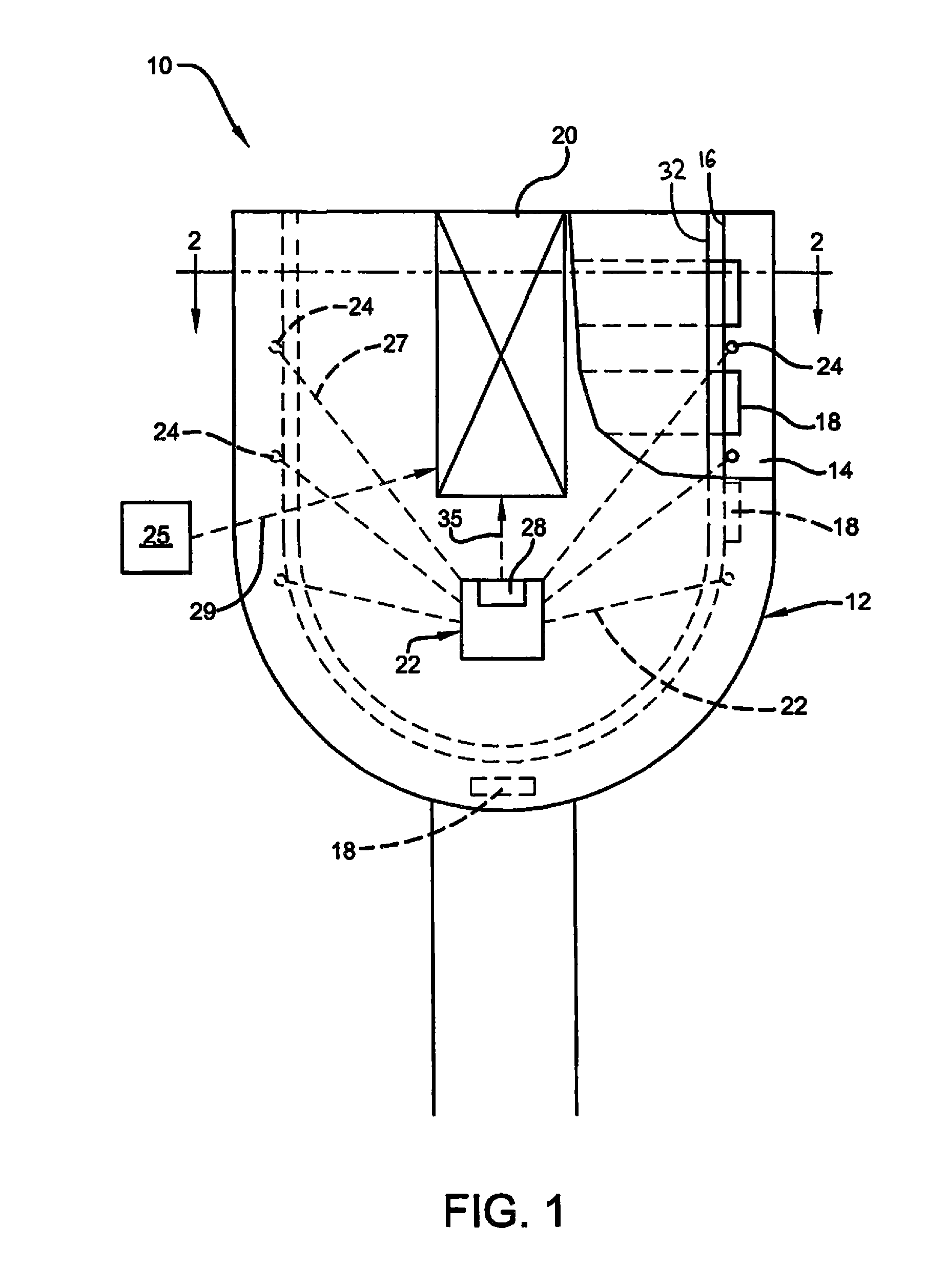
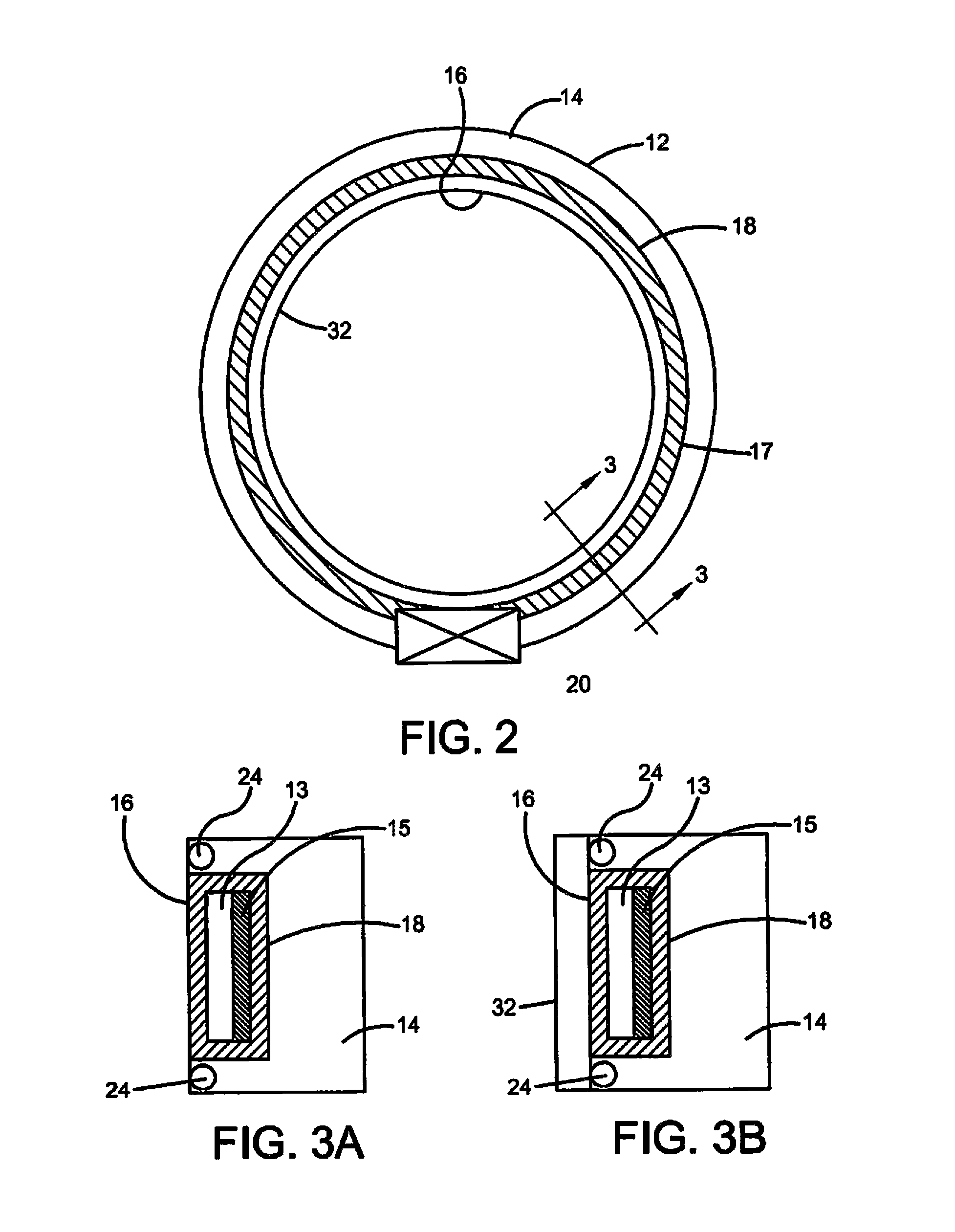
[0044]With reference to FIGS. 1-3, a generic embodiment of a residual limb-prosthesis is shown and designated by the numeral 10. The residual limb-prosthesis 10 includes a socket 12 for receiving a residual limb, wherein the socket 12 includes a socket wall 14 defining a limb-receiving surface 16. The socket 12 can be manufactured from any of the common materials employed for prosthesis sockets in the prior art or hereinafter developed.
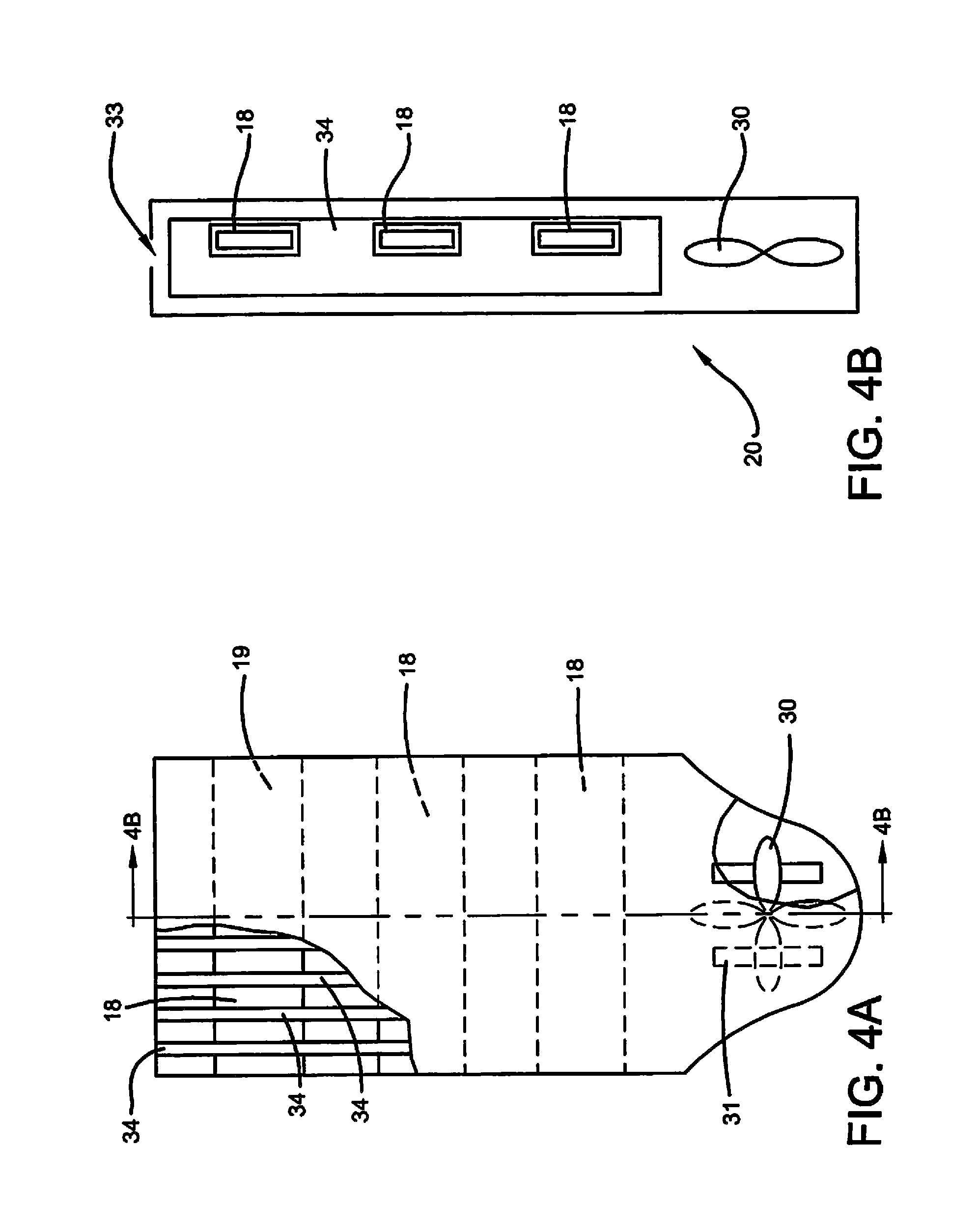
[0045]At least one heat pipe 18 extends through at least a portion of the socket 12 and includes a working fluid 13 (FIG. 3) and a wicking structure 15. The heat pipe 18 includes a socket section 17 (FIG. 1) and a heat sink section 19, wherein the heat pipe 18 extends along its length through said socket wall 14 proximate to or exposed at the limb-receiving surface 16. In some embodiments, multiple heat pipes may be employed. The heat pipes can extend in the same or different directions and can be placed at various locations, whether horizontally or v...
PUM
 Login to View More
 Abstract
Description
Claims
Application Information
 Login to View More