

Lipidic compound-telodendrimer hybrid nanoparticles and methods of making and uses thereof
- Summary
- Abstract
- Description
- Claims
- Application Information
AI Technical Summary
Benefits of technology
Problems solved by technology
Method used
Image

Examples
example
[0126]The following describes the preparation and characterization of examples of lipid-telodendrimer nanoparticles of the present disclosure. The following also describes an example of the use of examples the nanoparticles for drug delivery.
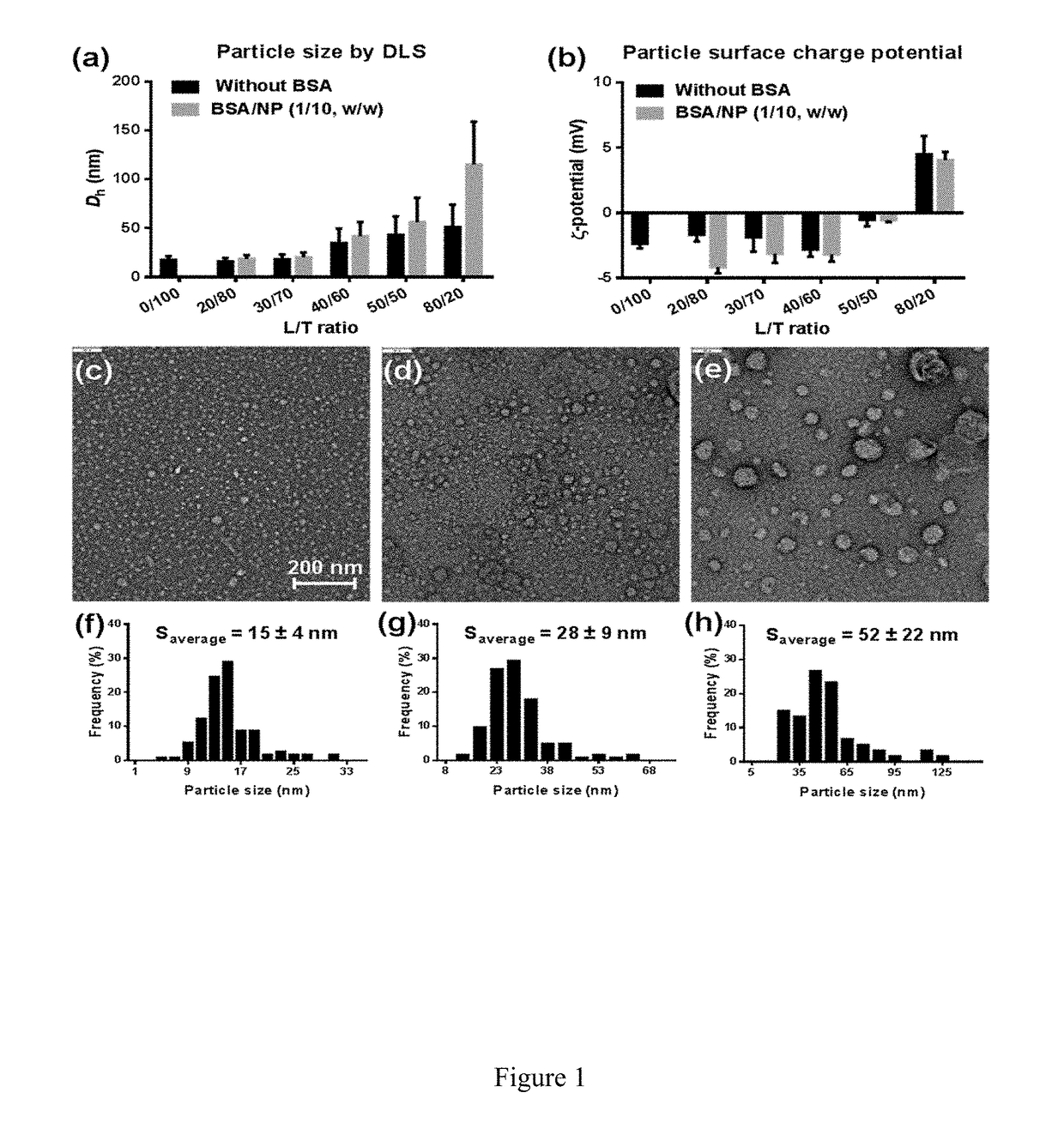
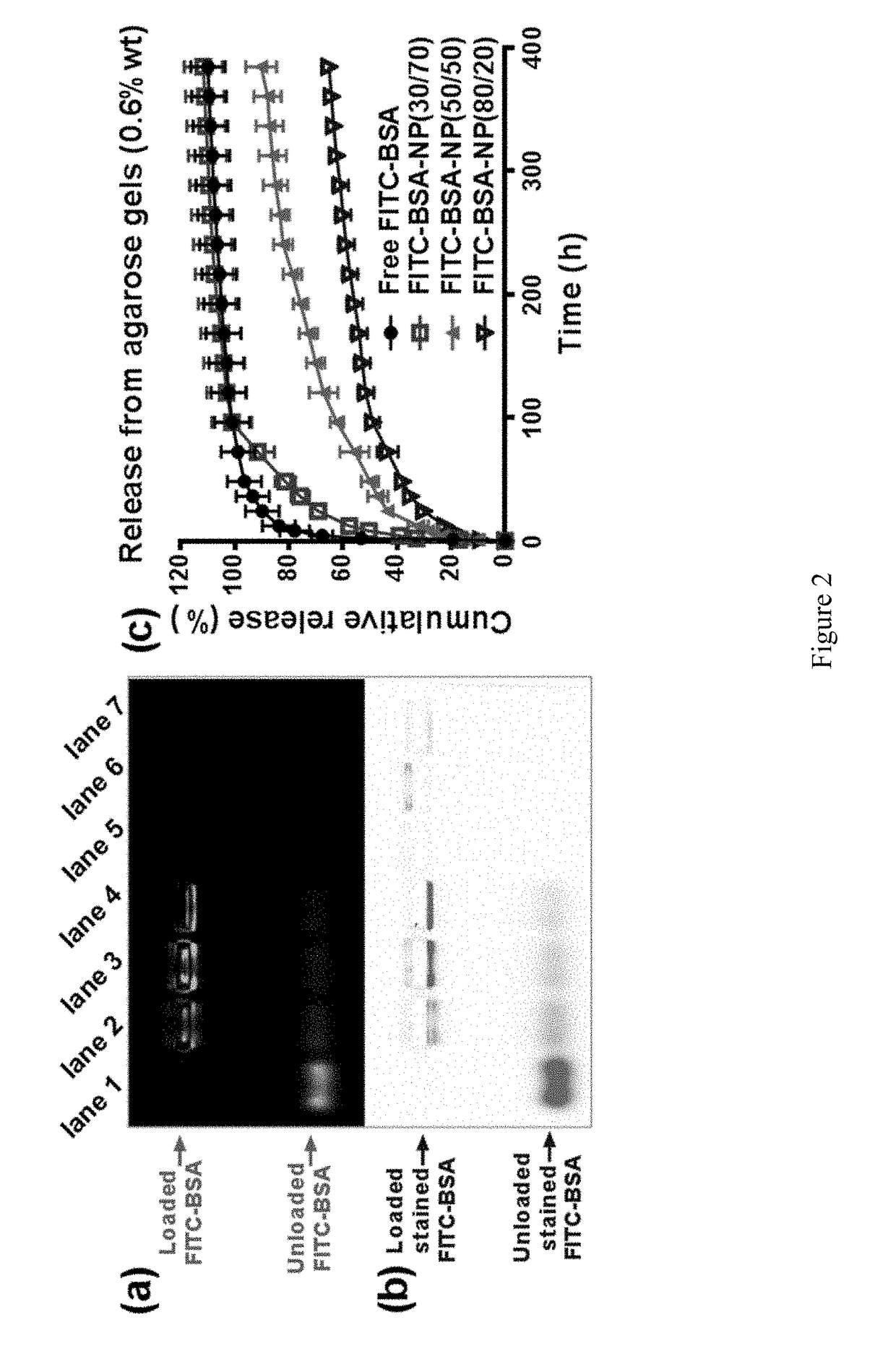
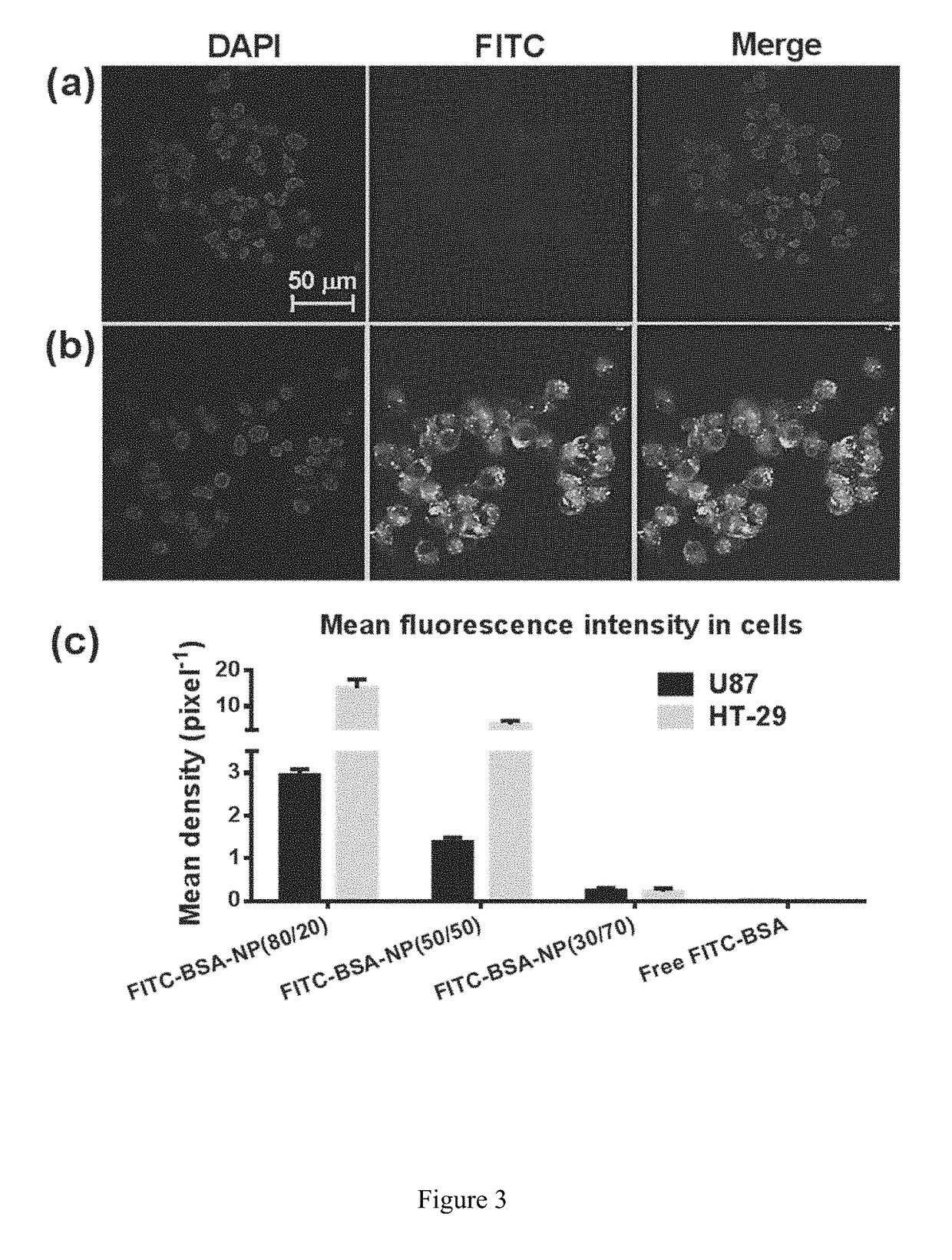
[0127]Nanoparticle-mediated intracellular delivery of protein therapeutics provides opportunities to treat, for example, brain cancers via intracranial administration to enhance tumor cellular uptake and prevent the leakage of cytotoxic proteins, e.g. diphtheria toxin, into systemic circulation. A facile strategy to precisely engineer lipid-like nanoparticles offers enhanced cell membrane permeability of proteins to reach the intracellular targets. For example, co-assembly of lipidoid (or lipid) and telodendrimers with a three-layered architecture, a linear-dendritic hybrid block copolymer, is able to fine-tune the properties of nanoparticles. The optimized shape, structure and ratio of telodendrimers in the systems effectively prevent aggregati...
PUM
| Property | Measurement | Unit |
|---|---|---|
| Size | aaaaa | aaaaa |
| Size | aaaaa | aaaaa |
| Temperature | aaaaa | aaaaa |
Abstract
Description
Claims
Application Information
 Login to View More