Semiconductor memory device and operating method thereof

US20170372767A1Active Publication Date: 2017-12-28SK HYNIX INC
1 Cites 29 Cited by

Patent Information

Authority / Receiving Office
US · United States
Current Assignee / Owner
Publication Date
2017-12-28

Smart Images

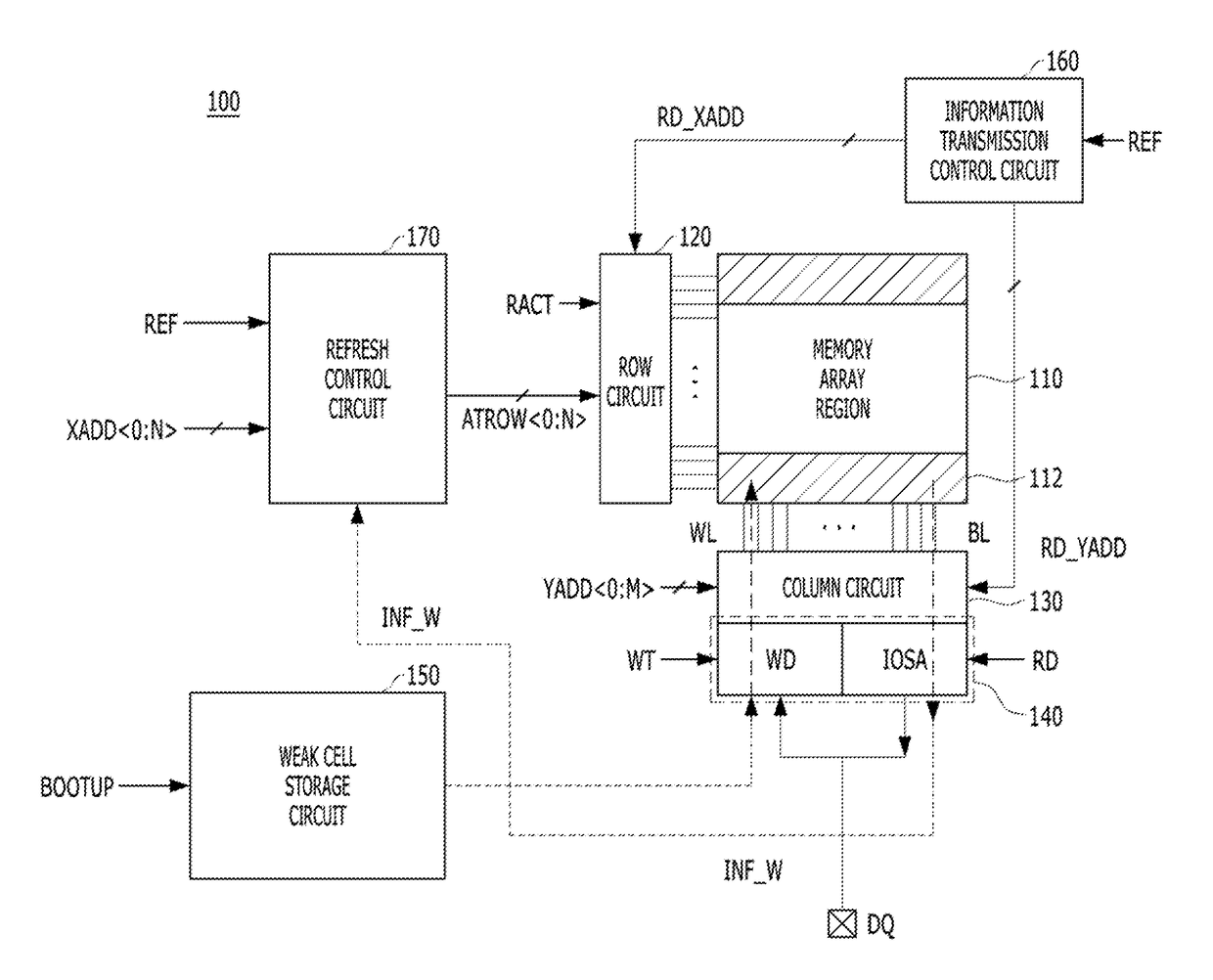
  • Figure 1
    Figure 1
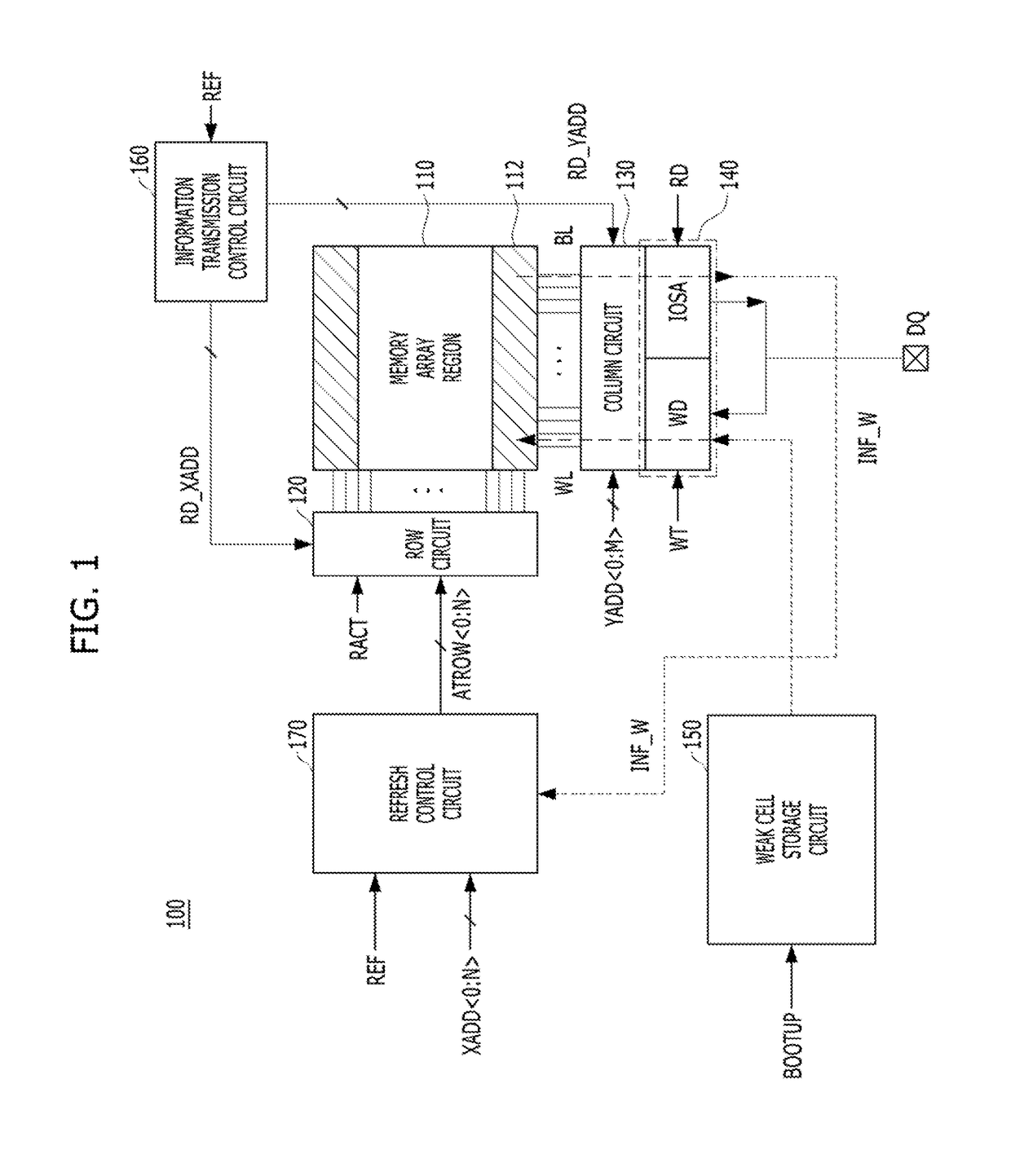
  • Figure 2
    Figure 2
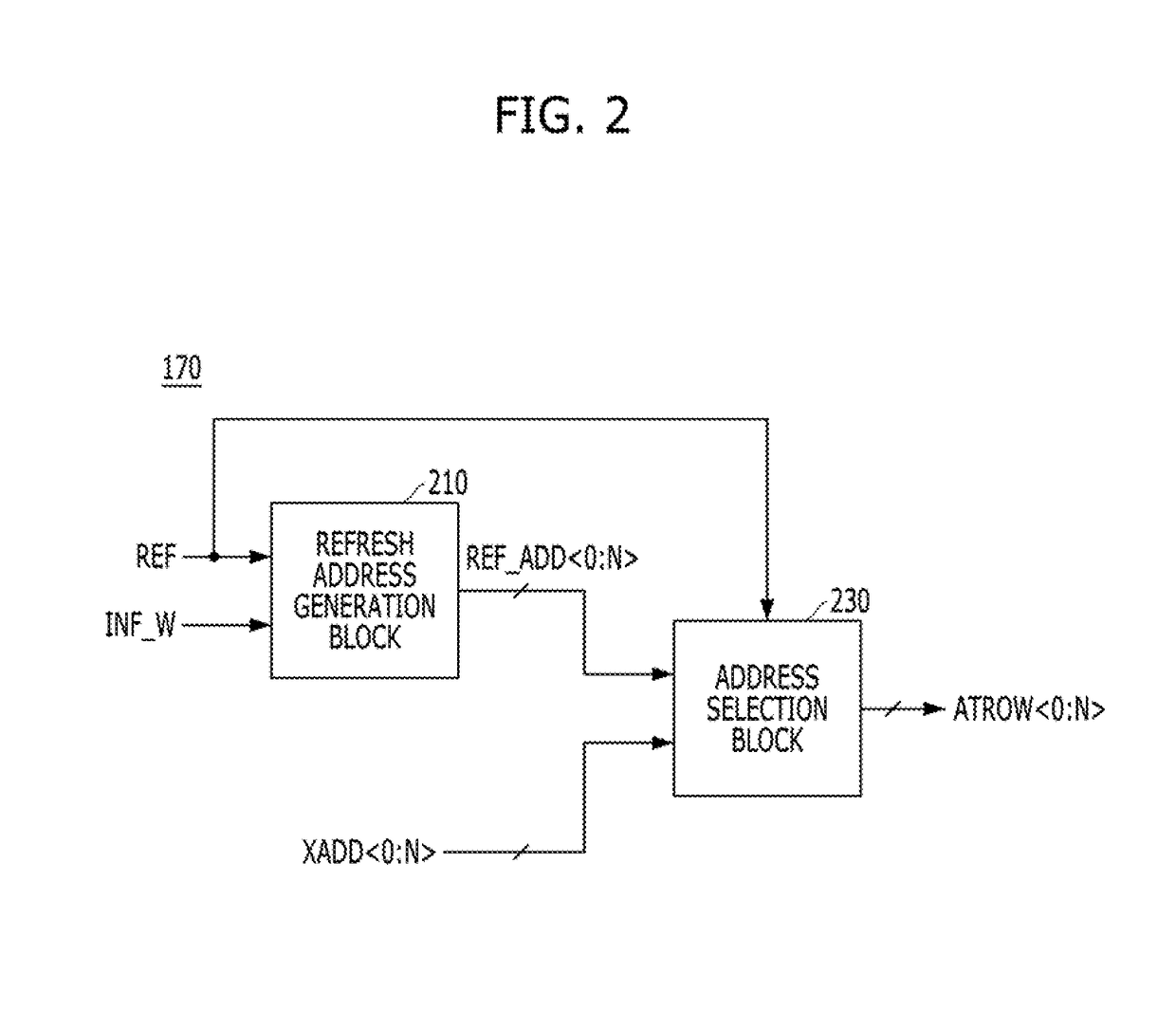
  • Figure 3
    Figure 3
Patent Text Reader

Abstract

A semiconductor memory device including a weak cell storage circuit suitable for programming therein weak cell information, and outputting the weak cell information in an initialization operation; a cell array region including a first cell region which stores the weak cell information received from the weak cell storage circuit, in the initialization operation; a refresh address generation block suitable for generating a refresh address by counting a refresh signal, and outputting a weak cell address corresponding to the weak cell information outputted from the first cell region, as the refresh address, with a predetermined cycle; and a refresh circuit suitable for performing a refresh operation for a word line corresponding to the refresh address, among a plurality of word lines.
Need to check novelty before this filing date? Find Prior Art

Description

CROSS-REFERENCE TO RELATED APPLICATION

[0001] This application claims priority under 35 U.S.C. §119 to Korean Patent Application No. 10-2016-0080146, filed on Jun. 27, 2016, the disclosure of which is herein incorporated by reference in its entirety.TECHNICAL FIELD

[0002] Exemplary embodiments relate to a semiconductor design technology, and more particularly, to a semiconductor memory device which performs a refresh operation.DISCUSSION OF THE RELATED ART

[0003] In general, a memory cell of a semiconductor memory device such as a dynamic random access memory (DRAM) is constructed by a transistor serving as a switch and a capacitor storing charges or data. Data is identified as ‘high’ (logic 1) or ‘low’ (logic 0) depending on whether charges are present in the capacitor of the memory cell, that is, whether the voltage of the terminal of the capacitor is high or low.

[0004] In principle, storage of data does not consume power because the storage of data is implemented in such a manner that c...

Examples

Embodiment Construction

[0030]Various embodiments will be described below in more detail with reference to the accompanying drawings. The present invention may, however, be embodied in different forms and should not be construed as limited to the embodiments set forth herein. Rather, these embodiments are provided so that this disclosure will be thorough and complete, and will fully convey the scope of the present invention to those skilled in the art. Throughout the disclosure, like reference numerals refer to like parts throughout the various figures and embodiments of the present invention.

[0031]1 In general, after tests are performed through various methods for a weak cell, information on a detected weak cell hereinafter, referred to as a ‘weak cell information’, is stored in a nonvolatile memory such that the stored data may be retained even though power supply is cut off.

[0032]If the weak cell information stored in the nonvolatile memory is used in a normal operation by being immediately read out aft...