

Electricity generation process
a technology of electricity generation and process, applied in the direction of mechanical equipment, machines/engines, lighting and heating apparatus, etc., can solve the problems of uneconomic process, increased pressure on the side of the membrane to which the solvent diffuses, and inability to achieve the power density of the general publi
- Summary
- Abstract
- Description
- Claims
- Application Information
AI Technical Summary
Benefits of technology
Problems solved by technology
Method used
Image

Examples
Embodiment Construction
[0021]The process of the present invention may provide an improved solution-mining process and / or an improved electricity generation process.
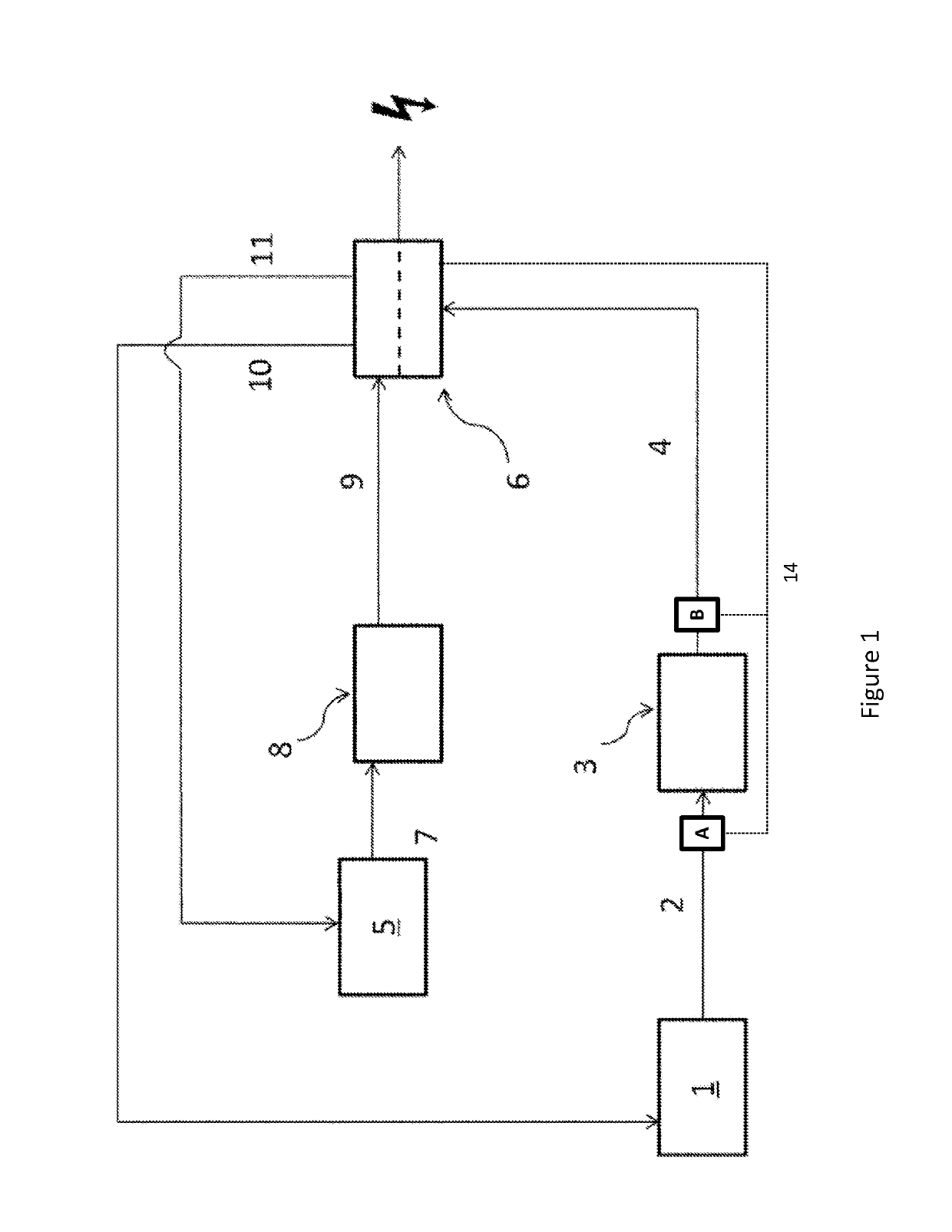
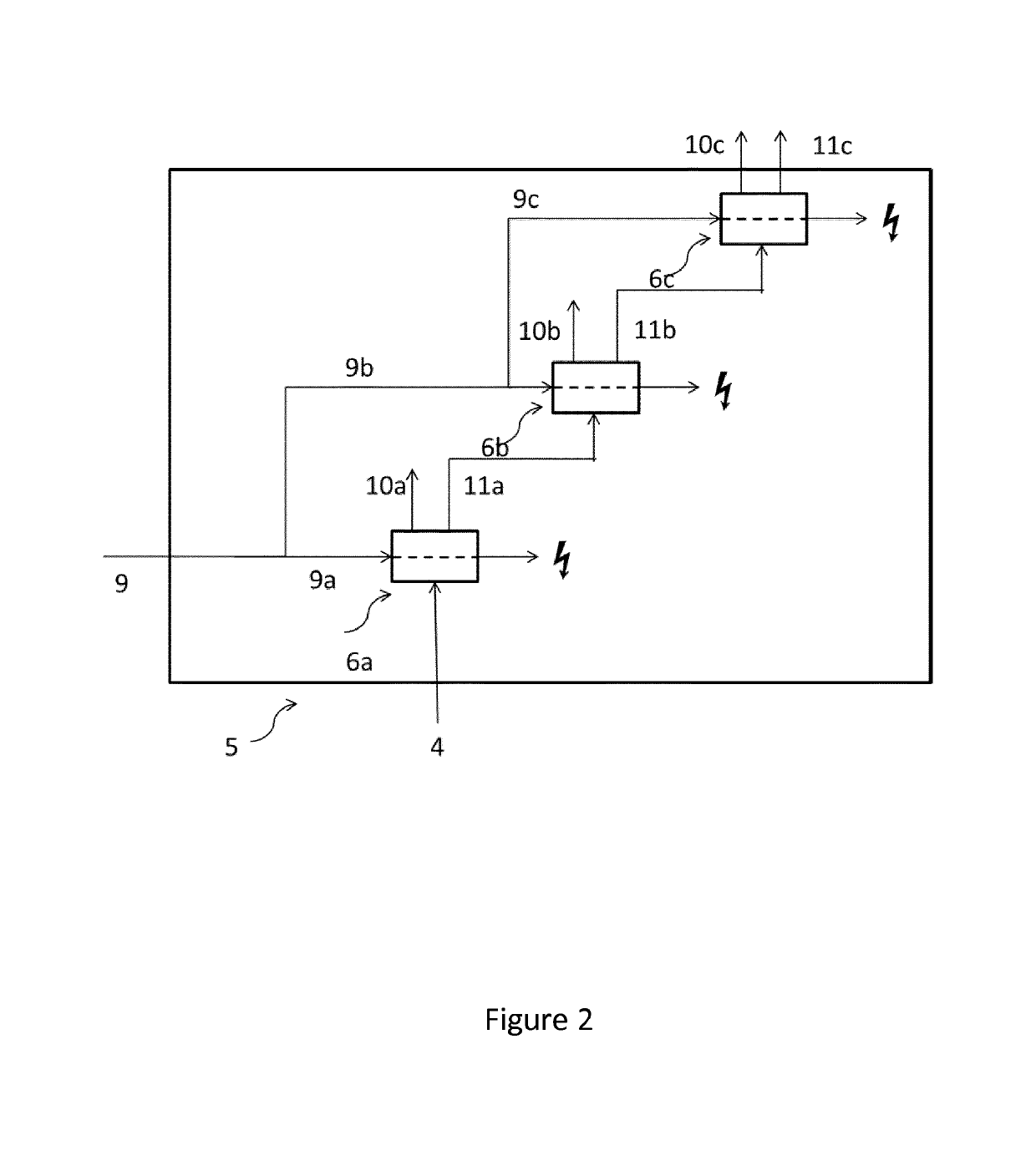
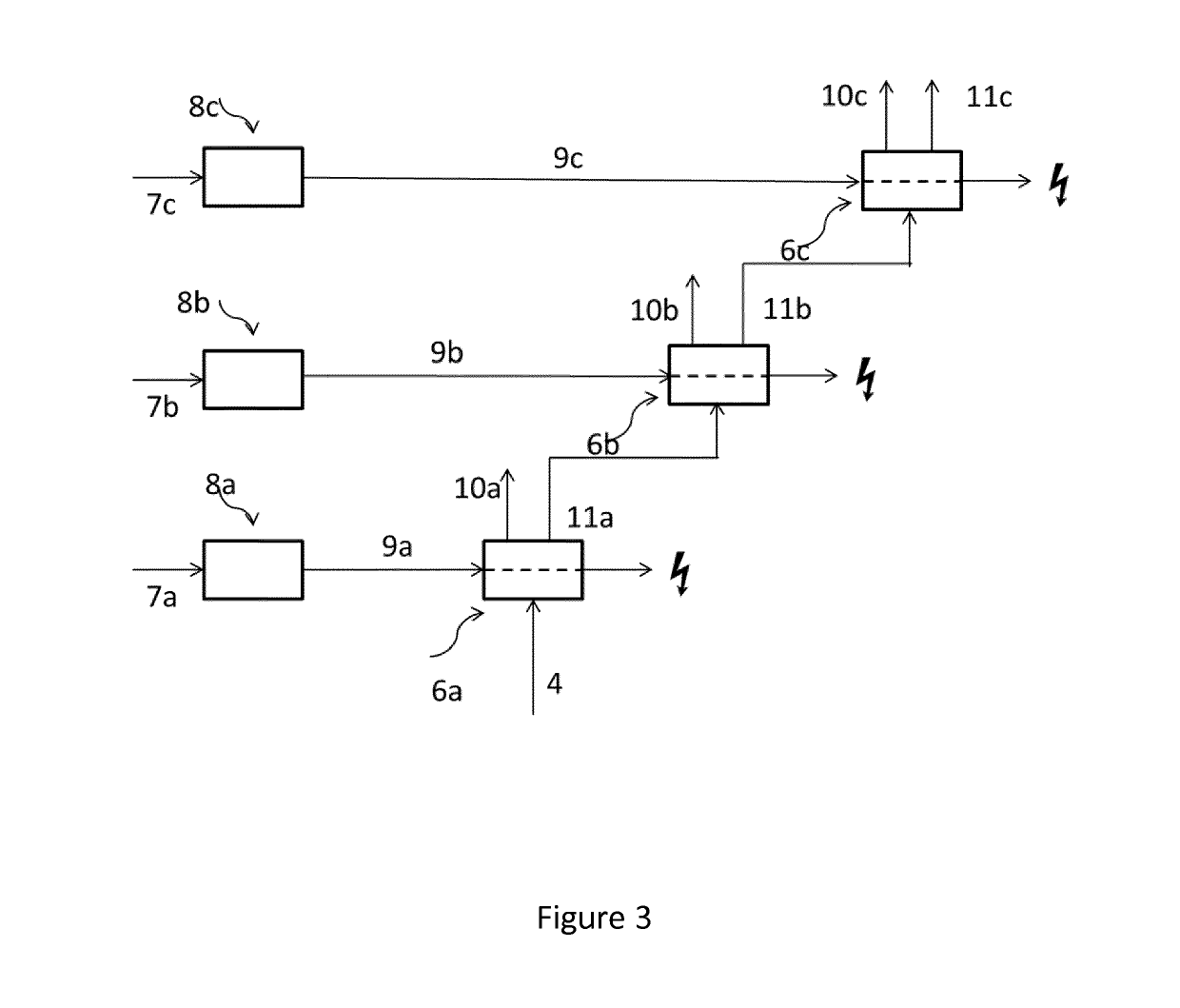
[0022]The process of the present invention uses the salinity differential between the input and output streams of a solution mining process to extract latent osmotic energy from the saline stream produced by the solution mining process by means of an osmotic power generation process. The input stream of the solution mining process, which may be referred to as an aqueous feed stream or lower salinity feed stream, is passed through an osmotic power unit prior to entering the salt formation. The output stream from the solution mining process, which is a saline stream, is passed through the osmotic power unit after leaving the salt formation. Osmotic power generation uses the salinity differential between a high-salinity stream and a low-salinity stream. The input stream of the solution mining process may be used as, or be derived from, the low-sal...
PUM
 Login to View More
 Abstract
Description
Claims
Application Information
 Login to View More