
Pre-filled parenteral drug inspection station and method of using the same
a technology of parenteral drug and inspection station, which is applied in the direction of process and machine control, program control, instruments, etc., can solve the problems of cumbersome whole process and time-consuming for the operator and the manufacturer
- Summary
- Abstract
- Description
- Claims
- Application Information
AI Technical Summary
Benefits of technology
Problems solved by technology
Method used
Image

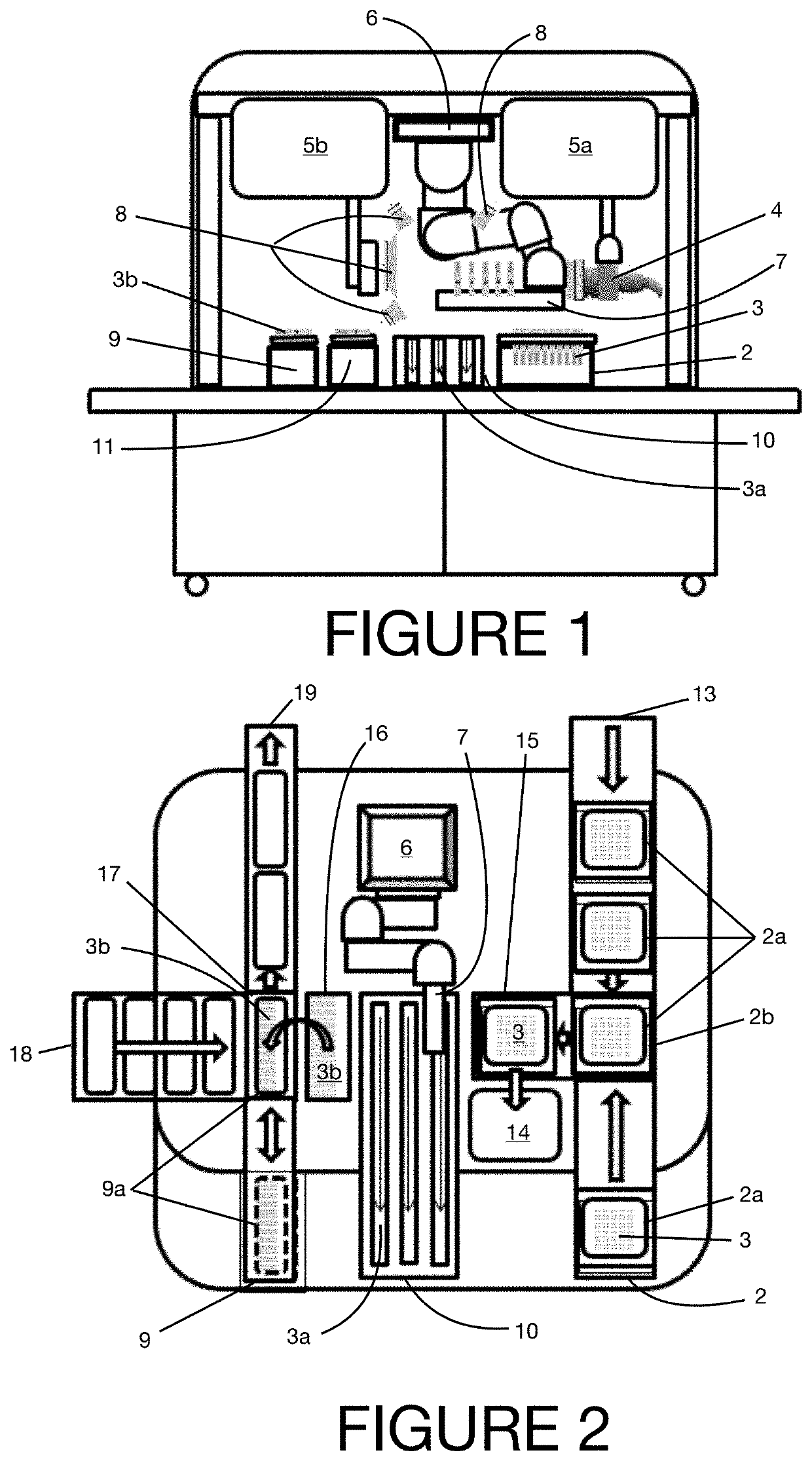
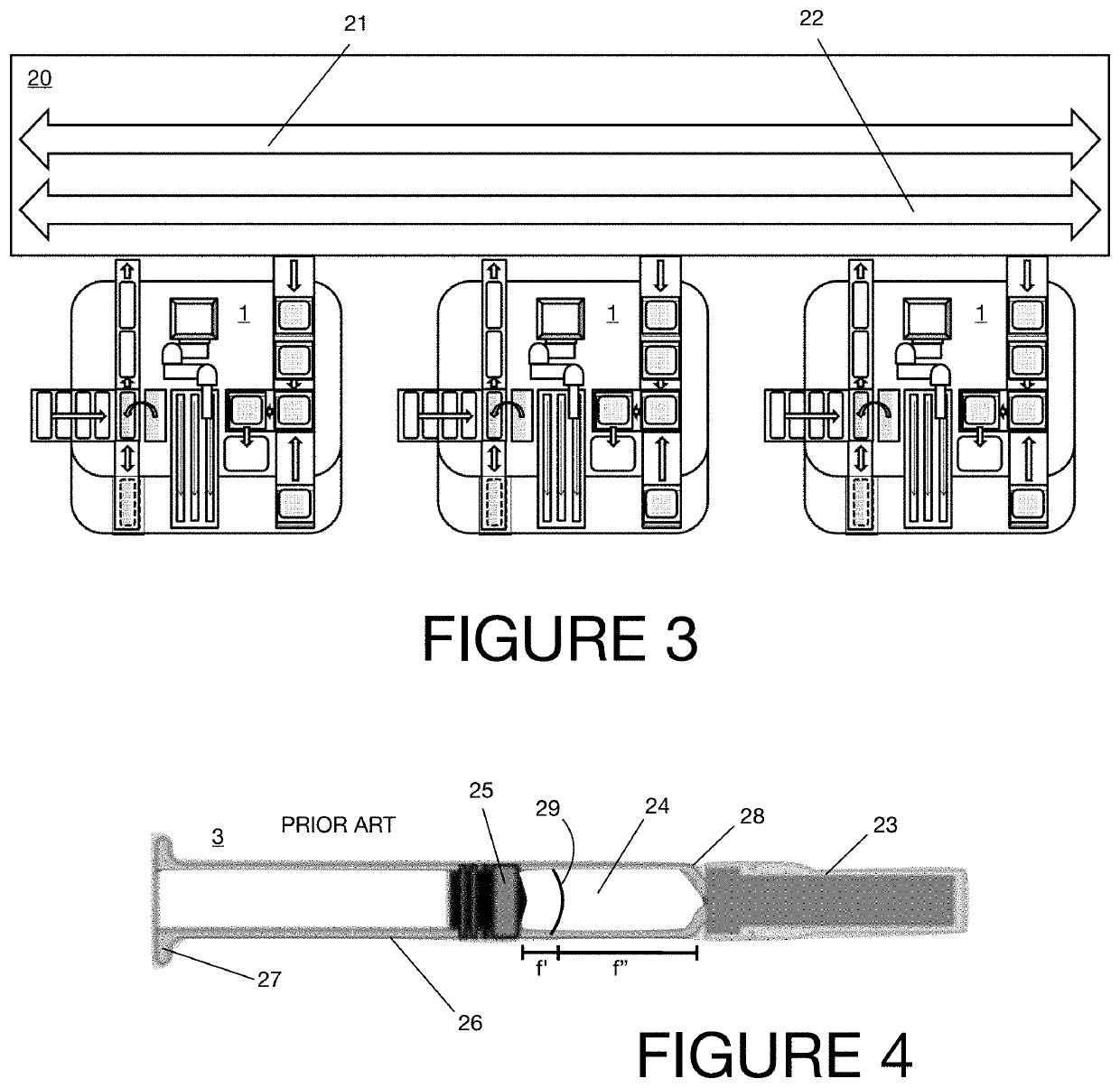
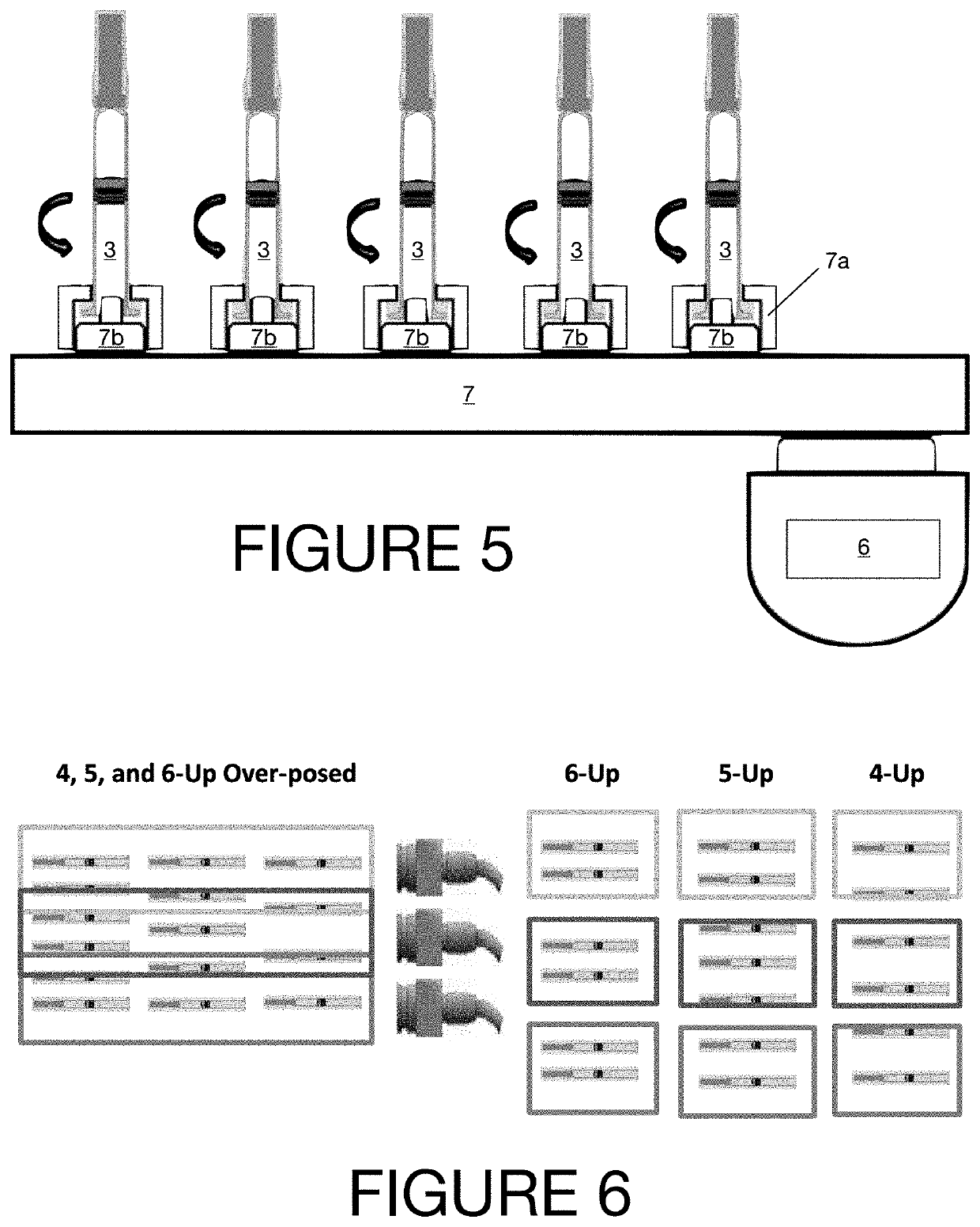
Examples
Embodiment Construction
[0037]For the purpose of this description the following terms will be used throughout the description and should be construed and have the below-explained definitions.
[0038]“Deep learning” is part of a broader family of machine learning methods based on artificial neural networks. Learning can be supervised, semi-supervised or unsupervised. Artificial Neural Networks (ANNs) were inspired by information processing and distributed communication nodes in biological systems. Deep learning architectures have been applied to fields including computer vision, speech recognition, natural language processing, audio recognition, social network filtering, machine translation, bioinformatics, drug design, medical image analysis, and material inspection, where they have produced results comparable to and in some cases superior to human experts.
[0039]“Hardware” is the parts of a computer system, such as the circuit boards, chassis, processors, controllers, enclosures, peripherals, and cables amon...
PUM
| Property | Measurement | Unit |
|---|---|---|
| area | aaaaa | aaaaa |
| angle | aaaaa | aaaaa |
| distance | aaaaa | aaaaa |
Abstract
Description
Claims
Application Information
 Login to View More