
Porous Separator and Electrochemical Device Including the Same
a technology of porous separator and electrochemical device, which is applied in the manufacture of hybrid/edl cells, cell components, cell components, etc., can solve the problems of thermal runaway or perforation of separator, short-circuit between a positive electrode and a negative electrode, and surface coating defects, etc., to save cost, reduce weight, and small thickness
- Summary
- Abstract
- Description
- Claims
- Application Information
AI Technical Summary
Benefits of technology
Problems solved by technology
Method used
Image

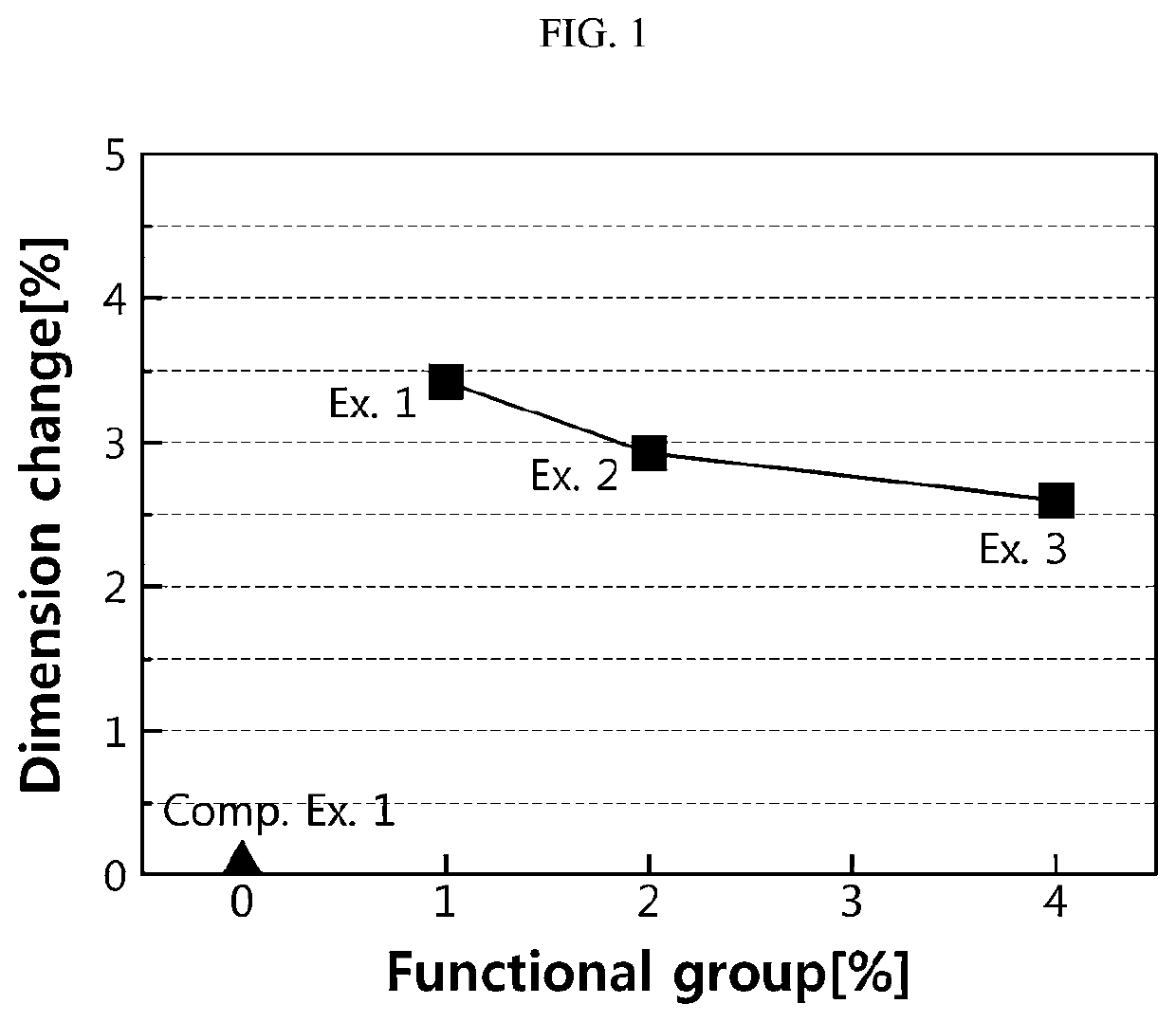
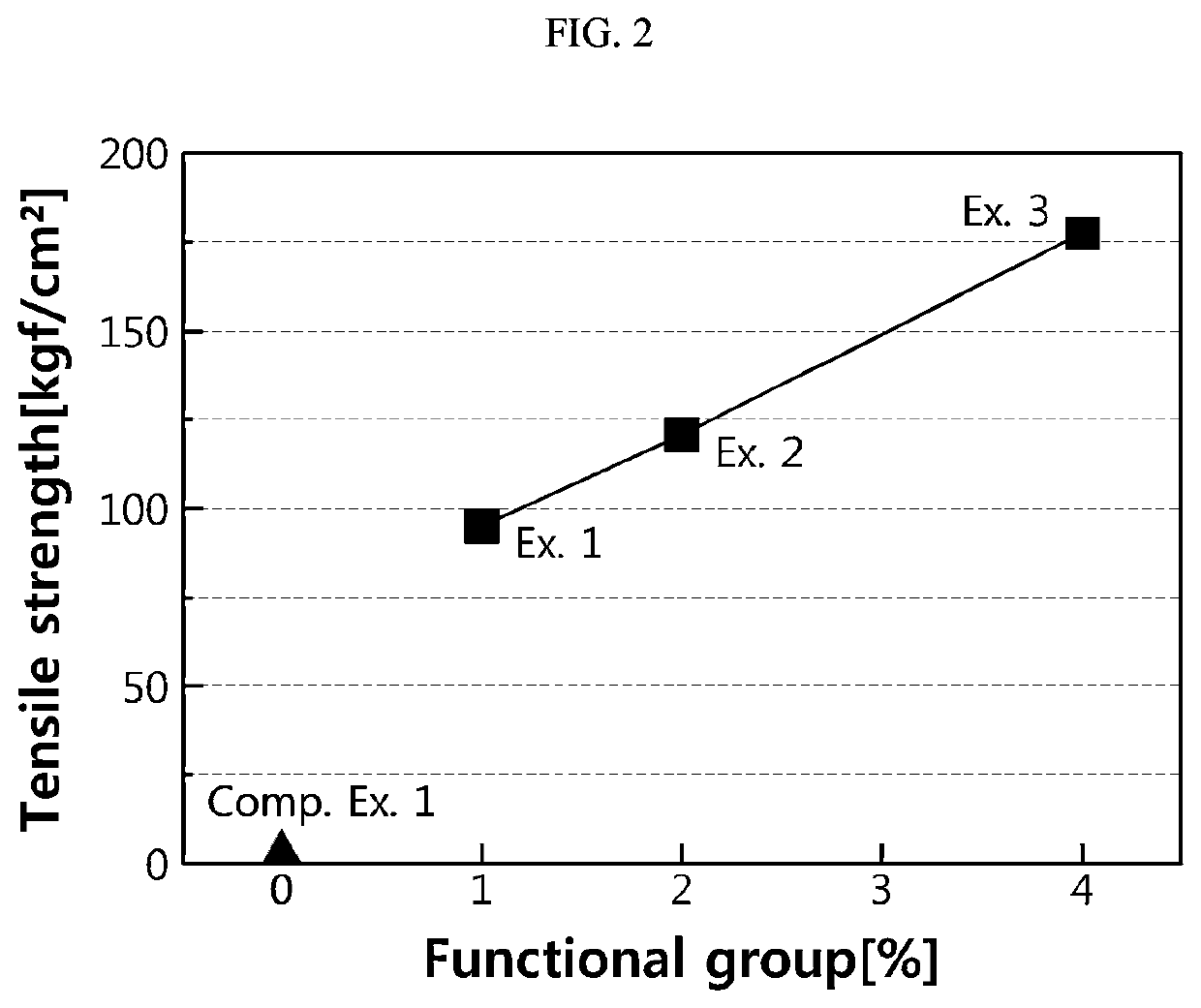
Examples
example 2
[0103]A modified binder polymer including polyvinylidene fluoride (homo-PVdF) substituted with 2% of a carboxyl (COOH)-containing monomer, based on 100 wt % of the modified PVdF-based binder polymer, was prepared. Particularly, a porous separator and a lithium secondary battery were obtained in the same manner as Example 1, except that the modified PVdF-based binder polymer having a weight average molecular weight of 600,000 g / mol was used.
example 3
[0104]A modified binder polymer including polyvinylidene fluoride (homo-PVdF) substituted with 4% of a carboxyl (COOH)-containing monomer, based on 100 wt % of the modified PVdF-based binder polymer, was prepared. Particularly, a porous separator and a lithium secondary battery were obtained in the same manner as Example 1, except that the modified PVdF-based binder polymer having a weight average molecular weight of 600,000 g / mol was used.
PUM
| Property | Measurement | Unit |
|---|---|---|
| dielectric constant | aaaaa | aaaaa |
| melting point | aaaaa | aaaaa |
| melting point | aaaaa | aaaaa |
Abstract
Description
Claims
Application Information
 Login to View More