
System and method for mining surprising temporal patterns
a temporal pattern and temporal pattern technology, applied in the field of data processing, can solve the problems of high difficulty in overcoming consumer targeting inefficiencies, inability to build large detailed databases that could chronicle thousands or even millions of consumer transactions, and inability to extract useful information from large databases
- Summary
- Abstract
- Description
- Claims
- Application Information
AI Technical Summary
Benefits of technology
Problems solved by technology
Method used
Image

Examples
Embodiment Construction
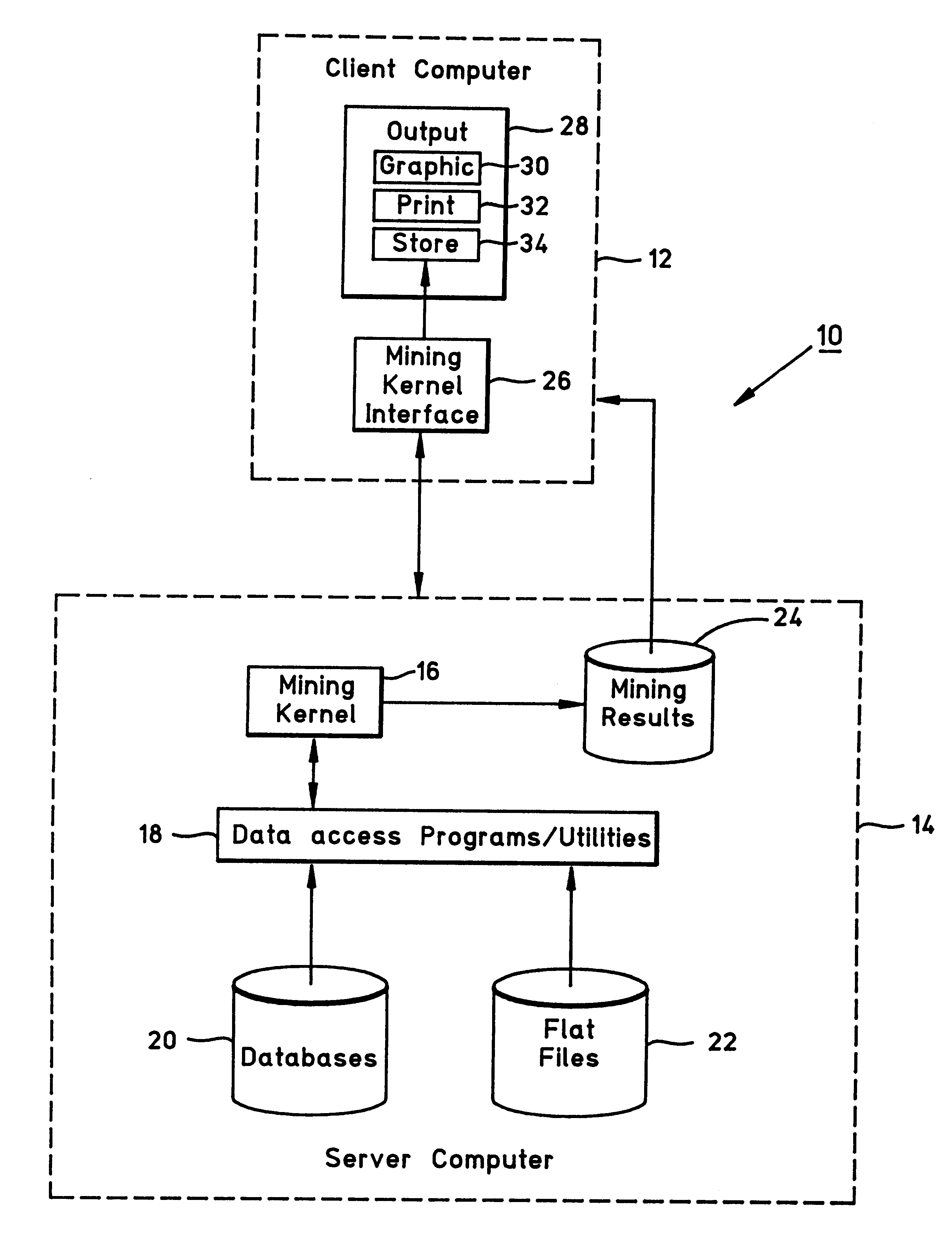
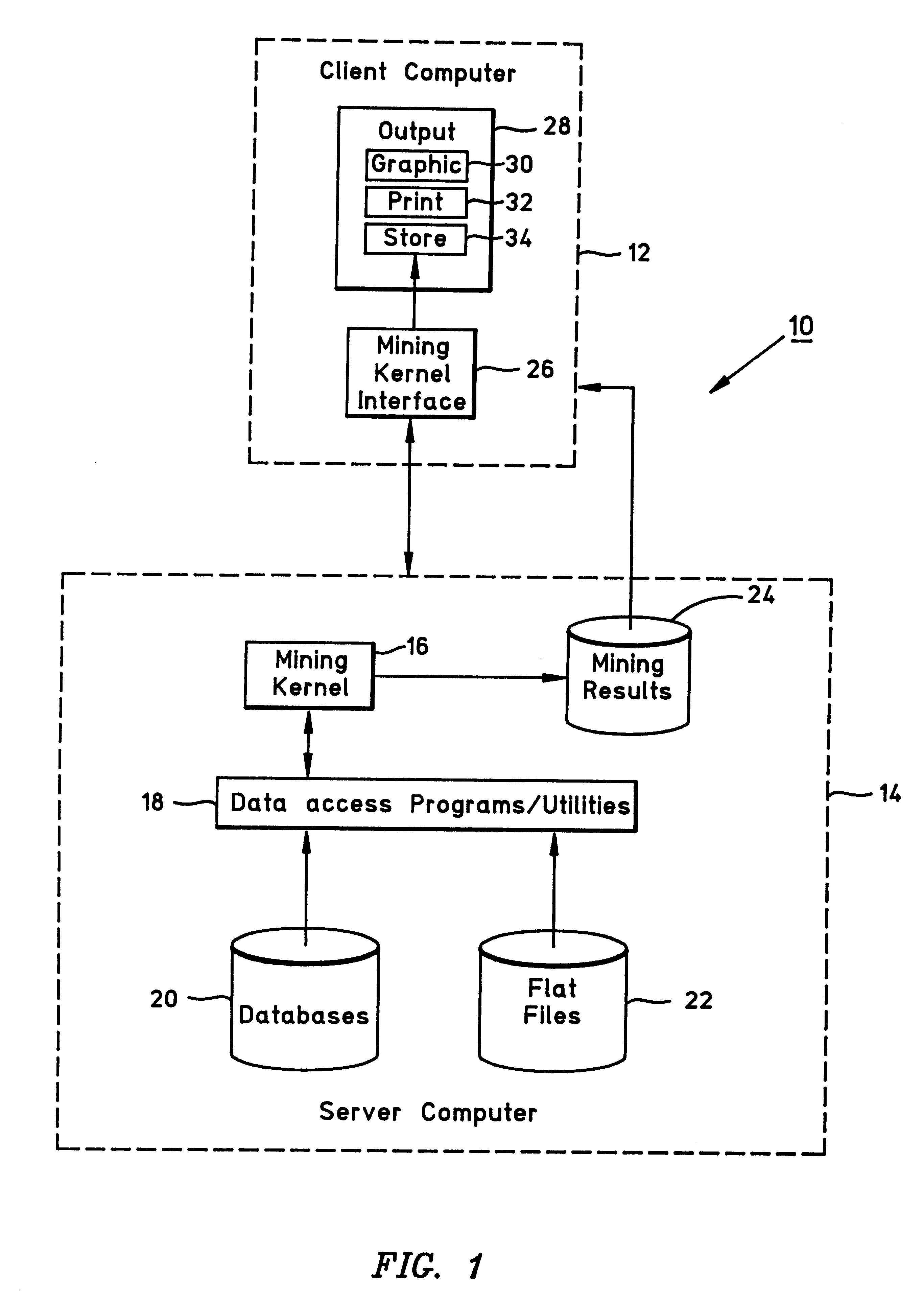
FIG. 1 illustrates a computer system 10 which may be used for mining databases and in particular may be used for discovering predictive association rules in accordance with the invention. In the particular computer architecture shown, the system 10 may include one or more digital processing apparatus, such as a client computer 12 and a server computer 14. In a preferred embodiment, the server computer may be a mainframe computer made by IBM Corp. of Armonk, N.Y., and use a multitasking operating system sold as that under the trademark of MVS. The server computer 14 may also be a Unix computer, an OS / 2 server, a Windows NT server or an IBM RS / 6000 250 workstation with 128 Mb of main memory using the AIX 3.2.5 operating system. The server computer 14 may include a database system, such as DB2 or ORACLE or it may have data on files on some other data storage medium, such as a disk (e.g., a 2 GB SCSI 3.5" drive or a tape. As will be apparent, other architectures may also be used. For ex...
PUM
 Login to View More
 Abstract
Description
Claims
Application Information
 Login to View More