
Method of fabrication of an infrared radiation detector and infrared detector device
a technology of infrared radiation and detector device, which is applied in the direction of sustainable manufacturing/processing, instruments, optical radiation measurement, etc., can solve the problem of incompatibility of bulk micro-machining with standard ic fabrication techniques
- Summary
- Abstract
- Description
- Claims
- Application Information
AI Technical Summary
Benefits of technology
Problems solved by technology
Method used
Image

Examples
Embodiment Construction
In an aspect of the present invention, a method of fabricating an infrared bolometer is described, which has an improved thermal insulation behaviour. Furthermore, a bolometer fabricated according to the method of the invention is described.
In order to evaluate a material for the realisation of a bolometer, it is necessary to understand how its properties influence the responsivity and the noise of the bolometer itself.
According to the invention, use is made of an alloy comprising polycrystalline Silicon Germanium (poly-SiGe).
This material has lower thermal conductance than polycrystalline silicon, and is compatible with the standard IC technology. It also has electrical and mechanical properties which are superior to those of polycrystalline silicon.
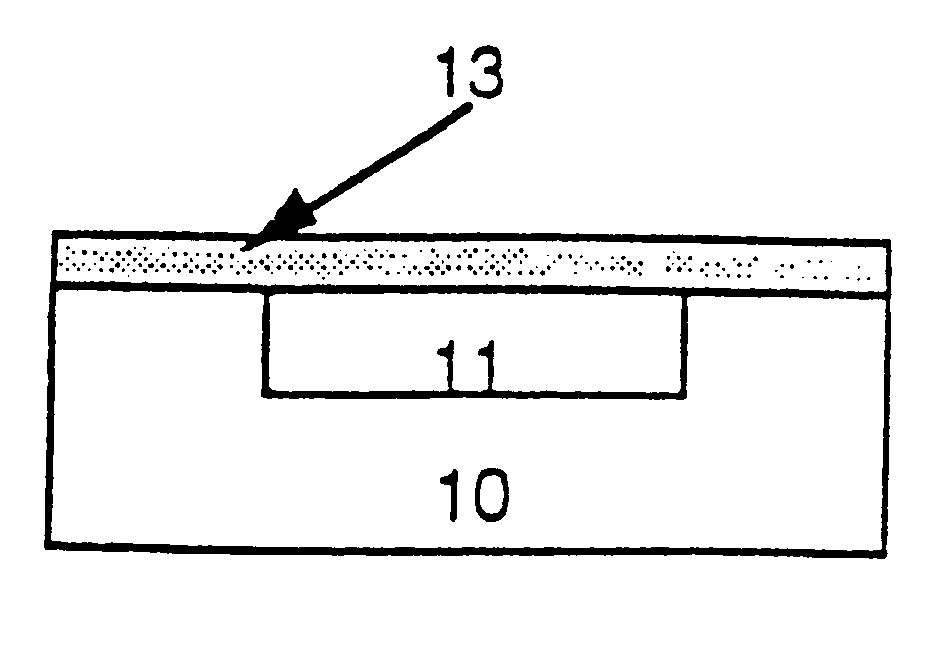
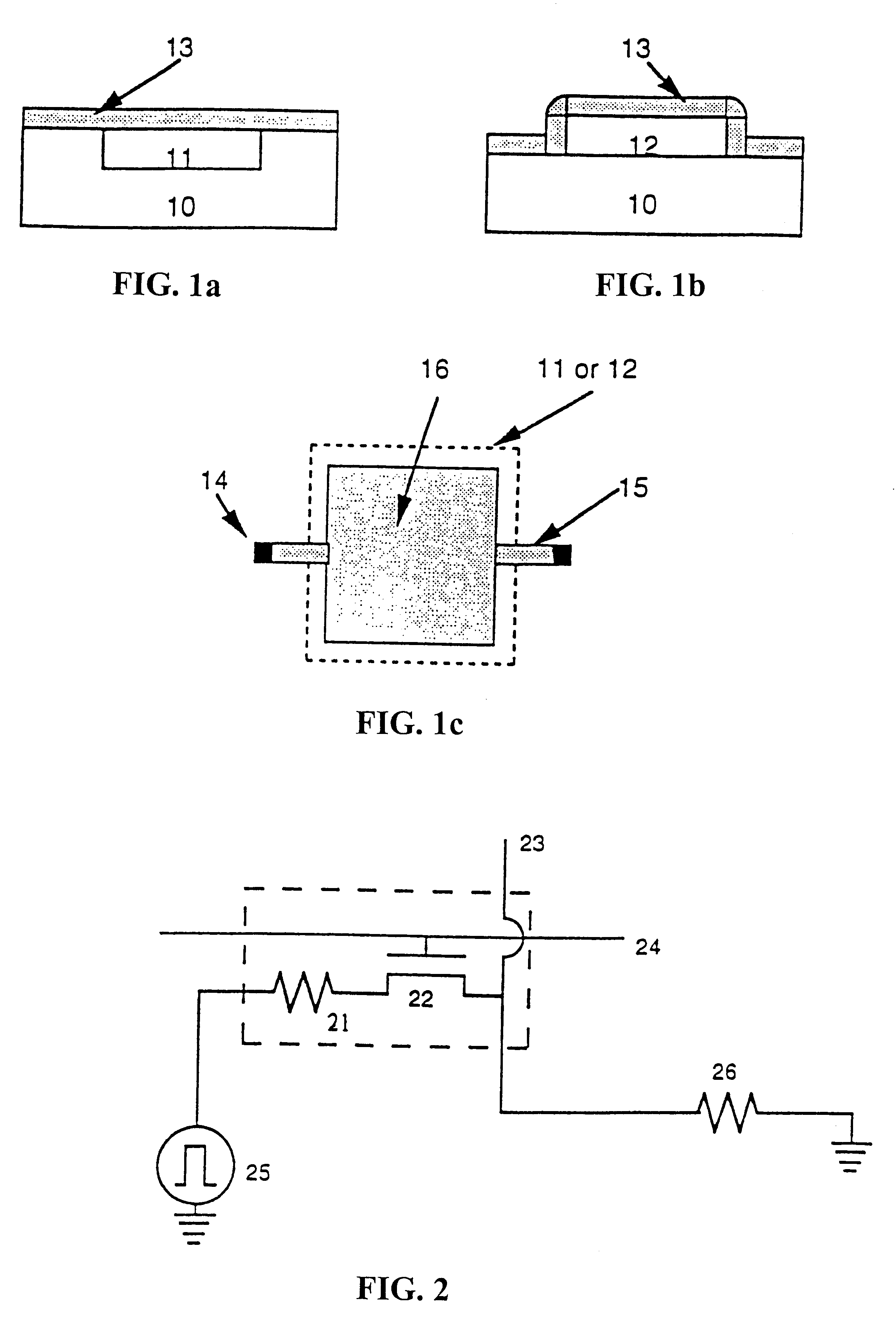
Several possible structures of bolometers are shown in the FIGS. 1a, 1b, and 1c.
FIG. 1a represents a bolometer wherein porous silicon regions 11 have been formed on a substrate 10, while FIG. 1b represents the deposition and the pattern...
PUM
| Property | Measurement | Unit |
|---|---|---|
| Pressure | aaaaa | aaaaa |
| Area | aaaaa | aaaaa |
| Sensitivity | aaaaa | aaaaa |
Abstract
Description
Claims
Application Information
 Login to View More