
Coolant flow field design for fuel cell stacks
a fuel cell and flow field technology, applied in the field of pem fuel cells, can solve the problems of over-cooling some areas of the fuel cell while under-cooling other areas, and achieve the effects of reducing the amount of energy required, increasing the efficiency of the fuel cell stack, and reducing the required pumping power
- Summary
- Abstract
- Description
- Claims
- Application Information
AI Technical Summary
Benefits of technology
Problems solved by technology
Method used
Image

Examples
Embodiment Construction
[0022]The following description of the preferred embodiments is merely exemplary in nature and is in no way intended to limit the invention, its application, or uses.
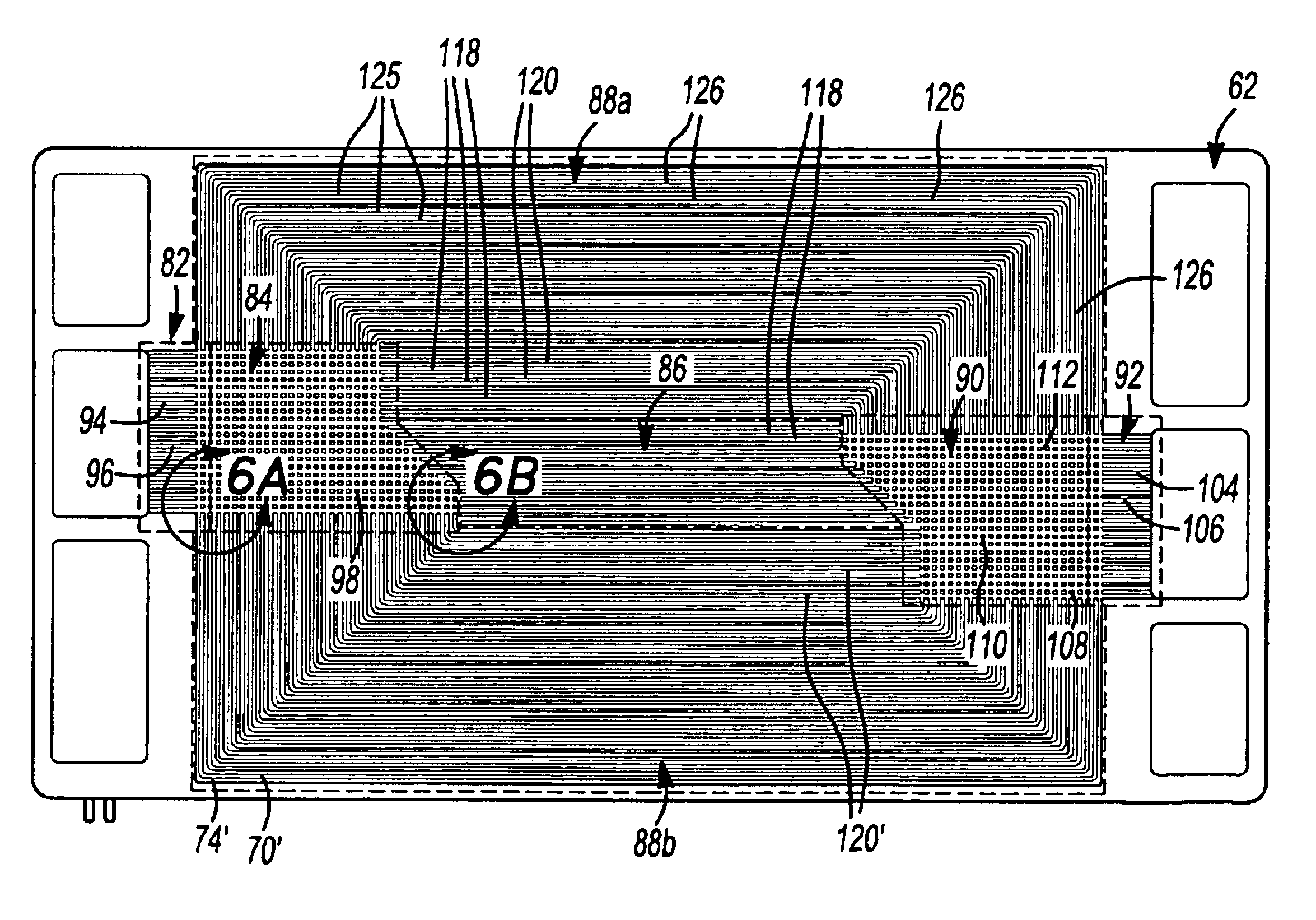
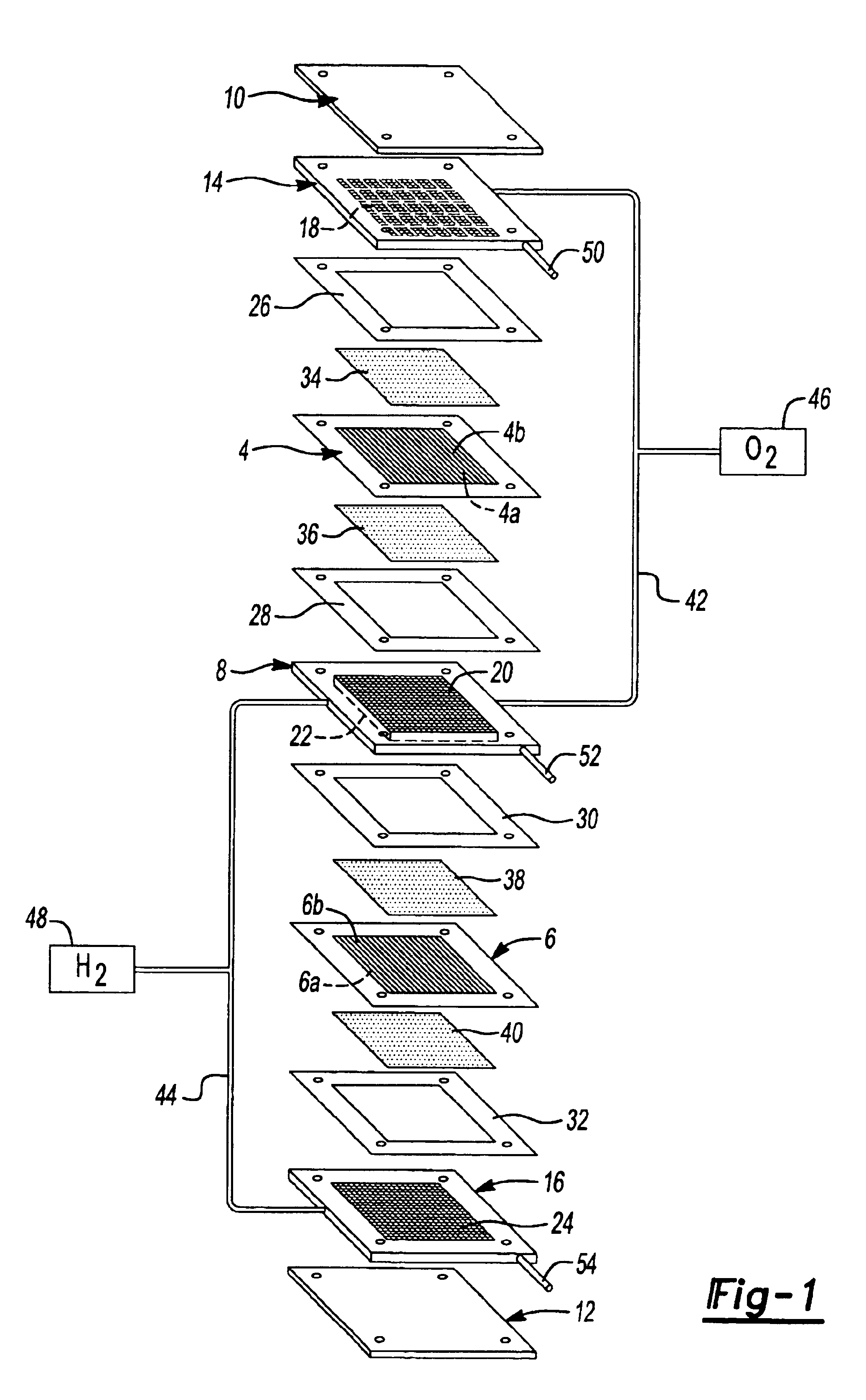
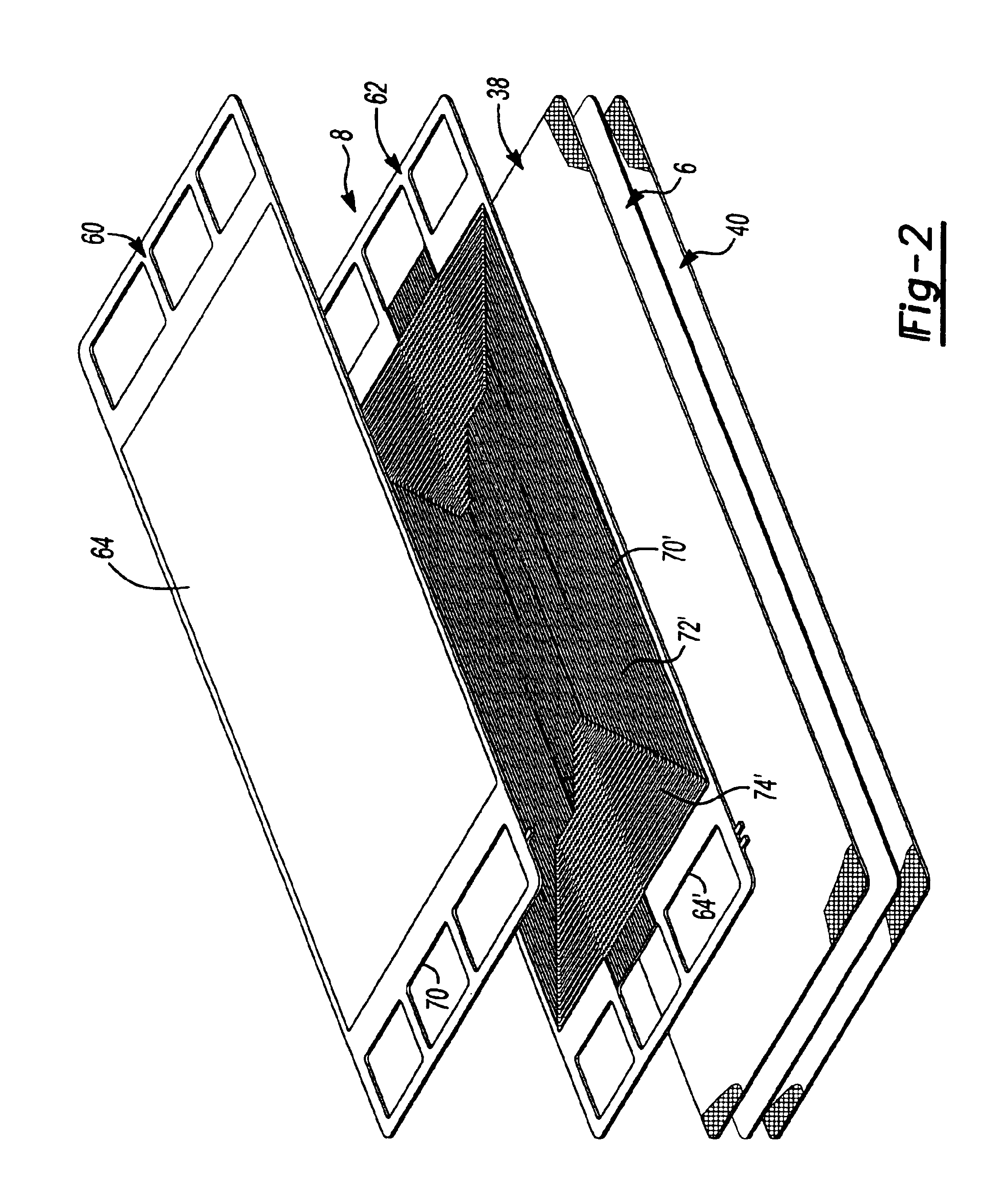
[0023]Before further describing the invention, it is useful to understand an exemplary fuel cell system within which the invention operates. Specifically, FIG. 1 schematically depicts a PEM fuel cell stack having a pair of membrane-electrode assemblies (MEAs) 4 and 6 separated from each other by a non-porous, electrically-conductive, liquid-cooled bipolar plate assembly 8. Each MEA 4 and 6 has a corresponding cathode face 4a, 6a and an anode face 4b and 6b. MEAs 4 and 6 and bipolar plate assembly 8 are stacked together between non-porous, electrically-conductive, liquid-cooled monopolar end plate assembly 14 and 16. Steel clamping plates 10 and 12 are provided for enclosing the exemplary fuel cell stack. Connectors (not shown) are attached to clamping plates 10 and 12 to provide positive and negative terminals for the f...
PUM
 Login to View More
 Abstract
Description
Claims
Application Information
 Login to View More