[0013]An object of the present invention is to provide a generator of time-variable magnetic fields of a magnetic resonance device, and a magnetic resonance device with such a generator, in which a device volume that surrounds a predetermined space for
exposure of an examination subject can be kept to optimally small dimensions.
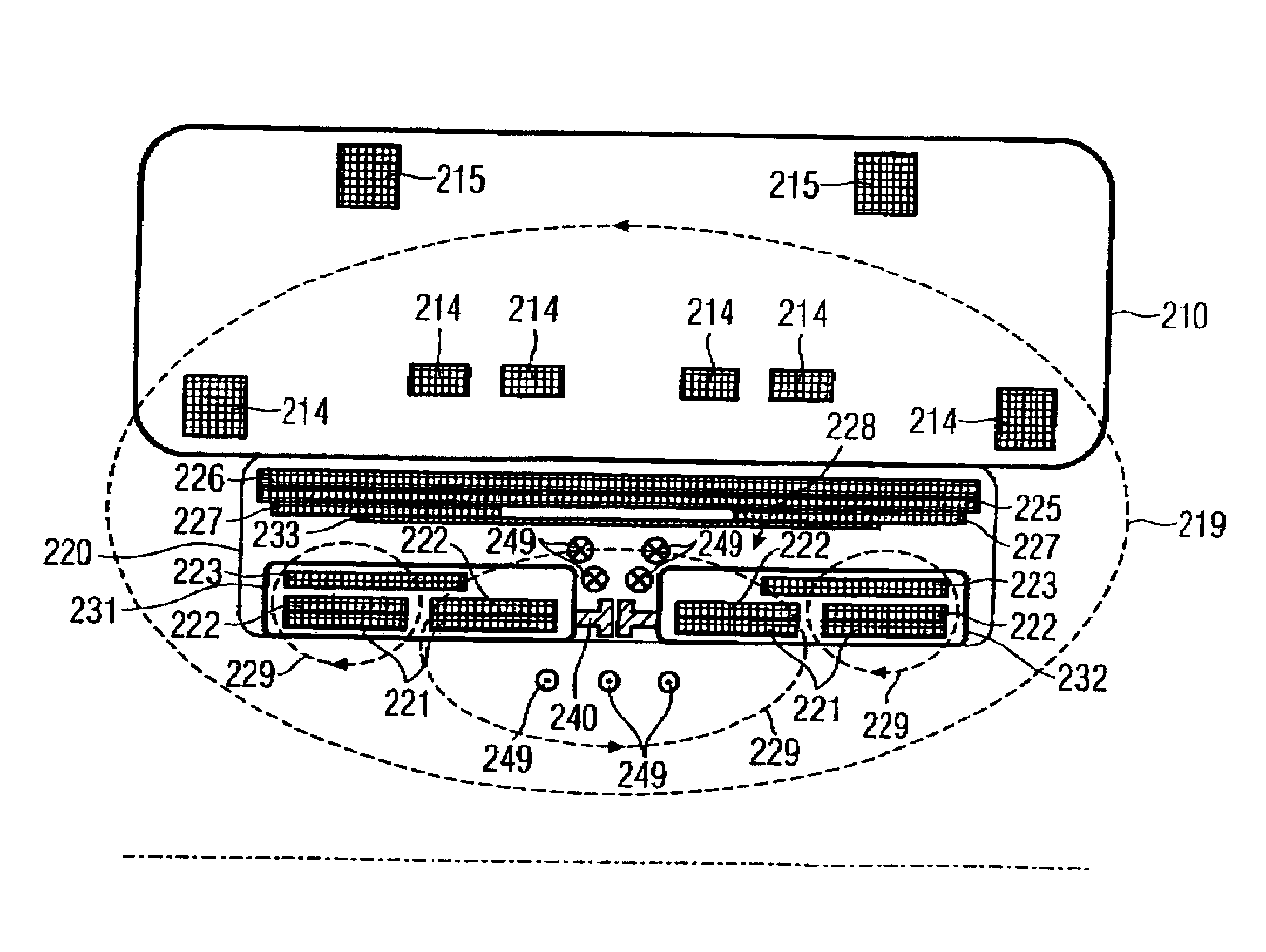
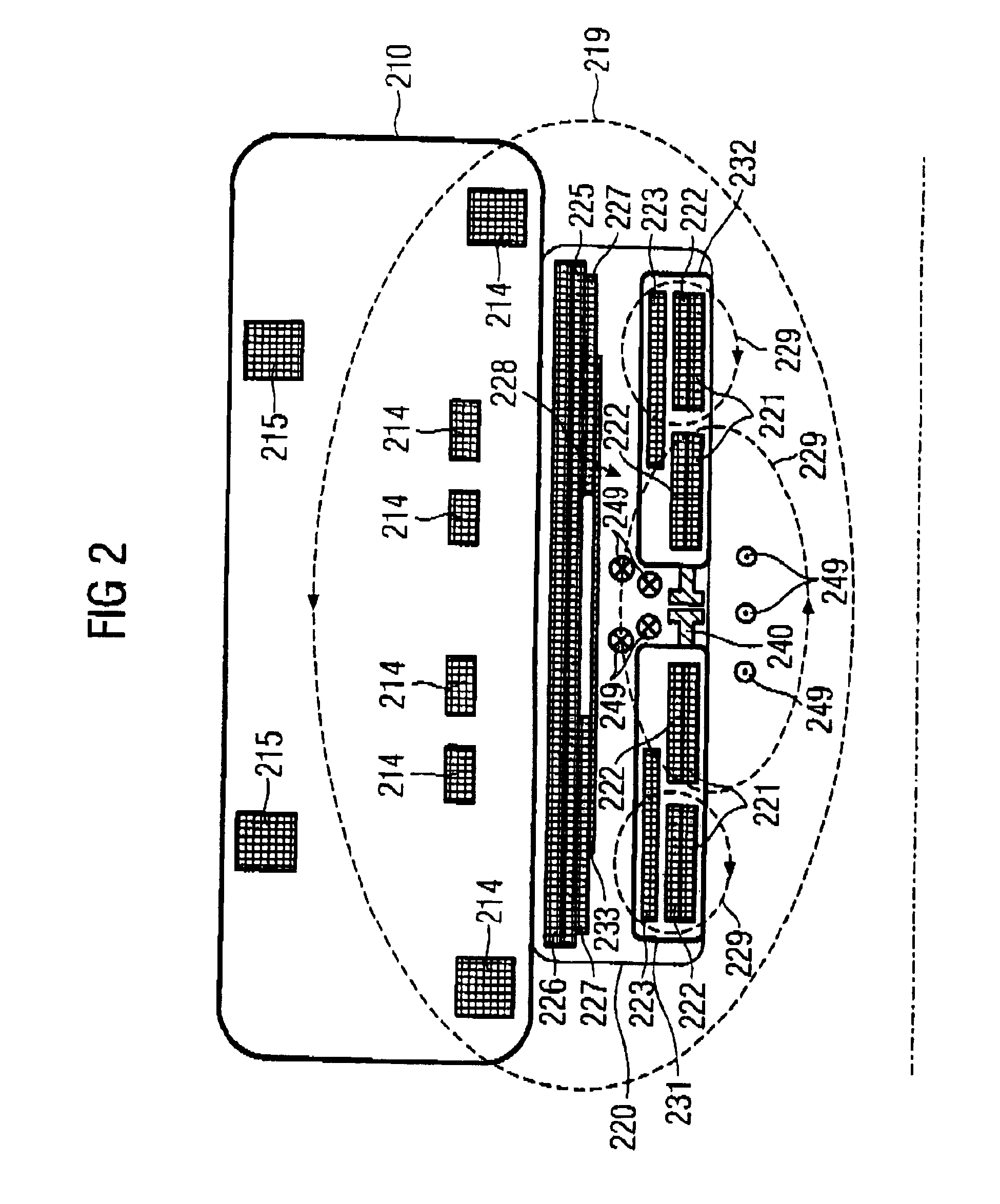
[0015]Due to the inventive design of the generator, a region (not provided in conventional solutions) for return of the radio-frequency field (generated by the radio-frequency
antenna element) is provided as a field return space within the gradient coil
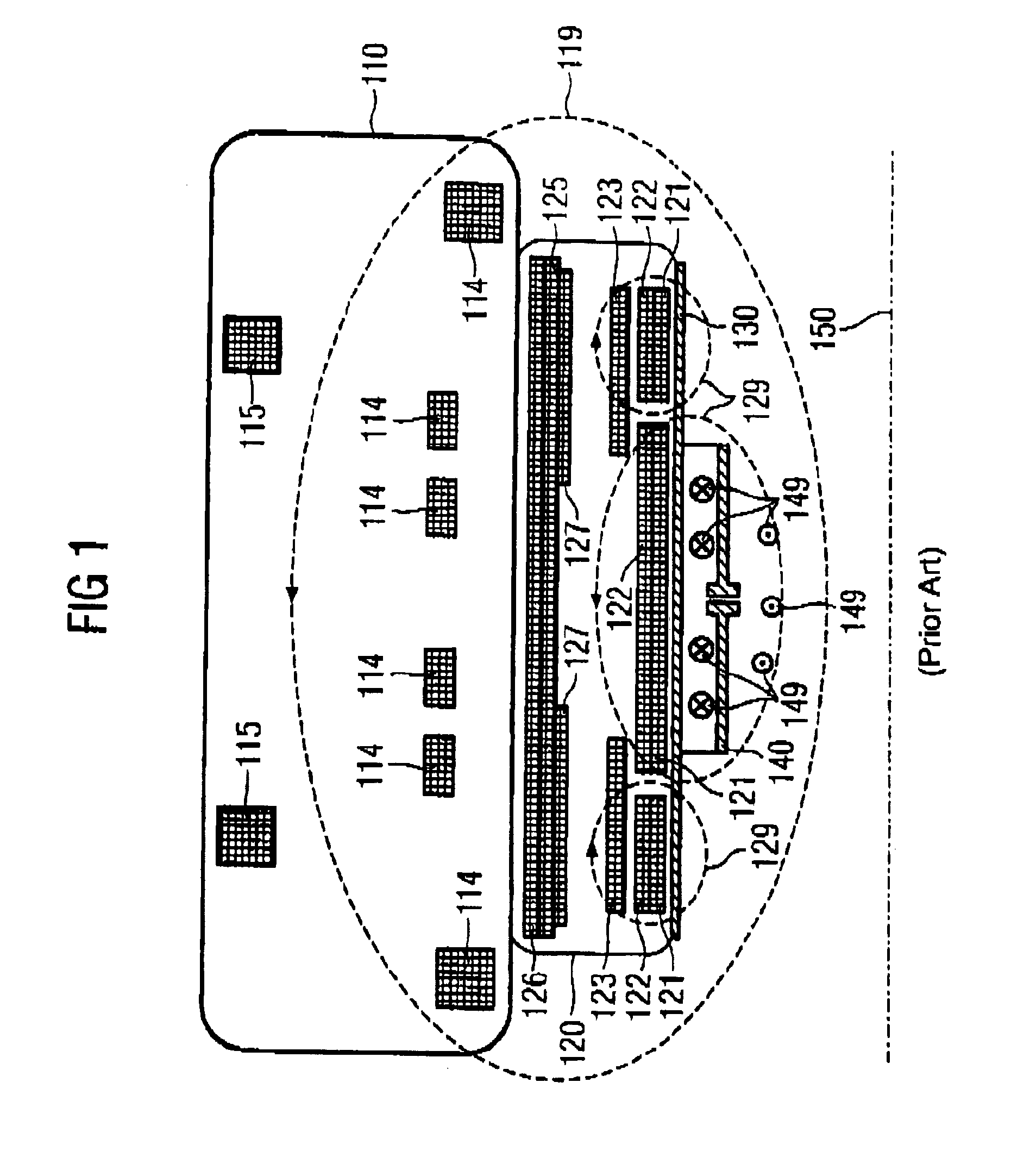
system having the gradient coil. In contrast to the comparable conventional solutions, the structural combination of the gradient coil system and the radio-frequency antenna can be designed with a smaller external
diameter, given a consistent internal
diameter, or with a larger internal diameter given a consistent external diameter. In the first case, the basic field
magnet of the magnetic resonance device can be dimensioned smaller and thus substantially less costly. In the second case, given an unchanged basic field
magnet a larger examination subject acceptance space is achieved that, among other things, increases the
patient comfort. These advantages of the invention result, among other things, from the arrangement of the RF antenna element in the middle region, meaning between the first and second RF shields, and thus the space occupied by the gradient coil is optimally (doubly) used.
[0016]A further
advantage of the use of a field return space integrated (preferably sealed) in the generator is that the
RF field, at least in this region, is uninfluenced by external activities. This allows the
RF field to be monitored and, using the monitoring result, more precisely generated. The third RF shield preferably is disposed not only in the region of the antenna element, and thus in the region of the strongest
RF field, but also extends on both sides in the axial direction in regions that are radially disposed outside of the gradient coils surrounded by the RF shields.
[0017]In an advantageous embodiment of the generator, the radio-frequency antenna element connects the first and second radio-frequency shields in terms of radio-frequency, such that the first and the second radio-frequency shields, together with the radio-frequency antenna element, form a radio-frequency antenna. This has the
advantage that substantial conductor sections of the RF antenna can be formed by conductors (the RF shields) that are anyway present for the gradient coil shielding. This leads to a more compact design of the generator due to the high degree of structural integration of the components used, especially the double use of the RF shields. The connection in terms of radio-frequency can be galvanic or non-galvanic, since in both cases the currents generating the RF field propagate essentially identically in the RF shields. The antenna element typically has a feed-in for an RF
signal for RF field generation and / or a read-out for a received MR
signal.
[0018]In a further advantageous embodiment, the first and second radio-frequency shields are each connected to the third radio-frequency shield via a connection likewise functioning as a radio-frequency shield, such that the field return space is shielded from radio-frequency up to the middle region. This has the
advantage that, in the axial direction, electrical conductors can be displaced lateral to the field return space that also (without further measures vis-à-vis the RF field) do not interact with the RF field. Thus, for example, the gradient coil and a shielding coil associated with it can be connected in series without an
inductance in the electrically connected conductors. In special embodiments, the radio-frequency connection of the RF shields can be effected by, for example, the first and / or second RF shield being arranged at least in a region near to the third RF shield, or by the first and / or second RF shield being galvanically connected with the third RF shield via a further RF shield.


 Login to View More
  Login to View More