
Variable geometry turbocharger, vane ring assembly with retaining member
a turbocharger and variable geometry technology, applied in the direction of machines/engines, manufacturing tools, liquid fuel engines, etc., can solve the problems of affecting the performance of the turbocharger, so as to reduce the potential for vanes, maintain efficiency, and cost-effective
- Summary
- Abstract
- Description
- Claims
- Application Information
AI Technical Summary
Benefits of technology
Problems solved by technology
Method used
Image

Examples
Embodiment Construction
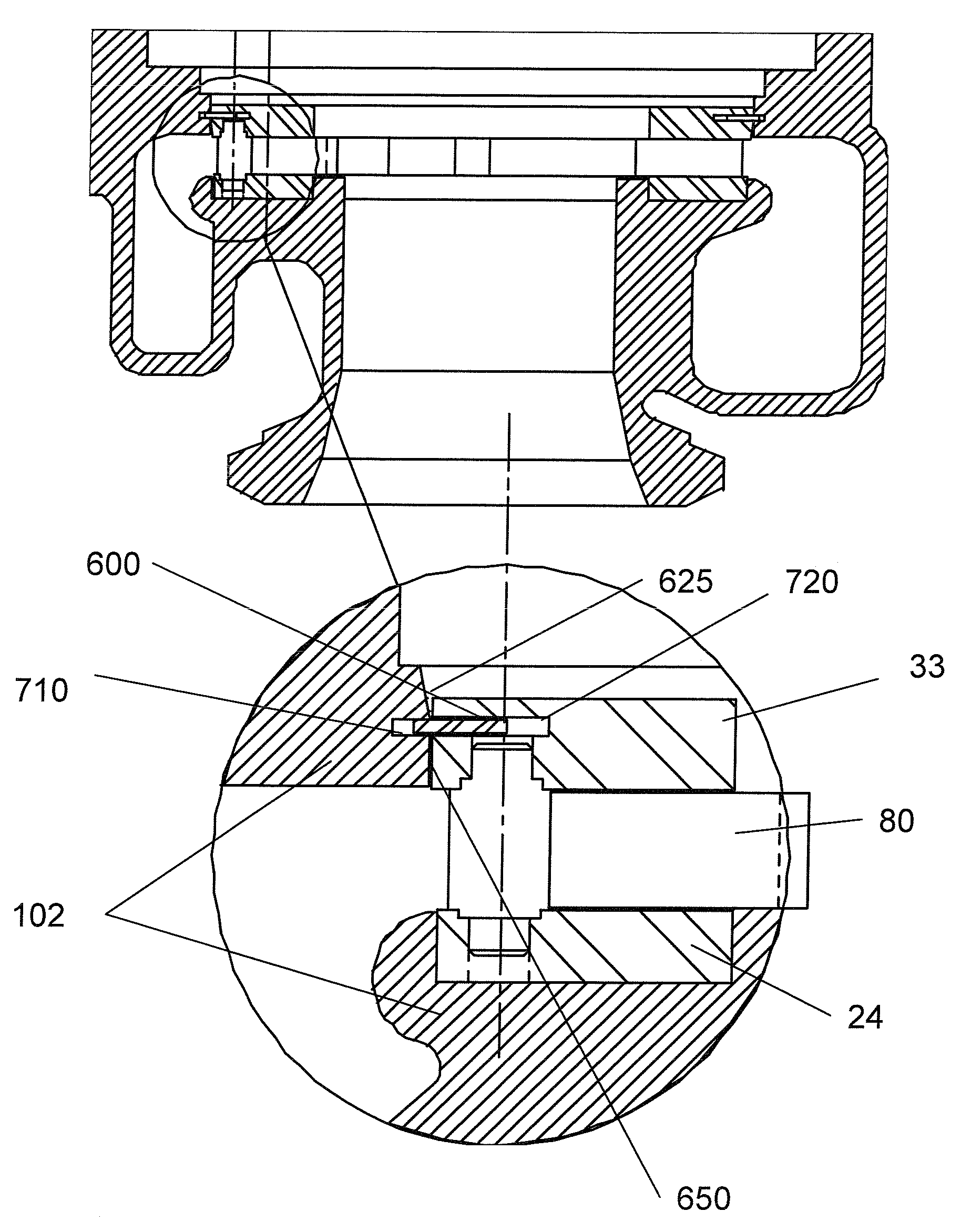
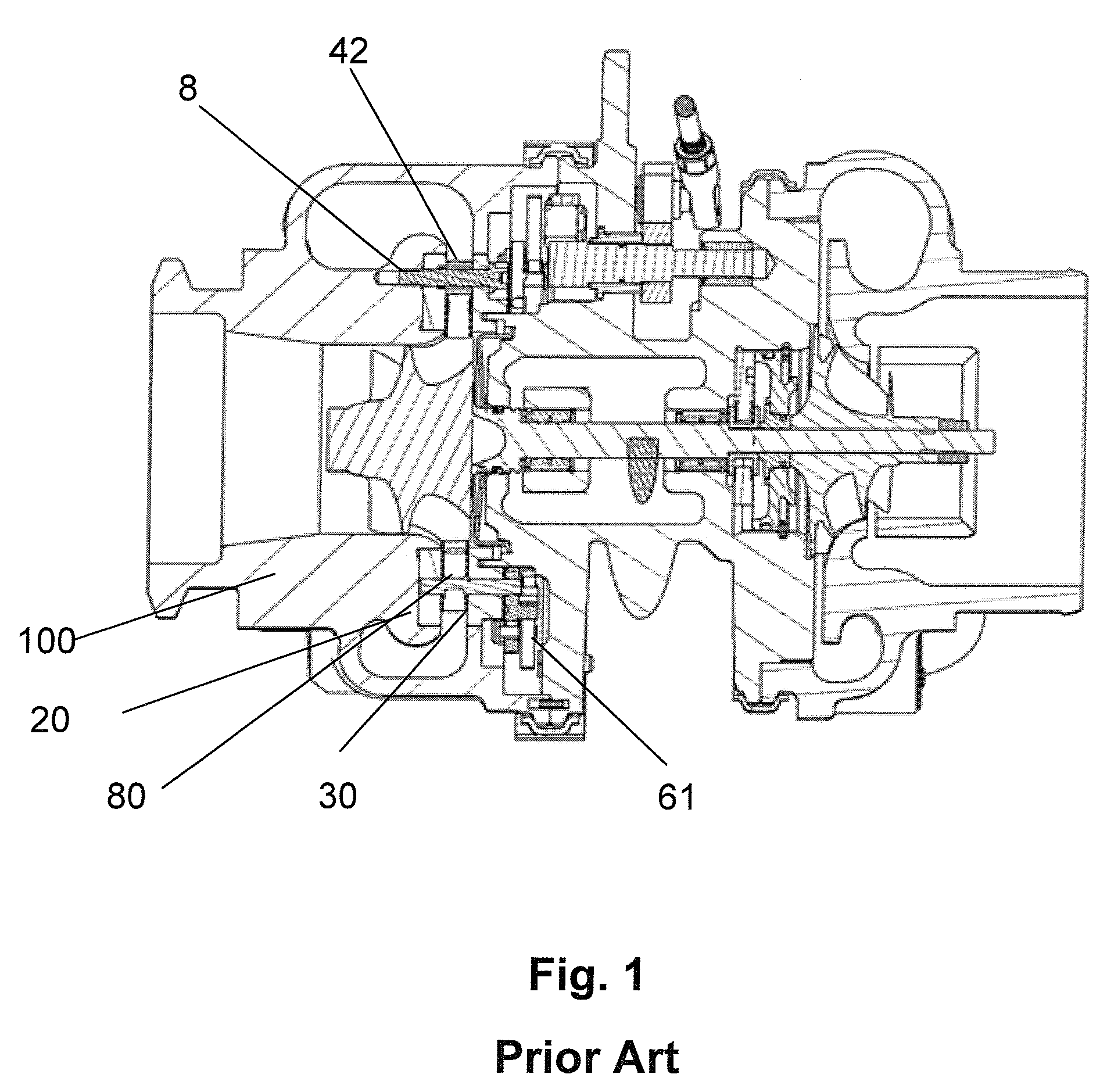
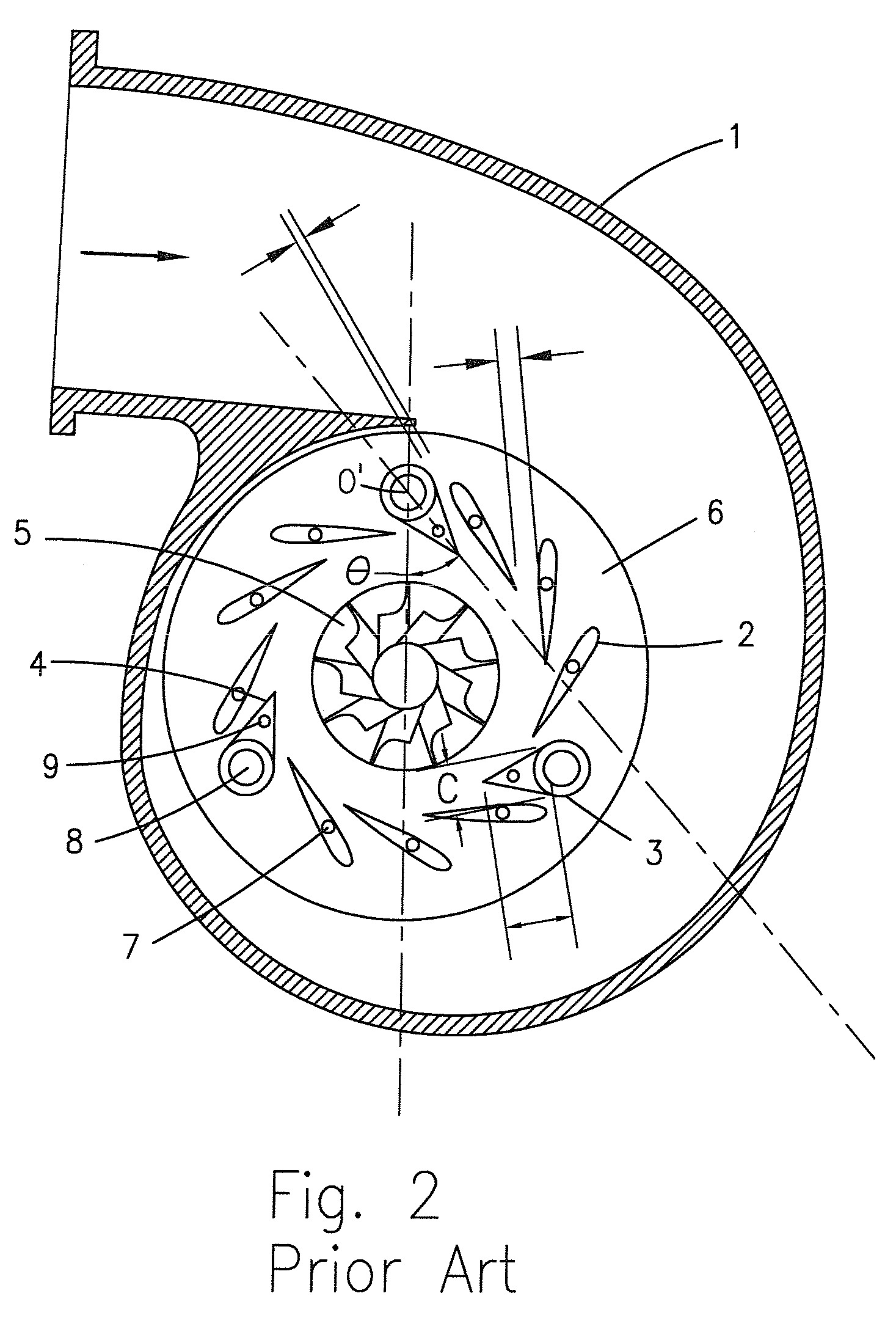
[0050]A turbocharger has five major component groups: A compressor housing; a turbine housing; a center section, incorporating the bearing system and providing support and location for the turbine housing and compressor housing; and the compressor and turbine wheels. Within the turbine housing assembly there exists the upper vane ring (30) supporting a plurality of VTG vanes (80) which are sandwiched between the upper vane ring (30) and the lower vane ring (20) such that a spacer (49, 50, 59) locates the vanes rings in the axial relationship with each other with the distance between each vane ring set by the combination of: in the case of a stepped spacer, the distance between the steps on the spacer (50) and the counterbores in each of the upper and lower vane rings. In the case of a non-stepped spacer (49) the distance between end-faces of the spacers and the faces of the lower and upper vane rings.
[0051]To control the width of the vane space, which is the distance of the lower va...
PUM
| Property | Measurement | Unit |
|---|---|---|
| temperature | aaaaa | aaaaa |
| temperature | aaaaa | aaaaa |
| outer diameter | aaaaa | aaaaa |
Abstract
Description
Claims
Application Information
 Login to View More