
Authentication system for gaming machines
a gaming machine and authentication system technology, applied in the field of authentication systems for gaming machines, can solve the problem of reducing the boot time of the gaming machine, and achieve the effect of small siz
- Summary
- Abstract
- Description
- Claims
- Application Information
AI Technical Summary
Benefits of technology
Problems solved by technology
Method used
Image

Examples
Embodiment Construction
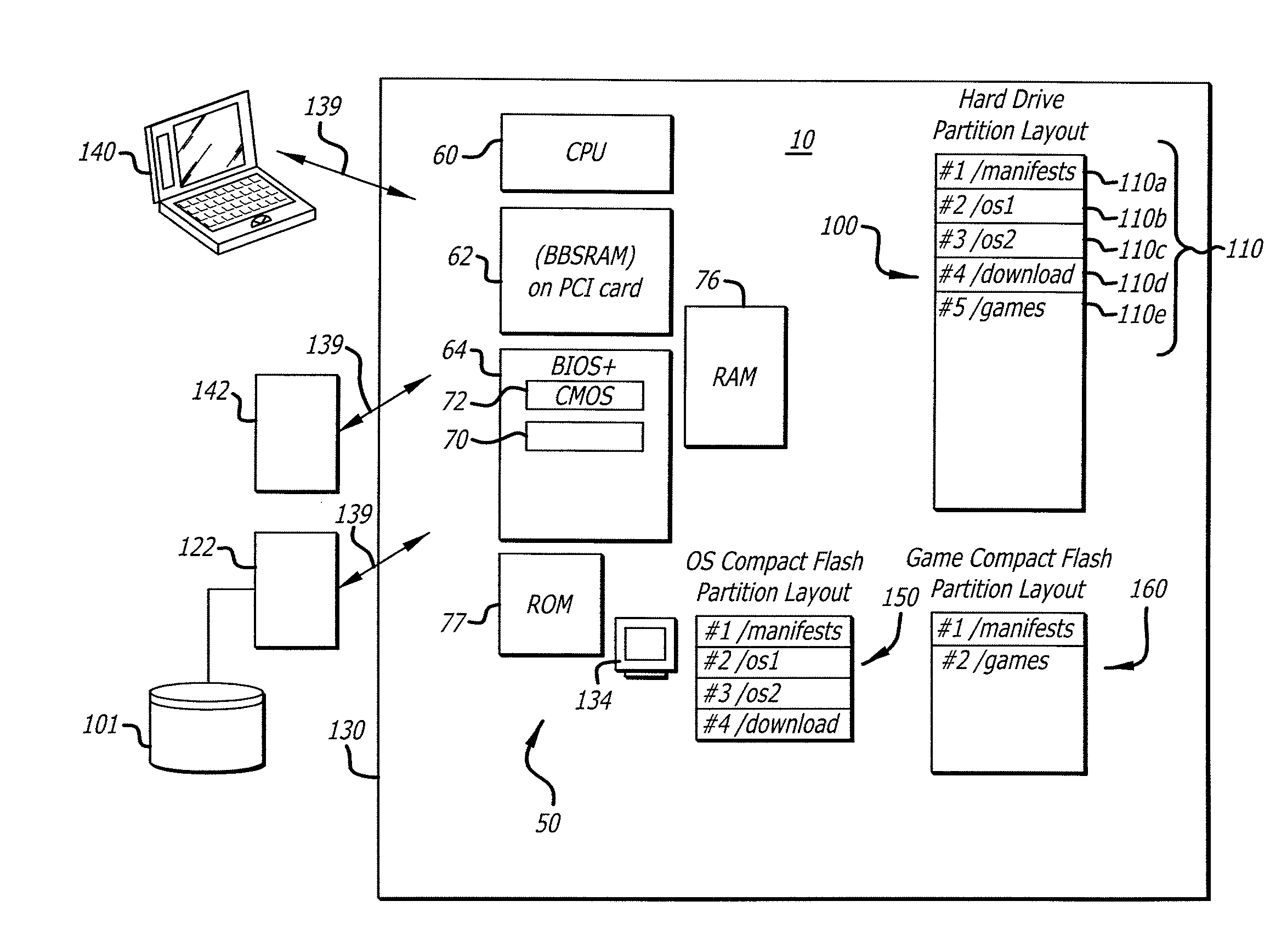
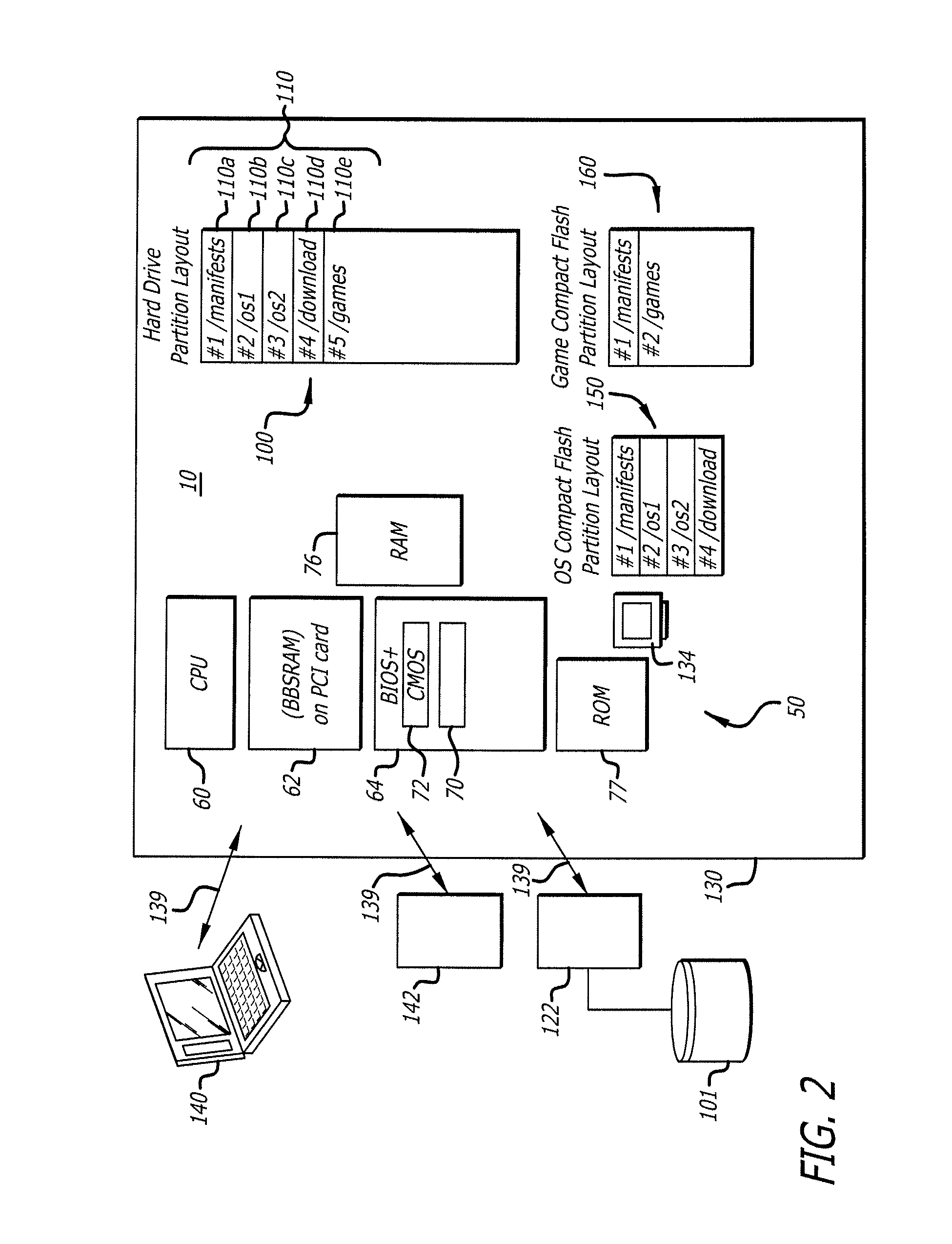
[0036]In one embodiment, a system and method that uses digital signature technology to authenticate the contents of one or more manifests on a digital storage device is provided. Each manifest includes a list of file records, wherein each record contains the name of a file stored on the hard disk device, and a hash value derived from the contents of the file of a device. At boot time, the gaming machine first authenticates the contents of the manifest and then verifies the contents of the files using the hash value stored in the manifest. By way of example, but not by way of limitation, files are verified using a SHA1 as they are needed during the boot up of the operating system and throughout normal operation. This method reduces the boot time of, for example, of a gaming machine and eliminates the need to check digital signatures for each individual file or over the entire contents of a non-secure media.
[0037]Referring now to the drawings, wherein like references numerals denote l...
PUM
 Login to View More
 Abstract
Description
Claims
Application Information
 Login to View More