Supercharge Your Innovation With Domain-Expert AI Agents!

Conforming bone stabilization receiver

a bone stabilization receiver and bone technology, applied in the field of spine stabilization, can solve the problems of leg pain, loss of muscle control, leg pain, persistent or disabling back pain,

Active Publication Date: 2015-08-25
GLOBUS MEDICAL INC
View PDF88 Cites 10 Cited by
  • Summary
  • Abstract
  • Description
  • Claims
  • Application Information

AI Technical Summary

Benefits of technology

The device provides stable spinal stabilization with preserved natural motion, reducing the risk of tissue damage during surgery and minimizing stress on adjacent discs, while allowing for flexible or rigid stabilization options.

Problems solved by technology

The spinal disc may be displaced or damaged due to trauma, disease, degenerative defects, or wear over an extended period.
The mass of a herniated or slipped nucleus tissue can compress a spinal nerve, resulting in leg pain, loss of muscle control, or even paralysis.
As these overlapping laminated plies of the annulus begin to buckle and separate, either circumferential or radial annular tears may occur, which may contribute to persistent or disabling back pain.
Adjacent, ancillary spinal facet joints will also be forced into an overriding position, which may create additional back pain.
Whenever the nucleus tissue is herniated or removed by surgery, the disc space will narrow and may lose much of its normal stability.
While this treatment alleviates the pain, all discal motion is lost in the fused segment.
Ultimately, this procedure places a greater stress on the discs adjacent to the fused segment as they compensate for lack of motion, perhaps leading to premature degeneration of those adjacent discs.
Many of the current designs for prosthetic discs are large and inflexible.
In addition, prosthetic disc sizes and other parameters limit the approach a surgeon may take to implant the devices.
For example, many of these devices require an anterior implantation approach as the barriers presented by the lamina and, more importantly, the spinal cord and nerve rootlets during posterior or posterior lateral implantation is difficult to avoid.
Anterior implantation involves numerous risks during surgery.
Various organs present physical obstacles as the surgeon attempts to access the damaged disc area from the front of the patient.
These greater vessels (the aorta and vena cava) risk exposure and injury during surgery.
One risk to the patient from an anterior approach is that their organs may be inadvertently damaged during the procedure.
Another risk to the patient from an anterior approach is that their greater vessels may be injured during surgery.
Despite this advantage, a posterior approach raises other difficulties that have discouraged it use.
For instance, a posterior approach can introduce a risk of damaging the spinal cord.
One drawback to this method is that the removal of a facet joint may lead to instability of the spine.

Method used

the structure of the environmentally friendly knitted fabric provided by the present invention; figure 2 Flow chart of the yarn wrapping machine for environmentally friendly knitted fabrics and storage devices; image 3 Is the parameter map of the yarn covering machine
View more

Image

Smart Image Click on the blue labels to locate them in the text.
Viewing Examples
Smart Image
  • Conforming bone stabilization receiver
  • Conforming bone stabilization receiver
  • Conforming bone stabilization receiver

Examples

Experimental program
Comparison scheme
Effect test

Embodiment Construction

[0043]During certain surgical procedures on bones, including but not limited to the spine, it may become necessary to supplement or even entirely replace the functionality of one or more joints. Attendant with these procedures is a desire to mimic, as best as possible, a natural movement of a healthy joint. Various devices and methods are known for fixing adjacent vertebrae, one to the other, while enabling movement within constraints, such as are disclosed in U.S. Patent Application Publication Nos. 2009 / 0299411 to Laskowitz et al., 2009 / 0240285 to Friedrich et al., or 2009 / 0240286 to Friedrich et al., the contents of each of which are incorporated by reference herein in their entirety. The present invention provides a device and method which may be used alone, or in combination with such devices and methods, for providing an additional or alternative range of motion, within constraints, thereby improving a therapeutic benefit to the patient, and providing additional options for th...

the structure of the environmentally friendly knitted fabric provided by the present invention; figure 2 Flow chart of the yarn wrapping machine for environmentally friendly knitted fabrics and storage devices; image 3 Is the parameter map of the yarn covering machine
Login to View More

PUM

No PUM Login to View More

Abstract

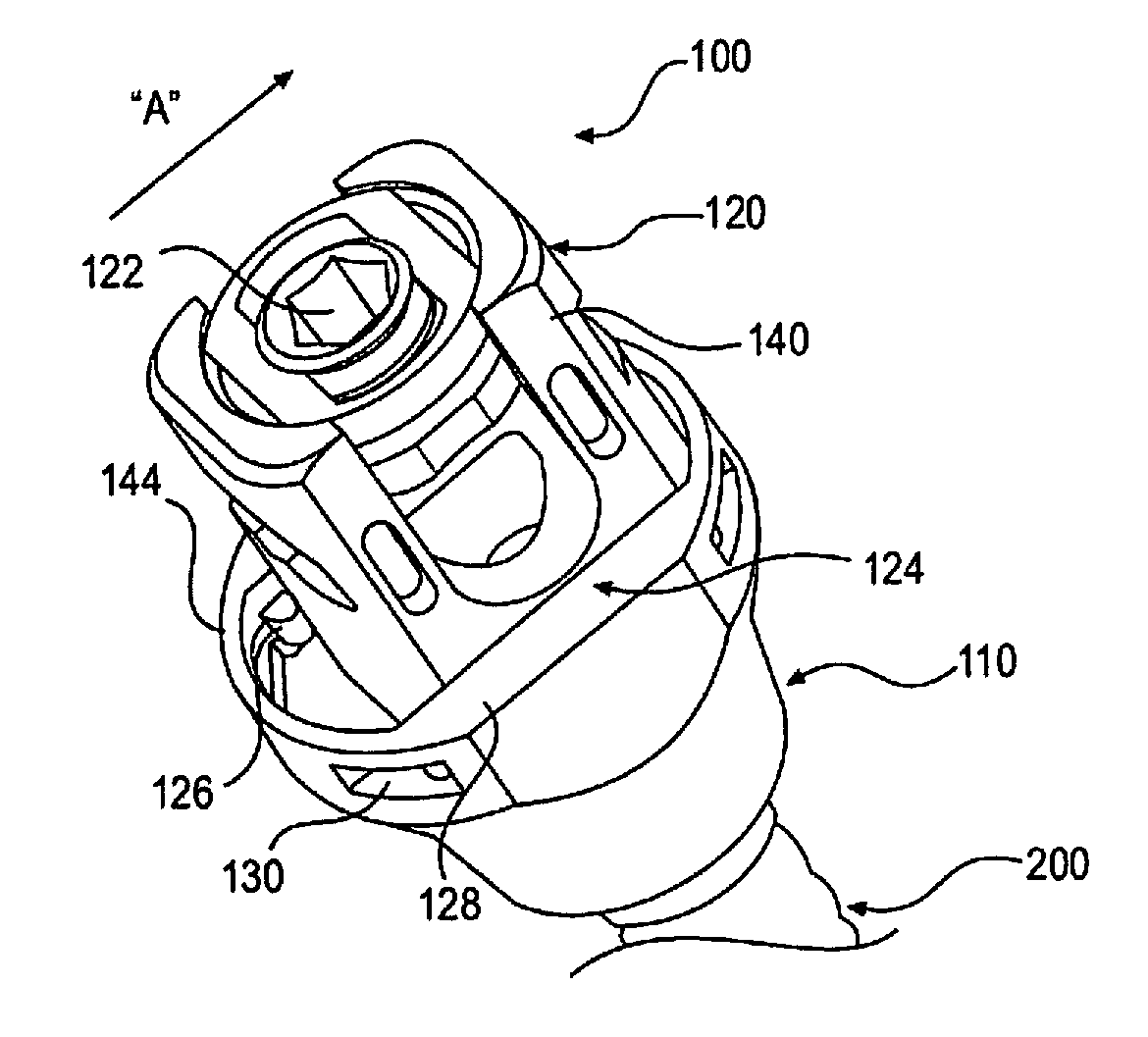
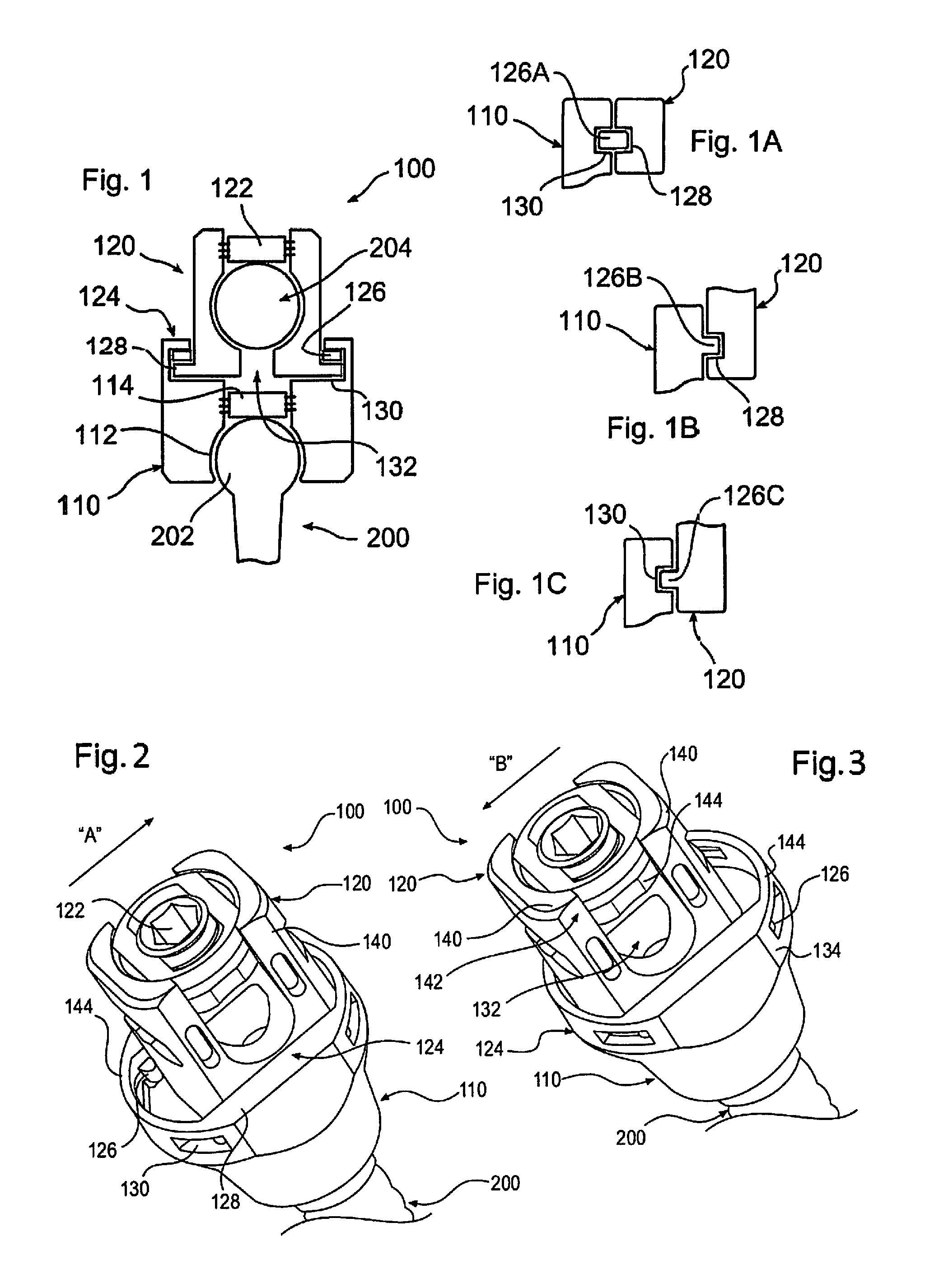
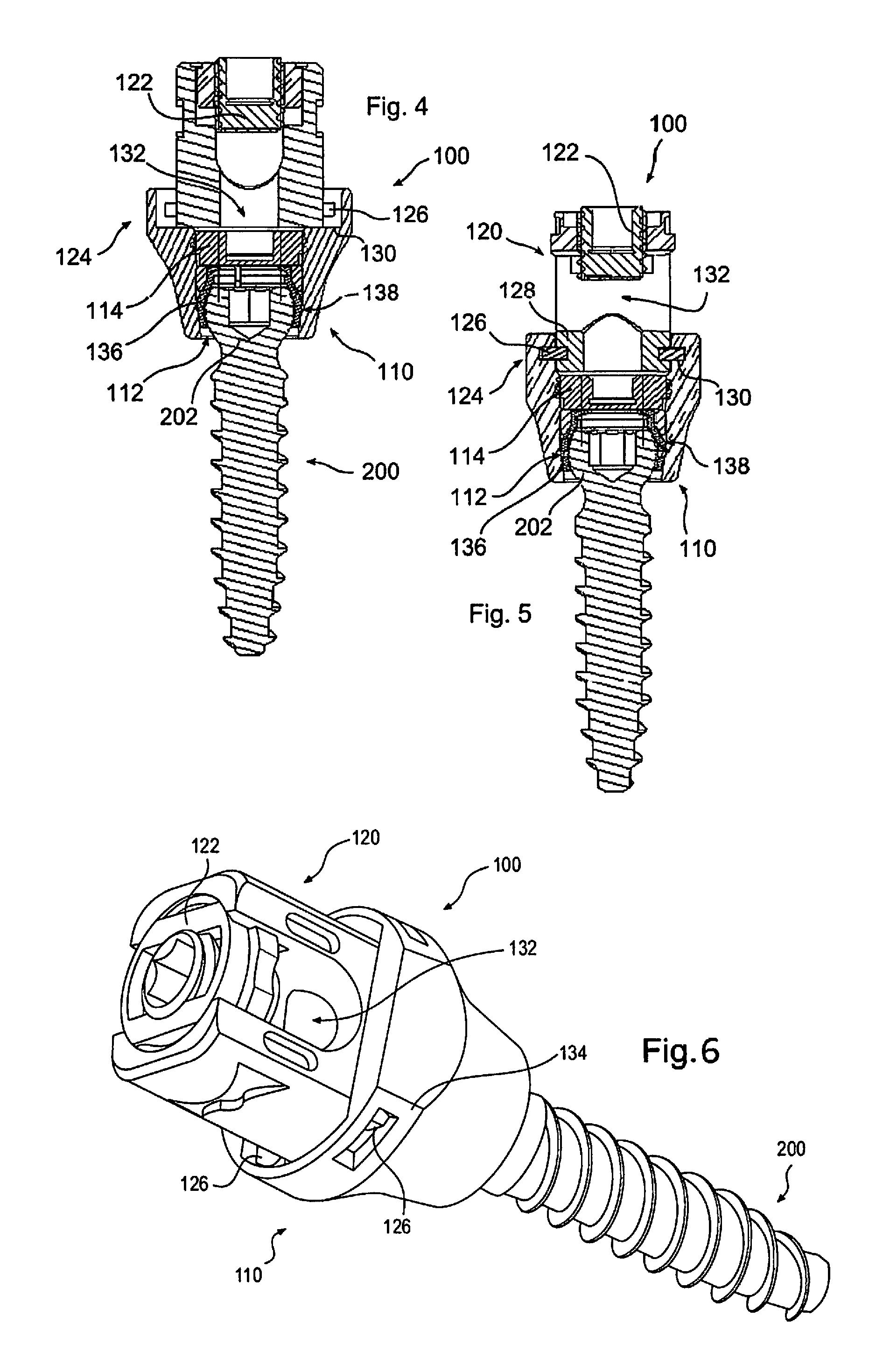
A receiver for engaging a bone stabilizing element includes a receiver portion connectable to the stabilizing element, and a base portion connectable to a bone of a patient. The base portion may connect to the bone with a bone screw, for example a polyaxial bone screw, and the receiver portion may connect to the stabilizing element, for example a rod, using a set screw. The receiver portion and the base portion are slideably connected to each other, coupled and constrained in relative movement, by overlapping portions. Axial rotation between the receiver portion and the base portion is enabled by changing the relative dimensions of overlapped portions.

Description

CROSS REFERENCE TO RELATED APPLICATIONS[0001]This application is a non-provisional application which claims priority to provisional application Ser. No. 61 / 352,680, which is incorporated herein in its entirety.FIELD OF THE INVENTION[0002]The present invention relates to the stabilization of the spine, and particularly the stabilization of multiple vertebral levels, preserving natural motion within therapeutic boundaries.BACKGROUND OF THE INVENTION[0003]The vertebrate spine is the axis of the skeleton on which a substantial portion of the weight of the body is supported. In humans, the normal spine has seven cervical, twelve thoracic and five lumbar segments. The lumbar spine sits upon the sacrum, which then attaches to the pelvis, and in turn is supported by the hip and leg bones. The bony vertebral bodies of the spine are separated by intervertebral discs, which act as joints and allow known degrees of flexion, extension, lateral bending, and axial rotation.[0004]The typical verteb...

Claims

the structure of the environmentally friendly knitted fabric provided by the present invention; figure 2 Flow chart of the yarn wrapping machine for environmentally friendly knitted fabrics and storage devices; image 3 Is the parameter map of the yarn covering machine
Login to View More

Application Information

Patent Timeline
no application Login to View More
Patent Type & Authority Patents(United States)
IPC IPC(8): A61B17/04A61B17/70
CPCA61B17/7035A61B17/7041A61B17/7032
Inventor HANSELL, NOAH
Owner GLOBUS MEDICAL INC
Features
  • R&D
  • Intellectual Property
  • Life Sciences
  • Materials
  • Tech Scout
Why Patsnap Eureka
  • Unparalleled Data Quality
  • Higher Quality Content
  • 60% Fewer Hallucinations
Social media
Patsnap Eureka Blog
Learn More