
Multilayer electronic component
A kind of electronic parts, laminated technology, applied in the direction of fixed capacitance parts, electrical components, laminated capacitors, etc., can solve the problem of poor moisture resistance
- Summary
- Abstract
- Description
- Claims
- Application Information
AI Technical Summary
Problems solved by technology
Method used
Image

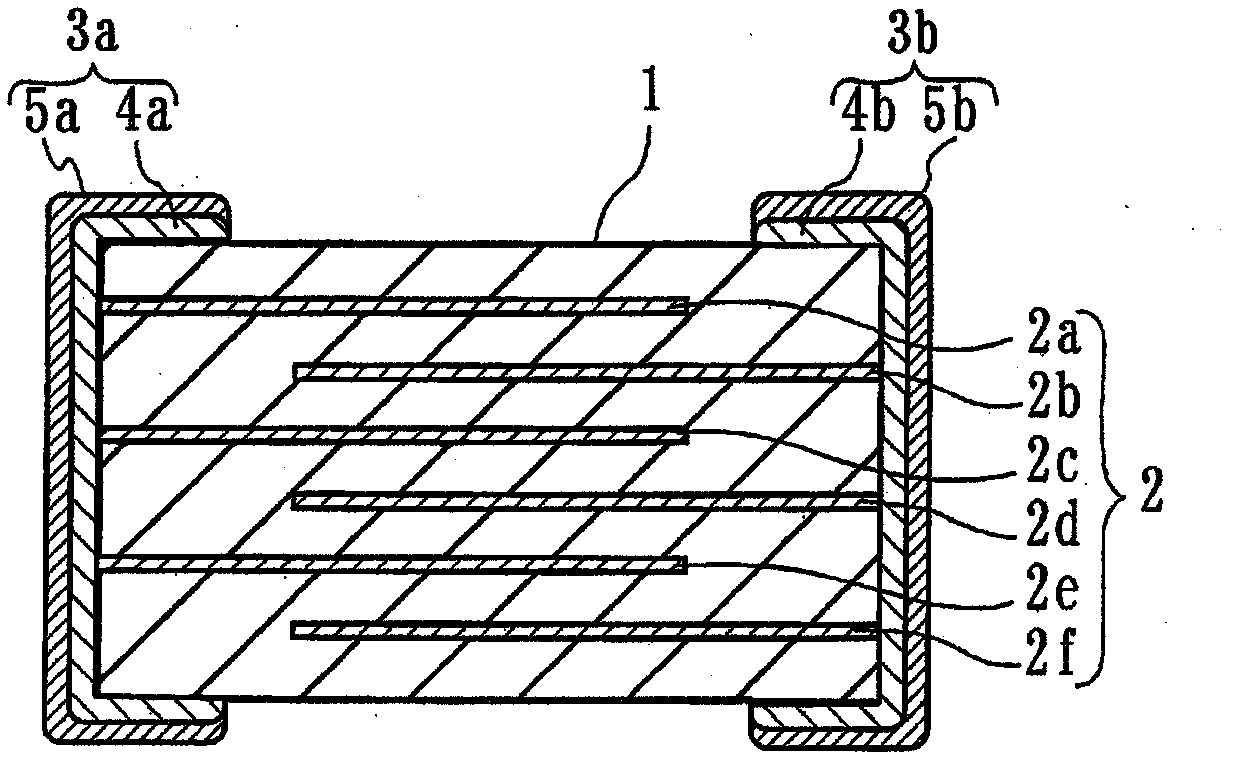
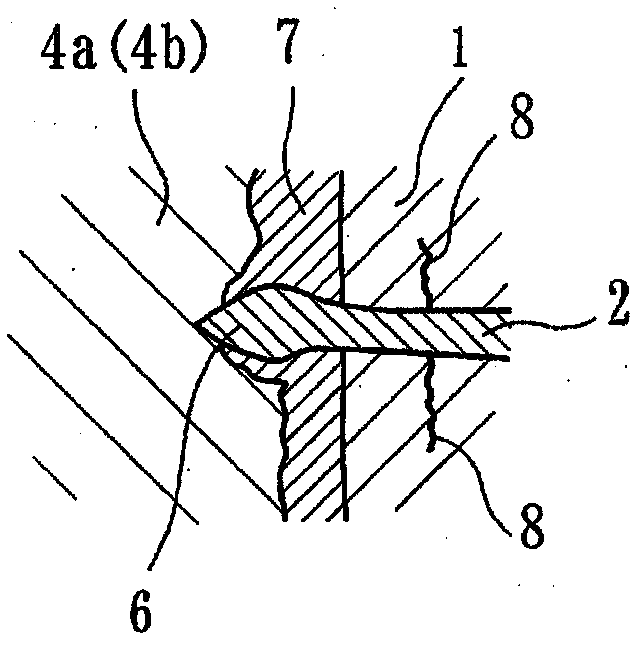
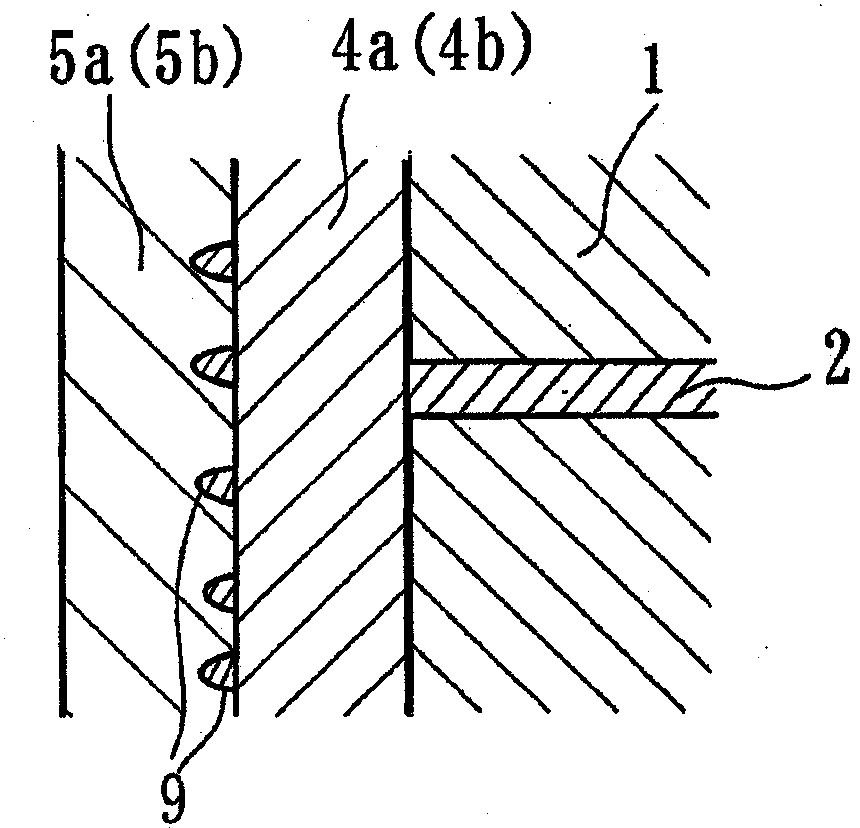
Examples
Embodiment
[0049] Next, examples of the present invention will be described in detail.
[0050] 〔Production of ceramic sintered body〕
[0051] First, as a ceramic base, weigh a specified amount of BaCO 3 and TiO 2 Next, these weighed objects were put into a ball mill together with PSZ (partially stabilized zirconia) balls and pure water, wet mixed and pulverized sufficiently, and dried to obtain a mixed powder.
[0052] Next, the mixed powder was calcined in the atmosphere at a temperature of 950°C for 2 hours, and then dry pulverized to produce BaTiO 3 Ceramic raw material powder as the main component.
[0053] Next, using ethanol as a solvent, a polyvinyl butyral-based binder was added, and the ceramic raw material powder was mixed and pulverized to obtain a ceramic slurry. Then, the above-mentioned ceramic slurry was molded using a doctor blade method to obtain a ceramic green sheet.
[0054] Next, a conductive paste for internal electrodes containing Ni as a main component was s...
PUM
 Login to View More
 Abstract
Description
Claims
Application Information
 Login to View More