Check patentability & draft patents in minutes with Patsnap Eureka AI!

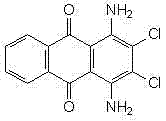
Improved method for synthesizing 1,4-diamino-2,3-dichloroanthraquinone

A technology of diaminoanthraquinone and dichloroanthraquinone is applied in chemical instruments and methods, preparation of organic compounds, organic chemistry, etc., and can solve the problems of high recovery cost of solvent nitrobenzene or dichlorobenzene, high price of sulfuryl chloride, Problems such as small azeotrope ratio, to achieve the effects of easy recycling, low energy consumption, and small molecular weight

Active Publication Date: 2011-10-19
JIANGSU HUAER CHEM
View PDF1 Cites 11 Cited by
  • Summary
  • Abstract
  • Description
  • Claims
  • Application Information

AI Technical Summary

Problems solved by technology

The disadvantage of this method is: 1. the recovery cost of solvent nitrobenzene or dichlorobenzene is high
Due to the high boiling point of solvent nitrobenzene or dichlorobenzene, its azeotropic ratio with water is small, therefore, the recovery of this solvent by steam distillation requires a very large energy consumption; ② the price of sulfuryl chloride as a chlorinating agent is relatively high

Method used

the structure of the environmentally friendly knitted fabric provided by the present invention; figure 2 Flow chart of the yarn wrapping machine for environmentally friendly knitted fabrics and storage devices; image 3 Is the parameter map of the yarn covering machine
View more

Image

Smart Image Click on the blue labels to locate them in the text.
Viewing Examples
Smart Image
  • Improved method for synthesizing 1,4-diamino-2,3-dichloroanthraquinone

Examples

Experimental program
Comparison scheme
Effect test

Embodiment 1

[0018] Prepare raw materials according to the mass ratio of 1,4-diaminoanthraquinone leuco: solvent carbon tetrachloride: chlorine gas is 50g: 300g: 44g (1: 6: 0.88);

[0019] In a reaction vessel with a stirrer, a thermometer, a feeder, a steam distillation device and a temperature adjustment device, under stirring, dissolve 50 g of 1,4-diaminoanthraquinone leuco body in 300 g of solvent carbon tetrachloride to form a reaction liquid, then adjust the temperature of the reaction solution to 15-25°C, pass 44g of chlorine gas into the reaction solution to chlorinate the leuco 1,4-diaminoanthraquinone, the speed of passing chlorine gas is 1.5mg / s, and pass chlorine gas After 12 hours, stop chlorination, lower the temperature to 93% (mass) by liquid chromatography analysis .

Embodiment 2

[0021] Substantially the same as Example 1, the difference is: replace carbon tetrachloride with tetrachlorethylene. 60g of 1,4-diamino-2,3-dichloroanthraquinone can be obtained with a yield of about 95%. According to liquid chromatography analysis, the content of 1,4-diamino-2,3-dichloroanthraquinone is >92.5% (quality).

Embodiment 3

[0023] Prepare raw materials according to the mass ratio of 1,4-diaminoanthraquinone leuco: solvent carbon tetrachloride: chlorine gas is 50g: 400g: 40g (1: 8: 0.80);

[0024] In a reaction vessel with a stirrer, a thermometer, a feeder, a steam distillation device and a temperature controller, under stirring, 50 g of the leuco 1,4-diaminoanthraquinone is dissolved in 300 g of the solvent carbon tetrachloride to form a reaction liquid, then adjust the temperature of the reaction solution to 25-30°C, pass 40g of chlorine gas into the reaction solution to chlorinate the 1,4-diaminoanthraquinone leuco, the speed of passing chlorine gas is 1.5mg / s, and pass chlorine gas After 8 hours, stop chlorination, cool down to 95% (mass);

[0025] The above recovered filtrate was allowed to stand for stratification, and the solvent layer (carbon tetrachloride) was separated for storage and reuse.

the structure of the environmentally friendly knitted fabric provided by the present invention; figure 2 Flow chart of the yarn wrapping machine for environmentally friendly knitted fabrics and storage devices; image 3 Is the parameter map of the yarn covering machine
Login to View More

PUM

No PUM Login to View More

Abstract

The invention relates to an improved method for synthesizing 1,4-diamino-2,3-dichloroanthraquinone. 1,4-diamino-anthraquinone leuco compounds are used as a raw material and the method is characterized by comprising the following steps of: dissolving the 1,4-diamino-anthraquinone leuco compounds in a solvent of carbon tetrachloride or perchlorethylene, and introducing chlorine gas to chloridize the 1,4-diamino-anthraquinone leuco compounds at the temperature of between 25 and 30 DEG C to obtain the 1,4-diamino-2,3-dichloroanthraquinone, wherein a mass ratio of the 1,4-diamino-anthraquinone leuco compounds to the solvent to the chlorine gas is 1:(6-12):(0.6-1.2), the speed of introducing the chlorine gas is 0.5 to 5.5mg / s, and the time of introducing the chlorine gas is at least 8 hours. The determined chlorinating condition and a proportion of various raw materials are quite proper, so that the yield is improved and is about 95 percent, and the content is at least 89 percent through liquid chromatogram; by using the carbon tetrachloride or perchlorethylene as the solvent, the energy consumption can be lowered; and by using the chlorine gas as a chlorating agent, the price of the raw material is reduced, and the raw material can be easily recycled.

Description

technical field [0001] The present invention relates to an improved method for the synthesis of 1,4-diamino-2,3-dichloroanthraquinone. Background technique [0002] 1,4-diamino-2,3-dichloroanthraquinone can also be called 2,3-dichloro-1,4-diaminoanthraquinone, its chemical structure is as follows: [0003] [0004] 1,4-Diamino-2,3-dichloroanthraquinone is an important dye intermediate, which can be used to produce Disperse Violet 26, Disperse Violet 28, Disperse Blue 60, vat dyes, solvent dyes and so on. The synthetic 1,4-diamino-2 of existing literature report, the method for 3-dichloroanthraquinone is to take 1,4-diaminoanthraquinone leuco as raw material, with sulfuryl chloride as chlorinating agent, in solvent nitric acid It is obtained by chlorination in benzene or dichlorobenzene. The disadvantages of this method are: 1. The recovery cost of solvent nitrobenzene or dichlorobenzene is high. Because the boiling point of solvent nitrobenzene or dichlorobenzene is hi...

Claims

the structure of the environmentally friendly knitted fabric provided by the present invention; figure 2 Flow chart of the yarn wrapping machine for environmentally friendly knitted fabrics and storage devices; image 3 Is the parameter map of the yarn covering machine
Login to View More

Application Information

Patent Timeline
no application Login to View More
IPC IPC(8): C07C225/34C07C221/00
Inventor 吴传龙郑冬松颜波
Owner JIANGSU HUAER CHEM
Features
  • R&D
  • Intellectual Property
  • Life Sciences
  • Materials
  • Tech Scout
Why Patsnap Eureka
  • Unparalleled Data Quality
  • Higher Quality Content
  • 60% Fewer Hallucinations
Social media
Patsnap Eureka Blog
Learn More