
One-pot method for preparing high-nitrogen and potassium-containing superabsorbent resin using carboxymethyl potato starch and hydrogen peroxide as raw materials
A technology of potato starch and carboxymethyl, which is applied in the field of preparation of functional polymer material-superabsorbent resin, can solve the problems of affecting the water absorption of superabsorbent resin, complex process, low water absorption rate, etc., and achieve good application promotion value, The effect of simple process and low cost
- Summary
- Abstract
- Description
- Claims
- Application Information
AI Technical Summary
Problems solved by technology
Method used
Image

Examples
Embodiment 1
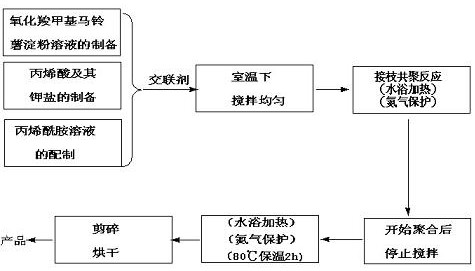
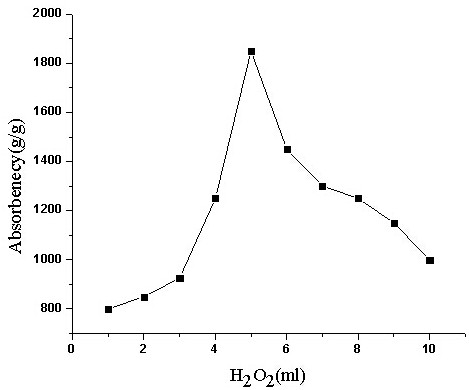
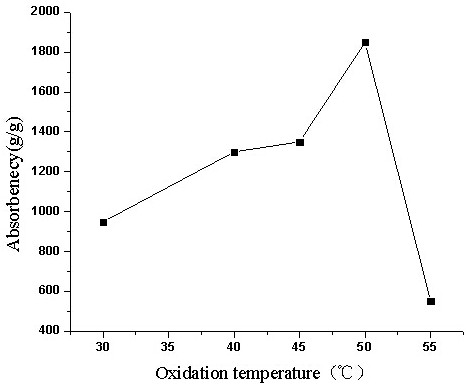
[0027] Example 1: Weigh 5g of carboxymethyl potato starch and 30ml of deionized water and mix evenly, add 5ml of hydrogen peroxide and oxidize at 50°C for 2h, measure 10g (9.5ml) of acrylic acid (to remove the polymerization inhibitor); weigh 3.9g of KOH Dissolve in 10ml of deionized water, neutralize acrylic acid with the KOH solution prepared above under cooling in an ice-water bath; weigh 10g of acrylamide and dissolve it in 10ml of deionized water to prepare an acrylamide solution. Fully mix the neutralized acrylic acid and its salt solution and the prepared acrylamide solution with the oxidized carboxymethyl potato starch solution, add 4ml of N,N'-methylenebispropylene with a concentration of 2.5mg / ml Amide solution, in N 2 Under protection, heat slowly to increase the temperature of the system gradually. After the polymerization reaction starts, stop stirring, continue to raise the temperature slowly, keep it at 80°C for 2 hours, dry and pulverize to obtain the product. ...
Embodiment 2
[0028] Example 2: Weigh 5g of carboxymethyl potato starch and 30ml of deionized water and mix evenly, add 8ml of hydrogen peroxide and oxidize at 50°C for 2h, measure 10g (9.5ml) of acrylic acid (to remove the polymerization inhibitor); weigh 3.9g of KOH Dissolve in 10ml of deionized water, neutralize acrylic acid with the KOH solution prepared above under cooling in an ice-water bath; weigh 10g of acrylamide and dissolve it in 10ml of deionized water to prepare an acrylamide solution. Fully mix the neutralized acrylic acid and its salt solution and the prepared acrylamide solution with the oxidized carboxymethyl potato starch solution, add 4ml of N,N'-methylenebispropylene with a concentration of 2.5mg / ml Amide solution, in N 2 Under protection, heat slowly to increase the temperature of the system gradually. After the polymerization reaction starts, stop stirring, continue to raise the temperature slowly, keep it at 80°C for 2 hours, dry and pulverize to obtain the product. ...
Embodiment 3
[0029] Example 3: Weigh 5g of carboxymethyl potato starch and 30ml of deionized water and mix evenly, add 5ml of hydrogen peroxide and oxidize at 40°C for 2h, measure 10g (9.5ml) of acrylic acid (to remove the polymerization inhibitor); weigh 3.9g of KOH Dissolve in 10ml of deionized water, neutralize acrylic acid with the KOH solution prepared above under cooling in an ice-water bath; weigh 10g of acrylamide and dissolve it in 10ml of deionized water to prepare an acrylamide solution. Fully mix the neutralized acrylic acid and its salt solution and the prepared acrylamide solution with the oxidized carboxymethyl potato starch solution, add 4ml of N,N'-methylenebispropylene with a concentration of 2.5mg / ml Amide solution, in N 2 Under protection, heat slowly to increase the temperature of the system gradually. After the polymerization reaction starts, stop stirring, continue to raise the temperature slowly, keep it at 80°C for 2 hours, dry and pulverize to obtain the product. ...
PUM
| Property | Measurement | Unit |
|---|---|---|
| concentration | aaaaa | aaaaa |
| water absorption | aaaaa | aaaaa |
| water absorption | aaaaa | aaaaa |
Abstract
Description
Claims
Application Information
 Login to View More