
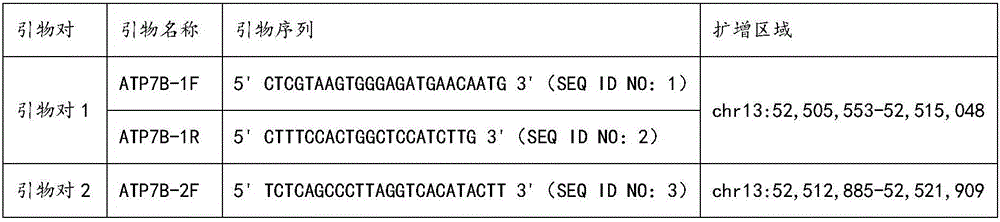
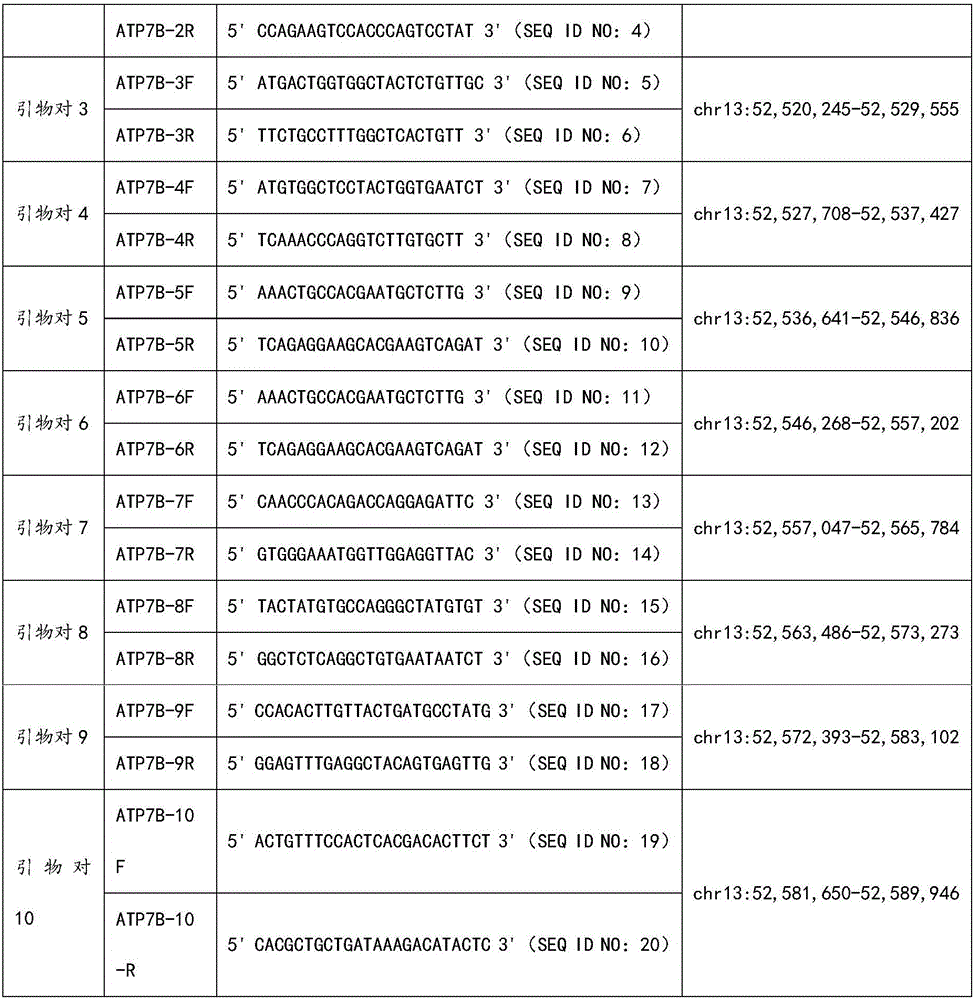
ATP7B (ATPase Cu2+transporting beta polypeptide) gene mutation detection primer set and kit, ATP7B gene mutation detection method and uses of ATP7B gene mutation detection primer kit
A technology for detecting primers and primer sets, applied in the field of molecular biology, can solve the problems of easy misdiagnosis and missed diagnosis, irreversible damage to patients, missed optimal treatment time, etc., and achieves the effect of uniform sequencing results, low cost and high sensitivity
- Summary
- Abstract
- Description
- Claims
- Application Information
AI Technical Summary
Problems solved by technology
Method used
Image

Examples
Embodiment 1
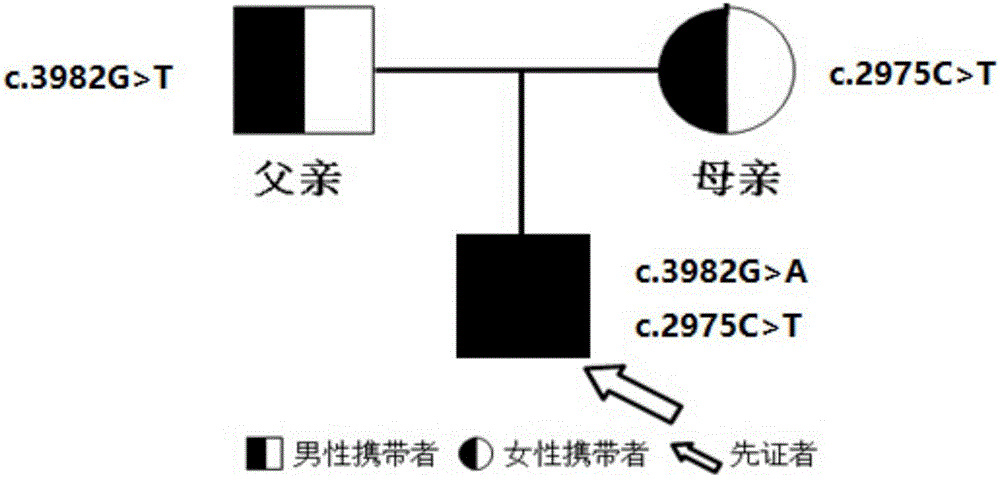
[0082] 1. Family situation: The clinical manifestations of the proband were abnormal liver function, elevated transaminase, ceruloplasmin 69.6 mg / L, and corneal K-F ring (-). There were no other patients in the family of both parents. The parents of the proband had normal phenotypes, non-consanguineous marriage, and no history of drug use or adverse environmental exposure during pregnancy. This study was approved by the Medical Ethics Committee of the Shenzhen Institute of Population and Family Planning Sciences, and all genetic diagnoses were obtained with the consent of the patient's family members and signed informed consent.
[0083] 2. Method:
[0084](1) Specimen collection and DNA extraction: Take 2 mL of peripheral venous blood from the proband and his parents, and anticoagulate with sodium citrate. Whole blood genomic DNA was extracted using QIAamp DNA MiniKit (Qiagen) and stored at -20°C. (2) Analysis of the full-length gene sequence of the pathogenic gene: Screen ...
PUM
 Login to View More
 Abstract
Description
Claims
Application Information
 Login to View More