Unlock instant, AI-driven research and patent intelligence for your innovation.
High-temperature-resistant heat-dissipating graphene-carbon nanotube coating and preparation method thereof
What is Al technical title?
Al technical title is built by PatSnap Al team. It summarizes the technical point description of the patent document.
A technology of graphene carbon and heat-dissipating coatings, applied in anti-corrosion coatings, fire-resistant coatings, coatings, etc., can solve the problems of unsatisfactory heat dissipation effects of heat-dissipating coatings
Inactive Publication Date: 2017-05-24
苏州碳丰石墨烯科技有限公司
View PDF6 Cites 15 Cited by
Summary
Abstract
Description
Claims
Application Information
AI Technical Summary
This helps you quickly interpret patents by identifying the three key elements:
Problems solved by technology
Method used
Benefits of technology
Problems solved by technology
[0007] The technical problem to be solved in the present invention is to overcome the defects of unsatisfactory heat dissipation effect of existing heat dissipation coatings, and provide a graphene carbon nanotube high temperature heat dissipation coating and its preparation method
Method used
the structure of the environmentally friendly knitted fabric provided by the present invention; figure 2 Flow chart of the yarn wrapping machine for environmentally friendly knitted fabrics and storage devices; image 3 Is the parameter map of the yarn covering machine
View more
Image
Smart Image Click on the blue labels to locate them in the text.
Viewing Examples
Smart Image
Click on the blue label to locate the original text in one second.
Reading with bidirectional positioning of images and text.
Smart Image
Examples
Experimental program
Comparison scheme
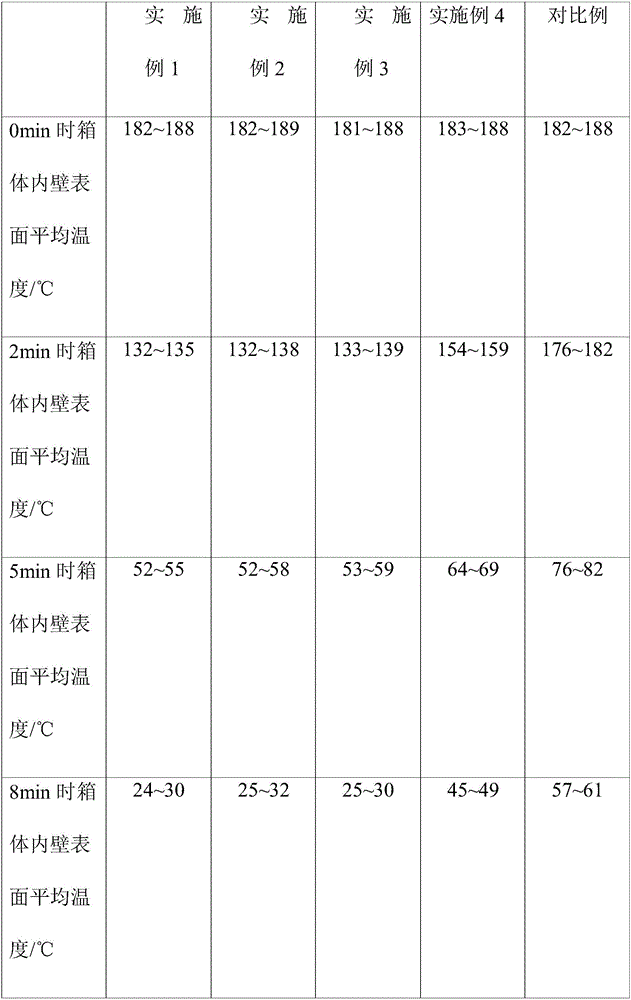
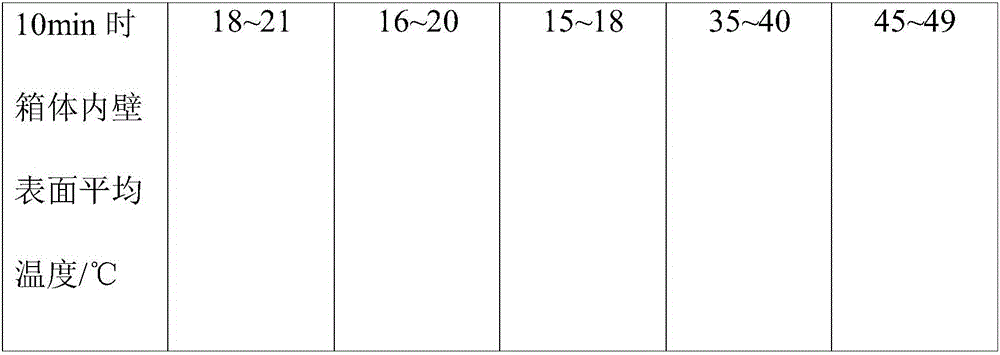
Effect test
Embodiment 1
[0028] A graphene carbon nanotube high-temperature heat dissipation coating, comprising the following components in parts by weight: 30 parts of graphene carbon nanotube composite slurry, water-based fluorocarbon resin or fluorocarbon resin emulsion: 28 parts, water: 15 parts, Defoamer: 0.1 part, leveling agent: 0.1 part, thickener: 0.1 part, dipropylene glycol methyl ether 2 parts.
[0029] The graphene-carbon nanotube composite slurry includes 1.5% carbon nanotubes, graphene: 2.5%, defoamer: 0.1%, wetting agent: 0.3%, and the rest is water.
[0030] A preparation method of graphene carbon nanotube high temperature heat dissipation coating, comprising the following steps:
[0031] 1) Put graphene and carbon nanotubes into water, add wetting agent to moisten; add defoamer, grind, and grind to fineness ≤ 30um;
[0033] 3), put the slurry into a certain amount of water, and add a defoamer;
[0034] 4), slowly add water-based fluorocarbon...
Embodiment 2
[0038] A graphene carbon nanotube high-temperature heat dissipation coating, comprising the following components in parts by weight: 40 parts of graphene carbon nanotube composite slurry, water-based fluorocarbon resin or fluorocarbon resin emulsion: 45 parts, water: 30 parts, Defoamer: 0.3 parts, leveling agent: 0.3 parts, thickener: 0.3 parts, dipropylene glycol methyl ether 5 parts.
[0039] The graphene-carbon nanotube composite slurry includes 3% carbon nanotubes, graphene: 1%, defoamer: 0.3%, wetting agent: 0.1%, and the rest is water.
[0040] The preparation method of the graphene carbon nanotube high-temperature heat dissipation coating of this embodiment is the same as that of Embodiment 1.
Embodiment 3
[0042] A graphene carbon nanotube high-temperature heat dissipation coating, comprising the following components in parts by weight: 36 parts of graphene carbon nanotube composite slurry, water-based fluorocarbon resin or fluorocarbon resin emulsion: 36 parts, water: 22 parts, Defoamer: 0.2 parts, leveling agent: 0.2 parts, thickener: 0.2 parts, dipropylene glycol methyl ether 4 parts.
[0043] The graphene-carbon nanotube composite slurry includes 2% carbon nanotubes, graphene: 1.5%, defoamer: 0.2%, wetting agent: 0.2%, and the rest is water.
[0044] The preparation method of the graphene carbon nanotube high-temperature heat dissipation coating of this embodiment is the same as that of Embodiment 1.
the structure of the environmentally friendly knitted fabric provided by the present invention; figure 2 Flow chart of the yarn wrapping machine for environmentally friendly knitted fabrics and storage devices; image 3 Is the parameter map of the yarn covering machine
Login to View More
PUM
Property
Measurement
Unit
electron mobility
aaaaa
aaaaa
elastic modulus
aaaaa
aaaaa
friction coefficient
aaaaa
aaaaa
Login to View More
Abstract
The invention discloses high-temperature-resistant heat-dissipating graphene-carbon nanotubecoating. The high-temperature-resistant heat-dissipating graphene-carbon nanotubecoating comprises the following components in parts by weight: 30-40 parts of a graphene-carbon nanotube composite slurry, 28-45 parts of waterborne fluorocarbon resin or a fluorocarbon resin emulsion, 15-30 parts of water, 0.1-0.3 part of a defoaming agent, 0.1-0.3 part of a leveling agent, 0.1-0.3 part of a thickening agent and 2-5 parts of dipropylene glycol methyl ether. A preparation method of the high-temperature-resistant heat-dissipating graphene-carbon nanotubecoating comprises the following steps: grinding the graphene-carbon nanotube composite slurry till the fineness is lower than or equal to 30 microns; then performing magnetic field induction; then sequentially adding water, the defoaming agent, the waterborne fluorocarbon resin or fluorocarbon resin emulsion, the leveling agent, the thickening agent and the dipropylene glycol methyl ether, and stirring at a low speed. By improving the orientation of the tube diameter of carbon nanotubes and then by doping a proper amount of graphene through chemical means, the heat conductivity and the heat emission of the carbon nanotubes and the graphene are further improved, so that the heat-dissipating effect is more ideal; in addition, by replacing a film-forming base material with the waterborne fluorocarbon resin or fluorocarbon resin emulsion with better weather resistance and high temperature resistance, the application field of the heat-dissipating coating is widened.
Description
technical field [0001] The invention relates to the technical field of object heat dissipation, in particular to a graphene carbon nanotube high-temperature heat dissipation coating and a preparation method thereof. Background technique [0002] There are radiation heat dissipation, conduction heat dissipation, convection heat dissipation, and evaporation heat dissipation. The heat dissipation of high-temperature objects includes almost all heat dissipation methods, but the thermal conductivity of air is small, and the amount of heat dissipation through direct conduction in the air is extremely small, and the heat transfer efficiency is extremely low. Convective heat dissipation in which objects exchange heat through gas flow, due to the poor air fluidity around high-temperature objects, the heat taken away is not high, and the heat dissipation effect is not obvious. This cooling method has certain limitations. Therefore, the most intuitive and effective way to improve the...
Claims
the structure of the environmentally friendly knitted fabric provided by the present invention; figure 2 Flow chart of the yarn wrapping machine for environmentally friendly knitted fabrics and storage devices; image 3 Is the parameter map of the yarn covering machine
Login to View More
Application Information
Patent Timeline
Application Date:The date an application was filed.
Publication Date:The date a patent or application was officially published.
First Publication Date:The earliest publication date of a patent with the same application number.
Issue Date:Publication date of the patent grant document.
PCT Entry Date:The Entry date of PCT National Phase.
Estimated Expiry Date:The statutory expiry date of a patent right according to the Patent Law, and it is the longest term of protection that the patent right can achieve without the termination of the patent right due to other reasons(Term extension factor has been taken into account ).
Invalid Date:Actual expiry date is based on effective date or publication date of legal transaction data of invalid patent.



 Login to View More