miRNA-155 and application of its inhibitor in DC-CIK cell culture
What is AI technical title?
AI technical title is built by Patsnap AI team. It summarizes the technical point description of the patent document.
A technology of mirna-155, 1. mirna-155, applied in the field of immunization, can solve the problems of unsatisfactory effect and poor efficacy of adoptive immunization
Active Publication Date: 2017-05-31
朗姿赛尔生物科技(广州)有限公司
View PDF1 Cites 4 Cited by
Summary
Abstract
Description
Claims
Application Information
AI Technical Summary
This helps you quickly interpret patents by identifying the three key elements:
Problems solved by technology
Method used
Benefits of technology
Problems solved by technology
[0005] Although a large number of studies have shown that DCs, DC tumor vaccines, and CIK cells have significant anti-tumor effects, clinical applications have found that DCs and CIK cells alone are not very effective in treating tumors. Tumor cellsresist these immune effector cells and lead to adoptive immunity. Poor efficacy
Method used
the structure of the environmentally friendly knitted fabric provided by the present invention; figure 2 Flow chart of the yarn wrapping machine for environmentally friendly knitted fabrics and storage devices; image 3 Is the parameter map of the yarn covering machine
View more
Image
Smart Image Click on the blue labels to locate them in the text.
Viewing Examples
Smart Image
Click on the blue label to locate the original text in one second.
Reading with bidirectional positioning of images and text.
Smart Image
Examples
Experimental program
Comparison scheme
Effect test
Embodiment 1
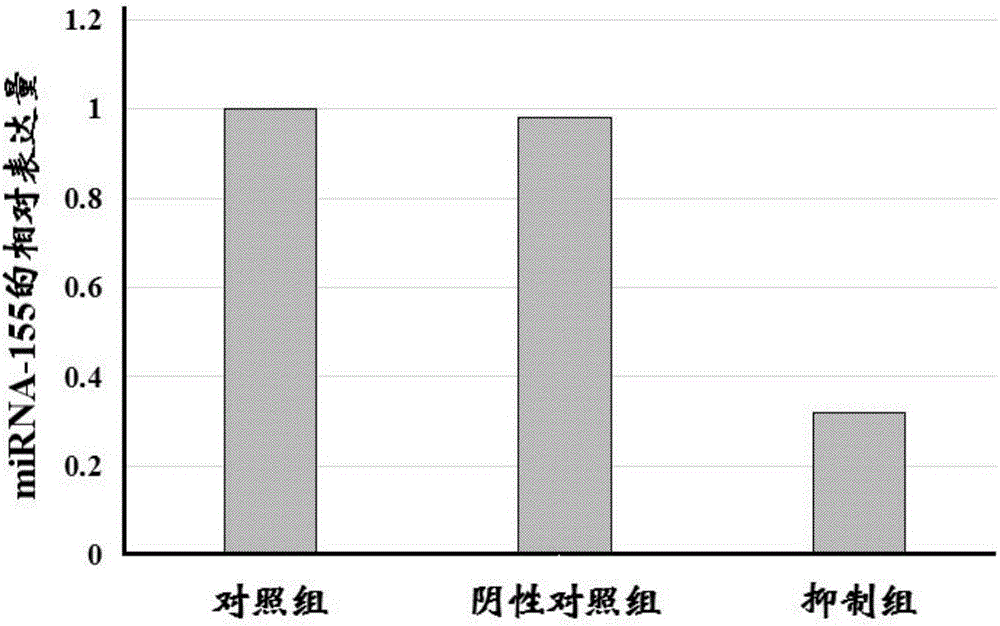
[0024] Example 1: The effect of miRNA-155 on DC-CIK cell co-culture
[0029] 2. The tumor cells are leukemia cells, including K562 / A02, THP-1 and HL-60 cells.
[0030] 2. Experimental method
[0031] 1. The separation and culture of effector cells DC and CIK
[0032] (1) Separation of mononuclear cells: Collect 20mL of peripheral blood from healthy volunteers, dilute 1:1 with pre-cooled PBS, slowly add the upper layer of lymphocyte separation solution, 650g, centrifuge for 20min at 4°C, collect white cell layer, and separate mononuclear cells , Resuspend the cells in 1640 medium and place them at 37℃, 5% CO 2 Incubate for 2h in t...
Embodiment 2
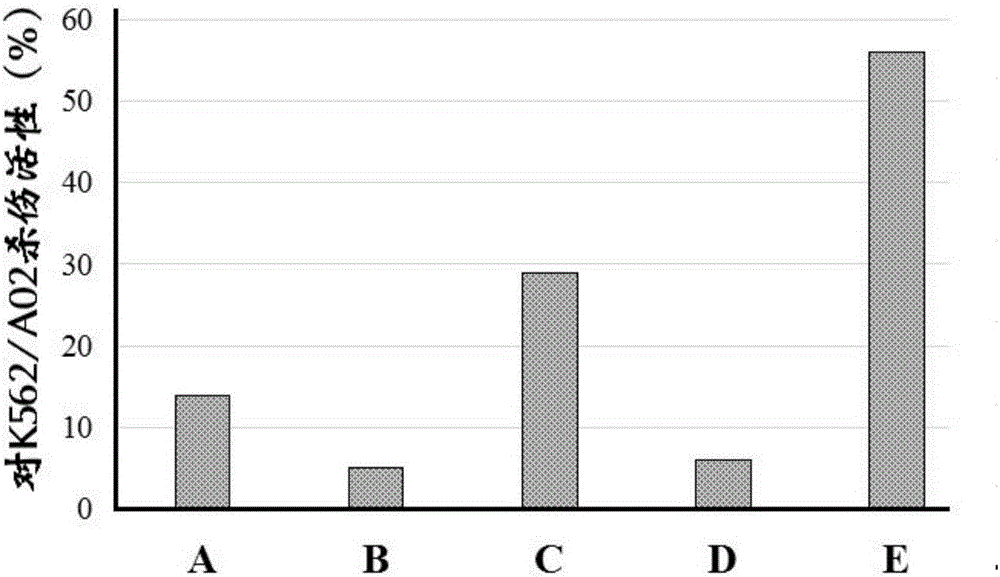
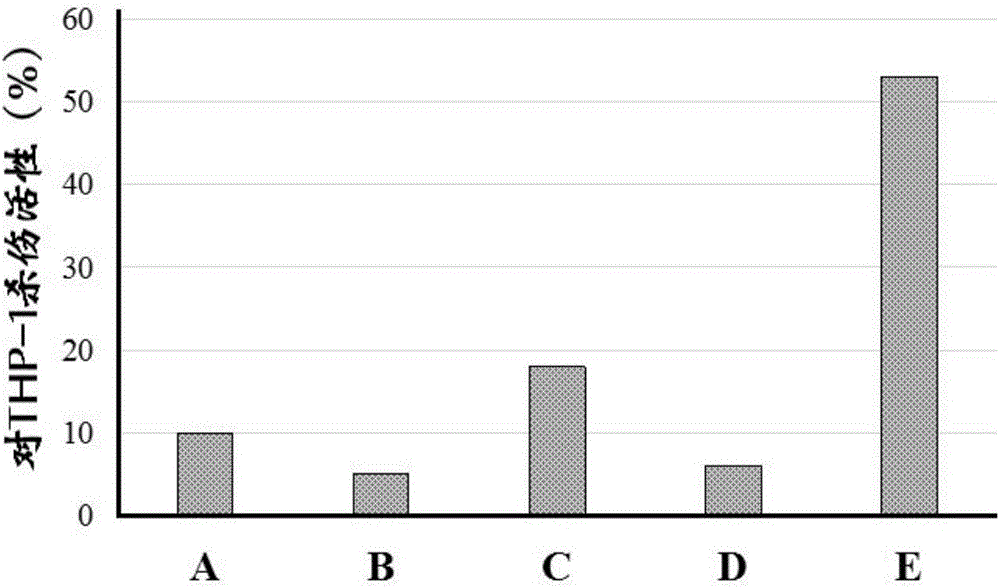
[0082] Example 2: Screening of miRNA-155 inhibitors (Pseudostellaria japonicus B, C)
[0083] 1. Experimental materials
[0084] Pseudoginsenopsis cyclic peptide B was purchased from Shanghai Yuanye Biotechnology Co., Ltd.; Pseudoginsenopsis cyclic peptide C was purchased from Kunming Institute of Botany, Chinese Academy of Sciences. Other materials are the same as in Example 1.
[0085] 2. Experimental method
[0086] 1. The separation and culture of effector cells DC and CIK
[0087] (1) Separation of mononuclear cells: Collect 20mL of peripheral blood from healthy volunteers, dilute 1:1 with pre-cooled PBS, slowly add the upper layer of lymphocyte separation solution, 650g, centrifuge for 20min at 4°C, collect white cell layer, and separate mononuclear cells , Resuspend the cells in 1640 medium and place them at 37℃, 5% CO 2 Incubate for 2h in the incubator.
[0088] (2) Cultivation of DC cells: After mononuclear cells are cultured for 2 hours, adherent cells are collected and induc...
the structure of the environmentally friendly knitted fabric provided by the present invention; figure 2 Flow chart of the yarn wrapping machine for environmentally friendly knitted fabrics and storage devices; image 3 Is the parameter map of the yarn covering machine
Login to View More
PUM
Login to View More
Abstract
The invention discloses a miRNA-155 and an application of its inhibitor in a DC-CIK cell culture; the miRNA-155 can be used as a drug target and applied to improve the killability of a CIK cell co-cultured and enhanced by a DC cell to a cancer cell. The applicant study finds that the DC-CIK cell under down-regulated expression of miRNA-155 has higher killability than the DC-CIK cell under normal expression of miRNA-155, and the killability of the DC cell under down-regulated expression of miRNA-155 is basically consistent with the killability of the DC cell under the normal expression of miRNA-155, there is no significant difference. It indicates that the miRNA-155 down-regulation cannot directly improve the killability of the DC cell to leukemia cell, but the down-regulated DC cell of the miRNA-155 can significantly enhance the killability of the cancer cell through co-culture. The applicant further finds that radix pseudostellariae cyclic peptide B and radix pseudostellariae cyclic peptide C are effective inhibitors of miRNA-155.
Description
Technical field [0001] The invention belongs to the field of immunity, relates to the cultivation of DC-CIK cells, and specifically relates to the application of miRNA-155 and its inhibitors in the cultivation of DC-CIK cells. Background technique [0002] Biological immunotherapy is to supplement, induce or activate the inherent biological response regulation system in the body from outside, activate and mobilize biologically active cells and cytokines with cytotoxic activity to adjust various immune-killing biological responses. At present, there are more research applications in immunotherapy: lymphokine-activated killer cells, tumor infiltrating lymphocytes, cytokine-induced killer (CIK) cells, dendritic cells (DC), and co-cultured immune (DC-CIK) cells , Natural killer cell type lymphocytes, among which DC and CIK cells are two important parts of tumor immunotherapy. The immune response induced by their interaction is the central link of the immunosuppressive effect [Wang Zh...
Claims
the structure of the environmentally friendly knitted fabric provided by the present invention; figure 2 Flow chart of the yarn wrapping machine for environmentally friendly knitted fabrics and storage devices; image 3 Is the parameter map of the yarn covering machine
Login to View More
Application Information
Patent Timeline
Application Date:The date an application was filed.
Publication Date:The date a patent or application was officially published.
First Publication Date:The earliest publication date of a patent with the same application number.
Issue Date:Publication date of the patent grant document.
PCT Entry Date:The Entry date of PCT National Phase.
Estimated Expiry Date:The statutory expiry date of a patent right according to the Patent Law, and it is the longest term of protection that the patent right can achieve without the termination of the patent right due to other reasons(Term extension factor has been taken into account ).
Invalid Date:Actual expiry date is based on effective date or publication date of legal transaction data of invalid patent.



 Login to View More
  Login to View More