
Hydroxyapatite-based fluorescent ceramic material and preparation method thereof
A hydroxyapatite-based and hydroxyapatite technology, which is applied in the field of fluorescent materials, can solve the problems of complexity, strict raw material ratio requirements, and high temperature of transparent ceramics, and achieves simple preparation process, high purity, and reduced sintering temperature and time. Effect
- Summary
- Abstract
- Description
- Claims
- Application Information
AI Technical Summary
Problems solved by technology
Method used
Image

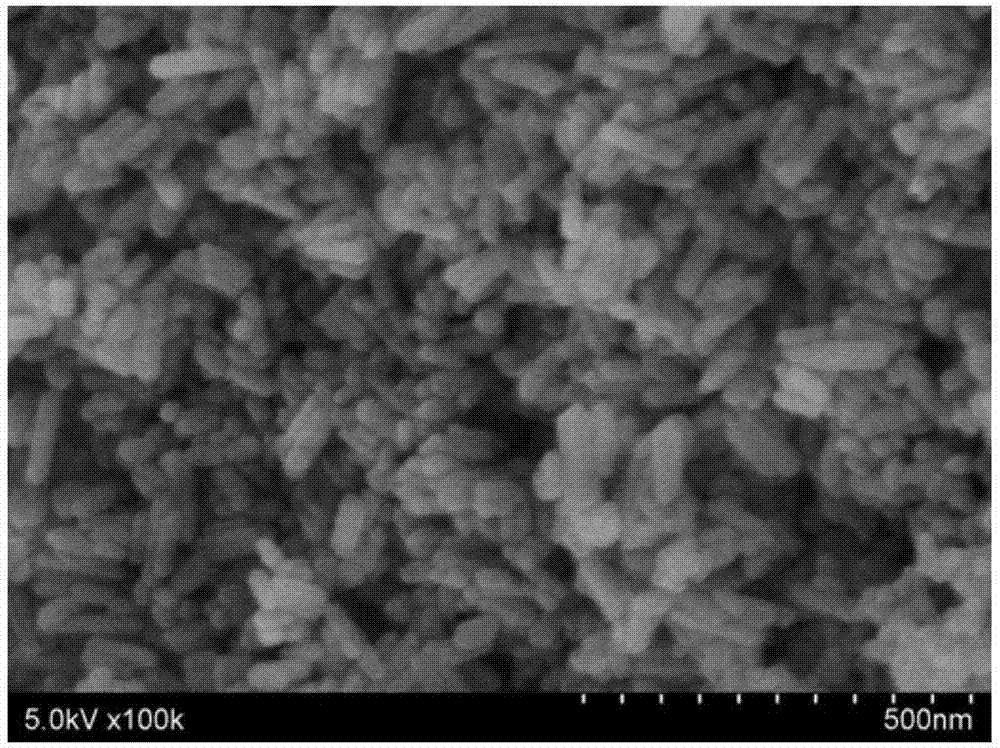
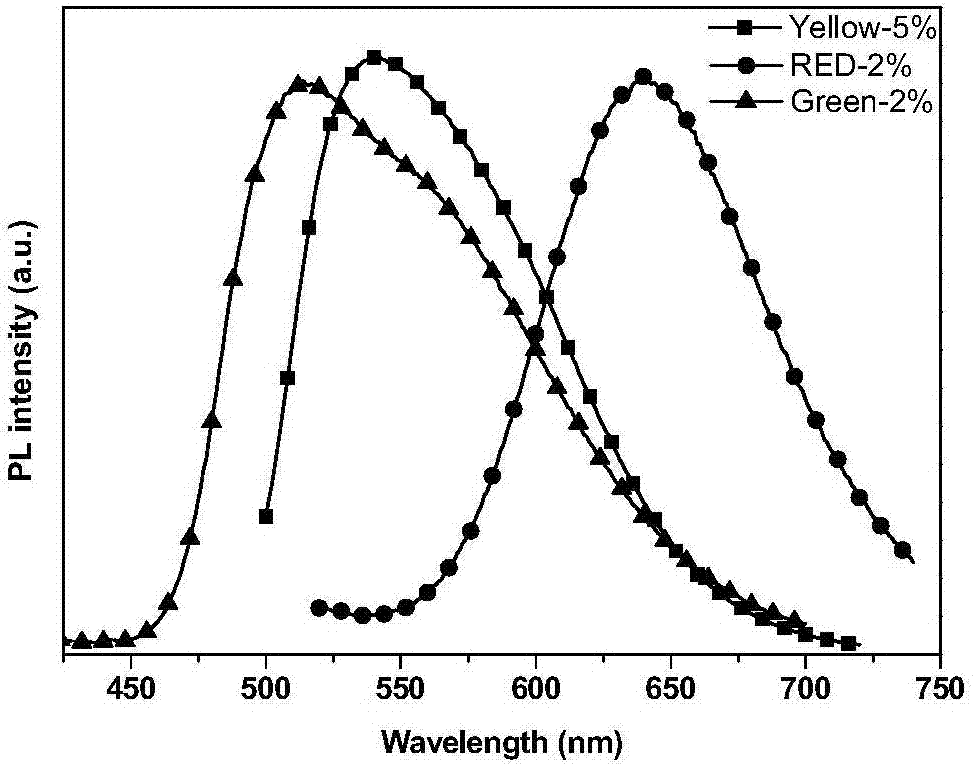
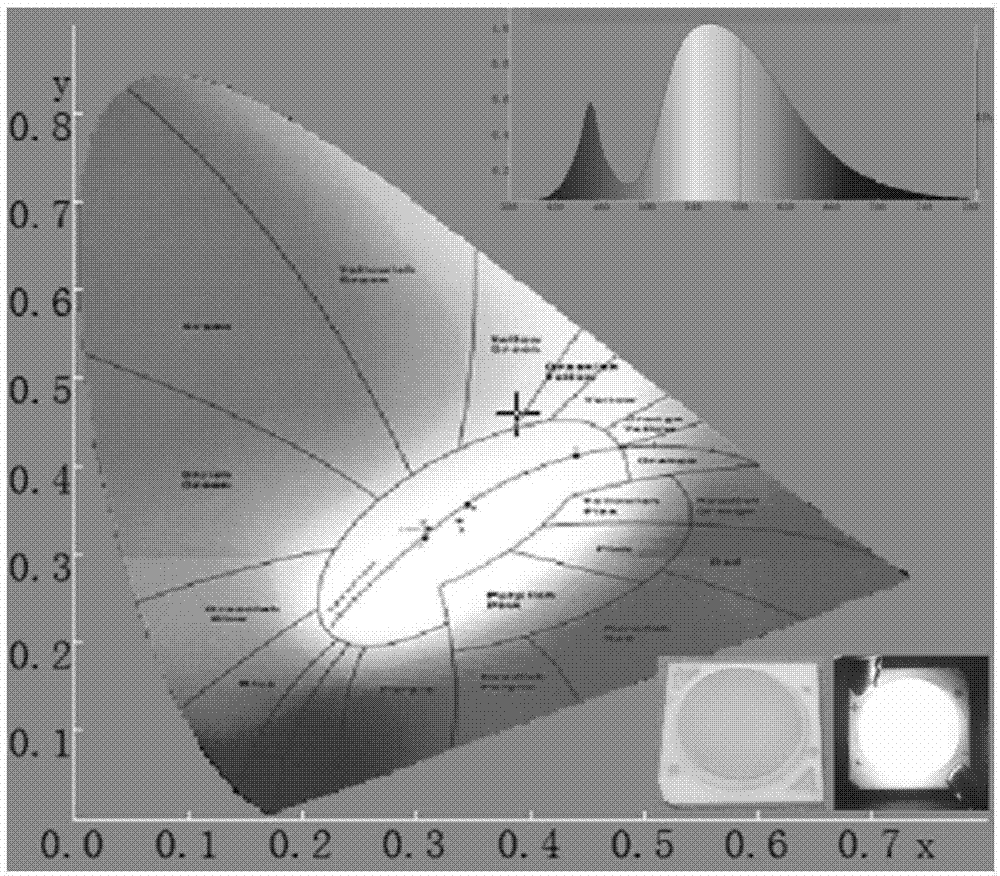
Examples
Embodiment 1
[0029] Using calcium nitrate and diammonium hydrogen phosphate as raw materials, the concentration of calcium nitrate is 0.9mol / L to prepare solution A, and the concentration of diammonium hydrogen phosphate is 1.8mol / L to prepare solution B; under the ice bath environment, the solution A is prepared according to the ion molar ratio to Ca : P=1.6:1, drop speed 3ml / min, slowly drop into B solution, adjust reaction environment pH>10 with ammonia water during the reaction; react 2h after dropping, obtain C suspension, turn C solution into high pressure Carry out hydrothermal in the reaction kettle, the hydrothermal reaction temperature is 130°C, and the hydrothermal reaction time is 24h; after hydrothermal filtration, the precipitate is washed with water and alcohol to obtain the precursor of hydroxyapatite powder, which is fully dried in an oven; The powder was calcined in a muffle furnace at a calcining temperature of 250° C., a heating rate of 5° C. / min, and a holding time of 2...
Embodiment 2
[0032]Using calcium nitrate and diammonium hydrogen phosphate as raw materials, the concentration of calcium nitrate is 0.3mol / L to prepare solution A, and the concentration of diammonium hydrogen phosphate to prepare solution B; : P=1.5:1, dripping speed 1ml / min, slowly drop into B solution, adjust the reaction environment pH>10 with ammonia water during the reaction; react for 2h after the drop is completed, obtain C suspension, turn C solution into high pressure Carry out hydrothermal in the reaction kettle, the hydrothermal reaction temperature is 100°C, and the hydrothermal reaction time is 12h; after hydrothermal filtration, the precipitate is washed with water and alcohol to obtain the precursor of hydroxyapatite powder, which is fully dried in an oven; The powder was calcined in a muffle furnace at a calcining temperature of 700° C., a heating rate of 5° C. / min, and a holding time of 2 hours to obtain a hydroxyapatite matrix.
[0033] Grind and mix the commercial red p...
Embodiment 3
[0035] Using calcium nitrate and diammonium hydrogen phosphate as raw materials, the concentration of calcium nitrate is 0.9mol / L to prepare solution A, and the concentration of diammonium hydrogen phosphate is 1.8mol / L to prepare solution B; under the ice bath environment, the solution A is prepared according to the ion molar ratio to Ca : P=2:1, drop speed 2ml / min, slowly drop into solution B, adjust the reaction environment pH>10 with ammonia water during the reaction; react for 2 hours after the addition is completed, obtain C suspension, transfer C solution to high pressure Carry out hydrothermal in the reaction kettle, the hydrothermal reaction temperature is 130°C, and the hydrothermal reaction time is 24h; after hydrothermal filtration, the precipitate is washed with water and alcohol to obtain the precursor of hydroxyapatite powder, which is fully dried in an oven; The powder was calcined in a muffle furnace at a calcining temperature of 250° C., a heating rate of 5° C...
PUM
| Property | Measurement | Unit |
|---|---|---|
| particle diameter | aaaaa | aaaaa |
| luminous efficiency | aaaaa | aaaaa |
| refractive index | aaaaa | aaaaa |
Abstract
Description
Claims
Application Information
 Login to View More