
High-temperature self-healing multiphase coating formed on base material and preparation method and application thereof
A matrix material and self-healing technology, applied in the field of high-temperature self-healing multiphase coating and its preparation, can solve the problems of good performance, low jet temperature, unable to prepare tissue, etc., and achieve the effect of prolonging the use time
- Summary
- Abstract
- Description
- Claims
- Application Information
AI Technical Summary
Problems solved by technology
Method used
Image

Examples
preparation example Construction
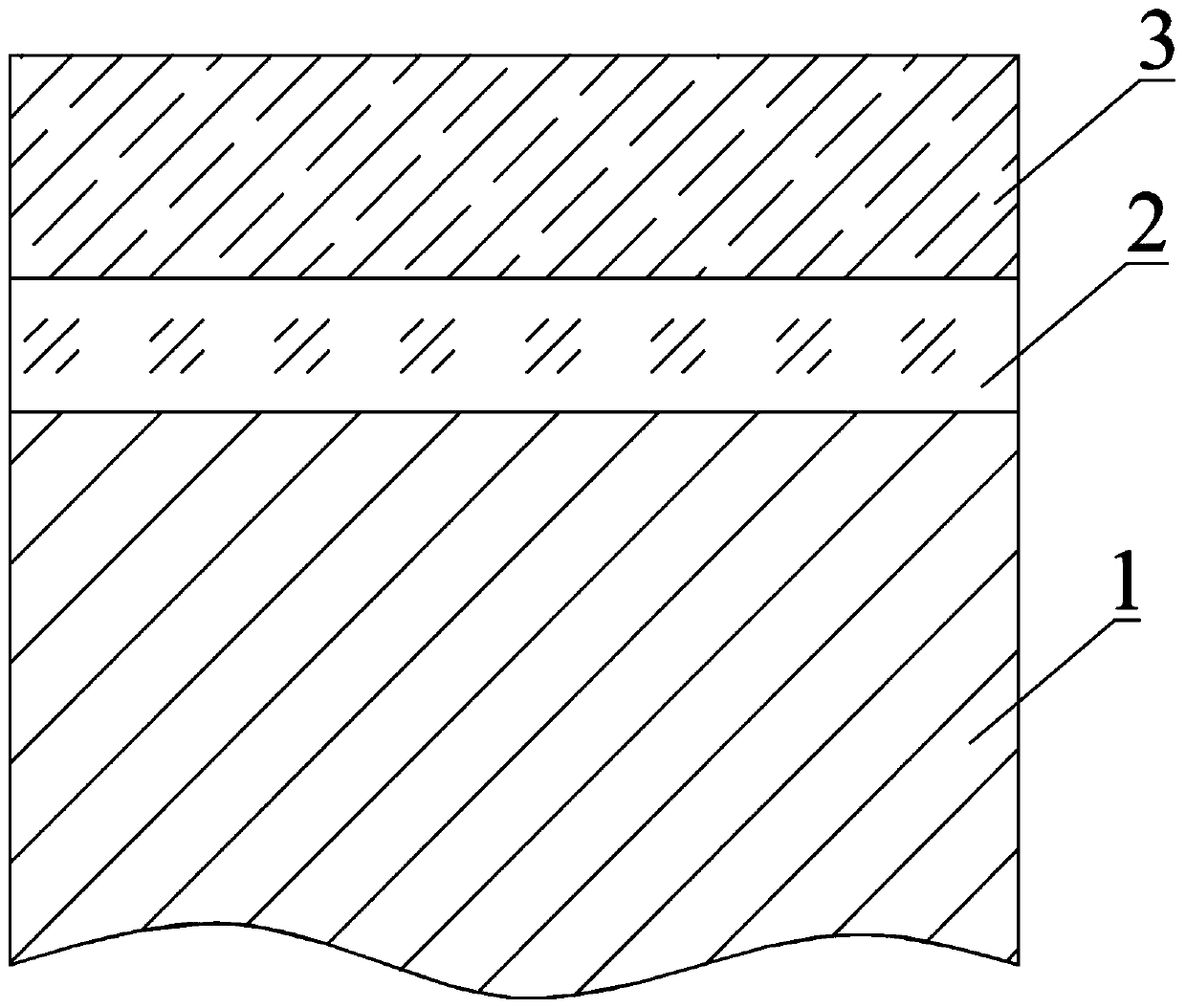
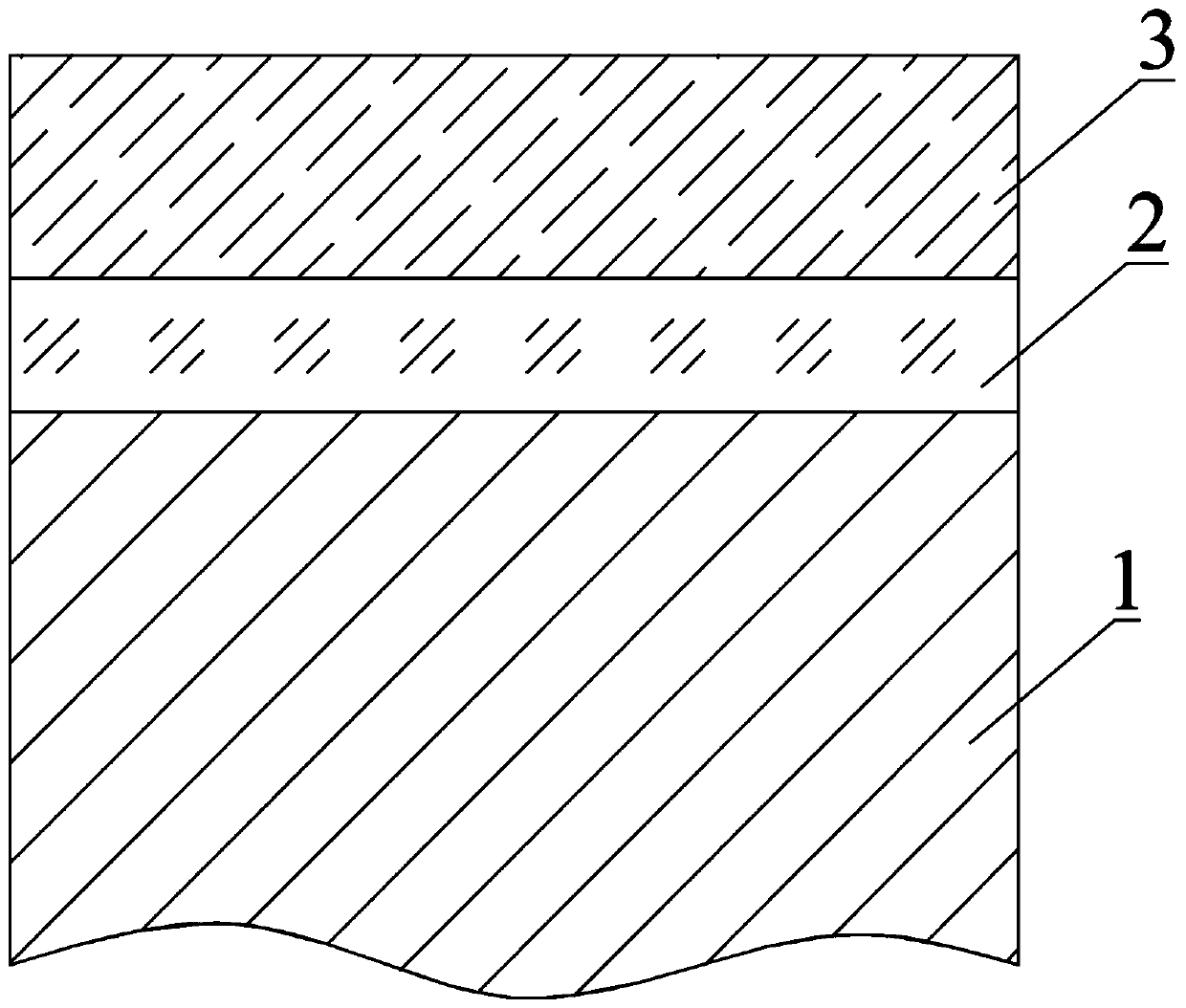
[0037] In a second aspect, the present invention provides a method for preparing the high-temperature self-healing composite coating described in the first aspect of the present invention, the method comprising the steps of:
[0038] (1) Depositing the SiC transition layer on the surface of the base material by chemical vapor deposition (CVD for short);
[0039] (2) ZrB 2 Powder, LaB 6 Powder and TaSi 2 Mix the powder evenly to obtain a mixed powder, then put the mixed powder into the powder feeder of the vacuum plasma spraying equipment and dry it;
[0040] (3) the base material deposited with the SiC transition layer is fixed on the rotary table in the vacuum chamber of the vacuum plasma spraying equipment; and
[0041] (4) prepare the ZrB on the SiC transition layer of the base material by vacuum plasma spraying method (VPS method for short) 2 -LaB 6 -TaSi 2 Composite surface layer, so that the high-temperature self-healing composite coating is prepared on the base ma...
Embodiment 1
[0065] S1. Prepare C. f / C-SiC ceramic matrix composite matrix original piece, the size is Φ30×10mm, respectively with 240 # 、600 # 、1000 # Polish the surface with sandpaper, put it in an acetone solution for ultrasonic cleaning for 10 minutes, and set it aside.
[0066] S2, the C f / C-SiC composite material is placed in a high-temperature furnace, heated to 1050 ° C, using trichloromethylsilane vapor as the SiC raw material, and the deposition time is 30 h. After the temperature in the furnace drops to room temperature, the sample is taken out, and the f A SiC transition layer with a thickness of 50 μm was obtained on the surface of the / C-SiC composite.
[0067] S3, select ZrB produced after spray granulation 2 -LaB 6 -TaSi 2 Hollow spherical micron powder (mole composition is ZrB 2 : 70%; LaB 6 : 15%; TaSi 2 : 15%, mol%), the particle size range of the hollow spherical micron powder is 15-45 μm.
[0068] S4. Put the spray powder into the powder feeder of the vacu...
Embodiment 2
[0075] Embodiment 2 is basically the same as Embodiment 1, the difference is:
[0076] In S3, ZrB produced after spray granulation was selected 2 -LaB 6 -TaSi 2 Hollow spherical micron powder, wherein the molar composition of the hollow spherical micron powder is ZrB 2 : 60%; LaB 6 : 20%; TaSi 2 : 20%, mol%.
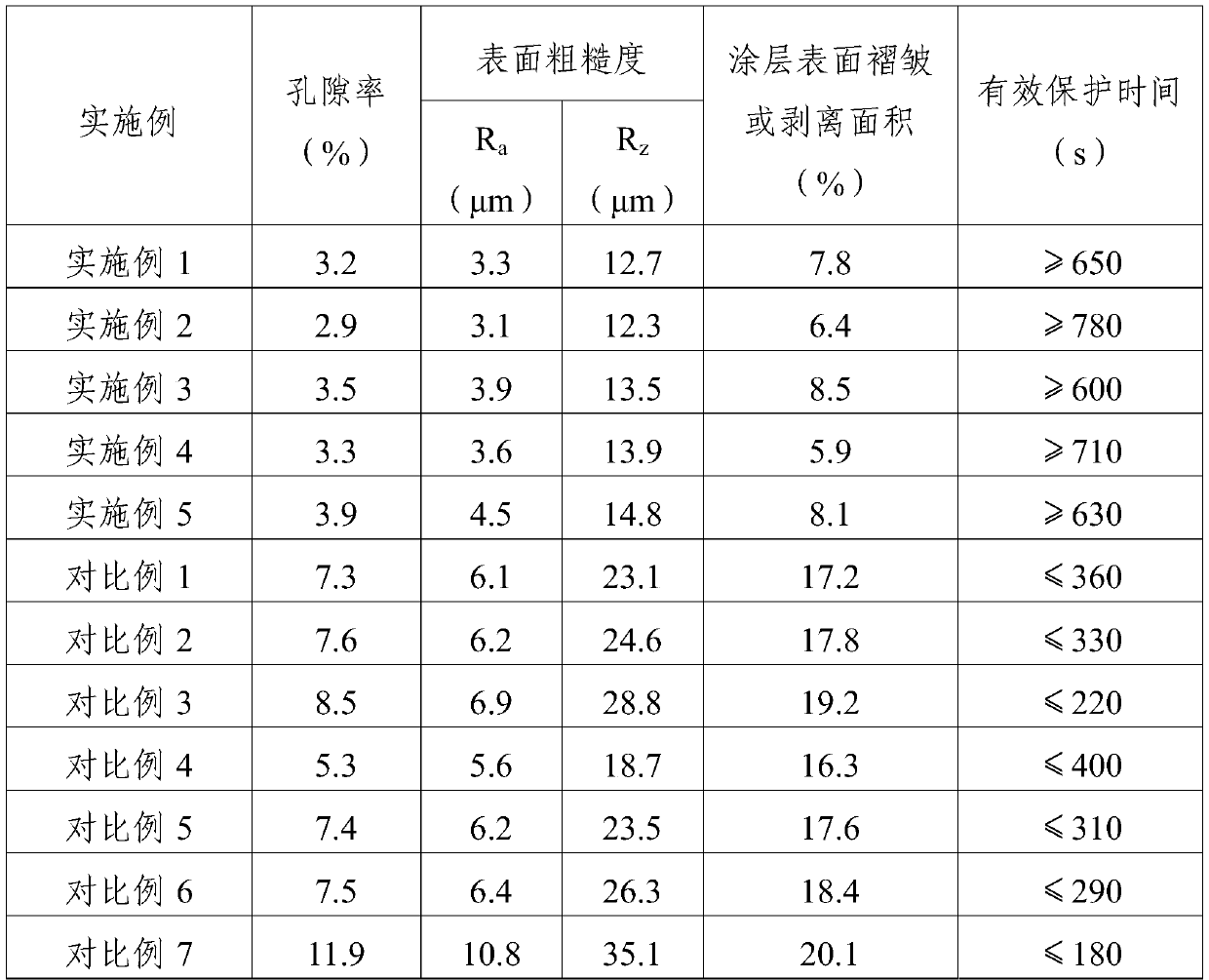
[0077] The SiC / ZrB prepared in this example was tested by the same test method as in Example 1. 2 -LaB 6 -TaSi 2 The porosity, surface roughness and high temperature ablation resistance of the composite ceramic coating were tested, and the test results are shown in Table 1; in the present embodiment, the C f / C-SiC ceramic matrix composites were subjected to high-temperature ablation resistance tests. The surface temperature of the material during the ablation process was 2200°C, and the ablation time was 780s. 2 -LaB 6 -TaSi 2 The multiphase ceramic coating can effectively protect the ceramic matrix composite for at least 780s.
PUM
| Property | Measurement | Unit |
|---|---|---|
| Particle size | aaaaa | aaaaa |
| Diameter | aaaaa | aaaaa |
| Thickness | aaaaa | aaaaa |
Abstract
Description
Claims
Application Information
 Login to View More