[0004] The friction
pendulum system (FPS) is actually a friction
pendulum sliding mechanism that relies on gravity to reset. When the natural vibration period of the upper mechanism is short, the natural vibration period of the isolation structure can be extended to T=2π(R / g)1 / 2, Among them, R is the
radius of the sliding spherical surface, and g is the acceleration of gravity. This kind of mechanism only acts as
vibration isolation for the swing direction. In order to meet the
vibration isolation requirements of the two dimensions of the X / Y plane, it needs to be designed as a double-layer structure, and the structure is relatively complicated. The cost is also high, and the current technical method is mainly used for tuning the
mass damping
system (TMD)
[0005] The laminated steel plate / rubber isolation bearing
system is relatively mature and has been popularized and applied for many years. This technical method and application have also been included in China's mandatory standards: "
Technical Specifications for Architectural Design (GB 50011-2010)", China Architecture The industrial industry recommended standard "Building shock-isolation rubber bearings (JG / T 118-2018), the
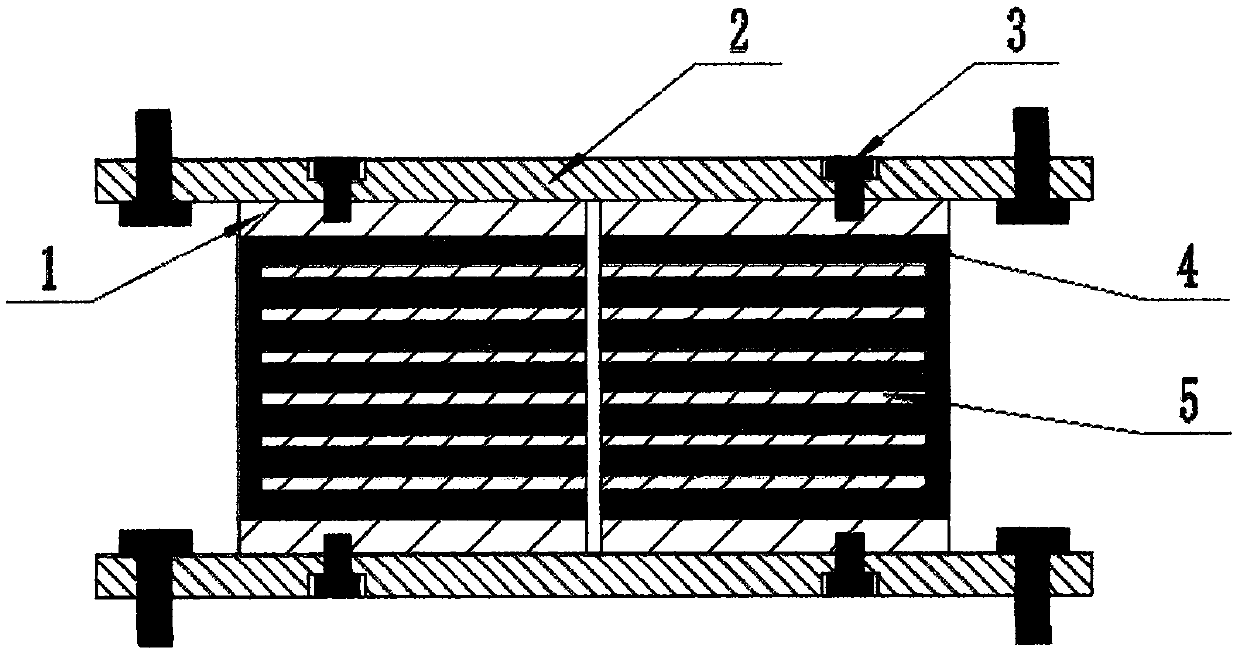
schematic diagram of the vibration-isolation rubber bearings is attached to the instruction manual figure 1 , where 1 is the upper steel plate, 2 is the steel plate for the support, 3 is the connecting bolt, 4 is the laminated rubber plate, and 5 is the laminated steel plate between the rubber plates. Taking
advantage of the high elasticity of rubber, the
horizontal shear force The bottom can be elastically deformed and recovered. Compared with the upper and lower connections of the
rigid structure, the
seismic energy in the horizontal direction can be less transmitted to the upper building structure, and the relative effect of the horizontal
earthquake resistance on buildings with a shorter natural vibration period The
disadvantage is that there is generally no vibration damping effect on the vibration of the upper building structure caused by the vertical earthquake action, and there is no effective vibration damping protection for the upper structure. Another
disadvantage is that there is a long-period horizontal vibration. The danger of
resonance [0006] The sliding isolation method with plane friction between the building and the lower foundation can theoretically limit and isolate the seismic action in the horizontal direction to the greatest extent. The plane friction pair has the advantages of large
bearing capacity and low pressure, and can play a role in
seismic isolation. The technical premise is that the interface between the sliding friction pairs is stable, the
friction coefficient is stable, and the sliding
friction force is stable. However, in practical applications,
steel plates with friction pairs will stick together due to
corrosion, resulting in sharp fluctuations in the
friction coefficient. In addition, between different building foundations In fact, there are different
subsidence levels and different levels, and the sliding planes will not actually remain in an ideal plane. When a real earthquake occurs, sliding friction is difficult to actually occur, and the
seismic energy in the horizontal direction will still be The shearing action is transmitted to the upper building structure, so ordinary sliding friction isolation is limited in practical application
[0007] The method of
building energy dissipation and vibration reduction is to direct the energy input from the earthquake into the building structure to specially set mechanisms and components for absorption and dissipation, so as to protect the safety of the main body of the building. Type friction
damper, mild steel and
alloy damper, lead
damper, steel plate or steel
pipe / rubber
sandwich type viscoelastic damper, and speed-dependent
piston type
viscous oil damper, these dampers or use interface
Friction force or the use of elastic-plastic deformation of materials or the use of high-pressure oil to force through the orifice to generate damping force, all have certain loading
hysteresis characteristics, and are mainly used in high-rise structures as interstory damping supports to absorb horizontal seismic energy. It is not suitable for the
seismic isolation base layer of the building; especially the
piston type
viscous oil damper, the piston oil damper with double piston rods is generally used, and the main piston has a small damping hole. With a high
internal pressure of 20-80MPa, the energy-dissipating damper used as the structural foundation is a severe test for long-term work to ensure that the dynamic seal does not leak oil. The reliability of this structure for structural foundation isolation and vibration reduction is not enough convince


 Login to View More
  Login to View More