
A cmos image sensor readout circuit compatible with two exposure modes
An image sensor and readout circuit technology, applied in image communication, television, electrical components, etc., can solve problems such as inability to achieve, and achieve the effects of low power consumption, low frame rate, and cost reduction
Patent Information
- Authority / Receiving Office
- CN · China
- Patent Type
- Patents(China)
- Current Assignee / Owner
- Publication Date
- 2021-08-31
Smart Images
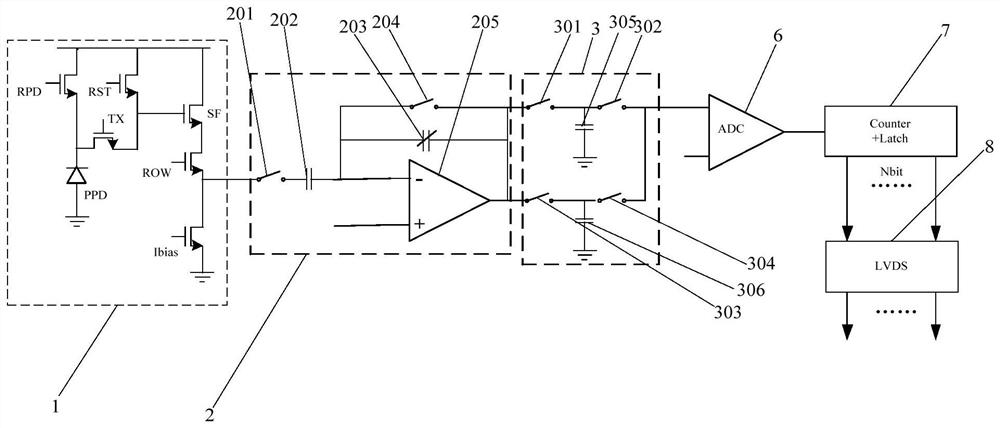
Figure 1 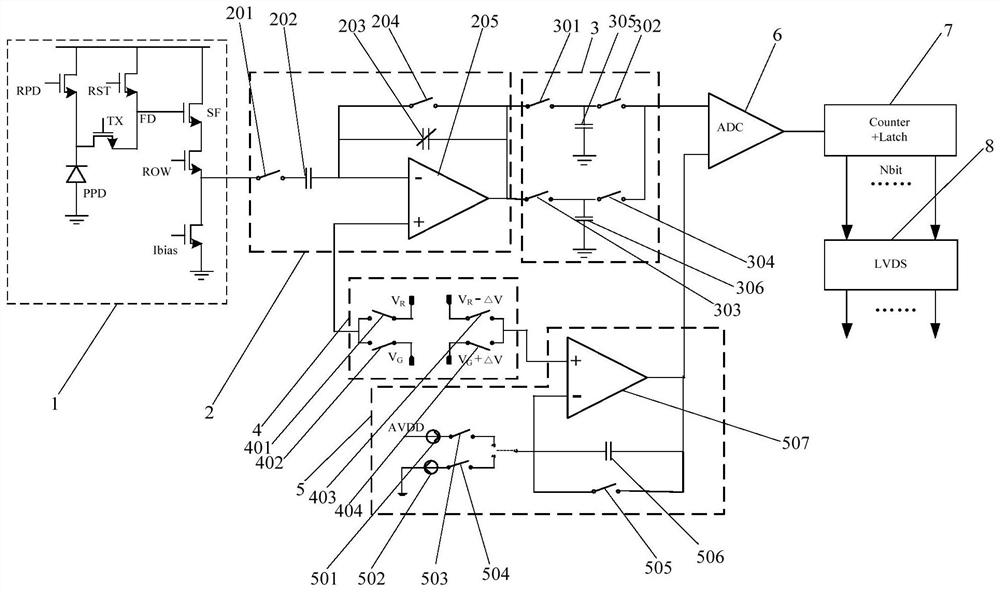
Figure 2 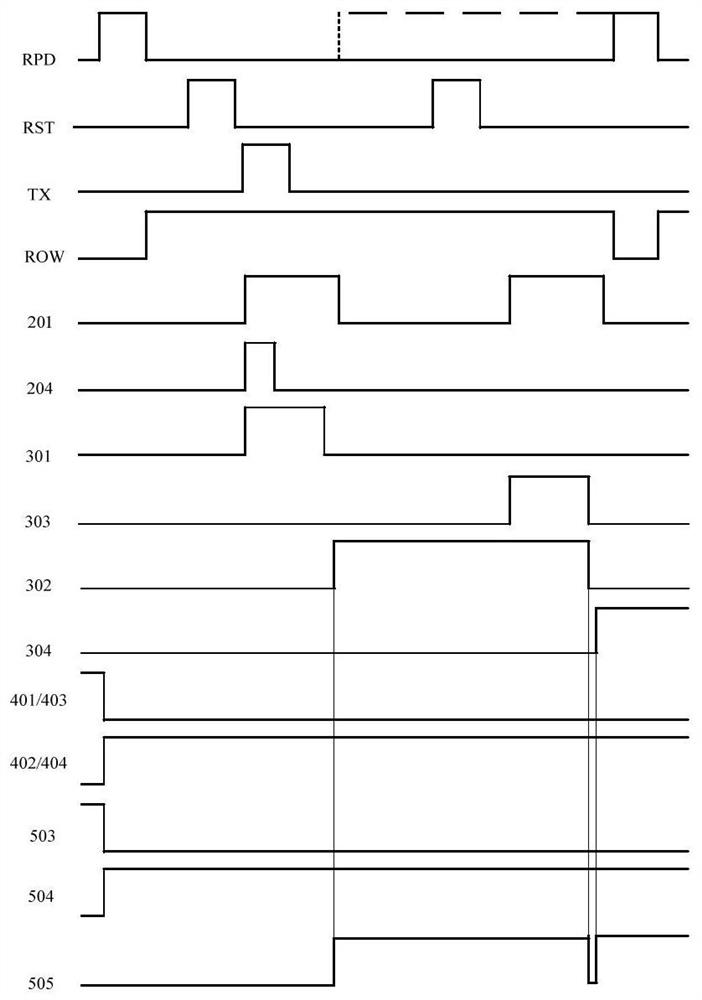
Figure 3
Abstract
Description
technical field
[0001] The invention belongs to the field of CMOS image sensors and relates to a CMOS image sensor readout circuit compatible with two exposure modes. Background technique
[0002] The image sensor is the core of the modern electronic imaging system, and the image sensor is mainly implemented based on two processes, CMOS process and charge-coupled device (CCD) process. CMOS image sensor technology has achieved rapid development in recent years due to its advantages of high integration, small size, and low power consumption. CMOS image sensors are currently divided into two exposure modes, one is the early rolling shutter exposure mode, and the output signal The noise ratio is high, but the frame rate is small. It is used for high-definition shooting of static objects or slow-moving objects, especially for geosynchronous satellite ground monitoring; the other is the global exposure mode, the output signal-to-noise ratio is relatively low, but High frame rate,...
Examples
Embodiment Construction
[0028] In order to enable those skilled in the art to better understand the solutions of the present invention, the following will clearly and completely describe the technical solutions in the embodiments of the present invention in conjunction with the drawings in the embodiments of the present invention. Obviously, the described embodiments are only It is an embodiment of a part of the present invention, but not all embodiments. Based on the embodiments of the present invention, all other embodiments obtained by persons of ordinary skill in the art without making creative efforts shall fall within the protection scope of the present invention.
[0029] It should be noted that the terms "first" and "second" in the description and claims of the present invention and the above drawings are used to distinguish similar objects, but not necessarily used to describe a specific sequence or sequence. It is to be understood that the data so used are interchangeable under appropriate ...