Method for collecting cellulose degradation bacterium strain
A technology of cellulose degrading bacteria and cellulase, applied in the field of environmental microorganisms, can solve the problems of unfavorable bacterial proliferation, high viscosity of CMC liquid medium, unfavorable collection of bacteria, etc.
- Summary
- Abstract
- Description
- Claims
- Application Information
AI Technical Summary
Problems solved by technology
Method used
Image

Examples
Embodiment 1
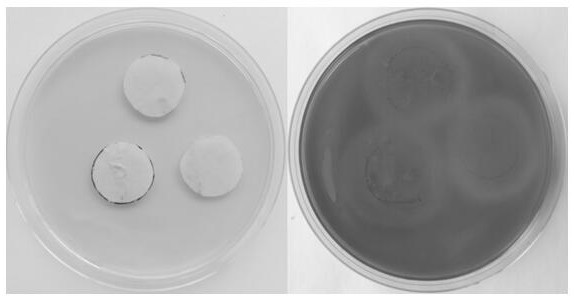
[0029] Embodiment 1: Characterize the cellulose degrading ability of bacterium described in the present invention
[0030] 1. The composition of the CMC medium used in the embodiment is: CMC-Na 15 g, NH 4 NO 3 1 g, yeast extract 1 g, MgSO 4 ·7H 2 O 0.5 g, KH 2 PO 4 1 g, 15 g agar, distilled water to 1 L, 121 ℃ autoclave for 20 min;
[0031] 2. The concentration of Congo red dye solution used in this example is 1 mg / ml, and the concentration of NaCl solution is 1mol / L;
[0032] 3. The cellulose-degrading bacteria used in this example are Bacillus subtilis (preservation number CGMCC No. 18089) and alpine bacillus (preservation number CGMCC No. 17046).
[0033] 4. Expand the culture of the bacteria in LB liquid medium, shake at 37 °C and 150 rpm for 12 h.
[0034] 5. Collect the bacterial solution cultivated overnight into a 10 ml sterilized centrifuge tube, centrifuge at 6000 rpm for 5 min at room temperature, collect the bacterial pellet, and discard the supernatant. ...
Embodiment 2
[0041] Embodiment 2: the cellulase activity of characterizing bacterium described in the present invention
[0042] On the CMC solid plate, use the method in Example 1 to cultivate cellulose-degrading bacteria for 72 h, quickly clamp out the filter paper with sterile tweezers, put it into a sterilized centrifuge tube, and use the DNS method to determine the bacterial fiber Sulfase activity.
[0043] 1, the CMC culture medium that uses in the embodiment is composed with embodiment 1;
[0044] 2. The cellulose-degrading bacteria used in this example are the same as in Example 1;
[0045] 3. In this example, use an ultraviolet spectrophotometer (UV) to measure the absorbance of the treated sample;
[0046] 3. The absorbance and cellulase activity measured in the present embodiment are as follows:
[0047] Table 1 Enzyme activity detection results
[0048]
[0049] The above proves that the bacteria collected by the method of the present invention can carry out quantitative...
Embodiment 3
[0050] Embodiment 3: the sample that the method of the present invention collects is used for extracting DNA
[0051] On the CMC solid plate, use the method of Example 1 to cultivate the cellulose-degrading bacteria for 72 h, quickly clamp the filter paper out with sterile tweezers, put it into a sterilized centrifuge tube, and use phenol-chloroform to extract the bacteria on the filter paper. bacterial DNA.
[0052] 1, the CMC culture medium that uses in the embodiment forms with embodiment 1;
[0053] 2. In this example, Nanodrop 2000 was used to measure the DNA content;
[0054] 3. The cellulose-degrading bacteria used in this example are the same as in Example 1;
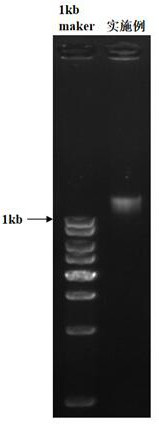
[0055] 4. Using 1% agarose gel electrophoresis in the examples, clear and bright DNA bands can be obtained ( figure 2 );
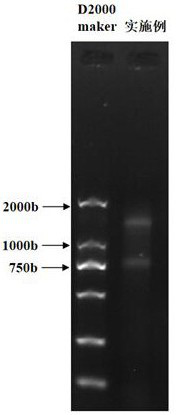
[0056]5. Compared with the traditional method of collecting bacteria (coating method), the method of using filter paper can stably extract DNA and can be used for subsequent PCR experim...
PUM
 Login to View More
 Abstract
Description
Claims
Application Information
 Login to View More
 - R&D
- Intellectual Property
- Life Sciences
- Materials
- Tech Scout
- Unparalleled Data Quality
- Higher Quality Content
- 60% Fewer Hallucinations
Browse by: Latest US Patents, China's latest patents, Technical Efficacy Thesaurus, Application Domain, Technology Topic, Popular Technical Reports.
© 2025 PatSnap. All rights reserved.Legal|Privacy policy|Modern Slavery Act Transparency Statement|Sitemap|About US| Contact US: help@patsnap.com