
Preparation method of 1, 4-cyclohexanedicarboxylic acid
A technology of cyclohexanedicarboxylic acid and terephthalic acid, which is applied in chemical instruments and methods, preparation of carboxylic acids by ozone oxidation, catalysts for physical/chemical processes, etc., can solve problems such as poor activity and selectivity, and achieve long service life, High hydrogenation activity and cost reduction effect
Patent Information
- Authority / Receiving Office
- CN · China
- Current Assignee / Owner
- Publication Date
- 2022-04-29
Smart Images
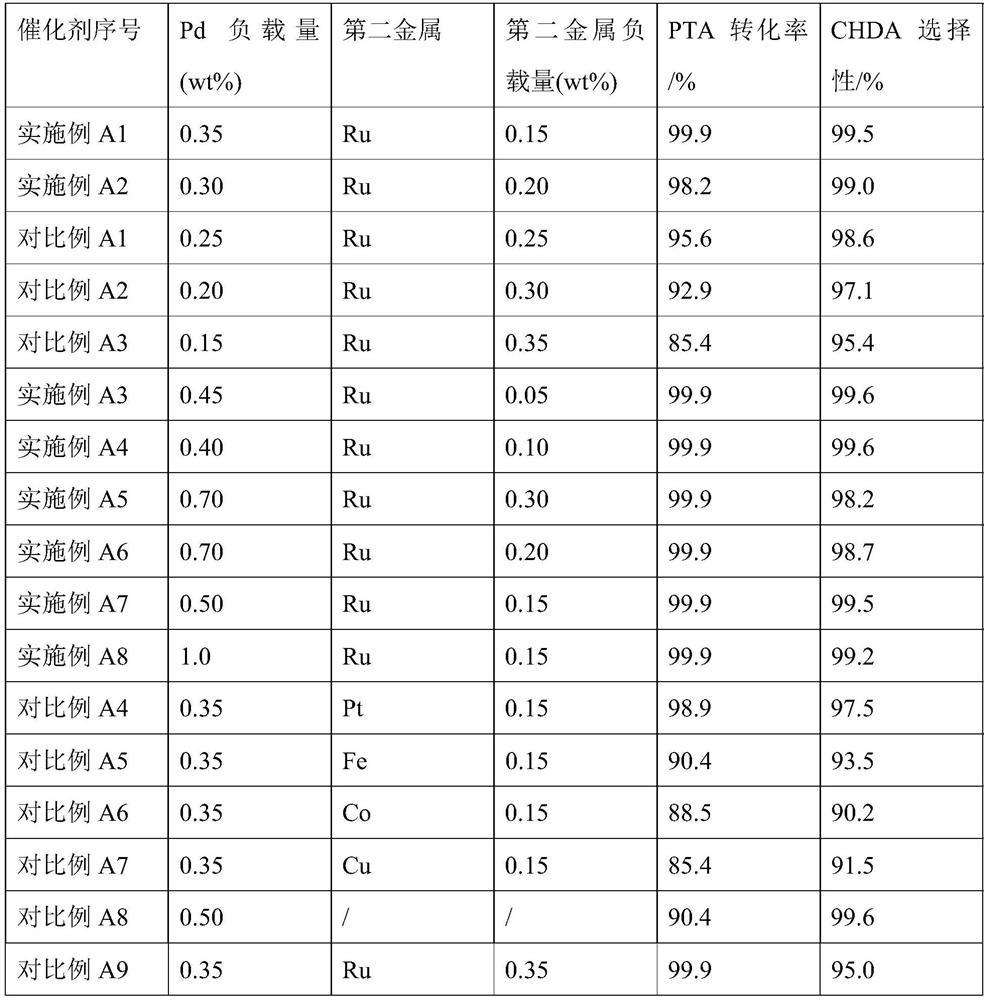
Figure 1 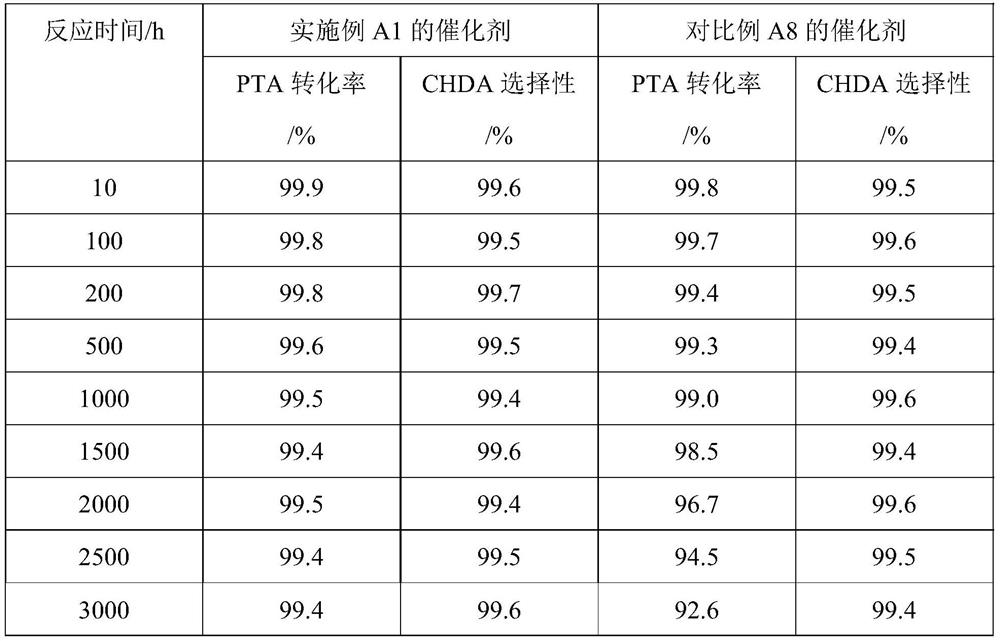
Figure 2
Abstract
Description
technical field
[0001] The invention belongs to the field of fine chemicals, and in particular relates to a method for preparing 1,4-cyclohexanedicarboxylic acid by continuous hydrogenation of terephthalic acid. Background technique
[0002] 1,4-Cyclohexanedicarboxylic acid (CHDA for short) brings many unique properties to polyester resins and glass fiber reinforced plastics for high performance coatings, products used in automotive, transportation, industrial maintenance, aerospace, buildings , equipment and general metal and gel coat coatings and other aspects. In addition, in medicine, CHDA can also be used to synthesize peptic ulcer medicine. CHDA is prepared by hydrogenation of terephthalic acid (PTA). US patent US 6291706 uses Pd / C catalyst, which is installed in the autoclave hanging basket, and the PTA concentration is 5% under continuous stirring at 200 ° C and 4.5 MPa. 45 minutes of the aqueous solution, and then contacted and reacted with the catalyst for 3 hour...
Examples
Embodiment A1
[0025] Example A1: The columnar activated carbon carrier was pretreated with a nitric acid solution, the nitric acid concentration was 5.0 wt%, the mass ratio of the activated carbon carrier to the nitric acid solution was 1:5, the treatment temperature was 90°C, and the treatment time was 3h. After nitric acid pretreatment, the activated carbon carrier was washed with purified water until the filtrate was neutral, and dried at 110 °C for 4 h.
[0026] The catalyst was prepared by an equal volume impregnation method. Palladium chloride and ruthenium chloride solutions (dissolved in hydrochloric acid) were prepared according to the theoretical loading, and the activated carbon carrier treated with the above nitric acid was added, impregnated for 24 hours, and dried at 110 °C for 4 hours. Using hydrogen reduction, the reduction temperature is 300 ℃. The theoretical loading of metal Pd is 0.35 wt %, and the theoretical loading of metal Ru is 0.15 wt %.
[0027] In Examples A2 to...