Zinc-containing nitrogen-doped porous carbon-coated zinc-based negative electrode material for lithium ion battery
A technology for lithium ion batteries and negative electrode materials, applied in battery electrodes, circuits, electrical components, etc., can solve the problems of poor cycle performance and low negative electrode capacity, and achieve the effects of increasing capacity, preventing mechanical disintegration, and inhibiting aggregation.
- Summary
- Abstract
- Description
- Claims
- Application Information
AI Technical Summary
Problems solved by technology
Method used
Image



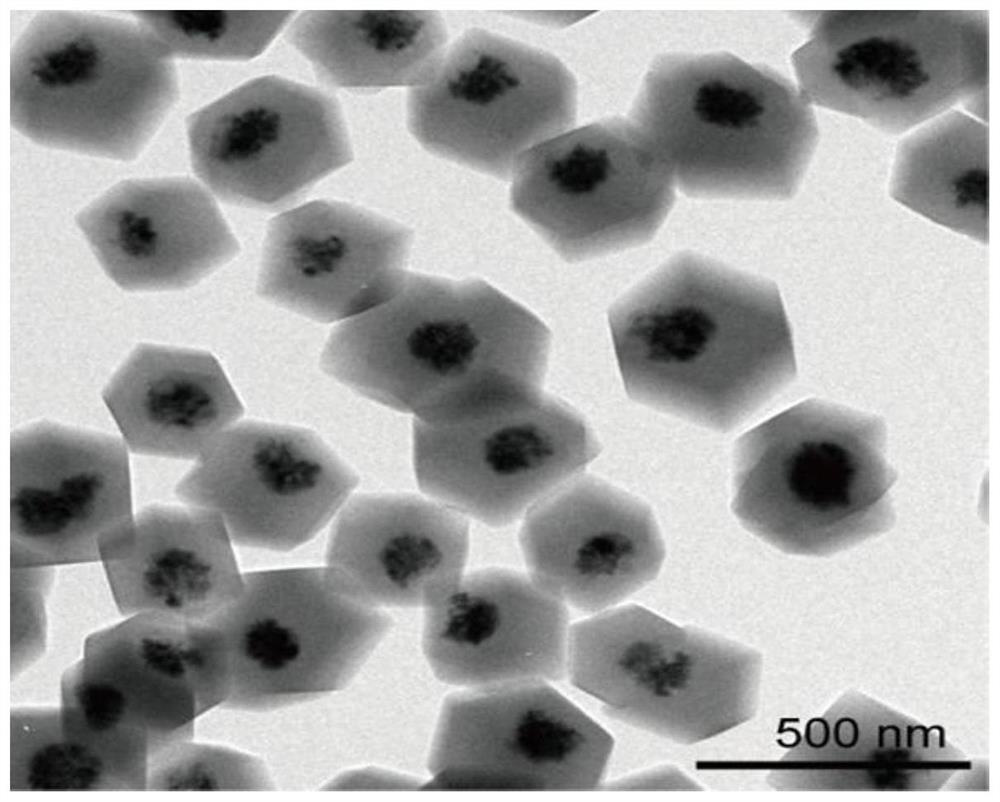
Examples
Embodiment 1
[0024] The preparation method of ZnO (ZnO@nitrogen-doped porous carbon / Zn) negative electrode material coated with nitrogen-doped porous carbon containing zinc for a lithium ion battery proposed by the present invention comprises the following steps:
[0025] S1: Dissolve 5 mmol of zinc acetate dihydrate in 50 mL of diethylene glycol, and heat to 160° C. under reflux for 1 h under stirring. After cooling to room temperature, the suspension was centrifuged at 4000rpm for 3h, and the colloidal product in the supernatant was used as the seed for the next step of synthesis;
[0026] S2: Dissolve 3mmol of zinc acetate dihydrate in 30mL of diethylene glycol, and when heated to 140°C under 400rpm stirring condition, add a certain volume of colloidal product in the supernatant to the solution, and then continue to heat and reflux at 160°C 1h. After cooling to room temperature, the product was collected by centrifugation and washed three times with methanol solution, then dispersed in...
Embodiment 2
[0033] The preparation method of ZnO (ZnO@nitrogen-doped porous carbon / Zn) negative electrode material coated with nitrogen-doped porous carbon containing zinc for a lithium ion battery proposed by the present invention comprises the following steps:
[0034] S1: Dissolve 5 mmol of zinc acetate dihydrate in 50 mL of diethylene glycol, and heat to 160° C. under reflux for 1 h under stirring. After cooling to room temperature, the suspension was centrifuged at 4000rpm for 3h, and the colloidal product in the supernatant was used as the seed for the next step of synthesis;
[0035] S2: Dissolve 3mmol of zinc acetate dihydrate in 30mL of diethylene glycol, and when heated to 140°C under 400rpm stirring condition, add a certain volume of colloidal product in the supernatant to the solution, and then continue to heat and reflux at 160°C 1h. After cooling to room temperature, the product was collected by centrifugation and washed three times with methanol solution, then dispersed in...
Embodiment 3
[0040] The preparation method of ZnO (ZnO@nitrogen-doped porous carbon / Zn) negative electrode material coated with nitrogen-doped porous carbon containing zinc for a lithium ion battery proposed by the present invention comprises the following steps:
[0041] S1: Dissolve 5 mmol of zinc acetate dihydrate in 50 mL of diethylene glycol, and heat to 160° C. under reflux for 1 h under stirring. After cooling to room temperature, the suspension was centrifuged at 4000rpm for 3h, and the colloidal product in the supernatant was used as the seed for the next step of synthesis;
[0042] S2: Dissolve 3mmol of zinc acetate dihydrate in 30mL of diethylene glycol, and when heated to 140°C under 400rpm stirring condition, add a certain volume of colloidal product in the supernatant to the solution, and then continue to heat and reflux at 160°C 1h. After cooling to room temperature, the product was collected by centrifugation and washed three times with methanol solution, then dispersed in...
PUM
 Login to View More
 Abstract
Description
Claims
Application Information
 Login to View More