Nonmagnetic low-vibration coaxial impulse pipe refrigerating machine

A pulse tube refrigerator, pulse tube technology, applied in refrigerators, gas circulation refrigerators, coolers, etc., can solve the problem that the airflow cannot be guaranteed to be smooth and uniform, the coaxial pulse tube refrigerator cannot be directly served, and the SQUID device measures millimetres. meaningless issues

CN1467461AInactive Publication Date: 2004-01-14TECHNICAL INST OF PHYSICS & CHEMISTRY - CHINESE ACAD OF SCI
3 Cites 17 Cited by

Patent Information

Authority / Receiving Office
CN · China
Current Assignee / Owner
Publication Date
2004-01-14
Estimated Expiration
Not applicable · inactive patent

Smart Images

  • Figure 1
    Figure 1
  • Figure 2
    Figure 2
  • Figure 3
    Figure 3
Patent Text Reader

Abstract

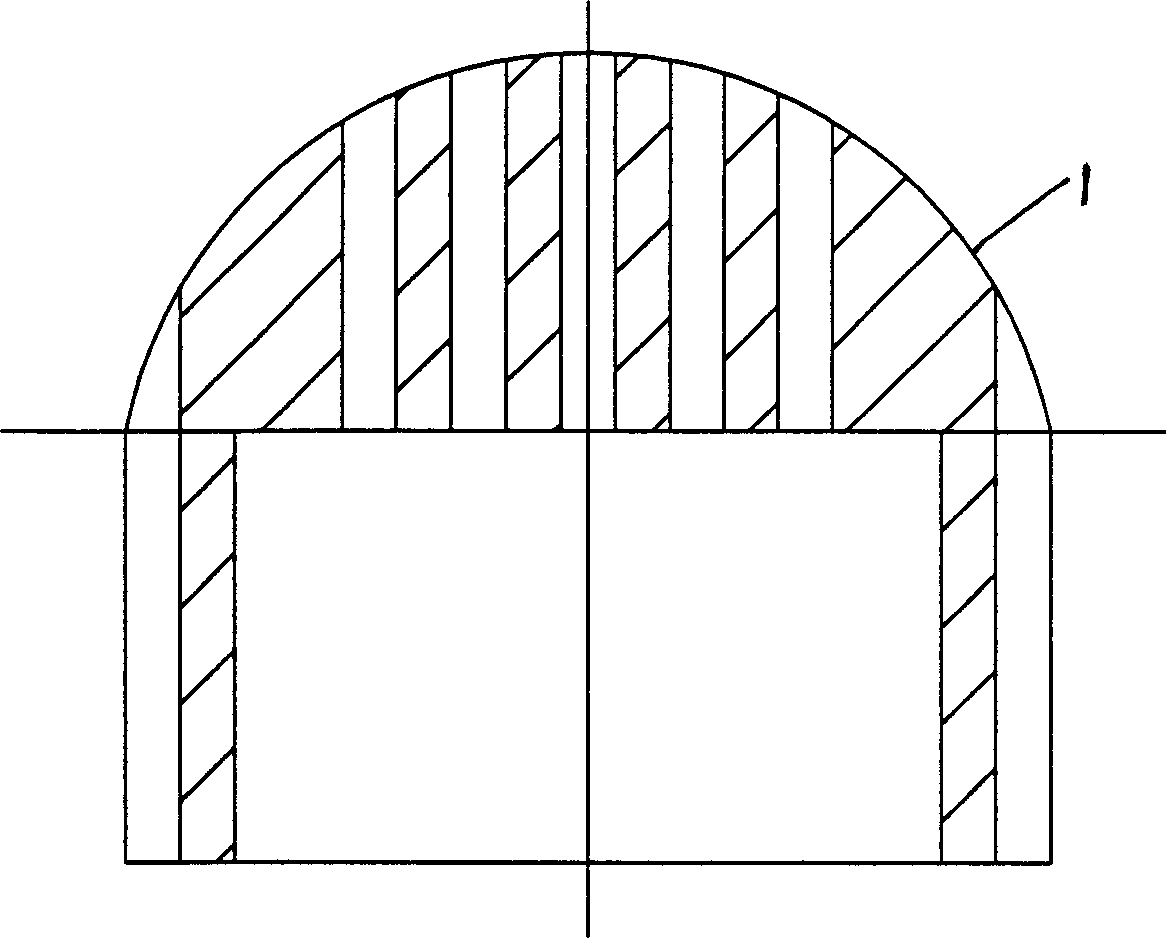
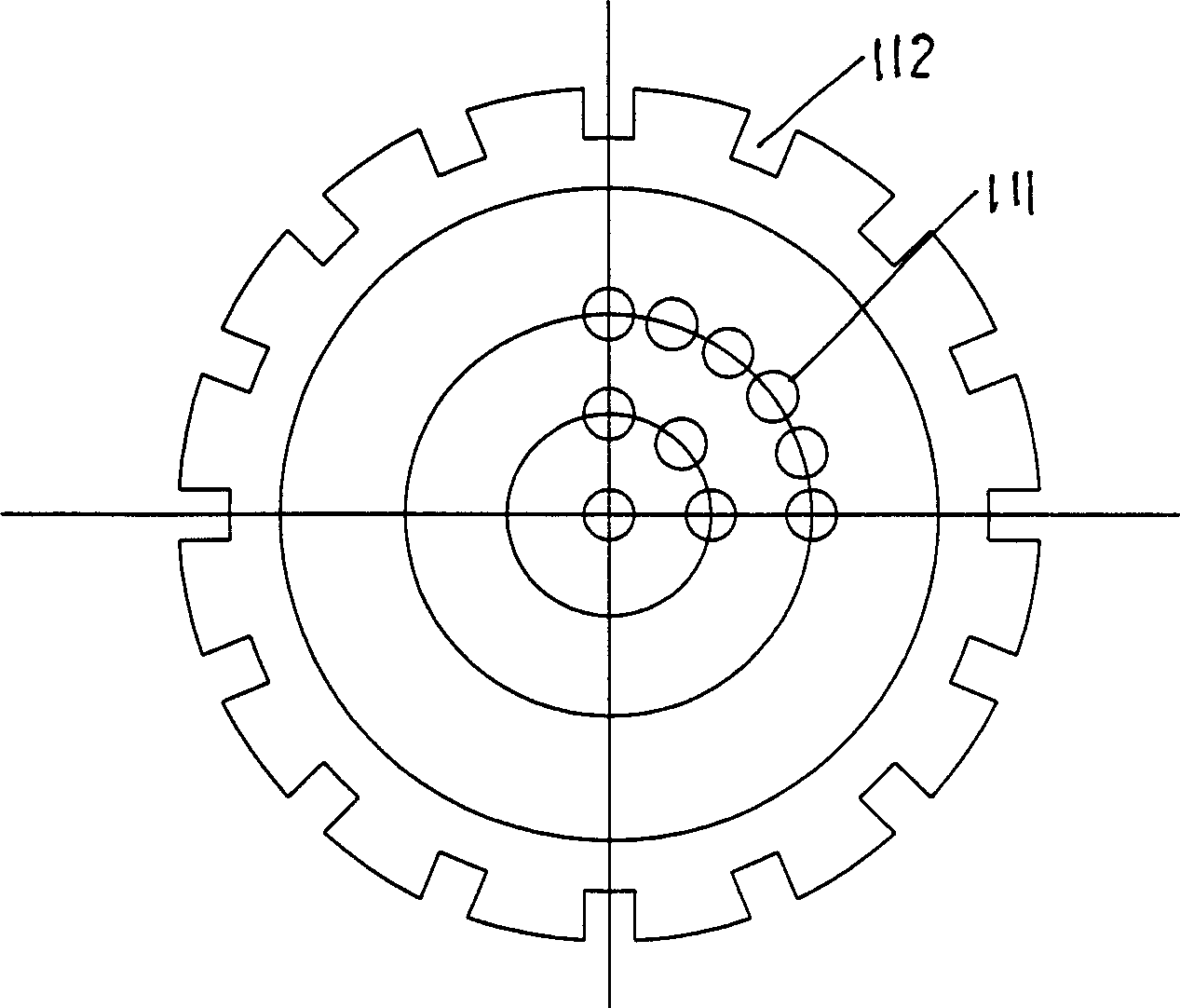
The invention relates to a non-magnetic low vibration coaxial pulse tube refrigerating machine wherein the pulse tube and the cold accumulation device are in coaxial arrangement, between which cold accumulation stuffing is filled, an arched flow diverter is arranged on an extending section and the end portion, closely spaced vertical through-holes are arranged on the arched portion, vertical grooves are arranged evenly circular ring external wall, the cover type cold end heat exchanger covers the groove and packs by bonding, the horizontal split cold platform supported by the support rod and fixed on the hot end flange vertically are arranged on the cold end heat exchanger, the cold platform and cold end heat exchanger are connected by flexible heat guide band, the coupling channel under the throttle holes are connected to phase modulation capillary.
Need to check novelty before this filing date? Find Prior Art

Description

field of invention

[0001] The invention belongs to the technical field of refrigeration and low temperature, and in particular relates to a non-magnetic and low-vibration coaxial pulse tube refrigerator. Background technique

[0002] The wide application of superconducting devices based on superconducting quantum interferometers (SQUID) depends on the development of low-temperature systems. In many occasions such as space or underwater submarines, it is the lack of suitable low-temperature systems that limits the use of SQUID devices. Using mechanical refrigeration methods instead of directly immersing SQUIDs in a Dewar containing cryogenic liquids has been a challenge in the field of cryogenics for nearly three decades. Superconducting devices based on superconducting quantum interferometers have very strict requirements on the environment. For example, the sensitivity of SQUID in superconducting geomagnetism is about 10 times that of the earth...

Examples

Embodiment Construction

[0026] Further describe the present invention below in conjunction with accompanying drawing and embodiment example:

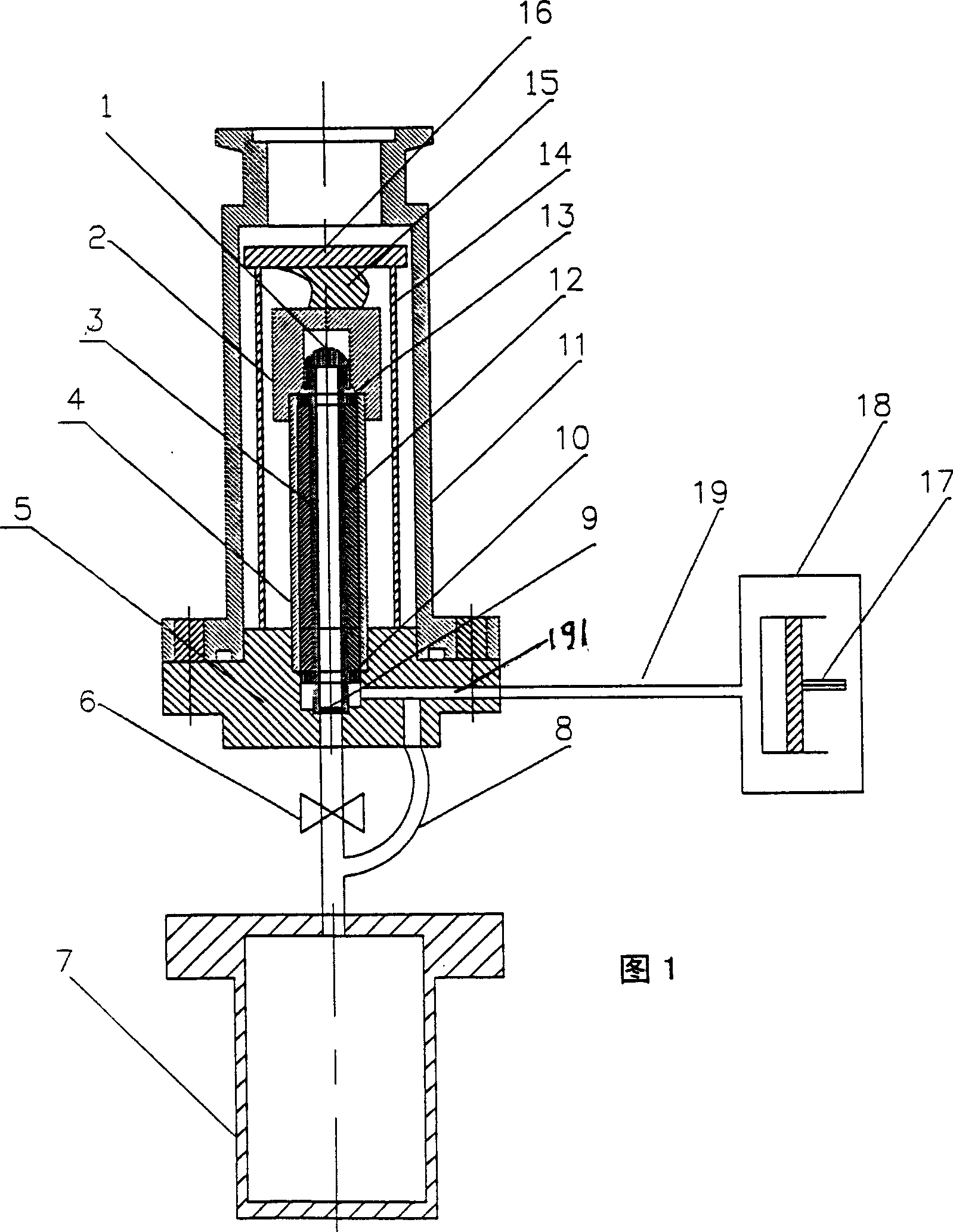
[0027] Fig. 1 shows the structure diagram of the non-magnetic and low-vibration coaxial pulse tube refrigerator of the present invention, as can be seen from the figure, the non-magnetic and low-vibration coaxial pulse tube refrigerator of the present invention, in the vacuum chamber, pulse tube 3 and regenerator 4 placed coaxially, filled with cold storage packing 12, the cold end of the pulse tube 3 is equipped with a pulse tube cold end deflector 1, the cold end of the regenerator is equipped with a regenerator cold end deflector 13, and the cold end of the refrigerator is equipped with The cold end heat exchanger 2, the hot end of the pulse tube is equipped with a hot end deflector 9 and a heat exchanger, and the pipeline between the heat exchanger and the gas storage 7 is provided with a throttling hole 6, and the compressor 17 is connected with the pulse ...