Energy efficient methods for isomerization of a C5-C6 fraction with dividing wall fractional distillation

US10118875B1Active Publication Date: 2018-11-06KOCKLER DAVID NORBERT
7 Cites 7 Cited by

Patent Information

Authority / Receiving Office
US · United States
Current Assignee / Owner
Publication Date
2018-11-06

Smart Images

  • Figure 1
    Figure 1
  • Figure 2
    Figure 2
  • Figure 3
    Figure 3
Patent Text Reader

Abstract

This invention relates to a method of separating an isomerization zone effluent mixture comprising between 5 and 7 carbon atoms into high octane isomerate product streams and low octane streams which may be recycled to the isomerization zone. The separation process makes use of a dividing wall column to efficiently perform the separation of isopentane and high octane multibranched paraffins from low octane straight chain and single branched paraffins.
Need to check novelty before this filing date? Find Prior Art

Description

BACKGROUND OF THE INVENTION

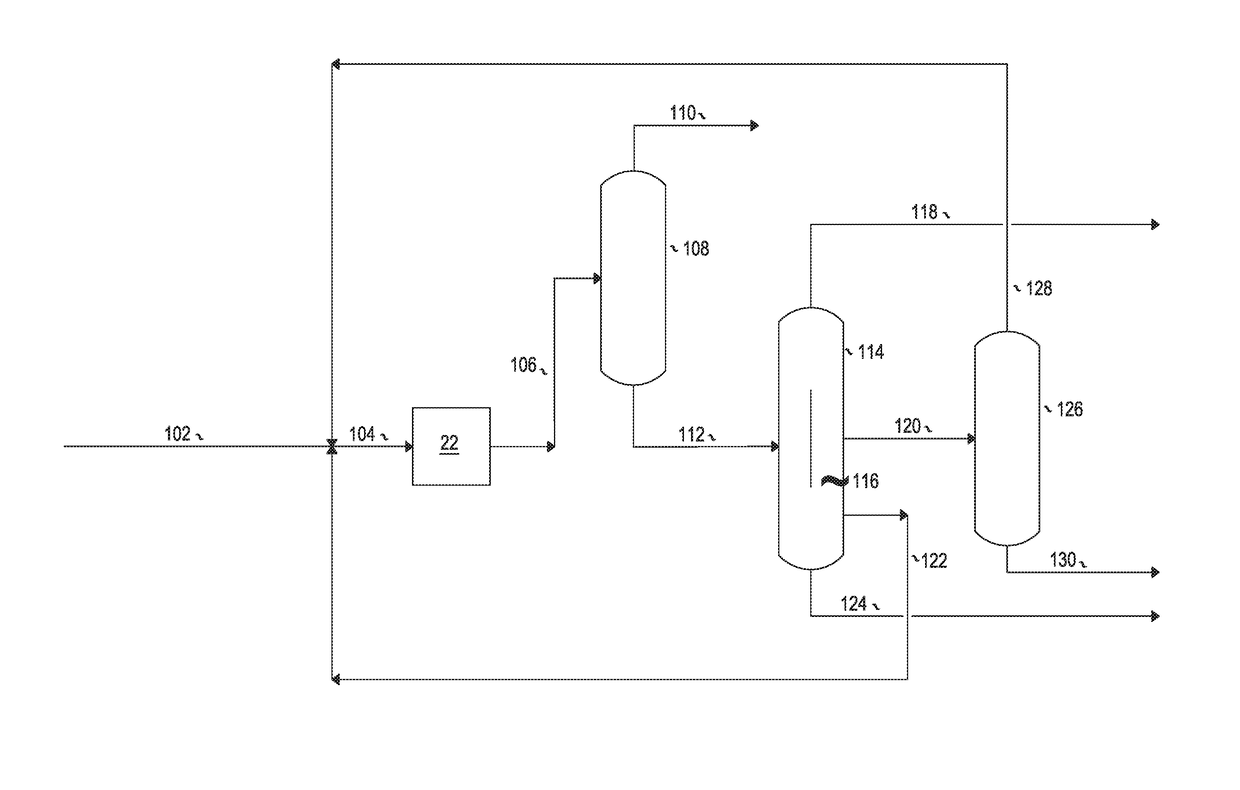
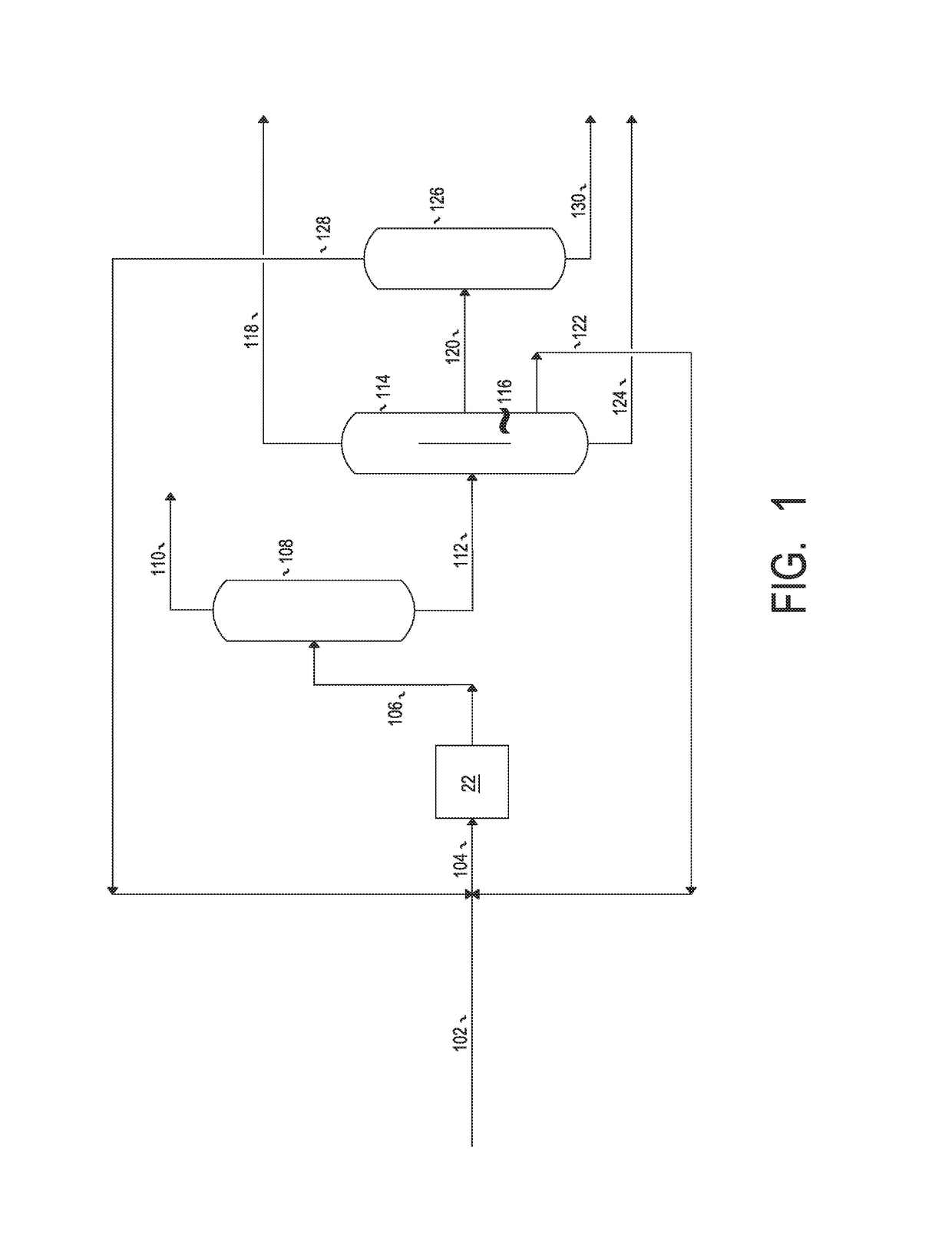
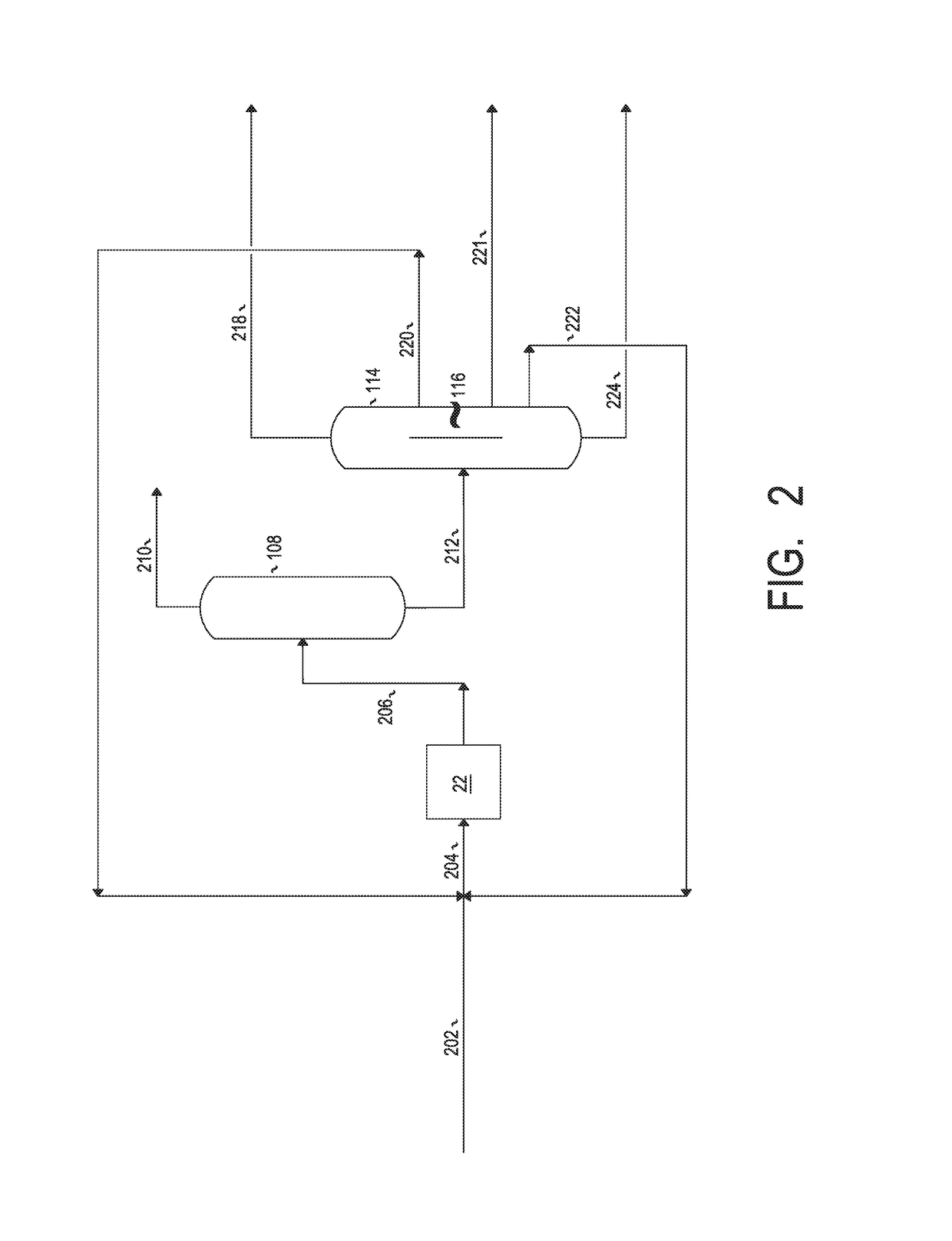
[0001] This invention relates generally to the isomerization of hydrocarbons. More specifically, the invention involves an isomerization zone and an isomerized product fractionation zone in which a stabilized effluent stream from the isomerization zone is separated into high octane product streams and low octane product streams by means of fractional distillation and by making use of a dividing wall column and a non-divided column. The stabilized isomerization zone effluent is generally comprised of hydrocarbons containing between 5 and 7 carbon atoms per molecule.

[0002] Isomerization is an important process used in the petroleum industry to increase the research octane number (RON) of light naphtha feeds. In current practice, the naphtha (C5-C10 fraction) obtained from atmospheric distillation of petroleum is separated by means of fractional distillation into light naphtha and heavy naphtha. The light naphtha is generally sent to an isomerization process un...

Examples

Embodiment Construction

[0025]The detailed description is provided herein is exemplary and provides examples of preferred embodiments of the invention. The description of the exemplary embodiments is not intended to limit the use of the invention to only the exemplary embodiments of the invention described herein.

[0026]The invention is not restricted to any particular type of isomerization process; however, the invention is well suited for isomerization processes which are designed to process a light naphtha feed comprised of a C5-C6 fraction. The invention is also well suited for applications in which recycle of low octane isomerized products is required to meet the RON specification for the isomerate product from the overall isomerization process. The term “overall isomerization process” is used herein to refer to the entirety of the isomerization process. The invention is well suited for isomerization applications with composite isomerate product RON targets in the range of about 86 to 88 and is especia...