

Transgenic trees exhibiting increased growth, biomass production and xylem fibre length, and methods for their production
a technology of xylem fibre and xylem, which is applied in the field of transgenic trees exhibiting increased growth, biomass production and xylem fibre length, and methods for their production. it can solve the problems of inability to predict the effect of ga 20-oxidase on the overexpression of ga 20-oxidase in woody plants, and difficulty in predicting how specific genetic changes in herbaceous species correspond in woody plants
- Summary
- Abstract
- Description
- Claims
- Application Information
AI Technical Summary
Problems solved by technology
Method used
Image

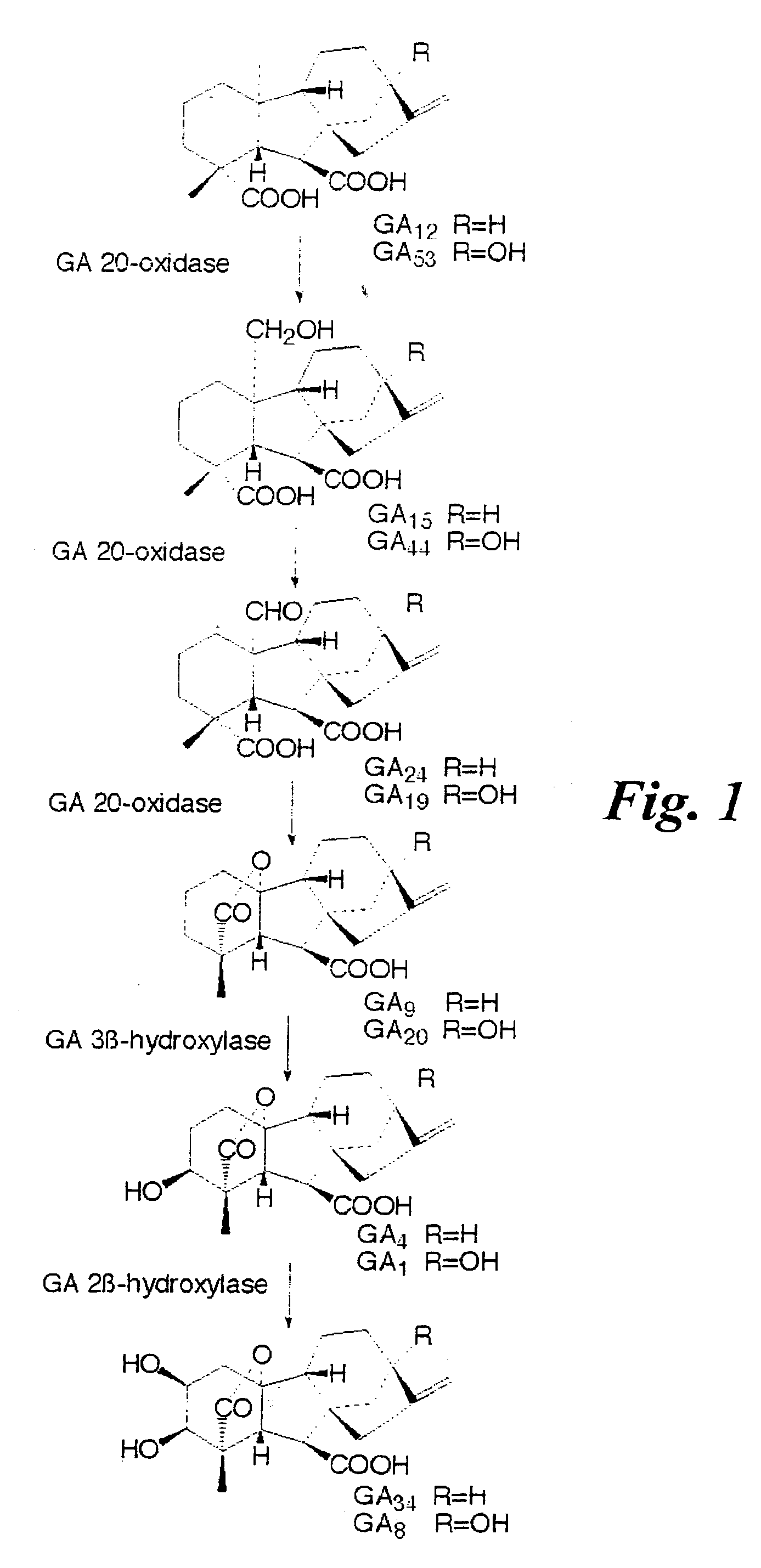
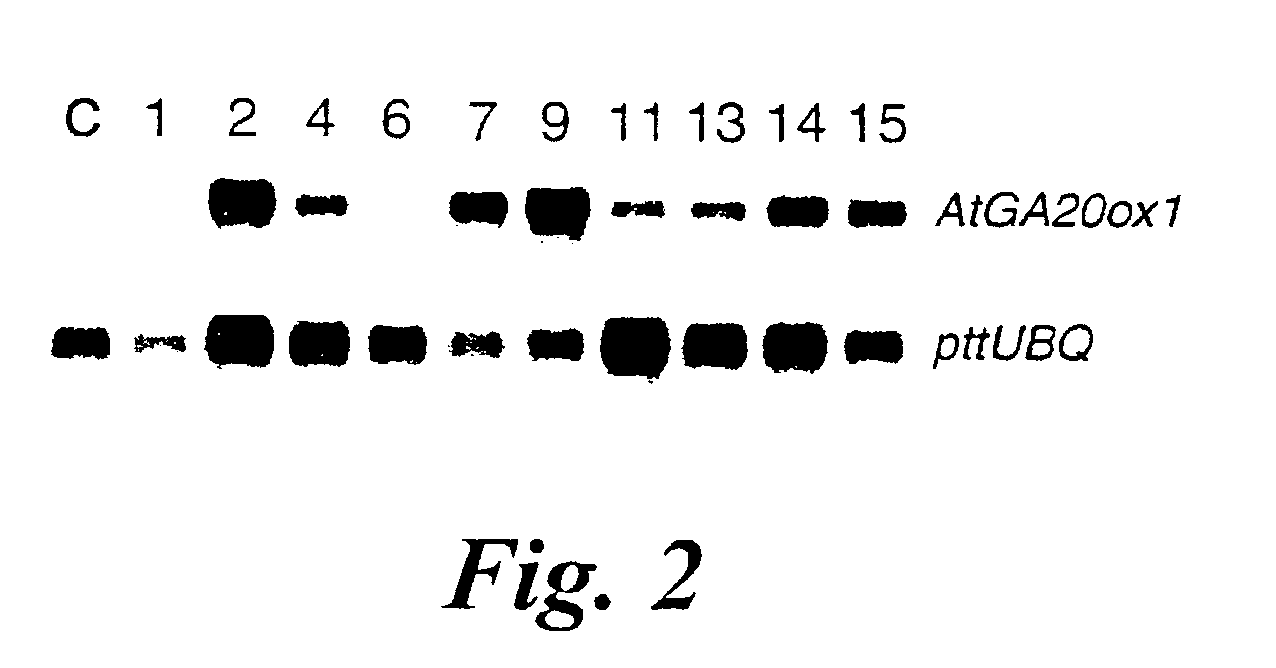
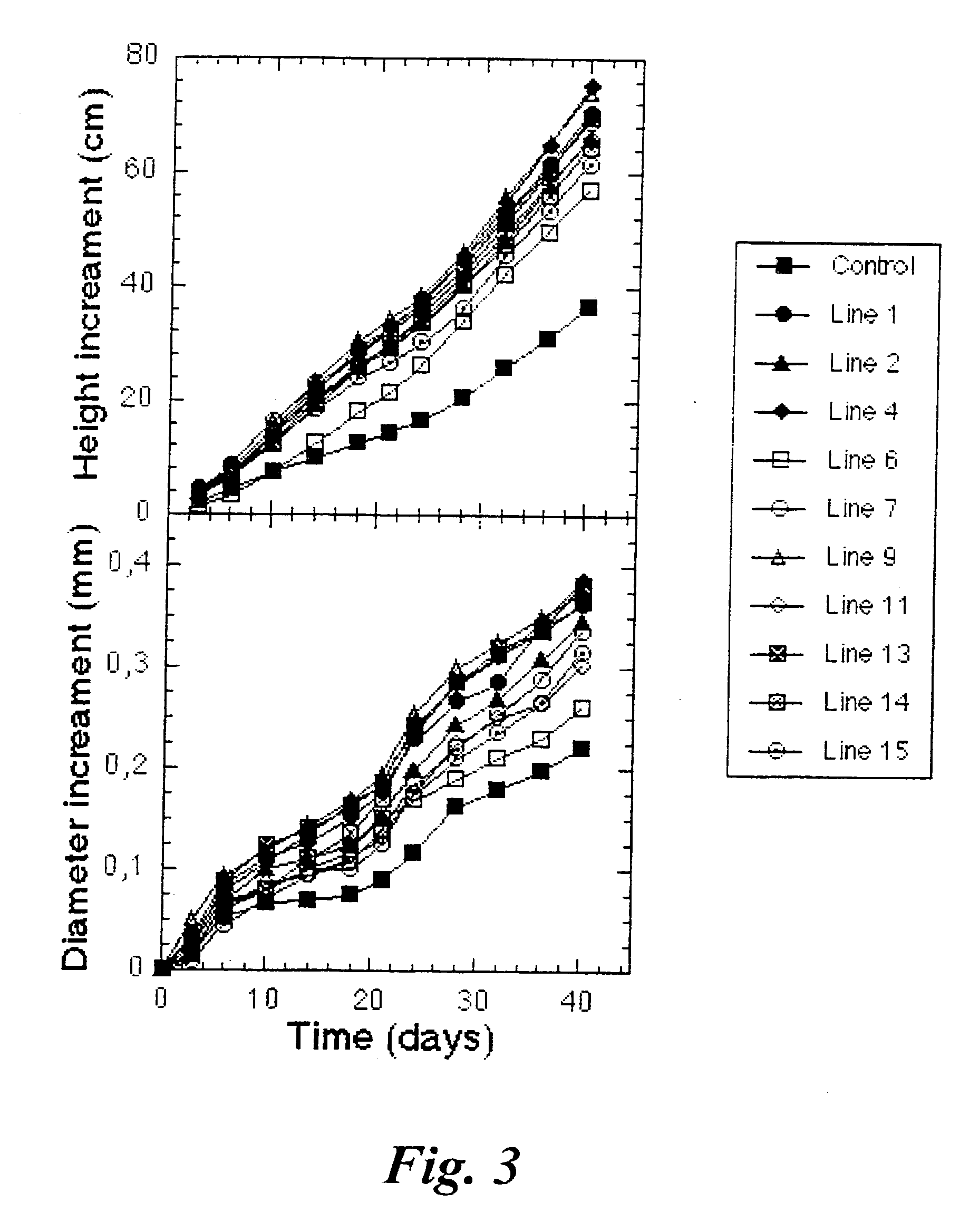
Examples
examples
Experimental Protocol
[0040] Plant Vector Construction
[0041] The Arabidopsis GA20-oxidase cDNA construct cloned in bluescript pAt2301 [Phillips, A. L. et al. Isolation and expression of three gibberellin 20-oxidase cDNA clones from Arabidopsis, Plant Physiol. 108, 1049-1057 (1995)], recently renamed AtGA20ox1 [Coles, J. P. et al. Modification of gibberellin production and plant development in Arabidopsis by sense and antisense expression of gibberellin 20-oxidase genes, Plant J. 17, 547-556 (1999)] was obtained as a gift from P. Hedden.
[0042] An upstream ATG sequence, preceding the translational start of the GA 20-oxidase enzyme, was removed by in vitro mutagenesis. A forward primer matching the 5'-end of the GA 20 oxidase gene, but lacking the extra ATG and carrying a Bam HI and Xba 1 site, and a reverse primer spanning an internal Hind III site in the GA 20 oxidase gene, were used in a PCR reaction. Using AtGA20ox1 as a template, a PCR product was obtained and subcloned into the pO...
PUM
| Property | Measurement | Unit |
|---|---|---|
| thick | aaaaa | aaaaa |
| length | aaaaa | aaaaa |
| time | aaaaa | aaaaa |
Abstract
Description
Claims
Application Information
 Login to View More