

Method for production of MRAM elements
a technology of magnetoresistive elements and production methods, applied in semiconductor devices, digital storage, instruments, etc., can solve the problems of image distortion and instabilities, photolithography is susceptible, etc., and achieves the most repeatable method, the effect of easy repeatability in the deposition system
- Summary
- Abstract
- Description
- Claims
- Application Information
AI Technical Summary
Benefits of technology
Problems solved by technology
Method used
Image

Examples
Embodiment Construction
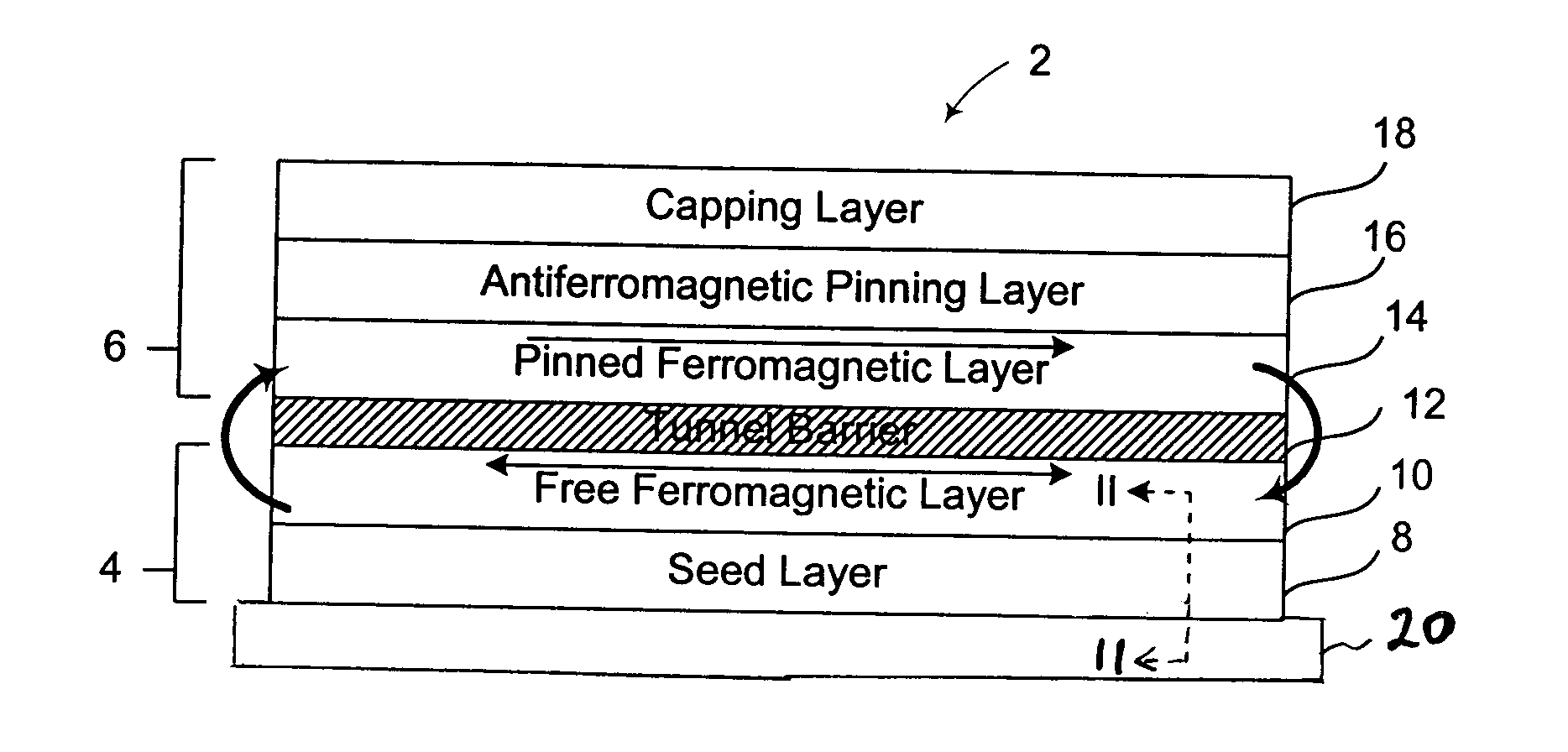
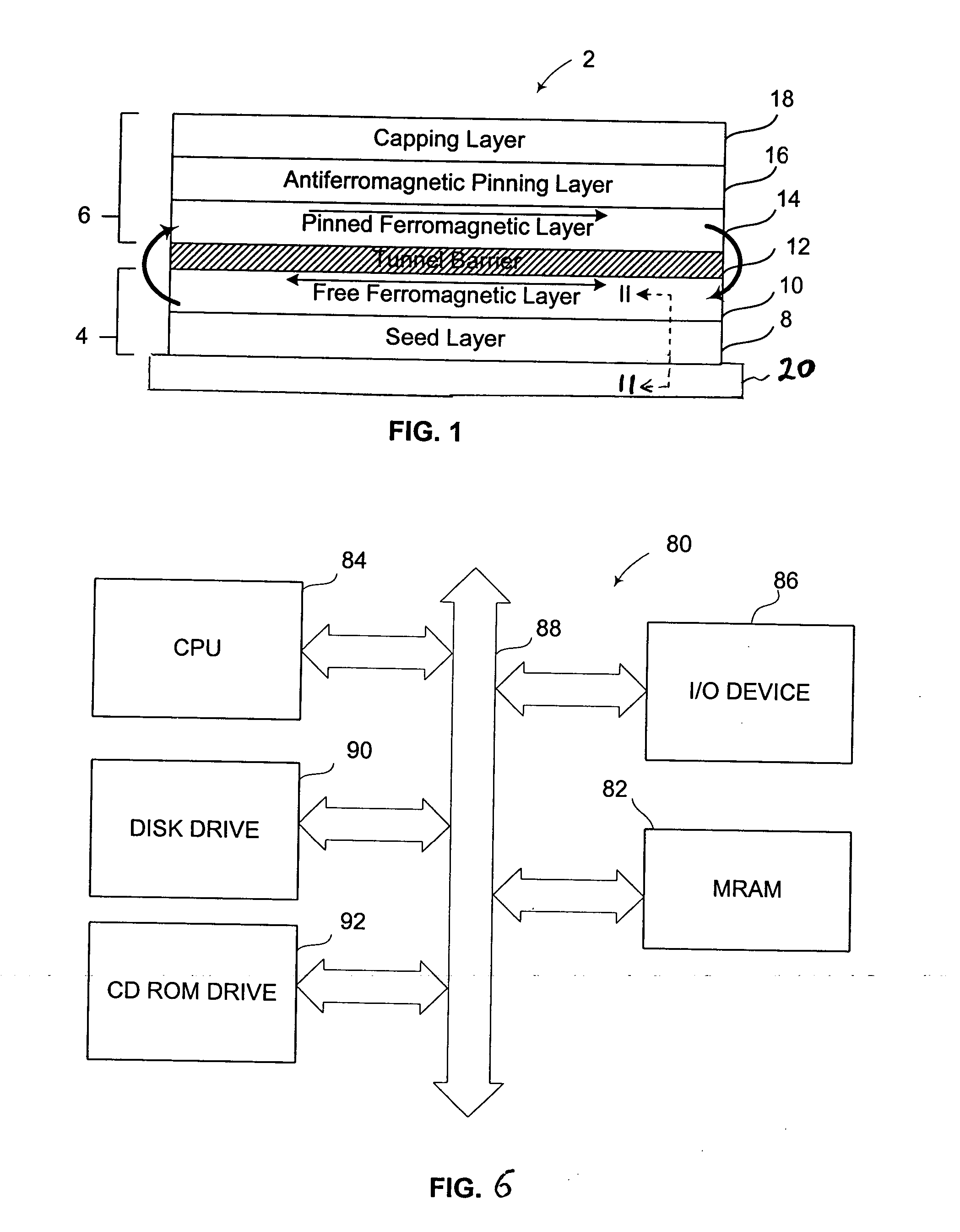
[0020] A generalized, exemplary magneto-resistive element structure 2 is shown in FIG. 1. The structure includes a free stack 4 and a pinned stack 6 formed above a substrate 20. Free stack 4 includes a seed layer 8 on which is disposed a free ferromagnetic layer 10. Above free stack 4 is pinned stack 6, separated by a tunnel barrier layer 12. Pinned stack 6 is made up of a pinned ferromagnetic layer 14, an antiferromagnetic pinning layer 16, and a capping layer 18. Other arrangements can be used. For example, the free and pinned ferromagnetic layers 10 and 14 may each be formed as a plurality of stacked individual layers. The stacks also can include offset control and coupling layers.
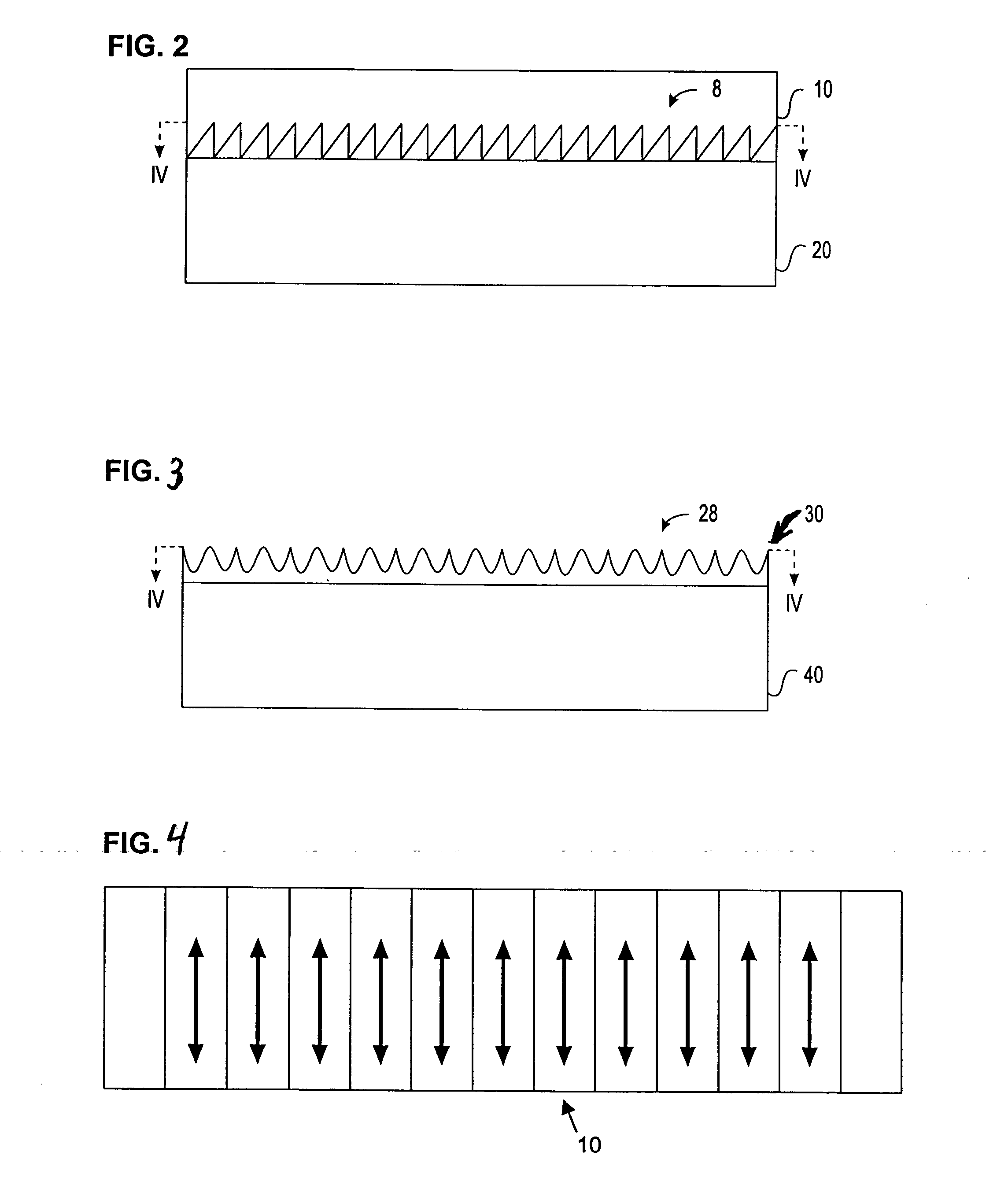
[0021]FIG. 2 shows a partial cross-section of film stack 2 taken along the line II-II in FIG. 1. As illustrated in FIG. 2, seed layer 8 provided above substrate 20 is textured. The texture of the seed layer 8 imparts uniaxial anisotropy in ferromagnetic film 10 grown above seed layer 8. Alignment of th...
PUM
 Login to View More
 Abstract
Description
Claims
Application Information
 Login to View More