

High-speed serial link clock and data recovery
a serial link and clock technology, applied in the field of high-speed serial link clock and data recovery, can solve the problems of inefficient bandwidth utilization, disadvantageous processing approaches in data transmission, and high frequency phase jitter tracking in high-speed data recovery systems
- Summary
- Abstract
- Description
- Claims
- Application Information
AI Technical Summary
Benefits of technology
Problems solved by technology
Method used
Image

Examples
Embodiment Construction
[0022] Reference will now be made in detail to present embodiments of the present invention, examples of which are illustrated in the accompanying drawings. Wherever possible, the same reference numbers will be used throughout the drawings to refer to the same or like parts.
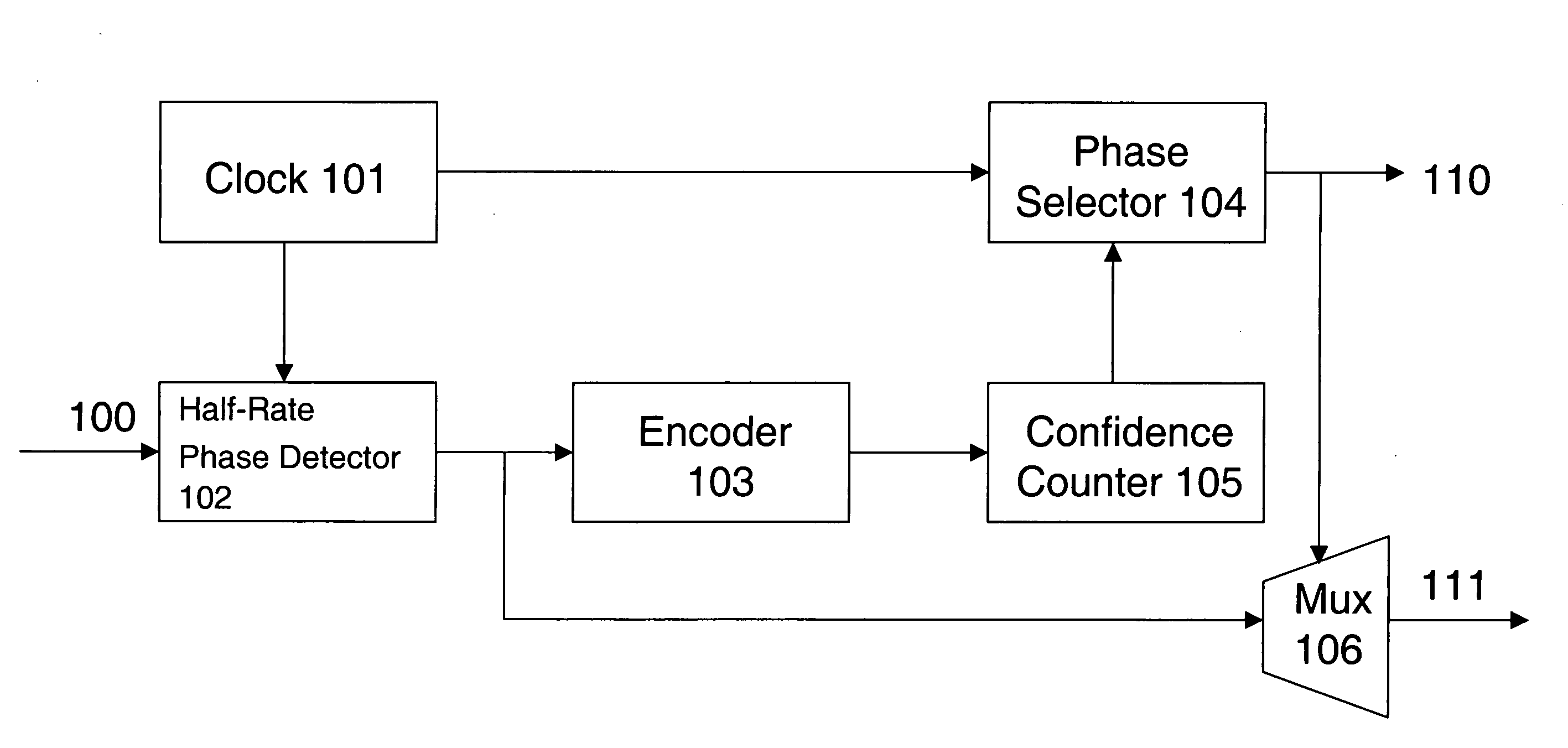
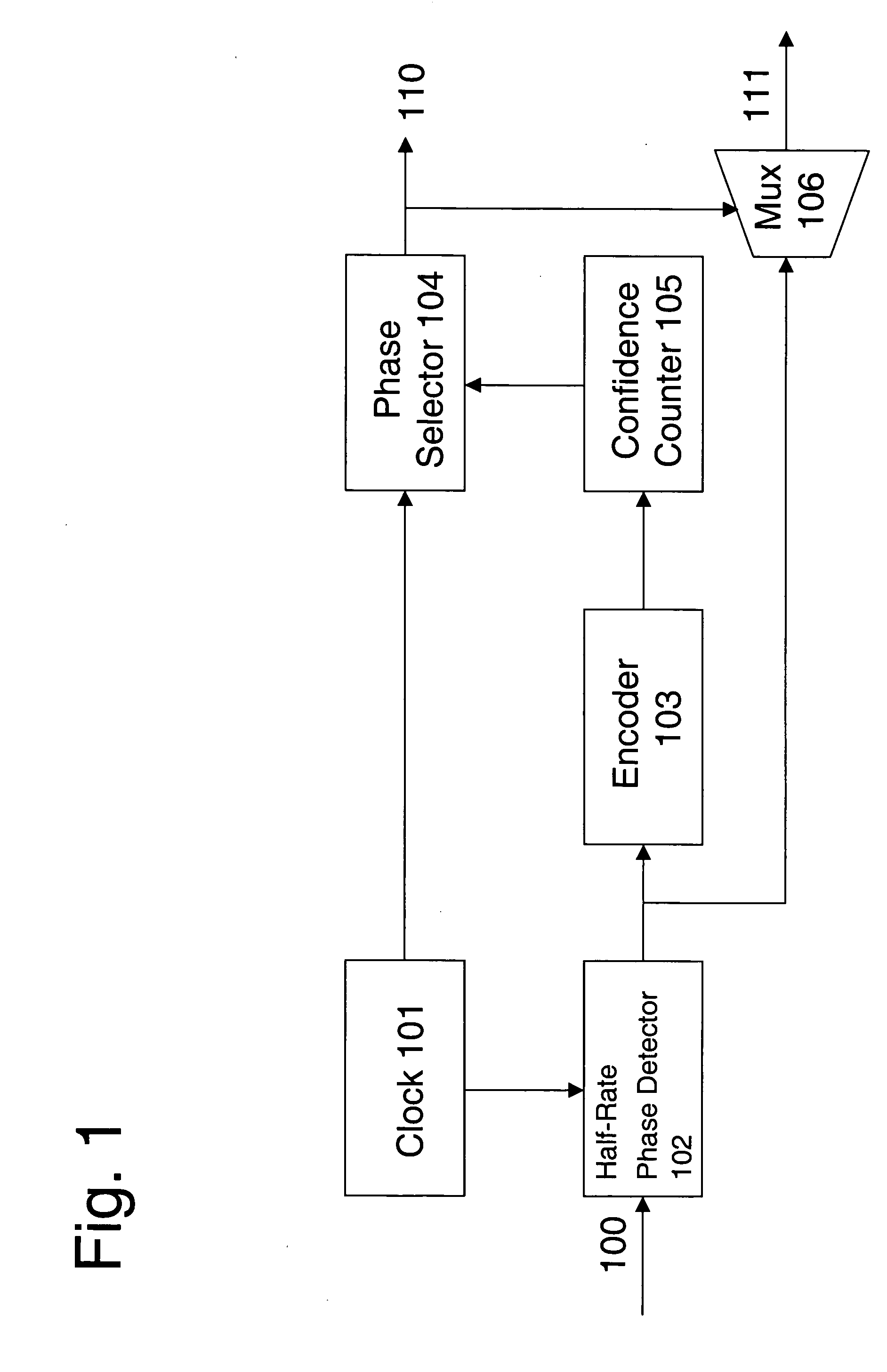
[0023]FIG. 1 is a block diagram of a system for clock and data recovery (“CDR”) according to one embodiment of the present invention. The system comprises a clock generator 101, a half-rate phase detector 102 receiving input data 100, an encoder 103, a phase selector 104 outputting a recovered clock 110, a confidence counter 105, and a multiplexer 106 outputting recovered data 111.
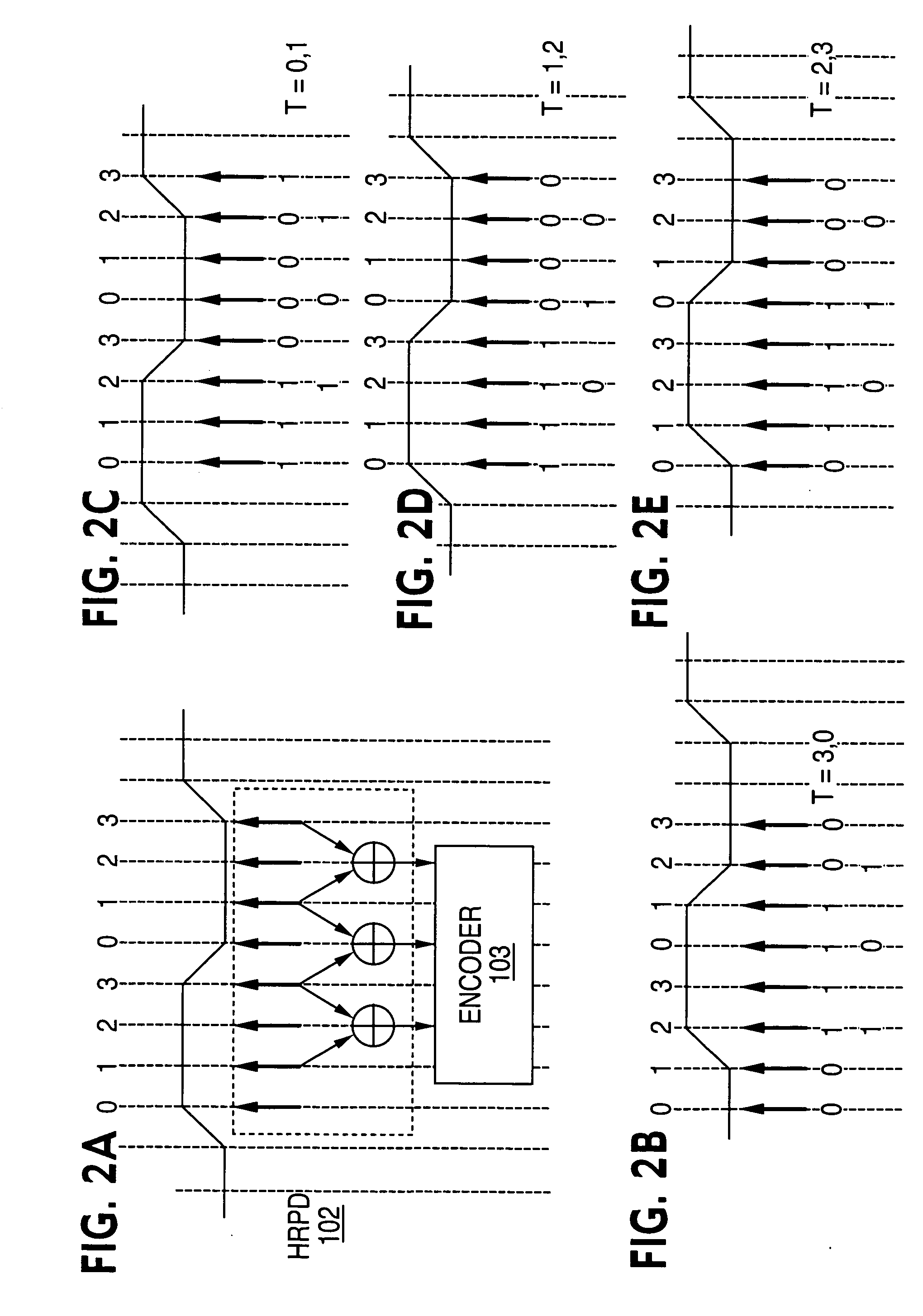
[0024] Based on a reference clock, clock generator 101 generates an 8-phase clock signal for input data 100 at half of the input data rate. The clock signal includes 8 phases for each clock period. A delay locked loop (“DLL”) or phase locked loop (“PLL”) device can serve as an 8-phase clock of clock generator 101. A crystal oscillator...
PUM
 Login to View More
 Abstract
Description
Claims
Application Information
 Login to View More