
Composite product and forming system
a technology of forming system and composite products, which is applied in the direction of transportation and packaging, chemistry apparatus and processes, and other domestic objects, can solve the problems of inability to meet the requirements of production, the outside surface distortion and imperfections of the experimental panel are unacceptable, and the process is usually limited to very low volume parts production, etc., to achieve high volume, high quality, and low cost
- Summary
- Abstract
- Description
- Claims
- Application Information
AI Technical Summary
Benefits of technology
Problems solved by technology
Method used
Image

Examples
Embodiment Construction
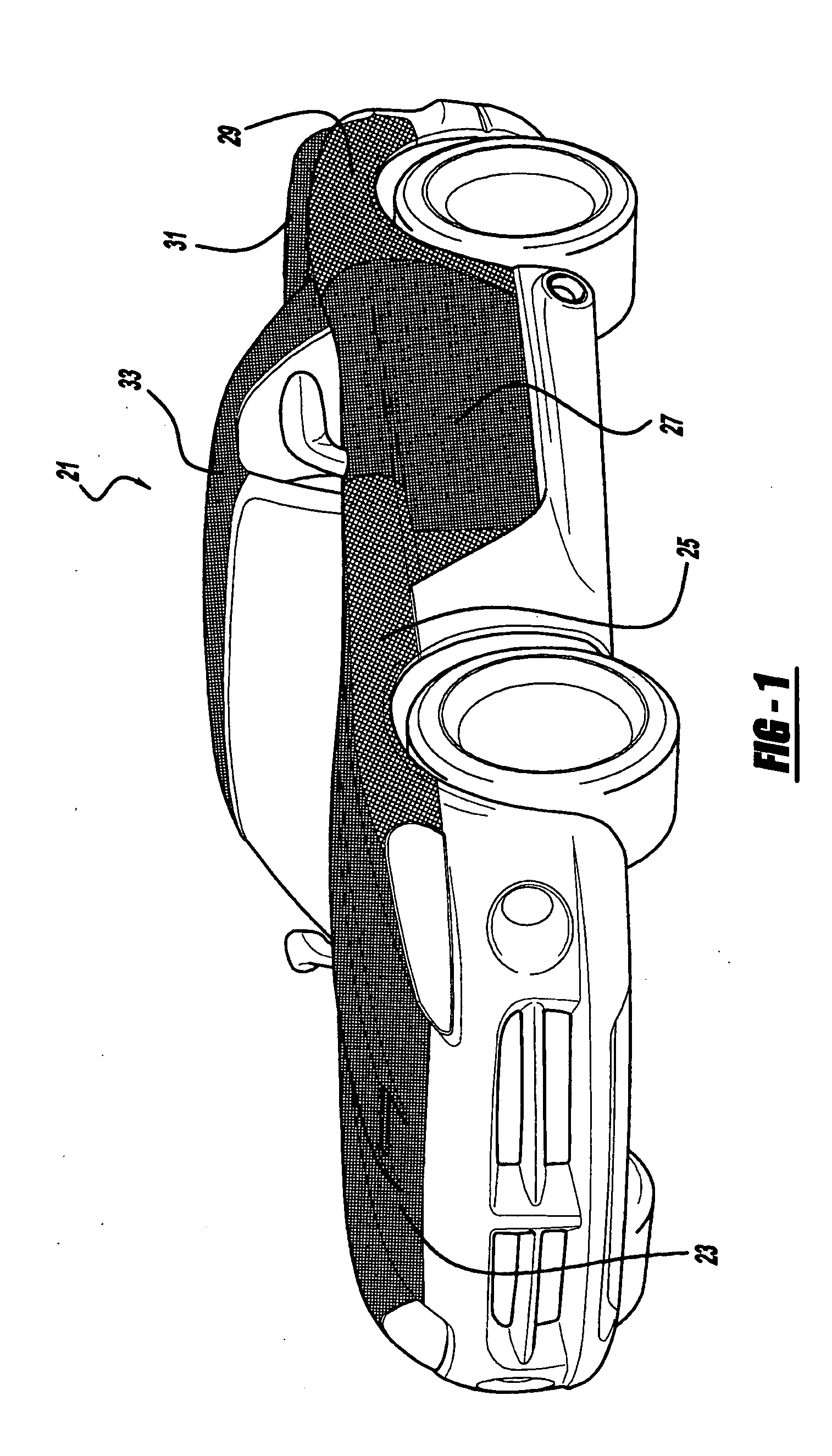
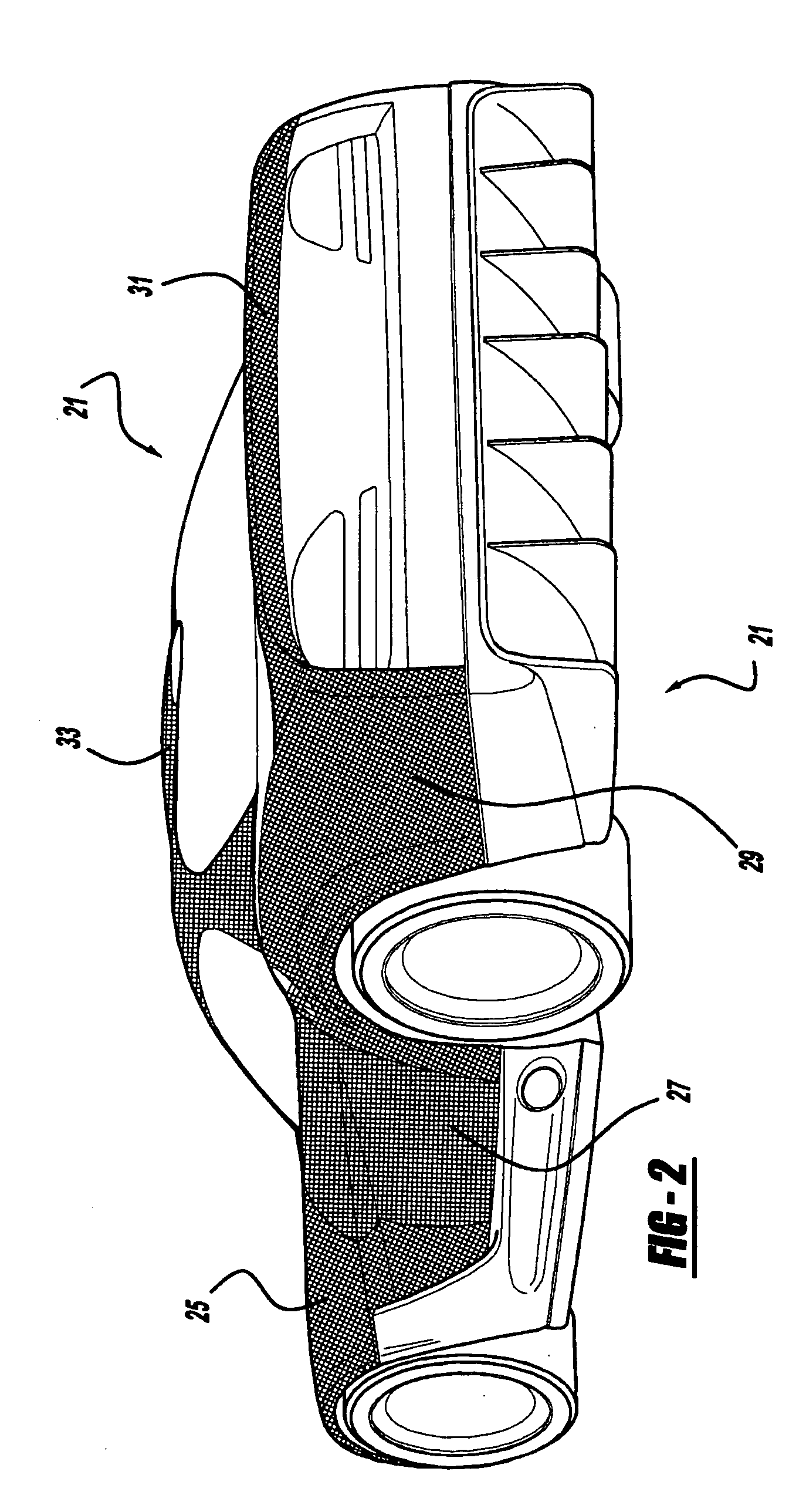
[0015] The composite product and forming system of the present invention is preferably used to create large body panels in an automotive vehicle 21. Referring to FIGS. 1-4, exemplary body panels include a three-dimensionally contoured hood outer panel 23, a hood inner panel, front fenders 25, door outer panels 27, door inner panels, rear fenders 29, deck lid inner and outer panels, spoilers 31, a roof 33, and alternately, interior trim panels, smaller fuel filler doors, and exterior and interior garnish moldings. Hood 23 has outer surfaces 41 and 43 defined by multiple internal sheet layers 45 which are permanently affixed to each other during processing, and terminate at their peripheral edges 47. Peripheral edges 47 may be downwardly turned as shown, cut along generally vertical planes or provided with a partial radius by pinching then trimming. Outside surface 41 of composite hood product or part 23 is a class A exterior surface which must exhibit extremely high finish quality ch...
PUM
| Property | Measurement | Unit |
|---|---|---|
| time | aaaaa | aaaaa |
| thickness | aaaaa | aaaaa |
| thickness | aaaaa | aaaaa |
Abstract
Description
Claims
Application Information
 Login to View More