
2000 Series alloys with enhanced damage tolerance performance for aerospace applications
a technology of aerospace applications and damage tolerance, applied in the field of alcumgagalloy, can solve the problems of reduced toughness and/or fcg performance, unexceptional fracture toughness and resistance to fatigue crack growth, and reduced life, so as to improve fcg resistance, equal or better toughness, and excellent strength
- Summary
- Abstract
- Description
- Claims
- Application Information
AI Technical Summary
Benefits of technology
Problems solved by technology
Method used
Image

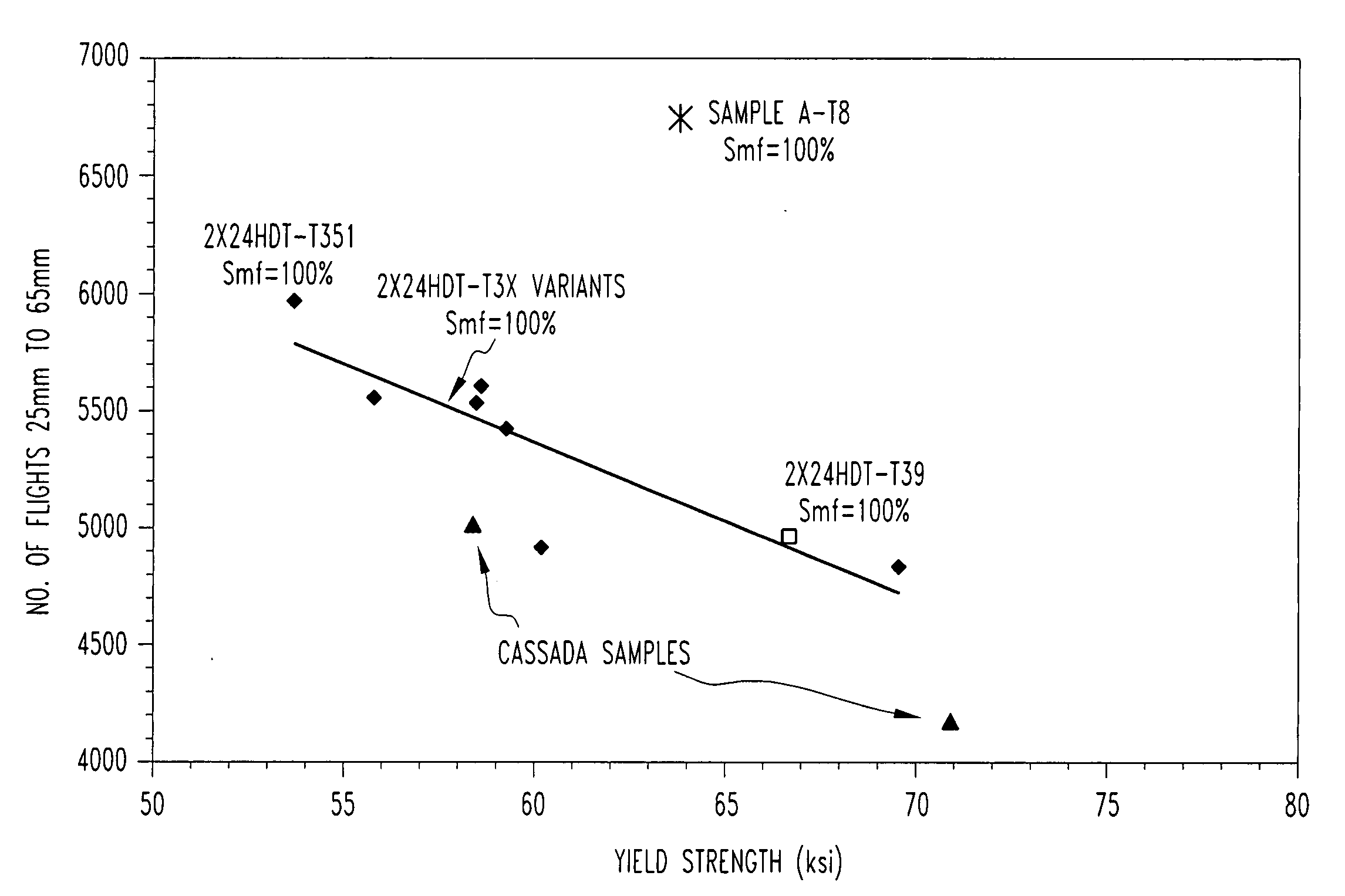
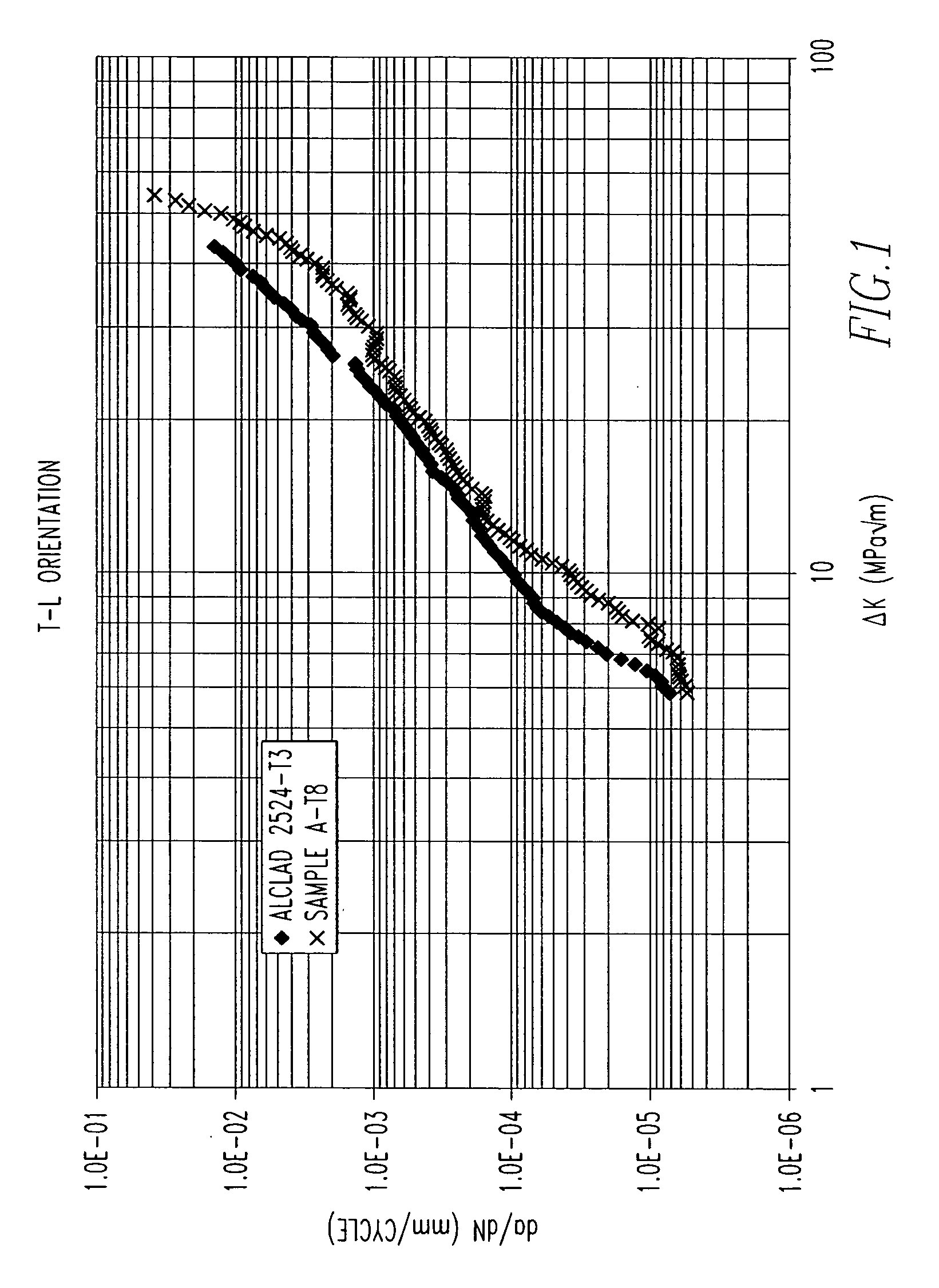
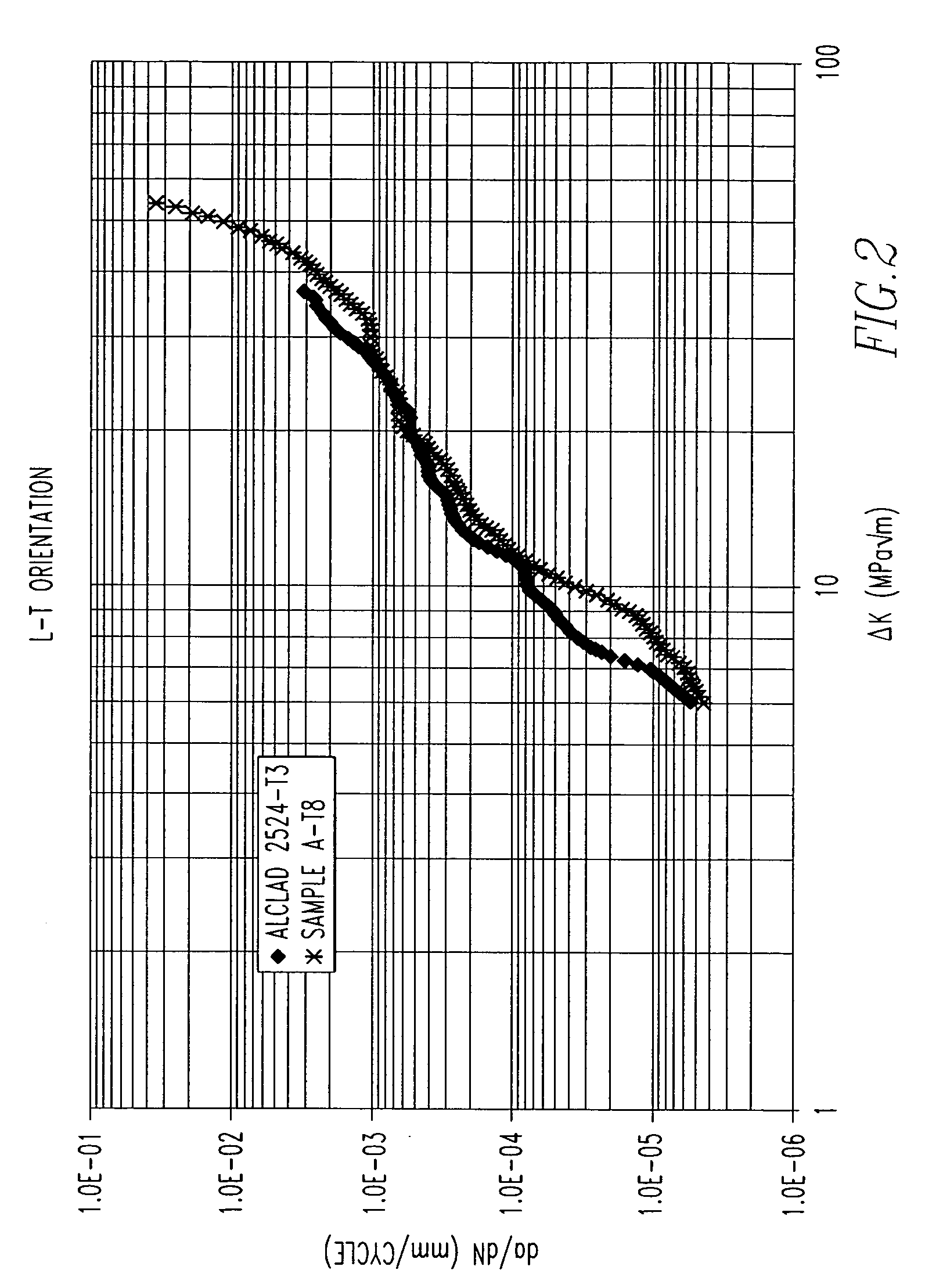
Examples
example
[0048] In preparing inventive alloy compositions to illustrate the improvement in mechanical properties, ingots of 6×16 inch cross-section were Direct Chill (D.C.) cast for the Sample A to D compositions defined in Tables 1 and 2. After casting the ingots were scalped to about 5.5 inch thickness in preparation for homogenization and hot rolling. The ingots were batch homogenized using a multi-step practice with a final step of soaking at about 955 to 965° F. for 24 hrs. The ingots were given an initial hot rolling to an intermediate slab gage and then reheated at about 940° F. to completed the hot rolling operation, reheating was used when hot rolling temperatures fell below about 700° F. The samples were hot rolled to about 0.75 inches for the plate material and about 0.18 inches for sheet. After hot rolling the sheet samples were cold rolled about 30% to finish at about 0.125 inches in gage.
[0049] Samples of the fabricated plate and sheet were then heat treated, at temperatures i...
PUM
| Property | Measurement | Unit |
|---|---|---|
| wt % | aaaaa | aaaaa |
| wt % | aaaaa | aaaaa |
| temperatures | aaaaa | aaaaa |
Abstract
Description
Claims
Application Information
 Login to View More