
Driving aid device
a technology of driving aid and driver's seat, which is applied in the direction of color television, television systems, instruments, etc., can solve the problems of unsatisfactory solutions and various solutions, and achieve the effects of reducing aggressiveness of adverse sources, increasing night vision, and greatly improving driving comfor
- Summary
- Abstract
- Description
- Claims
- Application Information
AI Technical Summary
Benefits of technology
Problems solved by technology
Method used
Image

Examples
Embodiment Construction
)
[0062] The invention is depicted hereinafter in the form of non-limiting examples.
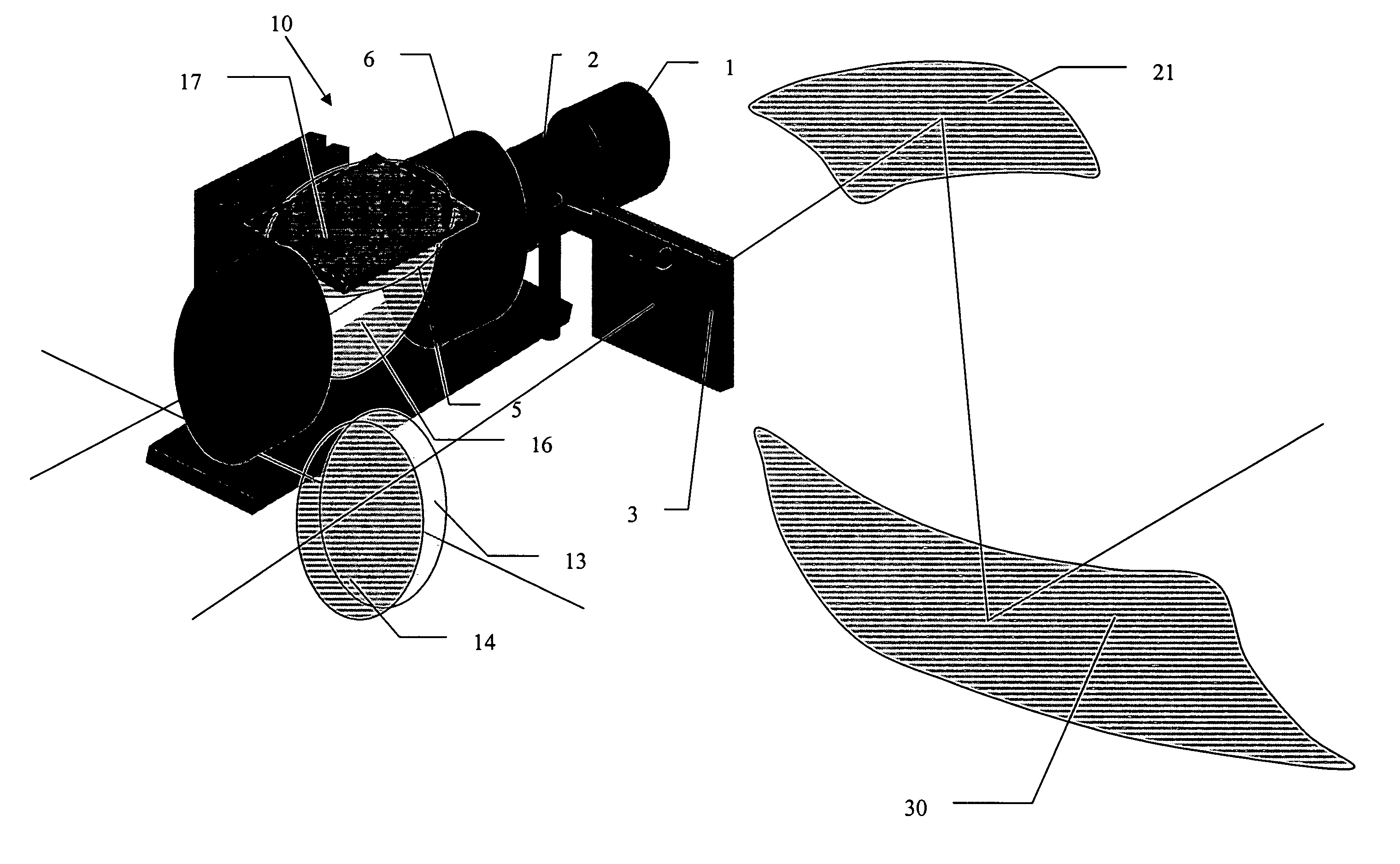
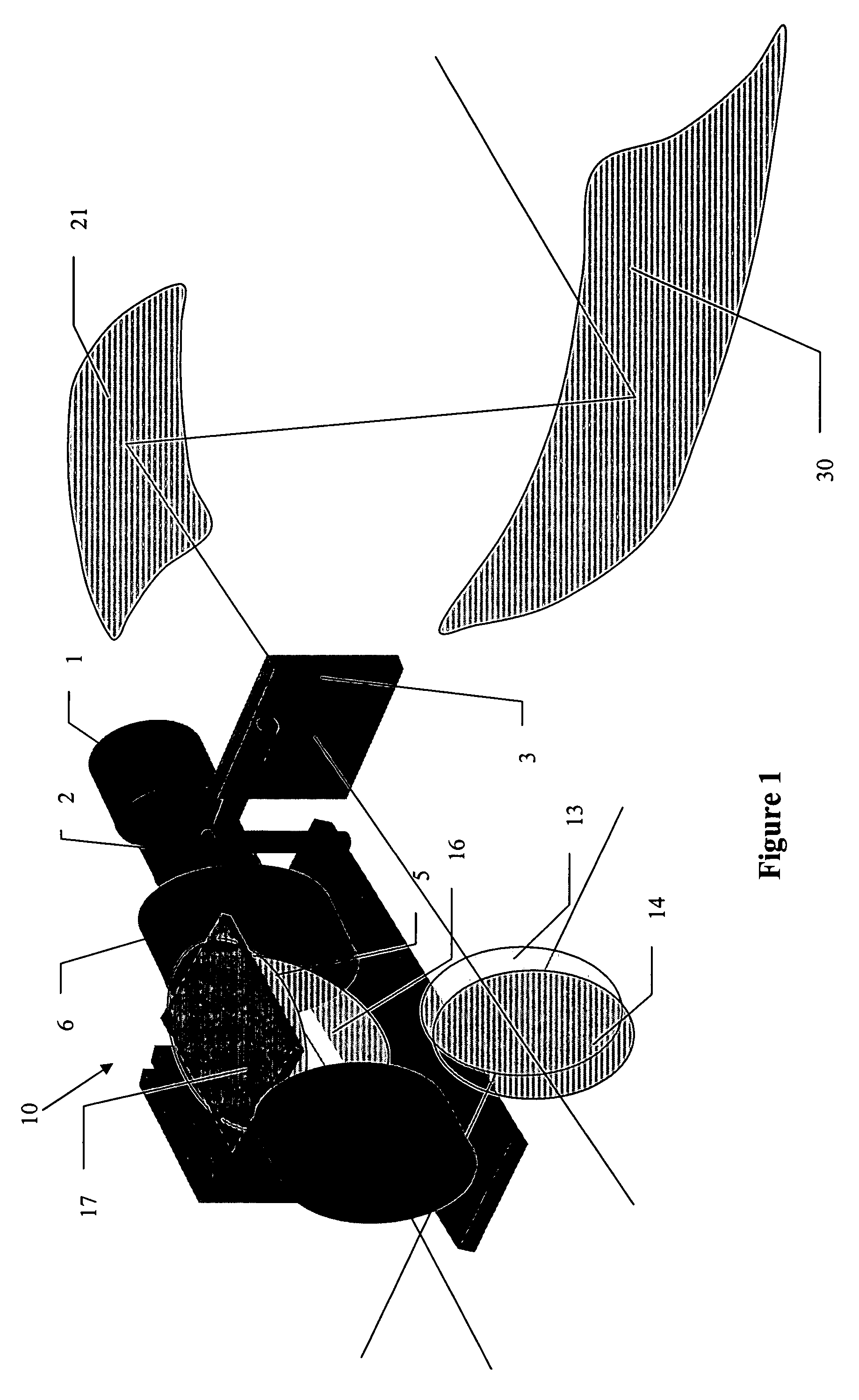
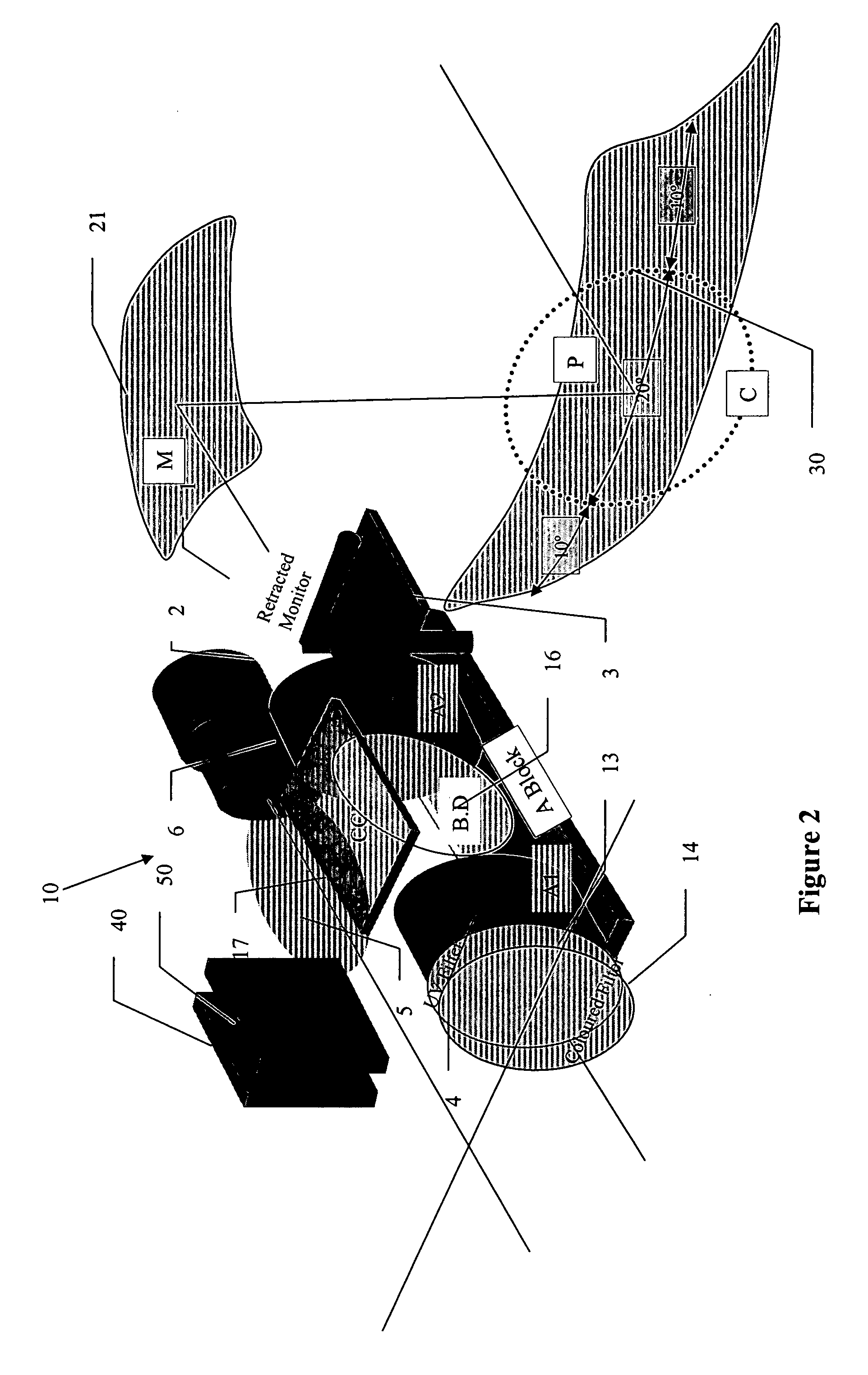
[0063] The device is composed of a movable unit (10) fulfilling the image analysis and filtration functions. This unit (10) can occupy two positions: night-time (FIGS. 1 and 4) and daytime (FIGS. 2, 3 and 5).
[0064] In the two cases of use, the final image is seen at infinity in the optical system 20 / 30.
[0065] The night-time vision function comprises a camera (1) receiving an image filtered by an optical module for filtration of the incident beam (6) contained in the unit (10), a red filter (5) and a monitor (3) comprising a screen on which the processed image forms.
[0066] The “daytime vision” function comprises an input lens (4) and a filtration system (6) provided with a feedback-controlled coronagraph (7). The optical input unit has an angular field of approximately 400. Apart from the lenses (11), it contains a first polariser (12) for the LCD matrix providing the first polarisation and the dis...
PUM
 Login to View More
 Abstract
Description
Claims
Application Information
 Login to View More