

Compact solid oxide fuel cell stack
- Summary
- Abstract
- Description
- Claims
- Application Information
AI Technical Summary
Benefits of technology
Problems solved by technology
Method used
Image

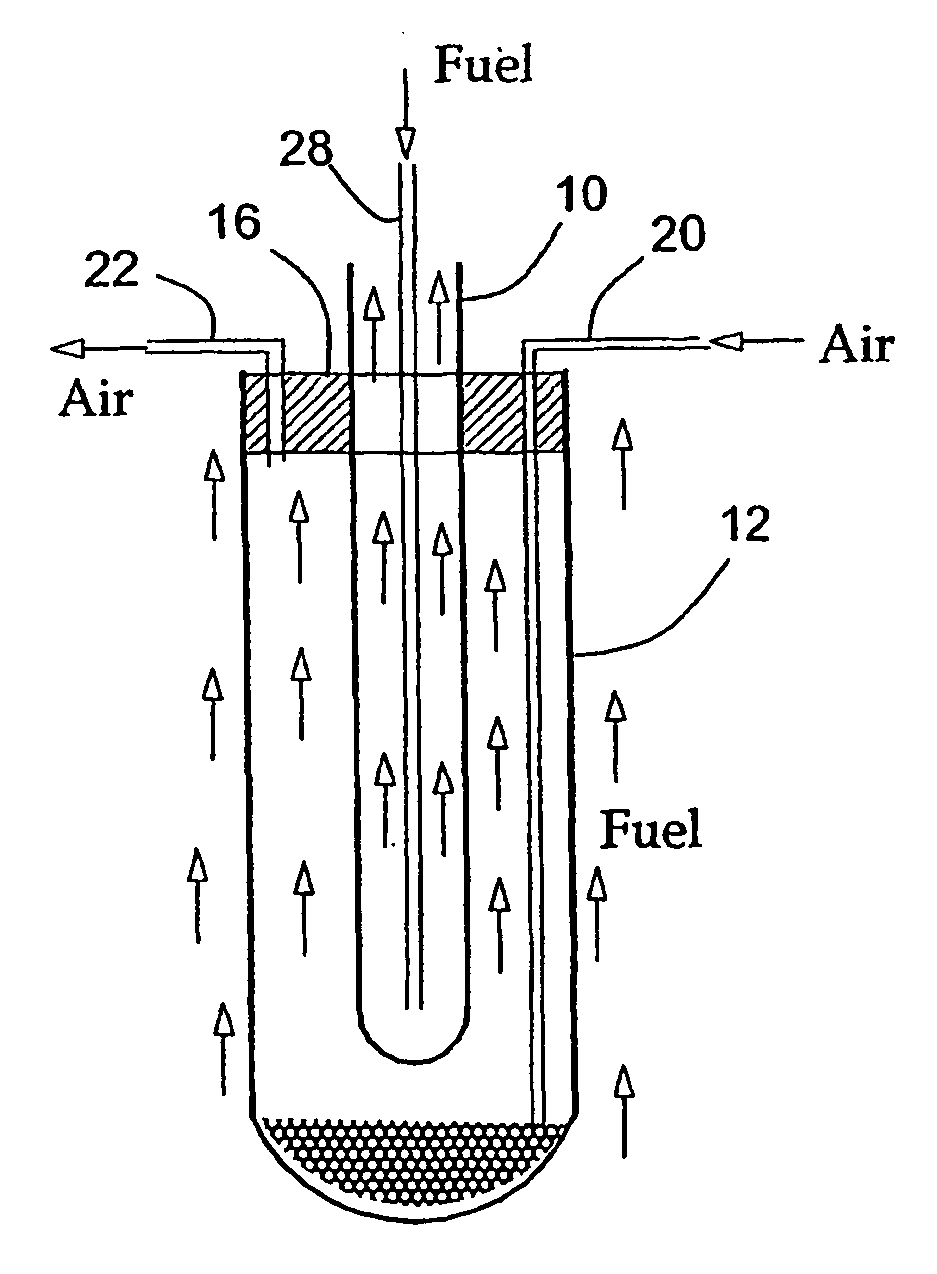
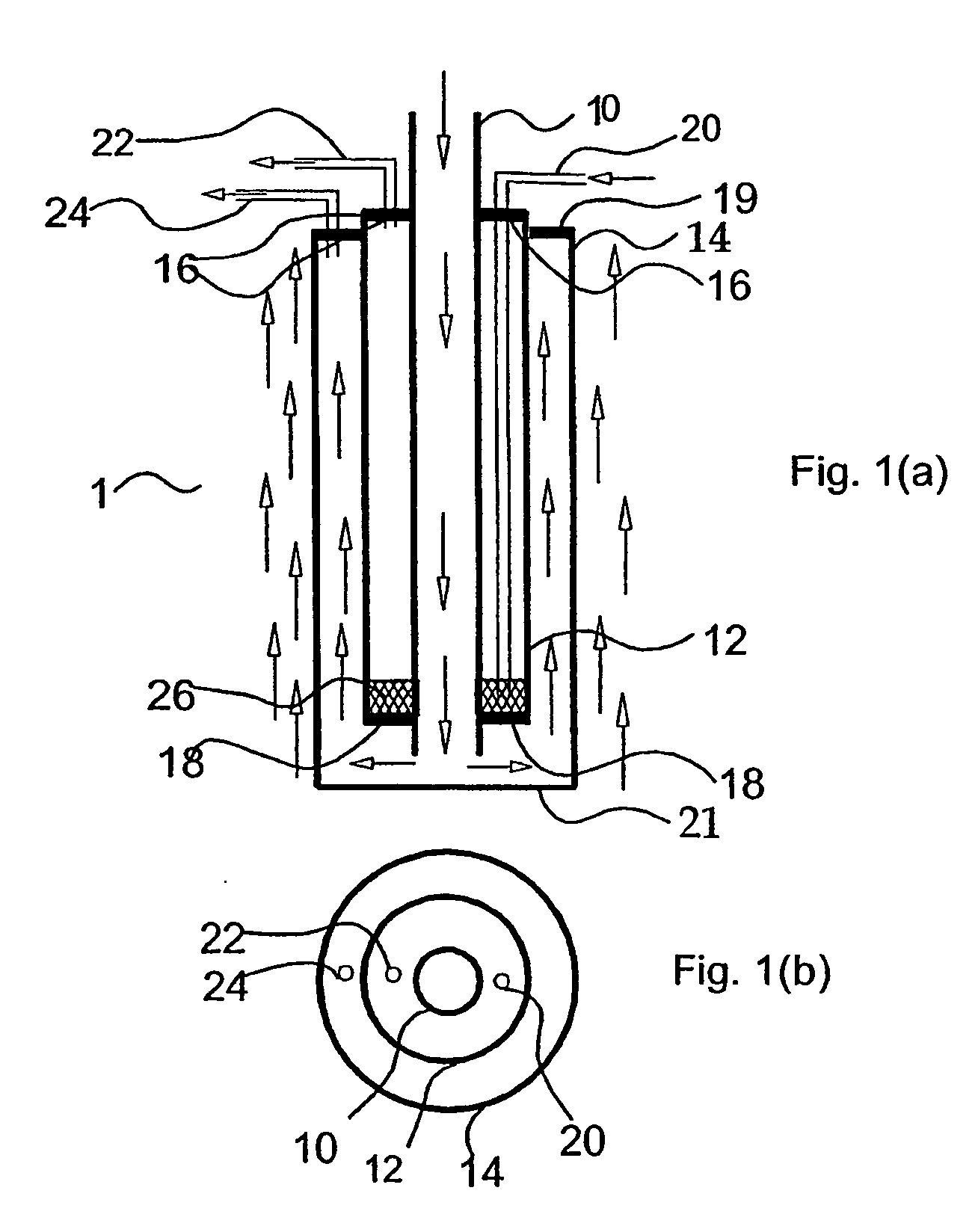
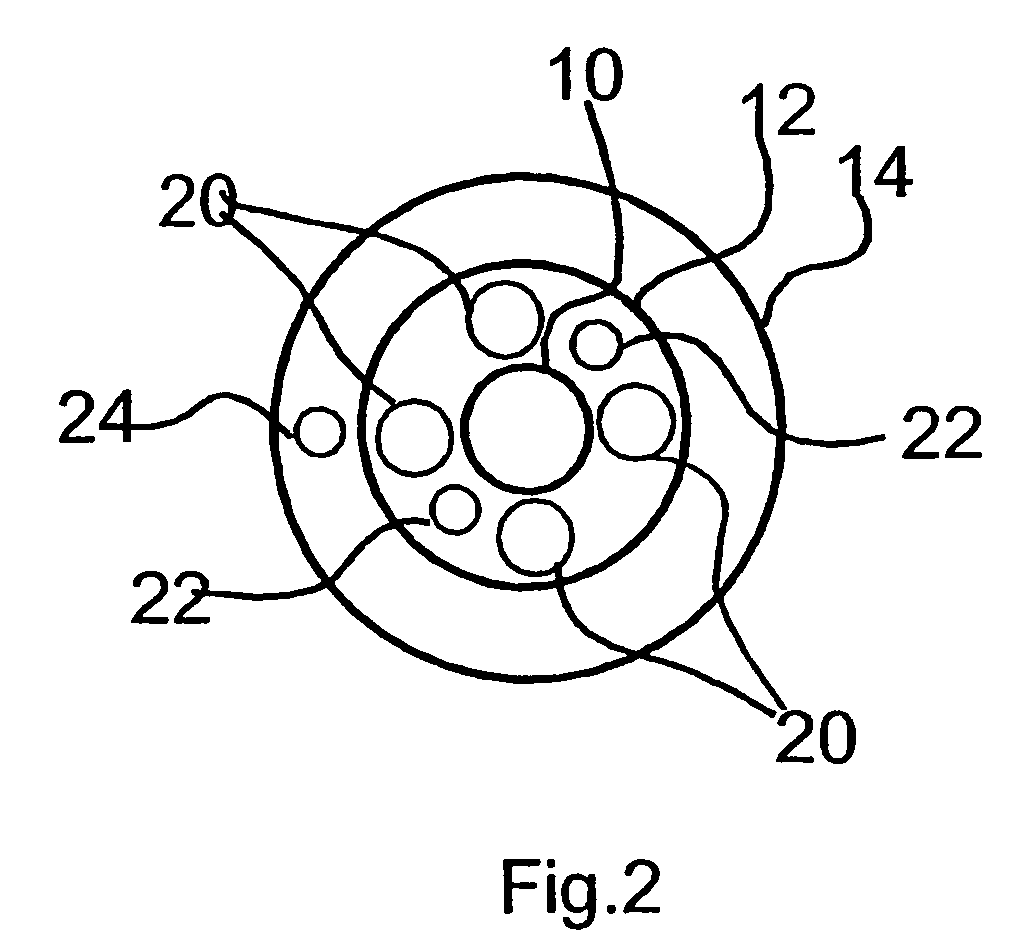
Examples
Embodiment Construction
[0058] When describing the present invention, the following terms have the following meanings, unless indicated otherwise. All terms not defined herein have their common art-recognized meanings. [0059] The term “ceramic” refers to inorganic non-metallic solid materials with a prevalent covalent or ionic bond including, but not limited to metallic oxides (such as oxides of aluminum, silicon, magnesium, zirconium, titanium, chromium, lanthanum, hafnium, yttrium and mixtures thereof) and nonoxide compounds including but not limited to carbides (such as of titanium tungsten, boron, silicon), suicides (such as molybdenum disicilicide), nitrides (such as of boron, aluminum, titanium, silicon) and borides (such as of tungsten, titanium, uranium) and mixtures thereof; spinels, titanates (such as barium titanate, lead titanate, lead zirconium titanates, strontium titanate, iron, titanate), ceramic super conductors, zeolites, and ceramic solid ionic conductors (such as yittria stabilized zirc...
PUM
 Login to View More
 Abstract
Description
Claims
Application Information
 Login to View More