
Uniform surfaces for hybrid material substrate and methods for making and using same
a hybrid material and substrate technology, applied in the field of uniform surfaces for hybrid material substrates and methods for making and using same, can solve the problems of difficult to provide a single solution to surface property problems, even more problematic problems of surface interaction with an analytical sampl
- Summary
- Abstract
- Description
- Claims
- Application Information
AI Technical Summary
Benefits of technology
Problems solved by technology
Method used
Image

Examples
example 1
Vapor Deposited PDMS on Hybrid Zero Mode Waveguide Array Substrates
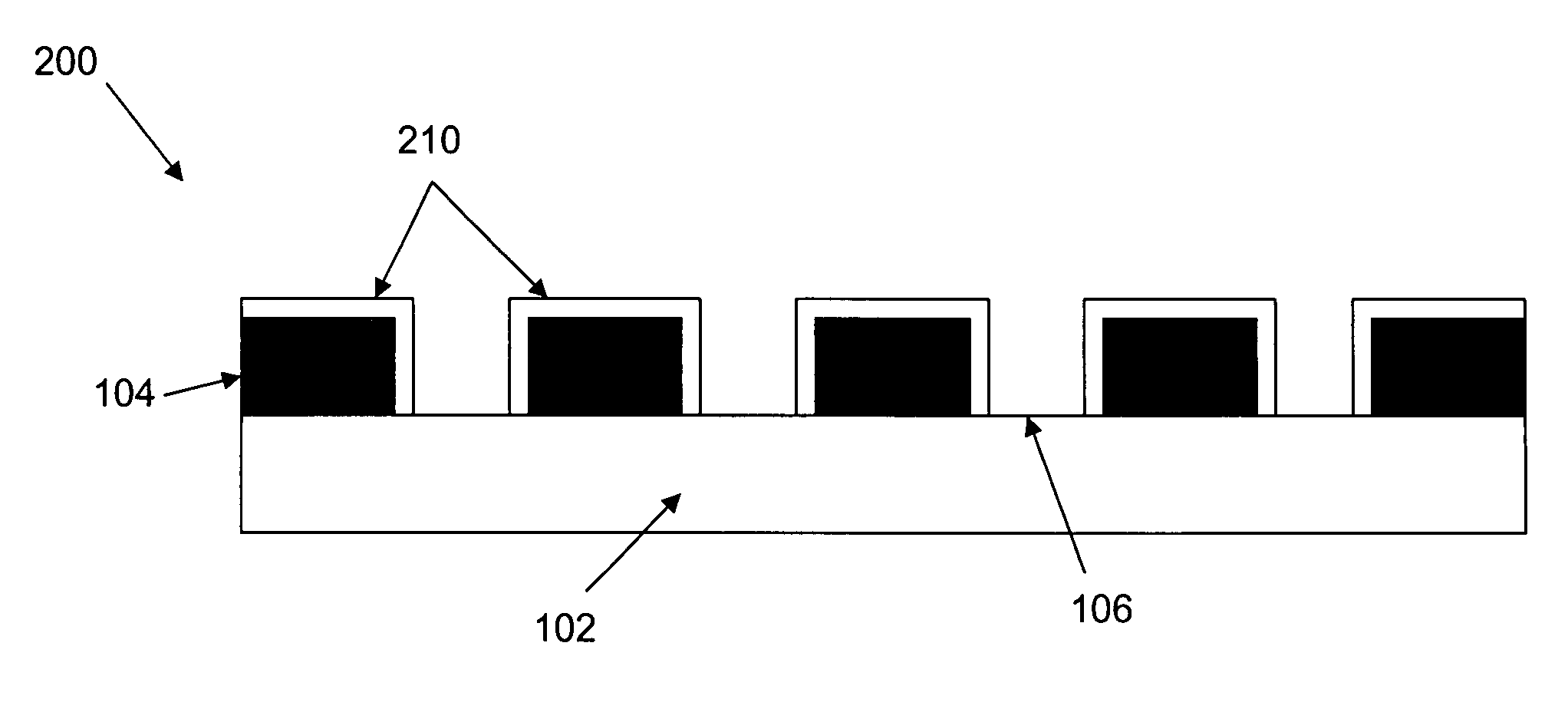
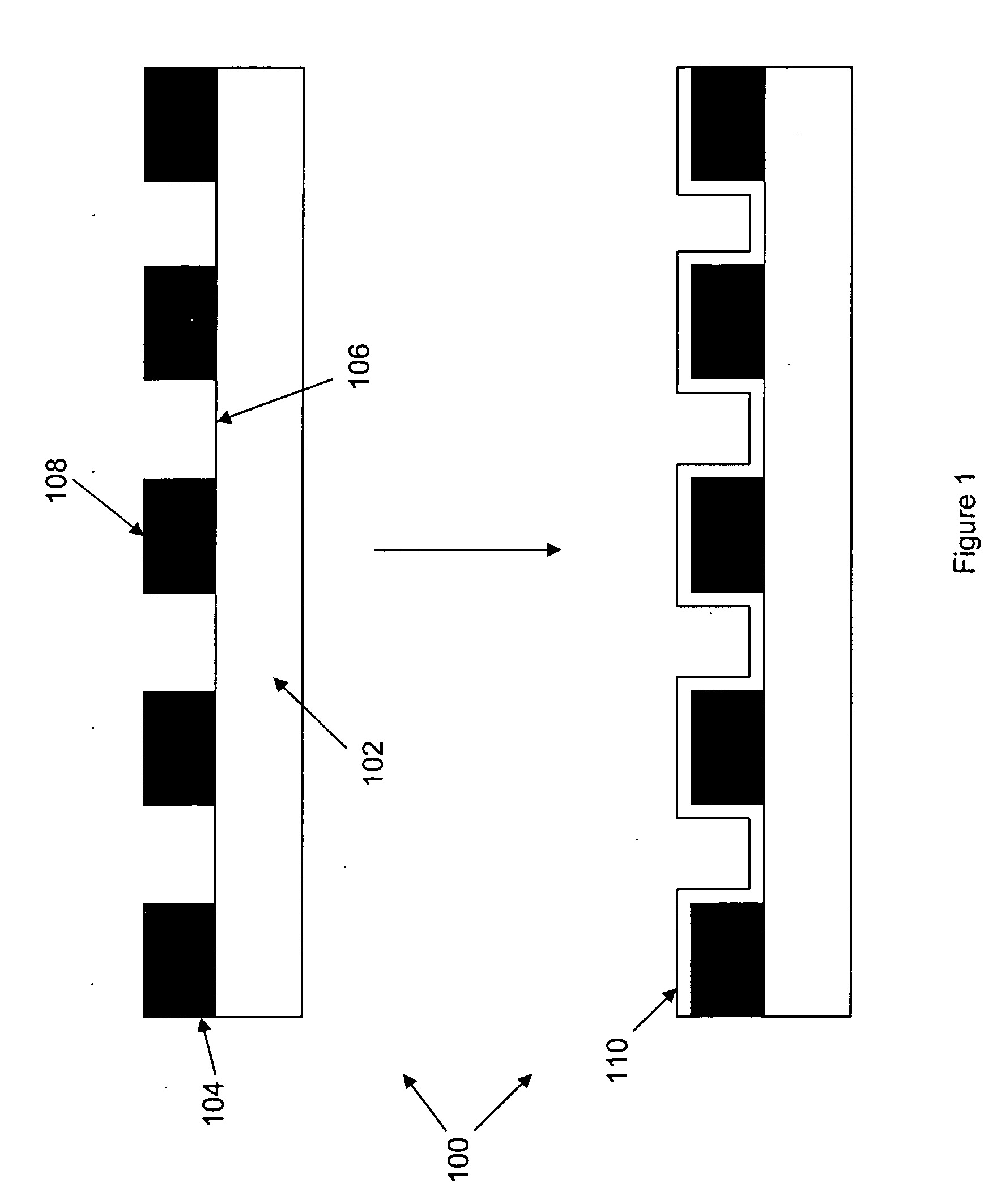
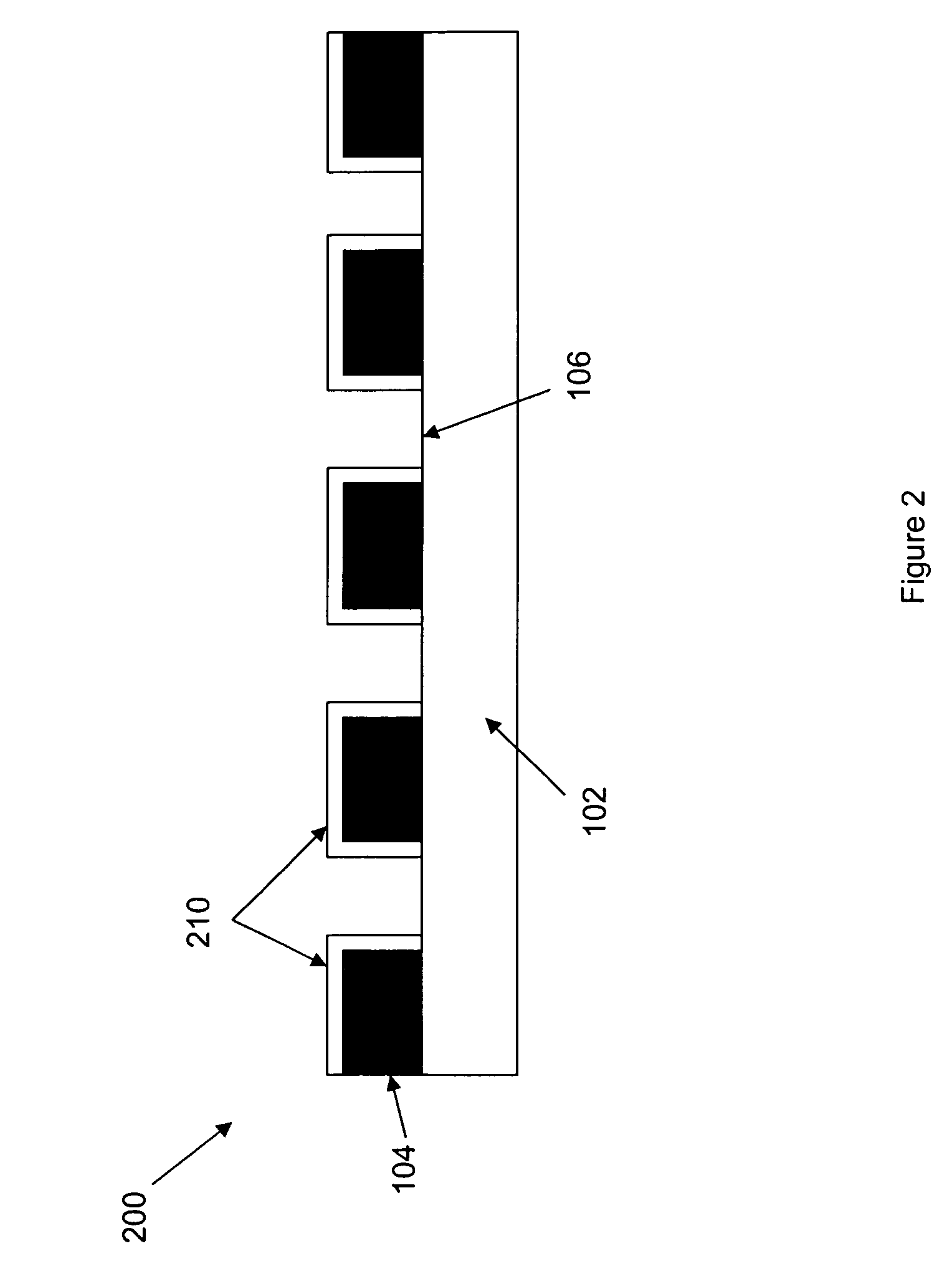
[0052] A zero mode waveguide array that included an aluminum cladding layer surrounding waveguide cores of approximately 50 nm, was subjected to a plasma-based PDMS deposition process.
[0053] The waveguide arrays (aluminum cladding on fused silica substrate) were prepared with an acetone wash, isopropanol rinse and nitrogen drying. The arrays were then placed onto a chip holder or a glass slide and plasma treated with the cladding layer up, for 5 minutes (Harrick, Inc., Medium power level setting, 1900-2000 mTorr). The waveguide arrays were then attached to the slide using a UV curable adhesive (Norland 81) so that the array pane of the waveguide was opened to a hole in the slide, which created a well around the array suitable for fluid application.
[0054] A polydimethylsiloxane (PDMS) gasket, precut to fit the slide, was then placed onto the slide. The mounted chip was then plasma treated for 1 minute (Low power le...
PUM
| Property | Measurement | Unit |
|---|---|---|
| wavelengths | aaaaa | aaaaa |
| wavelengths | aaaaa | aaaaa |
| wavelengths | aaaaa | aaaaa |
Abstract
Description
Claims
Application Information
 Login to View More