This helps you quickly interpret patents by identifying the three key elements:
Problems solved by technology
Method used
Benefits of technology
Benefits of technology
[0021] Another aspect of the invention is the prevention and treatment of acne, actinic keratosis, alopecia, Alzheimer's disease, autoimmune induced diabetes, benign prostatic hyperplasia, bladder cancer, bone fracture healing, breast cancer, Crohn's disease, prostate cancer, colon cancer, Type I diabetes, host-graft rejection, hypercalcemia, Type II diabetes, leukemia, multiple sclerosis, insufficient sebum secretion, osteomalacia, osteopo
Problems solved by technology
However, use of conventional VDR ligands is hampered by their associated toxicity, namely hypercalcemia (elevated serumcalcium).
Although some degree of separation between the beneficial action and calcium raising (calcemic) effects has been achieved with these VDR ligands, to date the separation has been insufficient to allow for oral administration to treat conditions such as osteoporosis, cancers, leukemias, and severe psoriasis.
However, none of these treatments increase true bone volume nor can they restore lost bone architecture.
Method used
the structure of the environmentally friendly knitted fabric provided by the present invention; figure 2 Flow chart of the yarn wrapping machine for environmentally friendly knitted fabrics and storage devices; image 3 Is the parameter map of the yarn covering machine
View more
Image
Smart Image Click on the blue labels to locate them in the text.
Viewing Examples
Smart Image
Click on the blue label to locate the original text in one second.
Reading with bidirectional positioning of images and text.
Smart Image
Examples
Experimental program
Comparison scheme
Effect test
example 1
Preparation of 6-{1-[4-(3,3-dimethyl-2-oxo-butoxy)-3-methyl-phenyl]-1-ethyl-propyl}-benzo[b]thiophene-2-carboxylic acid
[2313] A solution of 2-fluoro-4-iodo-3-trimethylsilanyl-benzaldehyde (14.2 g, 44.1 mmol) (Tetrahedron Letters 1992, p 7499-7502) in DMF (50 mL) is treated with mercapto-acetic acidethyl ester (5.80 mL, 52.9 mmol) and K2CO3 (12.2 g, 88.2 mmol). The resulting suspension is stirred at 75° C. for 60 min and quenched with water (300 mL). The mixture is extracted with EtOAc (3×50 mL,) and the organic layer is dried over Na2SO4, concentrated, and purified by silica gelcolumn chromatography (5-20% EtOAc / Hex), to give the title compound as an oil (9.40 g, 64%).
Preparation of 6-{1-ethyl-1-[4-2-hydroxy-3,3-dimethyl-butoxy)-3-methyl-phenyl]-propyl)-benzo[b]thiophene-2-carboxylic acid
[2326]
[2327] A solution of 6-{1-[4-(3,3-dimethyl-2-oxo-butoxy)-3-methyl-phenyl]-1-ethyl-propyl}-benzo[b]thiophene-2-carboxylic acid (102 mg, 0.226 mmol) in THF(5.0 mL) at RT is treated with NaBH (17 mg, 0.451 mmol). The resulting mixture is stirred for 4 h. The reaction is quenched with HCl (1.0 N, 1.0 mL) and extracted with EtOAc (2×20 mL). The organic layer is dried over Na2SO4 and concentrated to afford the title compound (90 mg, 88%).
[2328] MS (ES) m / e 453.1(M−1), 472.2 (M+18).
example 3
Preparation of 6-{1-[4-(3,3-Dimethyl-2-oxo-butoxy)-3-methyl-phenyl]-1-ethyl-propyl)-benzo[b]thiophene-2-carboxylic acid dimethylamide
[2329]
[2330] 6-{1-[4-(3,3-Dimethyl-2-oxo-butoxy)-3-methyl-phenyl]-1-ethyl-propyl}-benzo[b]thiophene-2-carboxylic acid (290 mg, 0.642 mmol) in CH2Cl2 (5.0 mL) is treated with DMAP (235 mg, 1.93 mmol) and EDC (184 mg, 0.962 mmol). The mixture is stirred for 15 min at RT, and dimethylaminehydrochloride (78 mg, 0.962 mmol) is added. The reaction is stirred for 18 h and quenched with aqueous NH4Cl (5.0 mL). The organic layer is loaded onto a silica gel column and purified with 50% EtOAc / Hex to afford the title compound (280 mg, 91%).
[2331] MS (ES) m / e 480.2 (M+1).
the structure of the environmentally friendly knitted fabric provided by the present invention; figure 2 Flow chart of the yarn wrapping machine for environmentally friendly knitted fabrics and storage devices; image 3 Is the parameter map of the yarn covering machine
Login to View More
PUM
Property
Measurement
Unit
Weight ratio
aaaaa
aaaaa
Pharmaceutically acceptable
aaaaa
aaaaa
Login to View More
Abstract
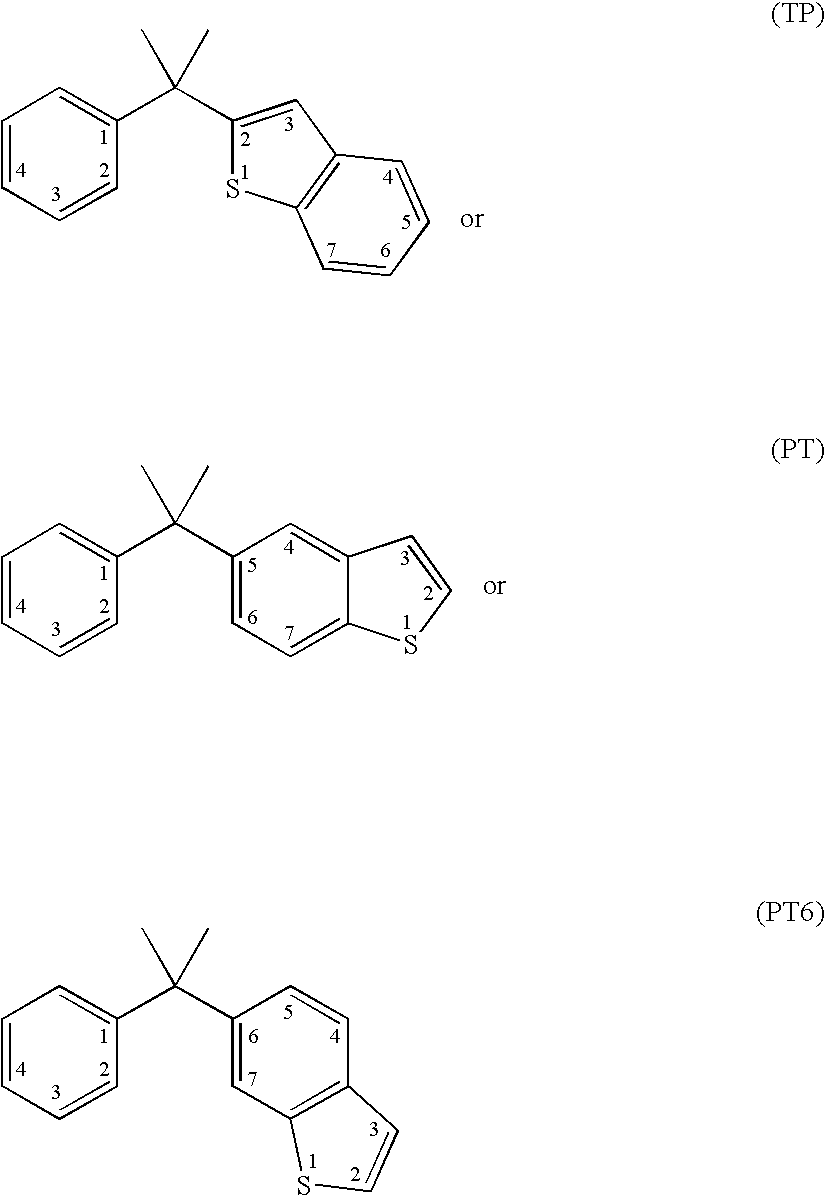
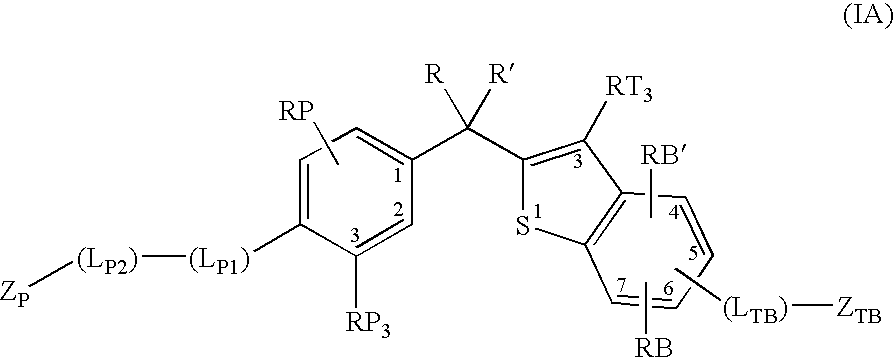
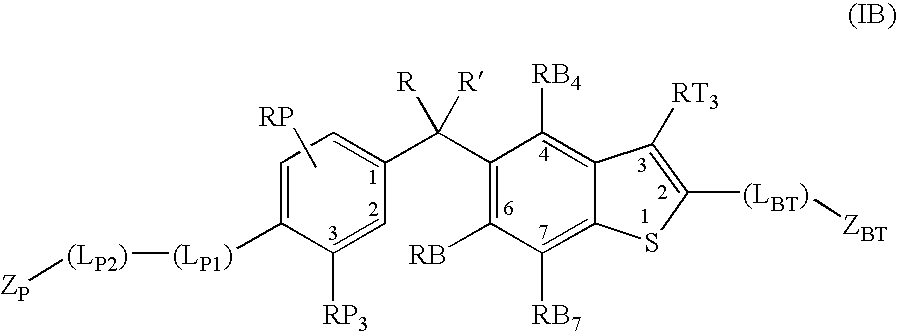
The present invention relates to novel, non-secosteroidal, phenyl-benzothiophene compounds with vitamin D receptor (VDR) modulating activity that are less hypercalcemic than 1α,25 dihydroxy vitamin D3. These compounds are useful for treating bone disease and psoriasis.
Description
BACKGROUND OF THE INVENTION [0001] Vitamin D3 Receptor (VDR) is a ligand dependent transcription factor that belongs to the superfamily of nuclear hormone receptors. The VDR protein is 427 amino acids, with a molecular weight of ˜50 kDa. The VDR ligand, 1α,25-dihydroxyvitamin D3 (the hormonally active form of Vitamin D) has its action mediated by its interaction with the nuclear receptor known as Vitamin D receptor (“VDR”). The VDR ligand, 1α,25-dihydroxyvitamin D3 (1α,25(OH)2D3) acts upon a wide variety of tissues and cells both related to and unrelated to calcium and phosphatehomeostasis. [0002] The activity 1α,25-dihydroxyvitamin D3 in various systems suggests wide clinical applications. However, use of conventional VDR ligands is hampered by their associated toxicity, namely hypercalcemia (elevated serumcalcium). Currently, 1α,25(OH)2D3, marketed as Rocaltrol® pharmaceutical agent (product of Hoffmann-La Roche), is administered to kidney failure patients undergoing chronic kid...
Claims
the structure of the environmentally friendly knitted fabric provided by the present invention; figure 2 Flow chart of the yarn wrapping machine for environmentally friendly knitted fabrics and storage devices; image 3 Is the parameter map of the yarn covering machine
Login to View More
Application Information
Patent Timeline
Application Date:The date an application was filed.
Publication Date:The date a patent or application was officially published.
First Publication Date:The earliest publication date of a patent with the same application number.
Issue Date:Publication date of the patent grant document.
PCT Entry Date:The Entry date of PCT National Phase.
Estimated Expiry Date:The statutory expiry date of a patent right according to the Patent Law, and it is the longest term of protection that the patent right can achieve without the termination of the patent right due to other reasons(Term extension factor has been taken into account ).
Invalid Date:Actual expiry date is based on effective date or publication date of legal transaction data of invalid patent.



 Login to View More