One hurdle to increased
power transmission is clearance between the power line and the ground or structure.
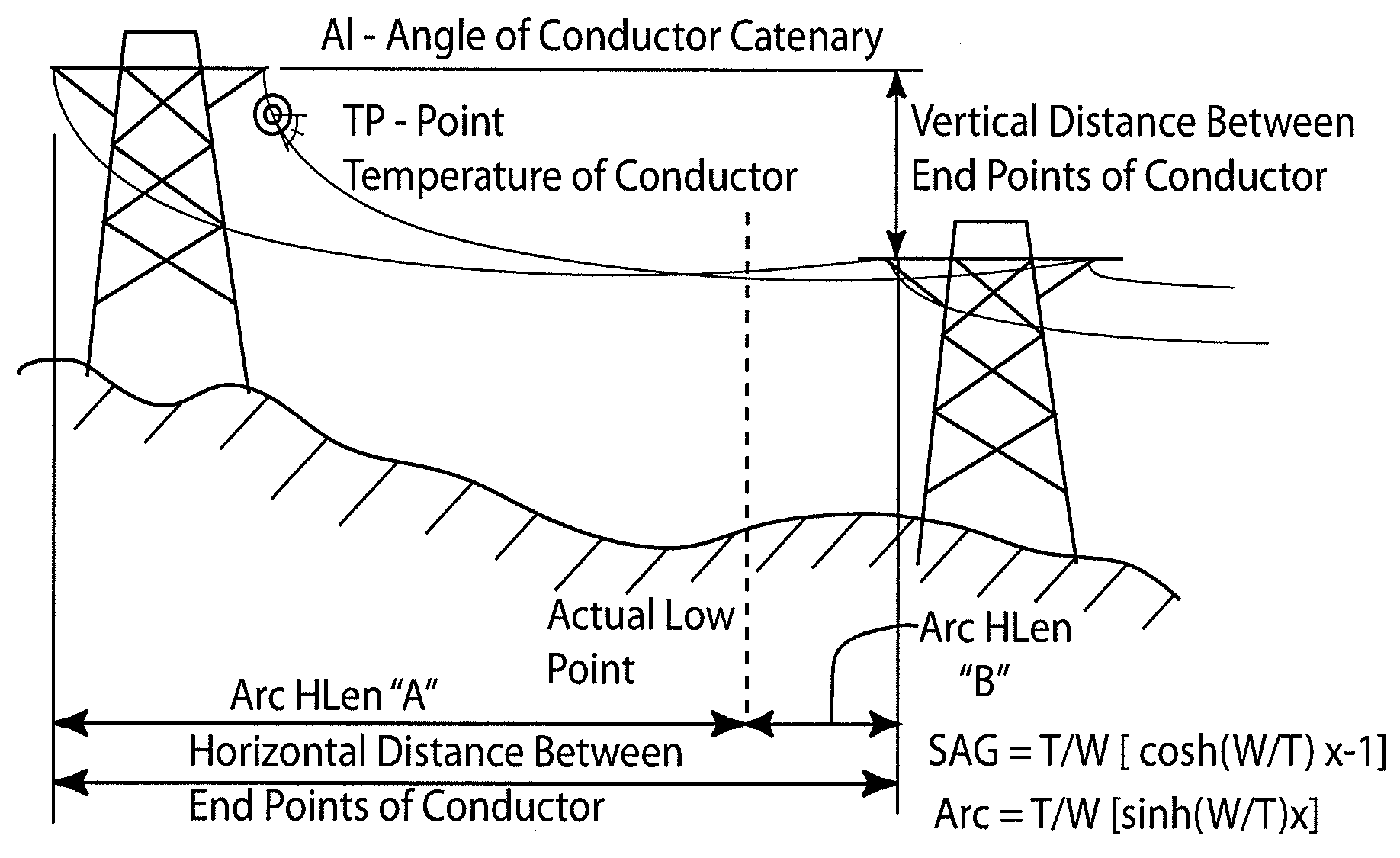
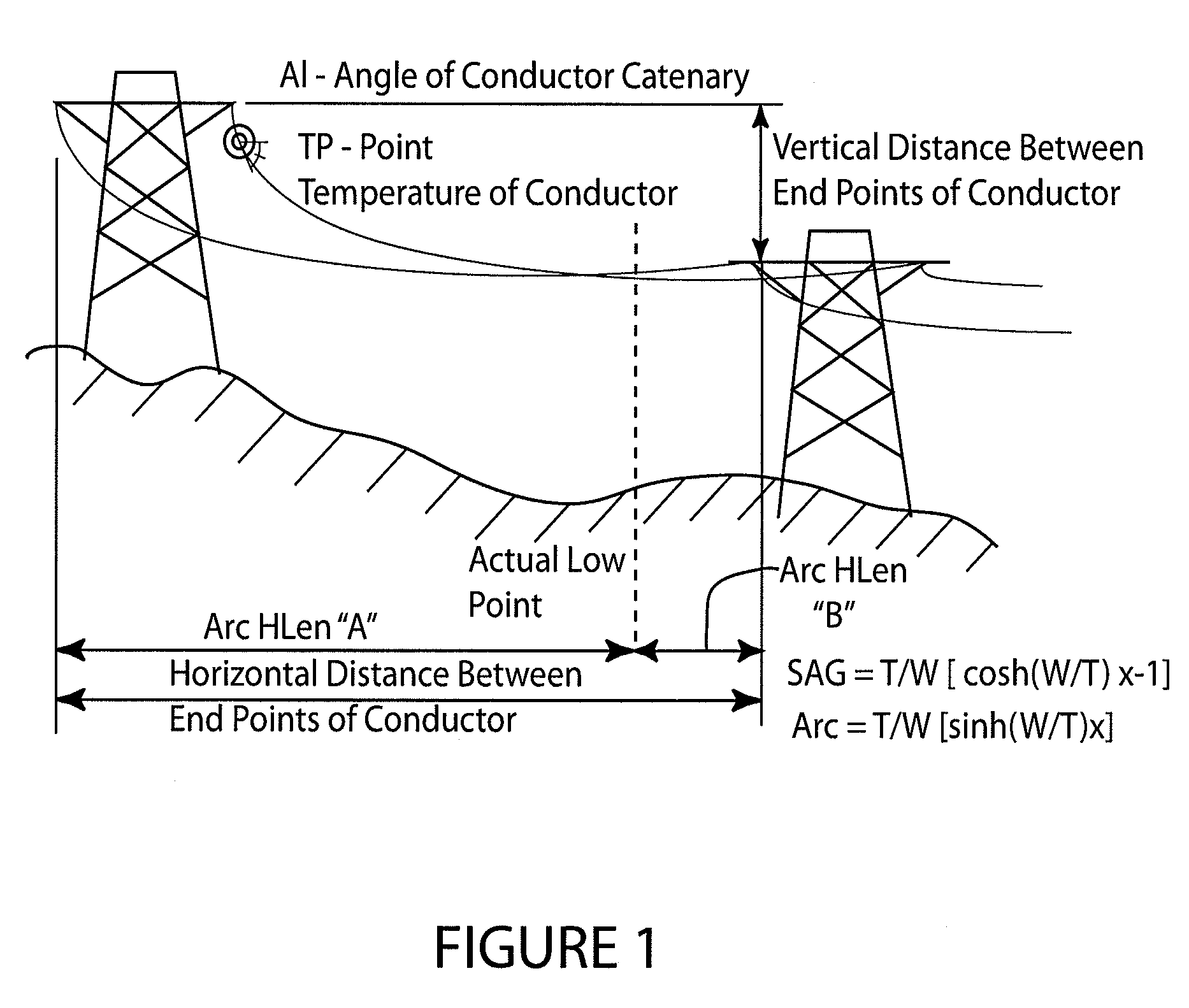
Thus, clearance can be is one of the considerations to electrical utilities because power lines sag under increasing power loads and as a result limitations are placed on the
ampacity or maximum load a line is allowed to carry.
As load increases more heat is generated resulting in ever increasing
thermal expansion of the power line causing the power line to sag closer to the ground.
It is often typical that safety is a significant factor and thus maximum load is significantly affected.
Adequate clearance regulations are necessary because power lines, after being installed in relation to the ground or structures, may later sag so as to become too close to the ground or structures resulting in significant safety concerns.
One such concern is that when power lines sag too close to the ground,
electrical shock or contact with the lines becomes more feasible and thus safety is at issue.
Another such concern is that electric flashover scenarios are possible as lines become too close to electrically grounding objects such as the ground or structures, and such electric flashover can result in extensive damage.
It is noteworthy though that such conservative assumptions result in significantly less than maximum line loading.
However, once an
electrical load is placed on the power lines, various load factors cause the power lines to sag.
Some of the problems of this method are due to its approximating qualities rather than accurate calculations.
Other disadvantages and / or problems result from the inability to measure the temperature at all points, instead of sample points.
As a result of these and other disadvantages and problems, additional safety factors may need to be added to assure minimum clearances, but as a result optimization suffers.
This approach is
time consuming, labor intensive, indirect and often subject to large errors.
These disadvantages may include conservative current ratings resulting from an assumed combination of worst case cooling conditions.
These measurements may be done with actual measuring, using
acoustics, microwaves, and
laser beams, although none of these methods may be practical.
The equipment can be bulky, heavy and expensive.
The equipment is typically installed on the ground under the conductor and thus must be left unattended where it is subject to vandalism, and it reduces the clearance at the center portion of the line where it is installed.
There are limitations and / or disadvantages associated with this tension measuring method.
Second, often load cells must be installed in-line which requires de-energizing and
cutting of the line; and as a result, significant labor expense and line
downtime is incurred.
Finally, many of the current tension reading load cells must be installed on the grounded end of insulators holding the line at dead-end structures; and as a result, calculations cannot be performed on all spans.



 Login to View More
  Login to View More