Congestive
heart failure is a major global
public health problem that results in hundreds of thousands of deaths and incalculable human suffering in millions of people each year.
These modalities offer some symptomatic improvement and, potentially, improve survival but all are palliative treatments at best and are not curative.
Existing therapies provide limited clinical benefits for patients in advanced stages of congestive
heart failure.
In fact, it is estimated that several hundred thousand patients each year with far advanced CHF experience only limited clinical benefit from existing well-established treatments, and could best be served by cardiac
transplantation.
Cardiac
transplantation offers significant improvement in symptoms and survival for patients with end stage
heart failure but is available to only a few thousand patients each year due to the limited number of donor hearts.
Unfortunately, mechanical circulatory assistance has not developed into a commonly used therapy in the treatment of heart failure.
However, technical challenges have, thus far, precluded the development of the practical TAH needed to achieve the original vision.
Indeed, a number of effective LVADs have shown promise in clinical studies but have experienced only limited commercial success.
More specifically, two non-
thoracotomy methods for achieving central
vascular access have been previously described and have been used to a limited extent in patients.
This approach has been used to a limited extent to treat patients with acute
cardiogenic shock, but has not been adapted for
ambulatory or chronic use.
However, these embodiments are not generally considered practical for
ambulatory or chronic clinical use.
Both of these LVAD systems noted immediately above are believed to maintain seal integrity with respective external fluid purge systems, but which are further believed to exhibit very limited durability.
It is believed that the period of use of these pumps has been limited to about two weeks.
Unfortunately, existing methods for inserting these devices require major
surgery during which the patient is placed on
cardiopulmonary bypass and the heart may be arrested while vascular grafts are connected to a chamber of the heart to provide
blood inflow to the pump of the assist
system.
The implantation of existing LVADs carries too much risk to justify their customary use except in the most extreme circumstances.
This is highly unfortunate, because LVADs offer greater hemodynamic
efficacy than virtually all other adapted treatments, and also offer the potential of much greater clinical benefit in the treatment of congestive heart failure than other therapies and comparable to cardiac
transplantation.
The substantial risk associated with present methods of implanting LVADs and RVAD has limited their use to end-stage patients.
A much larger group of patients with less severe
heart disease are not, presently, considered candidates for treatment with mechanical circulatory assist devices because of the substantial risk of implanting circulatory assist devices.


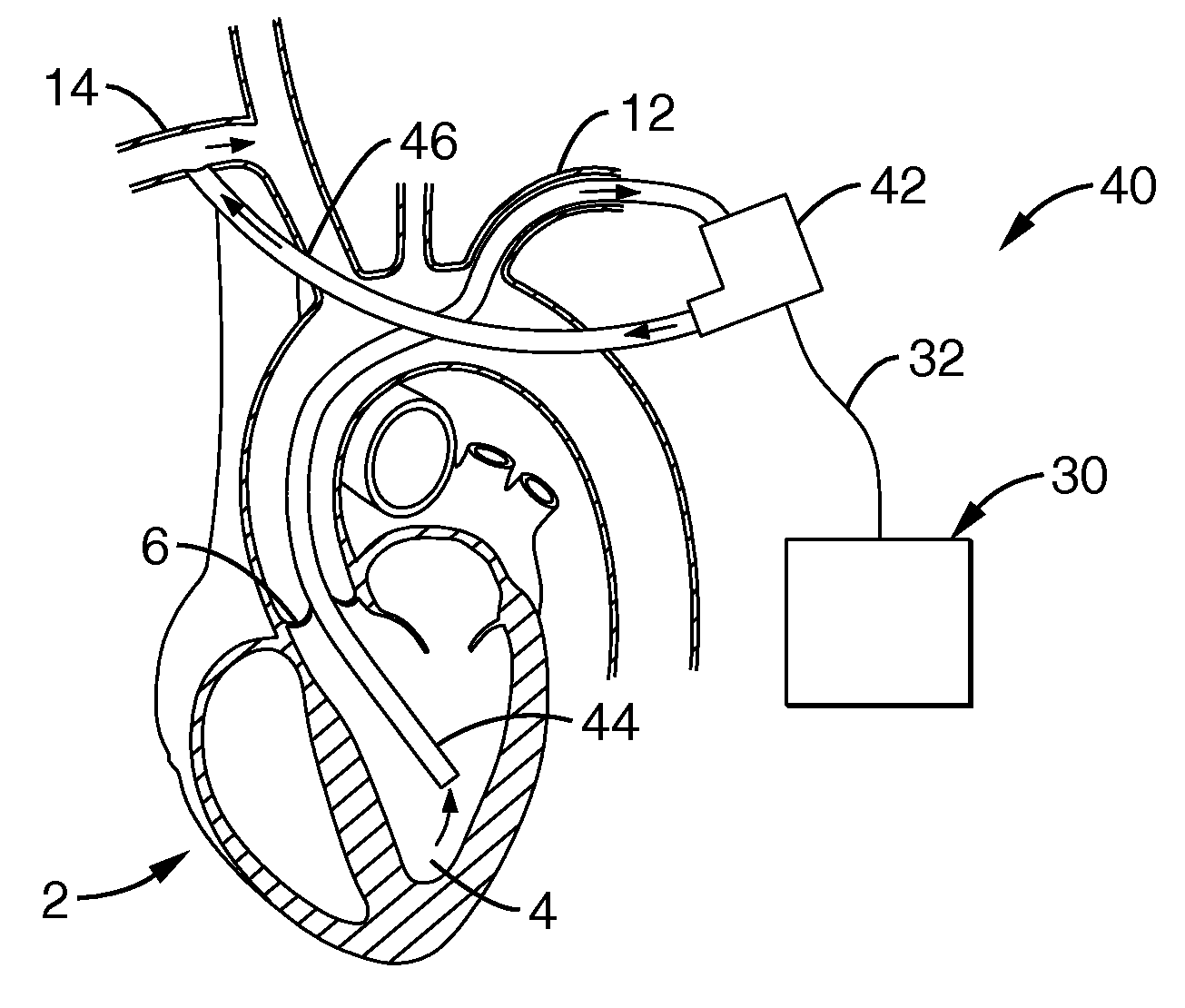
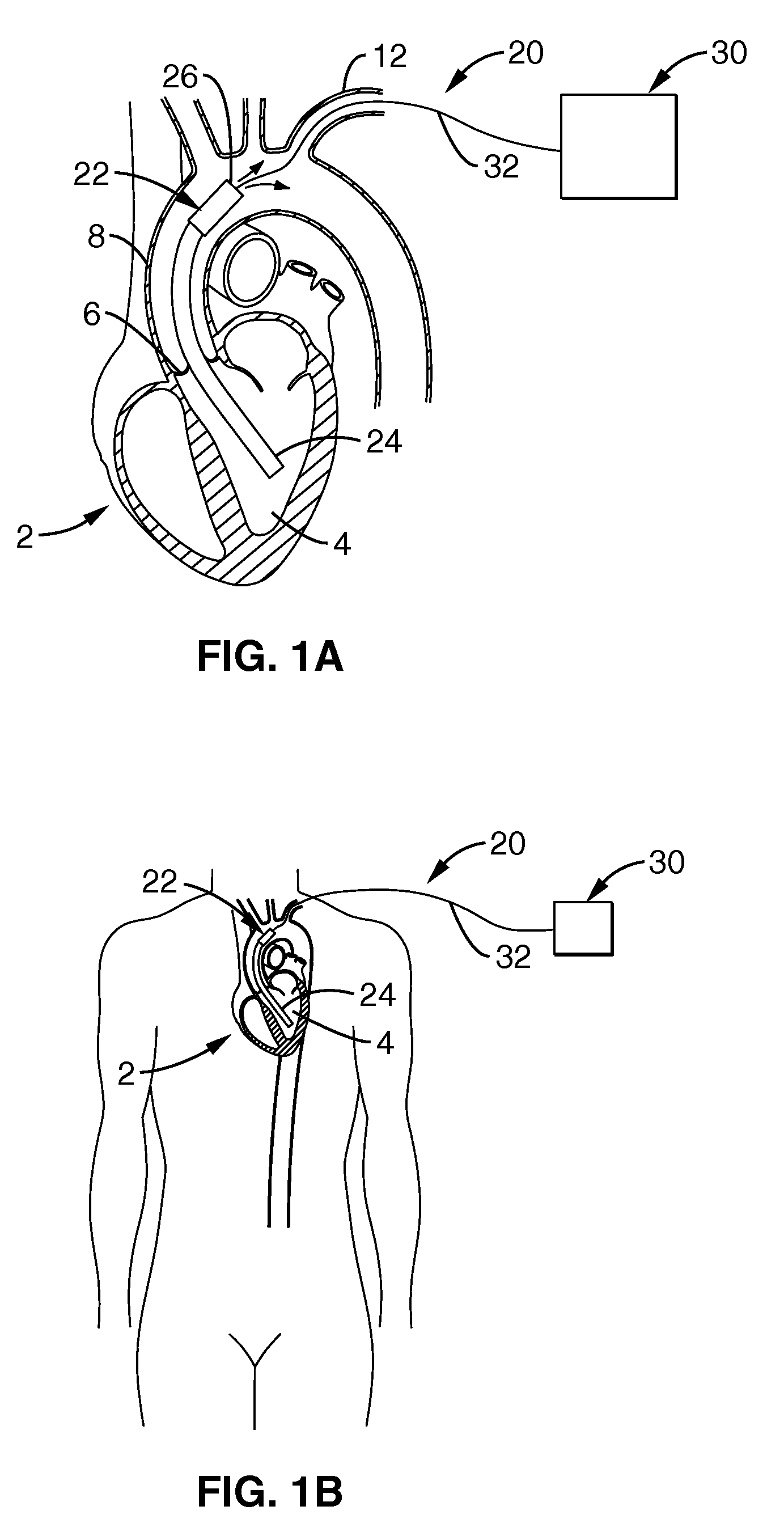
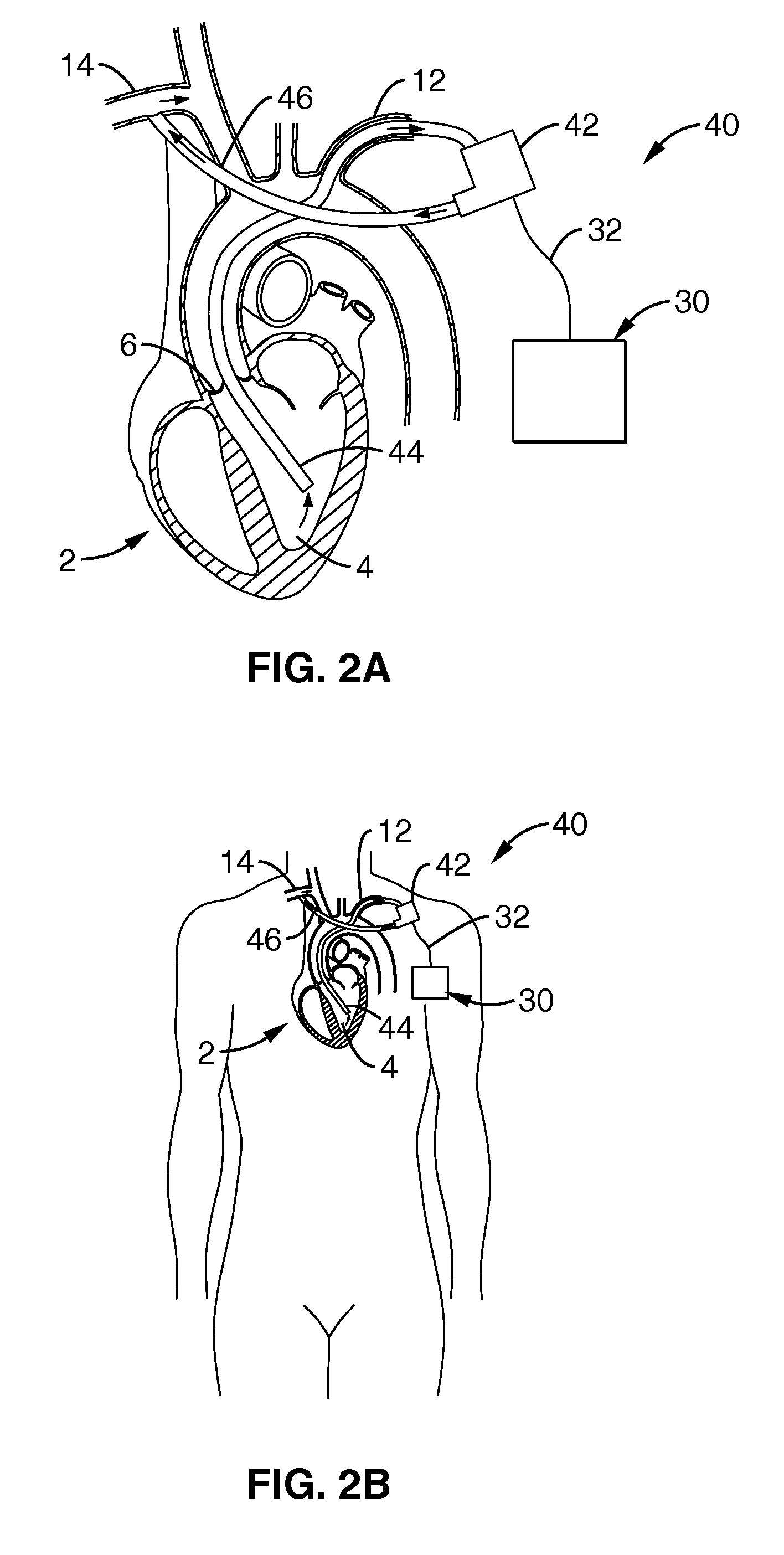
 Login to View More
  Login to View More