
Polyurethane Resin Moulding For Vehicle Interior Part And Method Of Manufacturing The Same
a technology of polyurethane resin and vehicle interior, which is applied in the direction of synthetic resin layered products, transportation and packaging, coatings, etc., can solve the problems of substantial amount of time required and the effect of heat storage material is hardly expected in the closed spa
- Summary
- Abstract
- Description
- Claims
- Application Information
AI Technical Summary
Benefits of technology
Problems solved by technology
Method used
Image

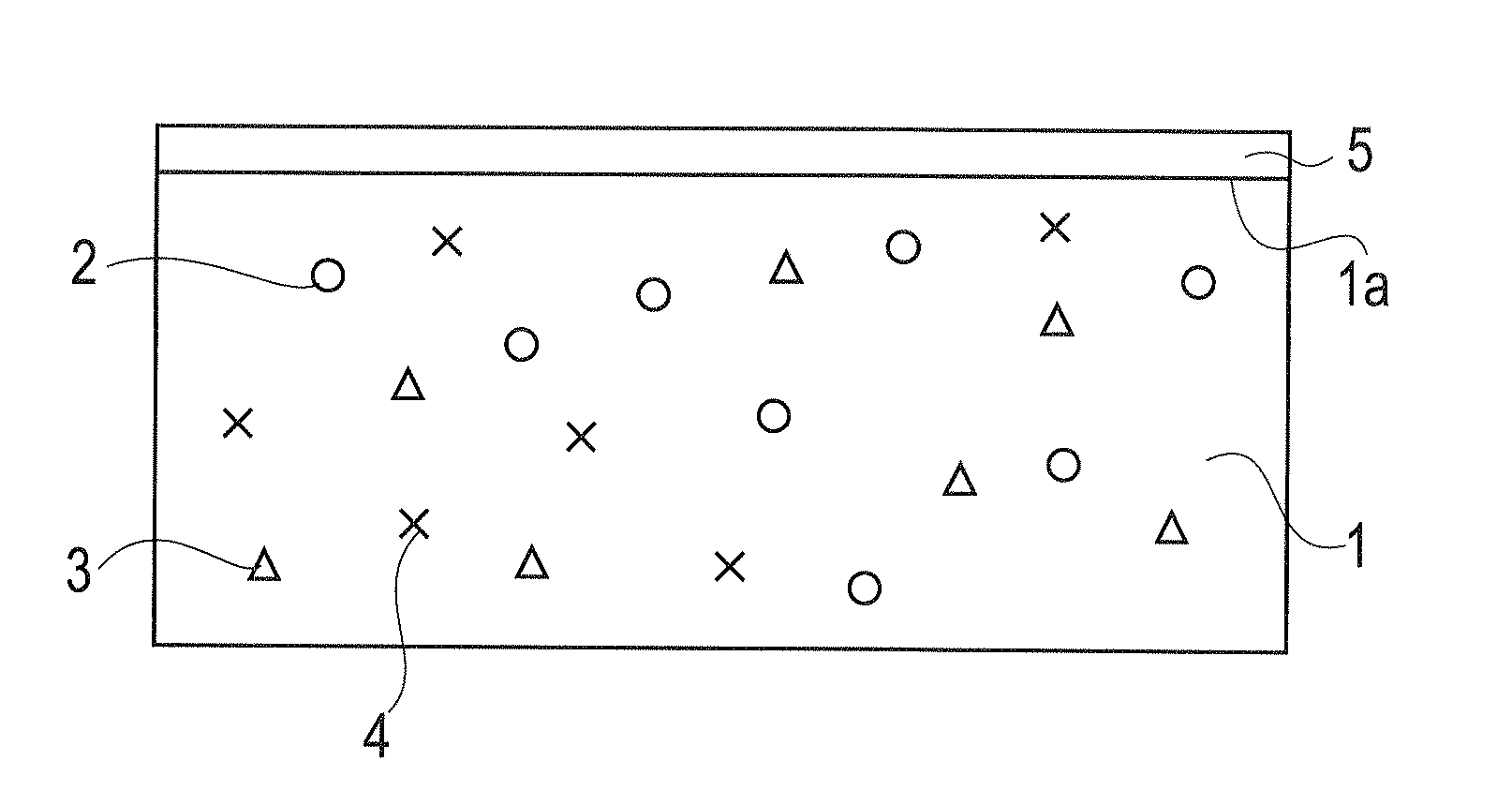
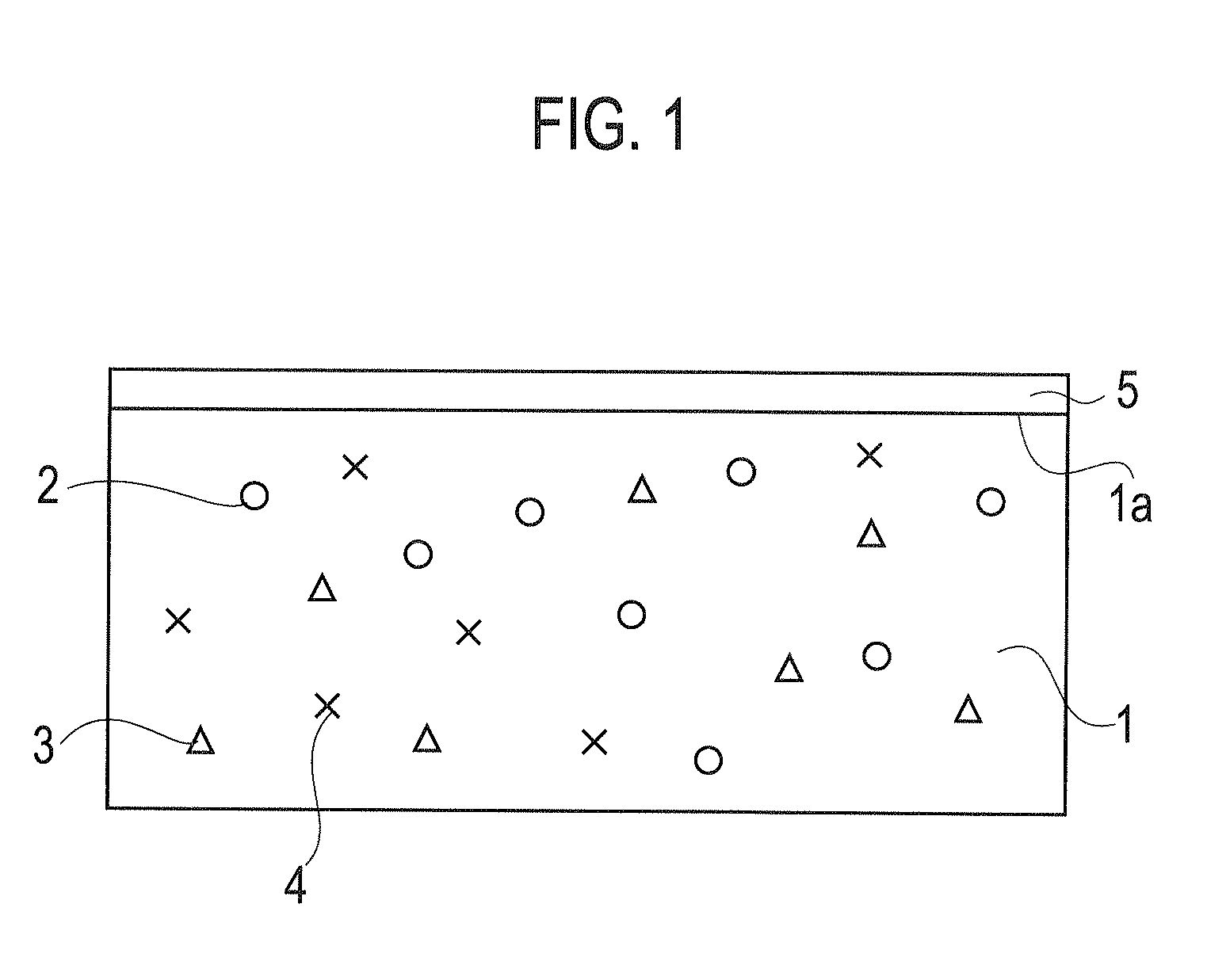
Examples
example 1
[0054]10 parts (6.4% by weight in a polyurethane resin moulding) of a latent heat storage material, Prethermo C-75 (manufactured by Daiwa Chemical Industries Co., Ltd.), that paraffin waxes (PW) of which a melting point was 75° C. were microencapsulated as shown in Table 1 were added to 100 parts of a polyol mixture. Then, a moulding was obtained based on the raw materials of the polyurethane resin for a steering wheel and the moulding conditions as described above. Hereinafter, the latent heat storage material that the paraffin waxes are microencapsulated is described as “microencapsulated PW”.
examples 2 to 4
[0057]20 parts (12.1% by weight in a polyurethane resin moulding) of the microencapsulated PW of which the melting point was 75° C. used in Example 1 were added to 100 parts of a polyol mixture in Example 2, 30 parts (17.1% by weight in a polyurethane resin moulding) of the above-mentioned microencapsulated PW were added to 100 parts of the polyol mixture in Example 3, and 40 parts (21.5% by weight in a polyurethane resin moulding) of the above-mentioned microencapsulated PW were added to 100 parts of the polyol mixture in Example 4, whereby each moulding was obtained by the same operations as Example 1. Table 3 shows test results of Examples 2 to 4 with the addition of a test result of Comparative Example 5 of which a moulding was obtained by the same operations as Example 1 except that the microencapsulated PW were not added.
TABLE 3TemperatureTemperatureDifference fromDifference fromSetting TemperatureSetting Temperature(80° C.) after HoldingMicroencapsulated(80° C.) at ReachingTi...
examples 5 and 6
[0058]5 parts (3.2% by weight in a polyurethane resin moulding) of the microencapsulated PW of which the melting temperature was 75° C. used in Example 1 and 5 parts (3.2% by weight in a polyurethane resin moulding) of shirasu balloons with a diameter of 35 μm were added to 100 parts of a polyol mixture in Example 5. 5 parts of the above-mentioned microencapsulated PW and 5 parts (3.2% by weight in a polyurethane resin moulding) of shirasu balloons with a diameter of 80 μm were added to 100 parts of a polyol mixture in Example 6. Each moulding was obtained by the same operations as Example 1. Table 4 shows test results of the examples.
TABLE 4TemperatureTemperatureDifference fromDifference fromSetting TemperatureSetting Temperature(80° C.) after HoldingMicroencapsulated(80° C.) at ReachingTime (30 minutes) atNo.PW and PW80° C. (° C.)80° C. (° C.)Example 55 Parts of Prethermo103C-75 +5 Parts of Shirasuballoons 35Example 65 Parts of Prethermo103C-75 +5 Parts of Shirasuballoons 80Exampl...
PUM
| Property | Measurement | Unit |
|---|---|---|
| melting point | aaaaa | aaaaa |
| particle diameter | aaaaa | aaaaa |
| thickness | aaaaa | aaaaa |
Abstract
Description
Claims
Application Information
 Login to View More