

Switchboard bus assembly in which material requirements are reduced without reducing performance
a technology of switchboard and bus, which is applied in the field of switchboard bus, can solve the problems of poor thermal dissipation and current distribution, increased cost of expensive copper, and increased current density near the surface of the conductor
- Summary
- Abstract
- Description
- Claims
- Application Information
AI Technical Summary
Benefits of technology
Problems solved by technology
Method used
Image

Examples
Embodiment Construction
[0015]Although the invention will be described in connection with certain aspects and / or embodiments, it will be understood that the invention is not limited to those particular aspects and / or embodiments. On the contrary, the invention is intended to cover all alternatives, modifications, and equivalent arrangements as may be included within the spirit and scope of the invention as defined by the appended claims.
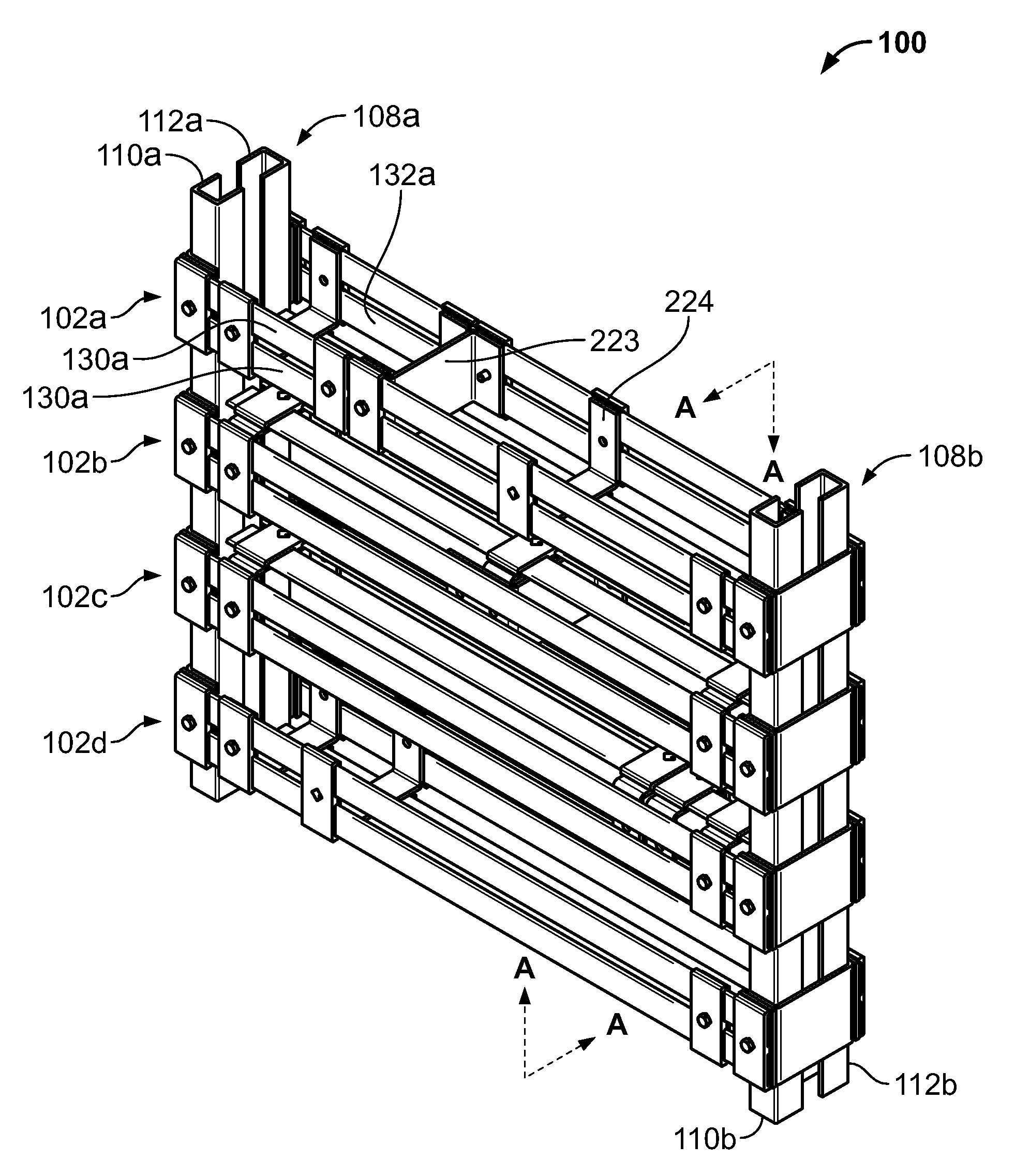
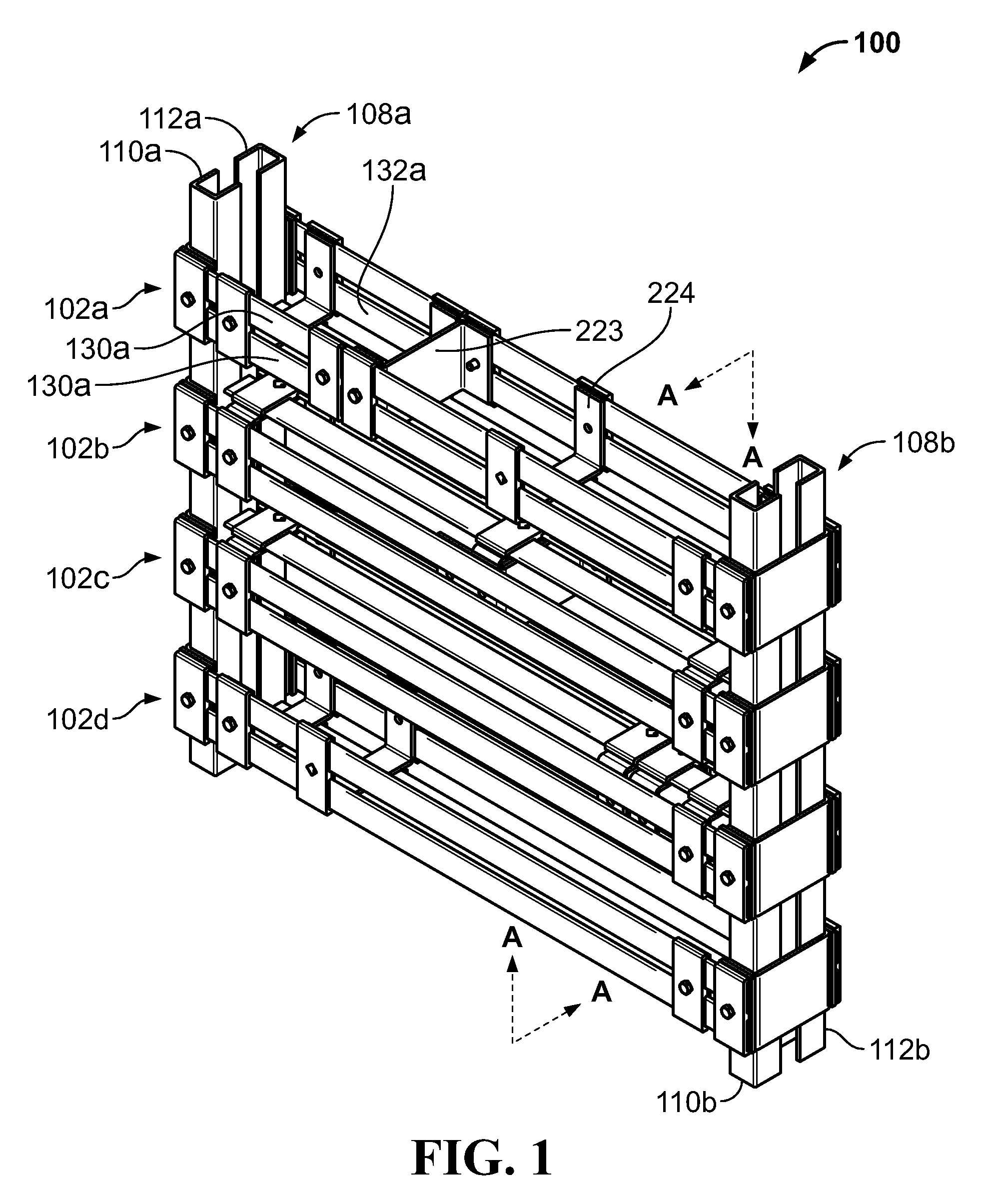
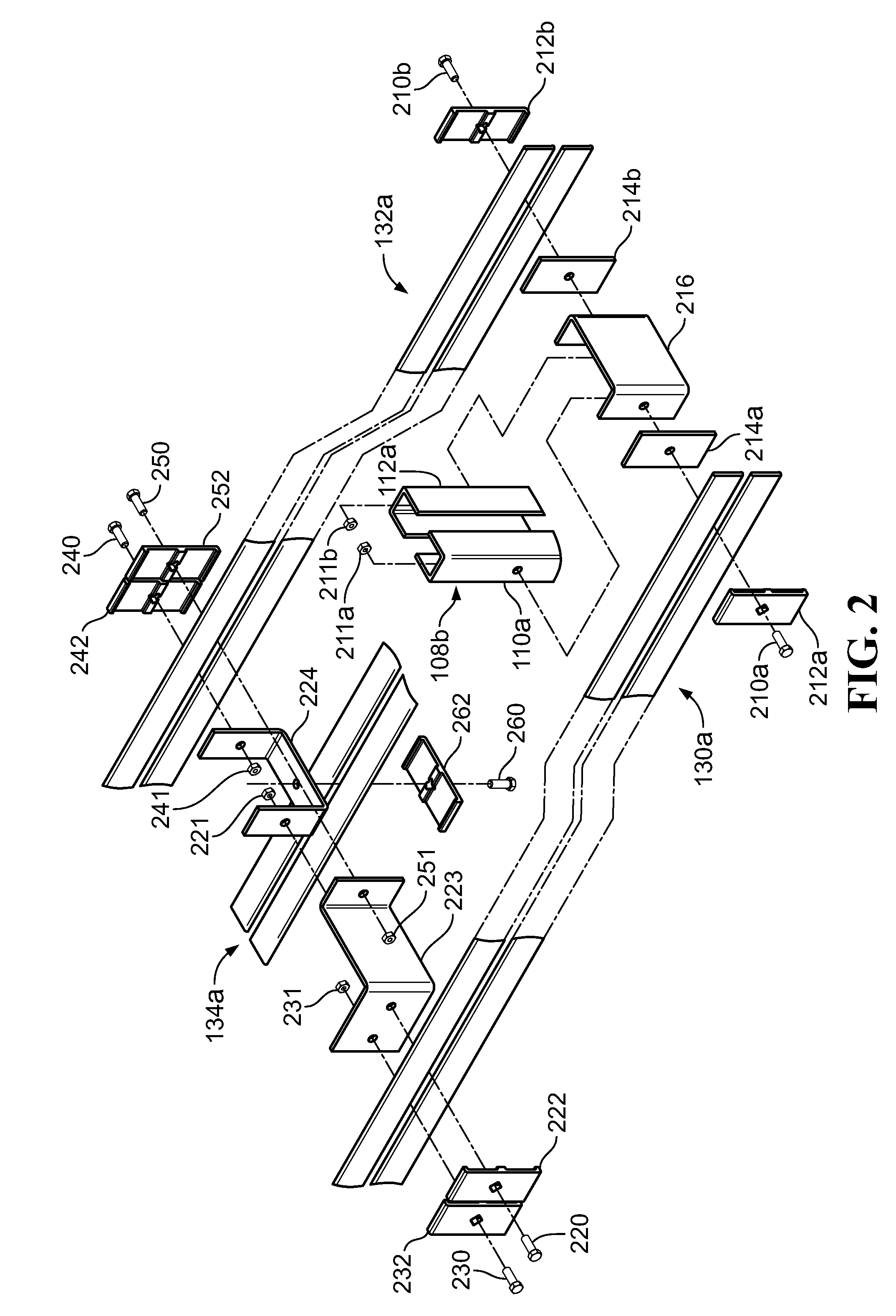
[0016]An isometric view of a bus system 100 for use in electrical distribution equipment such as switchgear, switchboards, and motor control centers, is shown inFIG. 1. FIG. 2 shows a portion of the bus system 100 in exploded view. In an exemplary embodiment, the bus system 100 includes three horizontal phase conductors or buses 102a,b,c, one for each phase of a polyphase alternating current distributed by the electrical distribution equipment (not shown). The bus system 100 further includes a bus 102d corresponding to a neutral conductor. The buses 102 are made of a conduc...
PUM
 Login to View More
 Abstract
Description
Claims
Application Information
 Login to View More