
Method of controlling shape of synthesized ferroelectric oxide nanocrystal particles
a technology of ferroelectric oxide and nanocrystal particles, which is applied in the field of which can solve the problems of inability to achieve the shape-controlled synthesis of batiosub>3/sub>nanocrystals, and the work on the subject is small
- Summary
- Abstract
- Description
- Claims
- Application Information
AI Technical Summary
Problems solved by technology
Method used
Image

Examples
example
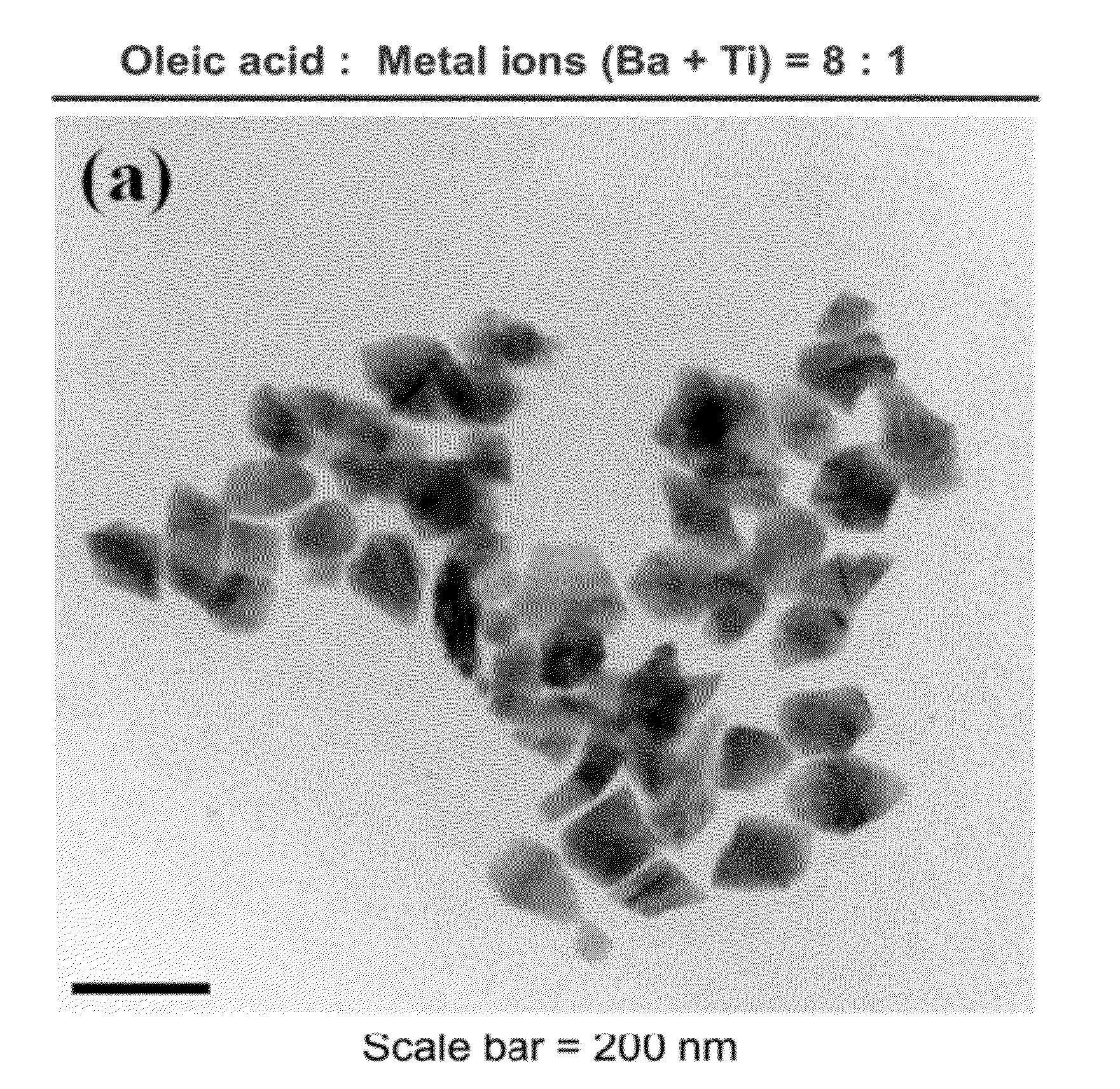
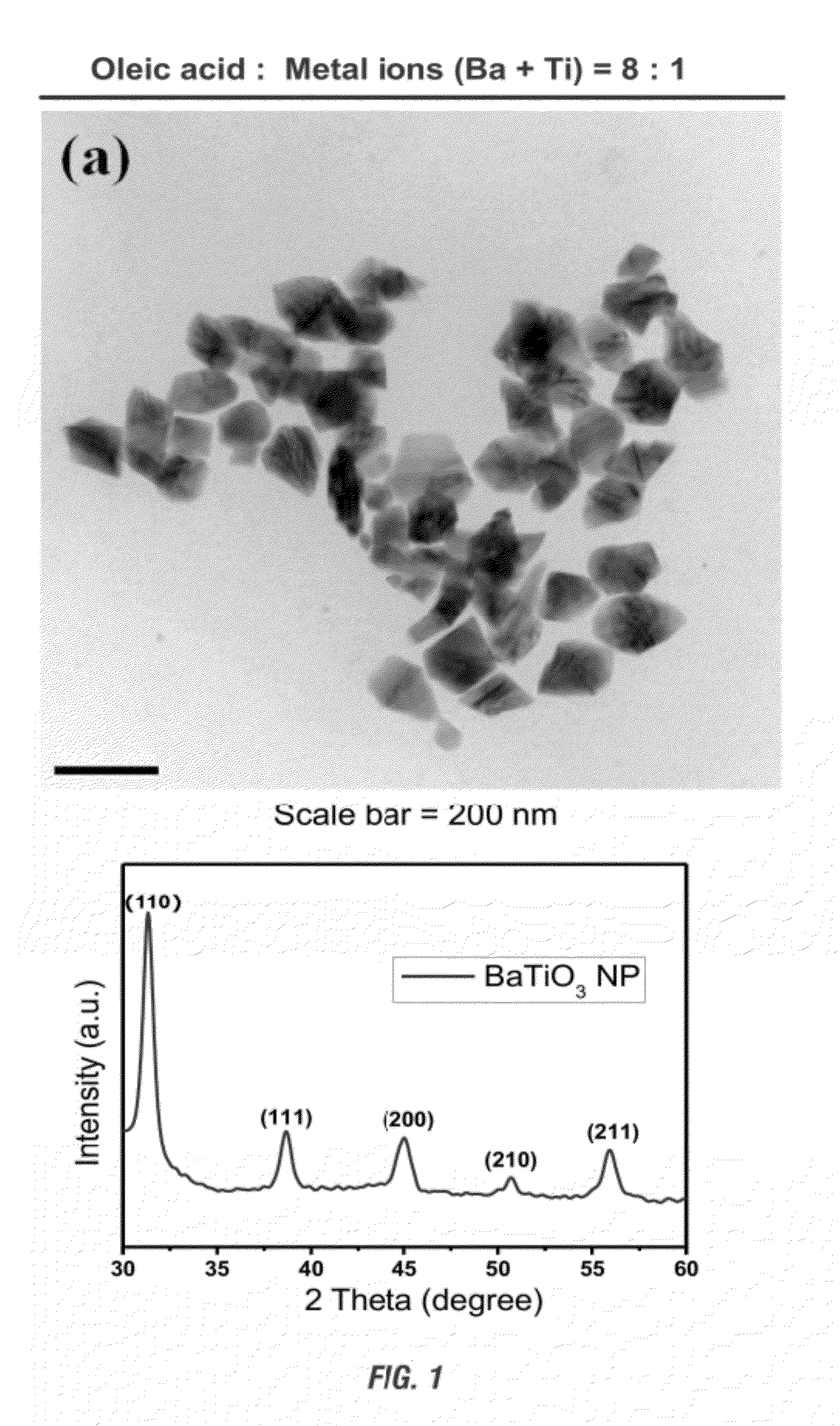
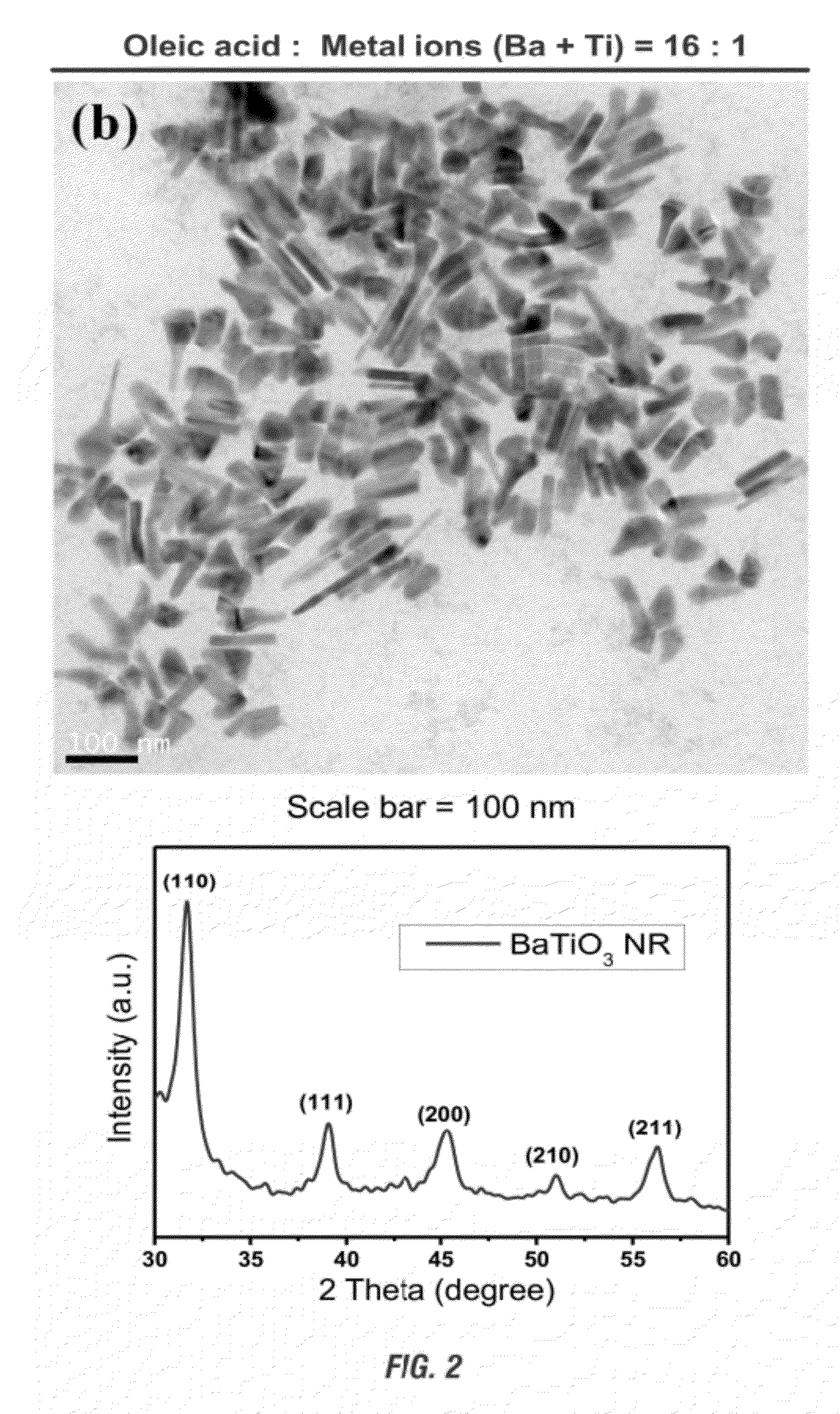
[0020]In a typical synthesis of BaTiO3 nanocrystals, 1.6 mmol oleic acid (Tech. 90%, Alfa Aesar) and 10 ml 1-octadecene (Tech. 90%, Sigma Aldrich) were mixed in a three-neck flask with magnetic stirring and heated to 100° C. for 30 min. Vacuum was applied to remove trace water; the whole system was protected with a dry Ar atmosphere. The solution was cooled down to 80° C.; subsequently, 1 ml barium titanium ethyl hexano-isopropoxide (13% isopropanol solution; equals to 0.2 mmol metal precursor) was injected quickly, followed by heating to 100° C. Isopropanol was then removed by vacuum. All chemicals were used as received without further purification.
[0021]Under the Ar protection, the light yellowish transparent reaction solution was heated to reflux for 24 hrs, resulting in a turbid mixture. After the reaction system was cooled to 100° C., large amount of ethanol was added to the turbid solution. The precipitates were separated by centrifuge and re-dissolved in toluene. BaTiO3 nanor...
PUM
| Property | Measurement | Unit |
|---|---|---|
| ferroelectric | aaaaa | aaaaa |
| molar ratio | aaaaa | aaaaa |
| organic | aaaaa | aaaaa |
Abstract
Description
Claims
Application Information
 Login to View More