Check patentability & draft patents in minutes with Patsnap Eureka AI!

Amplification of biological targets via on-chip culture for biosensing

Active Publication Date: 2015-01-22
NAT TECH & ENG SOLUTIONS OF SANDIA LLC
View PDF2 Cites 5 Cited by
  • Summary
  • Abstract
  • Description
  • Claims
  • Application Information

AI Technical Summary

Benefits of technology

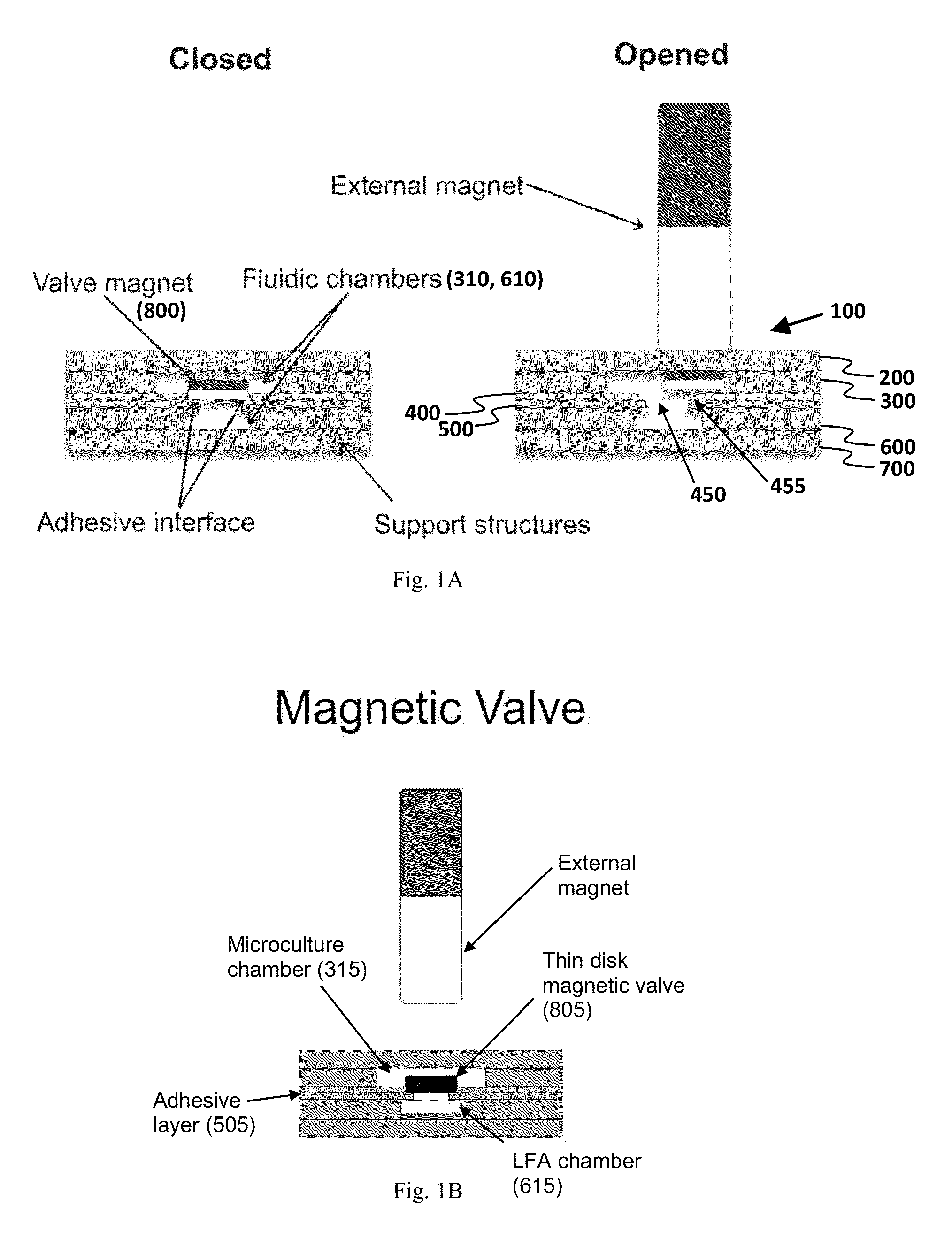
The present device described in this patent is a device that can improve the detection of targets, such as bacteria, in a sample. It includes a chamber or reservoir that can amplify the target before detection. The device is portable, ultra-low cost, requires no power, and can be operated by individuals with little training. It uses on-chip microculturing methods to amplify the target bacteria before detection, improving the detection limit by more than four orders of magnitude. The device also includes a valve element that is responsive to an applied magnetic field to open the device and release the amplified bacteria for detection. The technical effect of the device is to improve the detection and concentration of targets, providing a practical solution for detecting biological targets.

Problems solved by technology

Despite significant progress in the development of biosensor technologies, the utility of many assays remains limited.
Generally, this is due to the inability of these assays to detect the biological target at or below the infectious dose (commonly 102-103 cells or spores).
Also, some sensors lack the sensitivity and / or specificity required for detection of the desired target.

Method used

the structure of the environmentally friendly knitted fabric provided by the present invention; figure 2 Flow chart of the yarn wrapping machine for environmentally friendly knitted fabrics and storage devices; image 3 Is the parameter map of the yarn covering machine
View more

Image

Smart Image Click on the blue labels to locate them in the text.
Viewing Examples
Smart Image
  • Amplification of biological targets via on-chip culture for biosensing
  • Amplification of biological targets via on-chip culture for biosensing
  • Amplification of biological targets via on-chip culture for biosensing

Examples

Experimental program
Comparison scheme
Effect test

example 1

Prototype Device

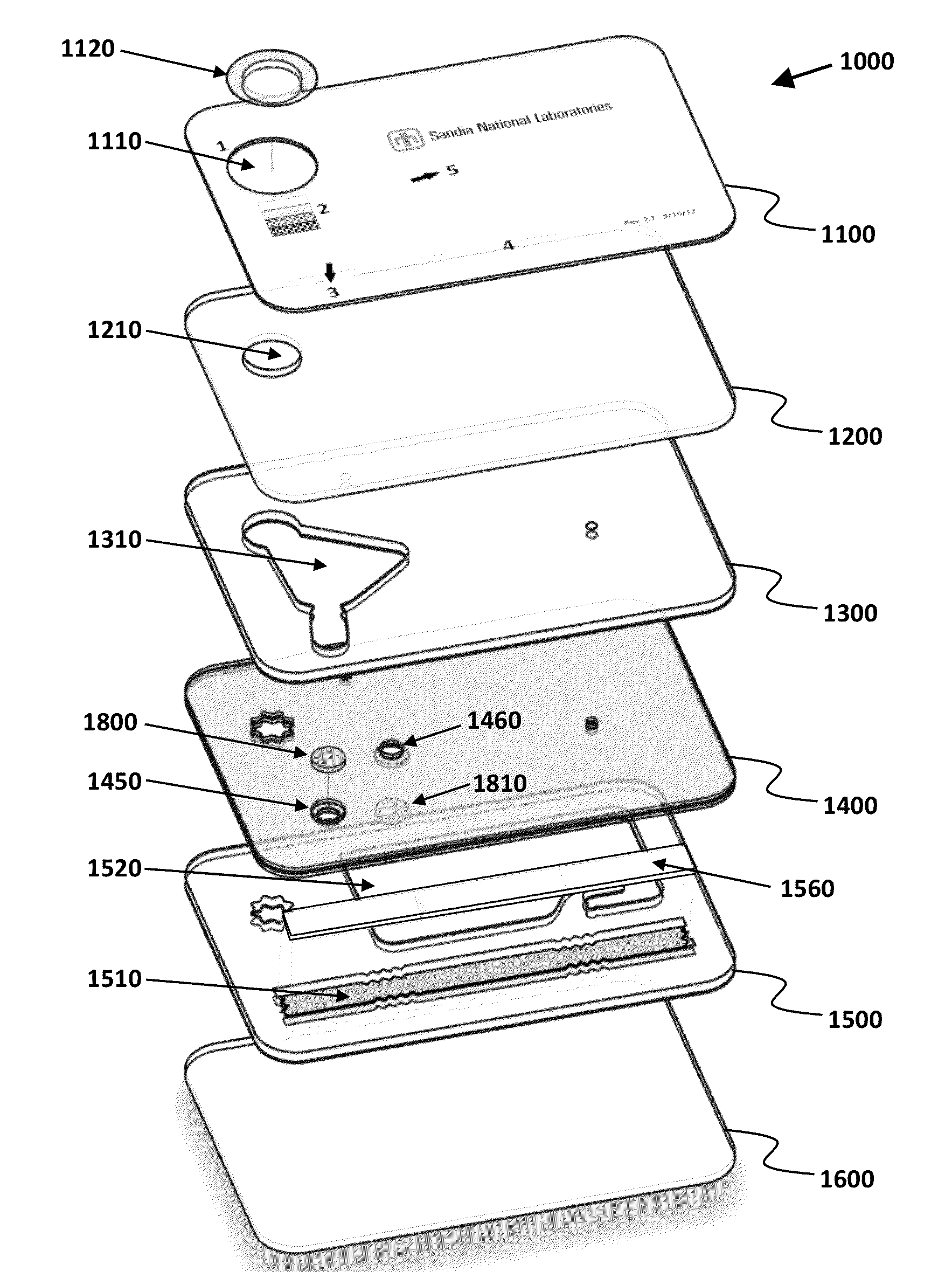
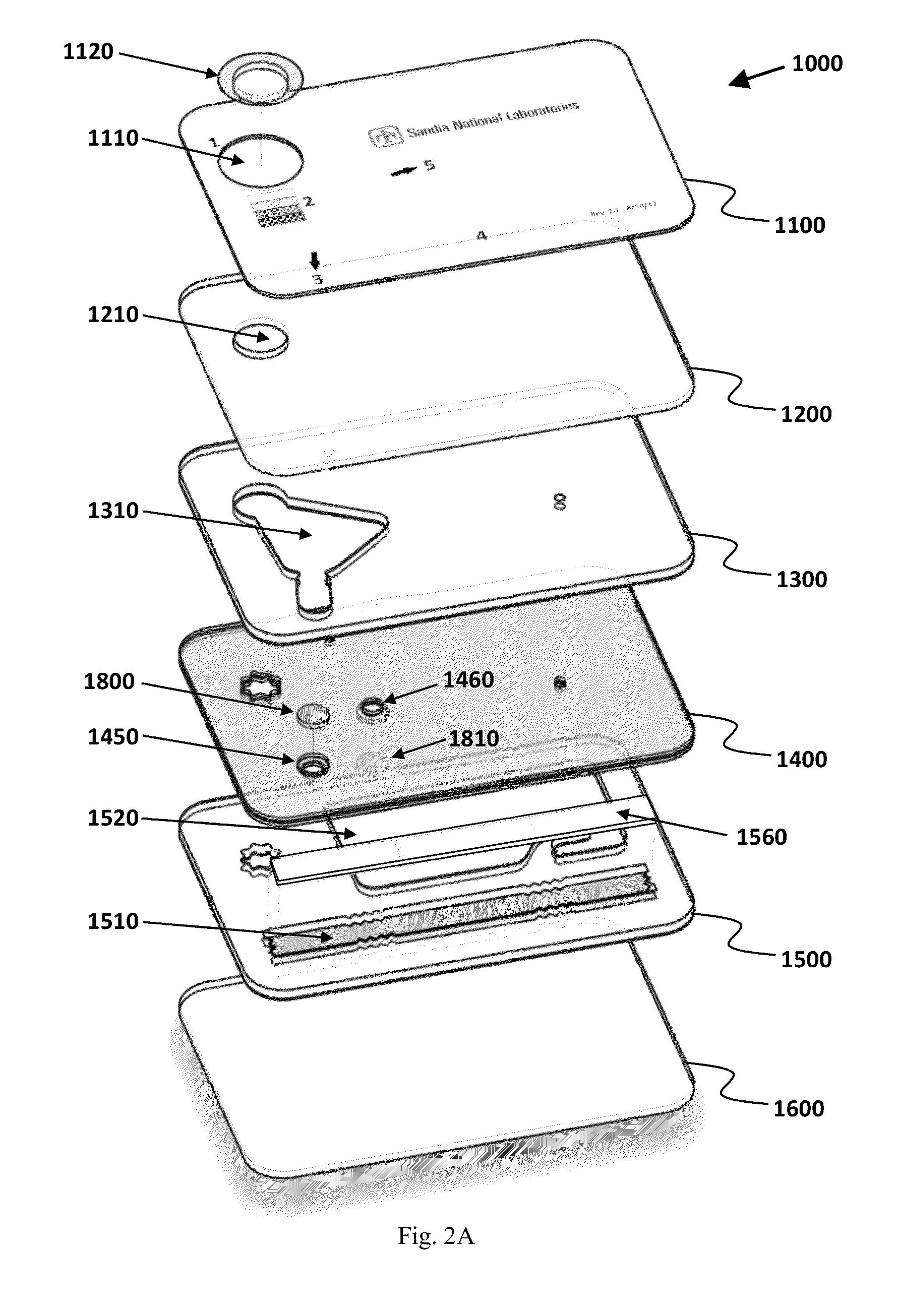
[0128]We will now provide fabrication details for prototype devices that were made and tested. As explained below, the devices were laminated from sheets of polymethyl methacrylate (PMMA) and biaxially-oriented polyethylene terephthalate (bo-PET, often marketed under the tradename “Mylar™”). The various perforations were cut out using a carbon dioxide laser cutter. Lamination was performed under pressure using a hydraulic press or roller press. The valve elements were pressed onto their adhesive-coated seats using the hydraulic press.

[0129]The adhesive used for the valve seats was an acrylic-based adhesive marketed by Adhesives Research of Glen Rock, Pa., under the product number ARCARE-90445. To achieve a desired amount of adhesion between the valve element and the valve seat, a controlled amount of pressure was applied for a controlled time duration. Further details are provided below. It should be noted in this regard that the amount of adhesion is also dependent ...

example 2

Amplification of Biological Targets Via on-Chip Culture for Biosensing

[0138]Anthrax poses a significant threat to US National Security as demonstrated by the 2001 terrorist attacks targeting the US Postal Service and Hart Building. The causative agent, Bacillus anthracis, is ubiquitous, and more importantly, found in countries harboring terrorists. Between the years 2005-2012, more than three thousand B. anthracis outbreaks were reported. This is likely an underestimation of the incidence and prevalence of the disease. Anthrax commonly causes sudden death in livestock, and consequently, is routinely isolated and propagated by indigenous populations to diagnose the disease. This practice of isolation and propagation in labs with little-to-no security in countries harboring terrorists drastically increases laboratories' repositories of B. anthracis, and escalates the risk that the agent can be stolen for nefarious purposes. In order to mitigate this risk, a simple and inexpensive assa...

the structure of the environmentally friendly knitted fabric provided by the present invention; figure 2 Flow chart of the yarn wrapping machine for environmentally friendly knitted fabrics and storage devices; image 3 Is the parameter map of the yarn covering machine
Login to View More

PUM

No PUM Login to View More

Abstract

The present invention, in part, relates to methods and apparatuses for on-chip amplification and / or detection of various targets, including biological targets and any amplifiable targets. In some examples, the microculture apparatus includes a single-use, normally-closed fluidic valve that is initially maintained in the closed position by a valve element bonded to an adhesive coating. The valve is opened using a magnetic force. The valve element includes a magnetic material or metal. Such apparatuses and methods are useful for in-field or real-time detection of targets, especially in limited resource settings.

Description

CROSS-REFERENCE TO RELATED APPLICATION[0001]This application claims the benefit of U.S. Provisional Application Nos. 61 / 857,029, filed Jul. 22, 2013, and 61 / 870,841, filed Aug. 28, 2013, each of which is hereby incorporated by reference in its entirety.STATEMENT OF GOVERNMENT INTEREST[0002]This invention was developed under Contract DE-AC04-94AL85000 between Sandia Corporation and the U.S. Department of Energy. The U.S. Government has certain rights in this invention.BACKGROUND OF THE INVENTION[0003]Miniaturized systems can be useful for detecting various analytes, contaminants, and toxins. In particular, such systems can allow for real-time or in-field detection of a target, while minimizing sample and reagent consumption. Point-of-care testing has wide applicability, not only in diagnostic fields, but also in detecting pathogens or genetic modifications in agricultural settings, as well as assessing biological and chemical threats in environmental screenings.[0004]Despite signific...

Claims

the structure of the environmentally friendly knitted fabric provided by the present invention; figure 2 Flow chart of the yarn wrapping machine for environmentally friendly knitted fabrics and storage devices; image 3 Is the parameter map of the yarn covering machine
Login to View More

Application Information

Patent Timeline
no application Login to View More
IPC IPC(8): G01N33/569
CPCG01N33/56911F16K31/086B01L2300/0887B01L2400/0633B01L2400/0406Y10T137/87917B01L2300/0816C12Q1/04B01L2300/0663F16K31/082F16K99/003B01L3/502738F16K99/0046F16K2099/0084
Inventor HARPER, JASON C.EDWARDS, THAYNE L.CARSON, BRYANFINLEY, MELISSAARNDT, WILLIAM
Owner NAT TECH & ENG SOLUTIONS OF SANDIA LLC
Features
  • R&D
  • Intellectual Property
  • Life Sciences
  • Materials
  • Tech Scout
Why Patsnap Eureka
  • Unparalleled Data Quality
  • Higher Quality Content
  • 60% Fewer Hallucinations
Social media
Patsnap Eureka Blog
Learn More