Check patentability & draft patents in minutes with Patsnap Eureka AI!

Multiplex Detection of Nucleic Acids

a nucleic acid and multi-method technology, applied in the field of multi-method methods of detecting multiple nucleic acid sequences, can solve the problems of loss of information regarding relative quantities of sequences in samples, and achieve the effect of simple readout format and high precision

Active Publication Date: 2016-09-29
VANADIS DIAGNOSTICS AB
View PDF3 Cites 3 Cited by
  • Summary
  • Abstract
  • Description
  • Claims
  • Application Information

AI Technical Summary

Benefits of technology

The present method is a way to detect and measure nucleic acid species in a sample using probes that generate individual signals when they hybridize to their target sequence. These signals can be combined into a cumulative signal that represents the presence or quantity of the nucleic acid species. This method allows for the reliable detection and quantification of nucleic acid species of interest, even in complex samples. It is especially useful for detection or quantification of chromosomes or chromosomal loci, which can be useful for diagnostic purposes. The method can be used with non-invasive prenatal diagnosis, which involves detecting fetal chromosomal defects from a sample taken from the mother. The method is based on the ability of probes to produce a ligation product that includes the target sequence, which can be verified by sequencing the product. This allows for the accurate detection of the target sequence and the surrounding nucleic acid sequence. Overall, the method provides a simple and efficient way to detect and measure nucleic acid species in samples.

Problems solved by technology

Analysis of specific targets from single or a few DNA molecules has traditionally been a technical challenge.
Also, an amplification step can result in loss of information regarding relative quantities of sequences in the sample, since the original difference in relative quantity may be tiny compared with the absolute magnitude of the amplified nucleic acid products, and since different sequences may be amplified with different efficiencies.

Method used

the structure of the environmentally friendly knitted fabric provided by the present invention; figure 2 Flow chart of the yarn wrapping machine for environmentally friendly knitted fabrics and storage devices; image 3 Is the parameter map of the yarn covering machine
View more

Image

Smart Image Click on the blue labels to locate them in the text.
Viewing Examples
Smart Image
  • Multiplex Detection of Nucleic Acids
  • Multiplex Detection of Nucleic Acids
  • Multiplex Detection of Nucleic Acids

Examples

Experimental program
Comparison scheme
Effect test

example 1

[0230]This example illustrates detection and quantification of free circularising foetal DNA in maternal blood using the present method.

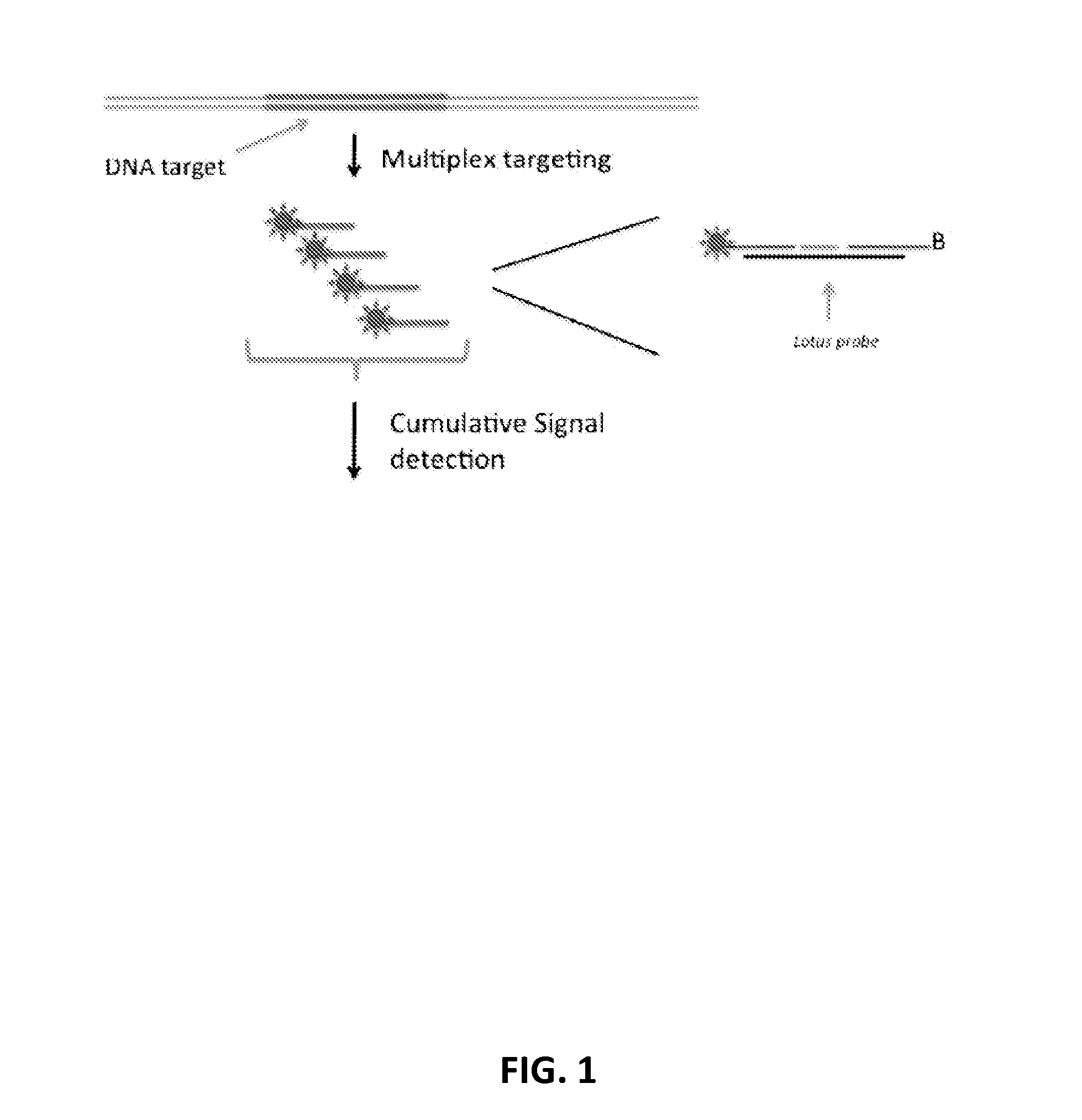
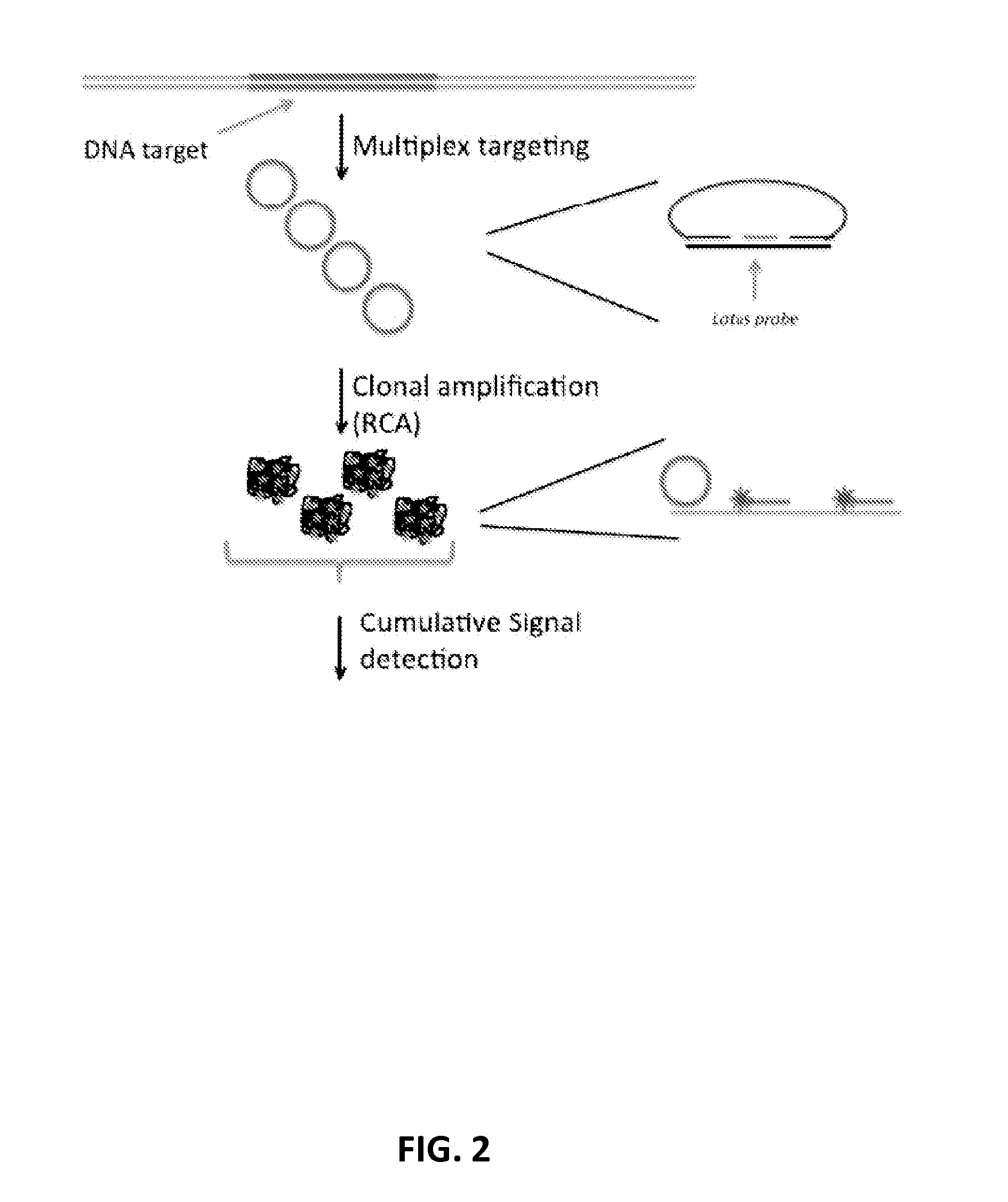
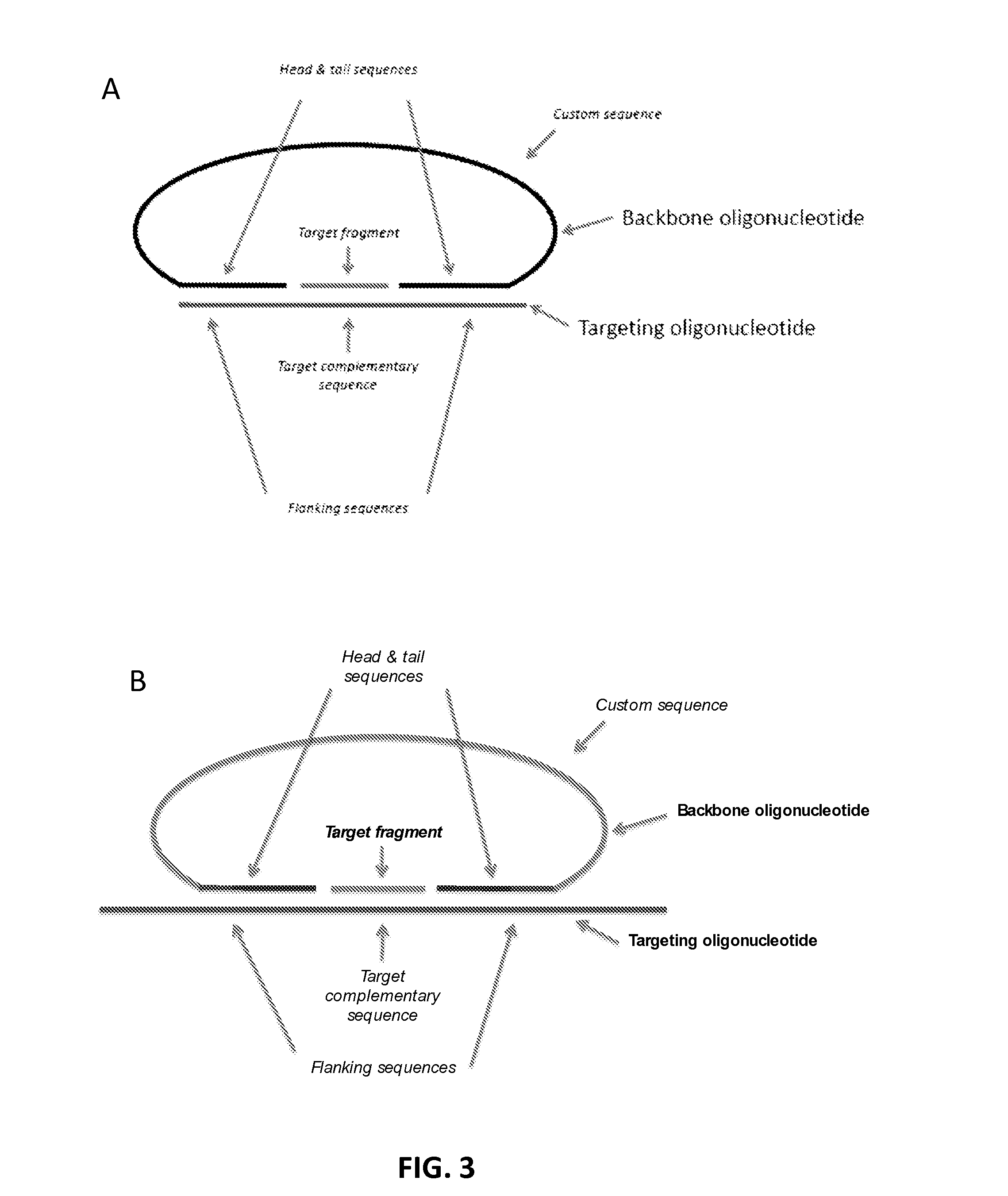
[0231]A blood sample is collected from the pregnant mother and free circularising DNA is extracted from the blood plasma. The DNA is then reacted with targeted specific DNA probes that specifically react with DNA fragments originating from the chromosomes subjected to analysis and quantification. In this example we illustrate the use of the so-called “Lotus probes” to target and react with specific fragments from chromosome 21 and a reference chromosome. However, other probe-based technologies for targeting specific DNA fragments could be used instead, such as padlock probes / Molecular Inversion Probes (MIPs), selector probes, oligonucleotide ligation probes.

[0232]Lotus probes are provided which target multiple fragments from each of two chromosomes. Upon target recognition, the probes generate a ligation product with their corresponding fragments, h...

example 2

[0233]In the following example, the Lotus probes target multiple fragments from each of two chromosomes. Upon target recognition, the probes generate a circularised ligation product with their corresponding fragments. The circularised ligation products contain either of two sequence motifs that can be used for subsequent labelling, each sequence motif corresponding to either of the two chromosomes being targeted. The protocol can be illustrated as:

1) 10 ng of DNA is digested with 1 unit of restriction enzyme in corresponding compatible restriction enzyme buffer. The reaction is incubated in 37 C for 1 h, followed by enzymatic deactivation at 80° C. for 20 min.

2) The DNA fragments are denatured to single stranded fragments at 95° C. for 10 min and mixed with probes and ligase to form circles. The probe pool are added in 10 pM individual concentration along with 1 U of Ampligase (Epicentre) and incubated at 55° C. for 1 h in ligase buffer.

3) 1 U Exonuclease is added to remove non-reac...

example 3

Materials and Methods

[0234]Sample Preparation:

[0235]10 ml blood was collected from each subject into a cell-free DNA tube (Streck, Omaha, Nebr.). Plasma was isolated from blood by a double centrifugation protocol (1600 g for 10 min, followed by 16 000 g for 10 min, after a tube transfer following the first spin). cfDNA was isolated by the Qiagen ccf nucleic acid kit (Qiagen, Hilden, Germany) according to the manufacturer's protocol. The resulting DNA was eluted in 50 ul of buffer (part of the Qiagen kit).

[0236]Probe and Backbone Design:

[0237]The multiplexed probe technology herein described enables specific and simultaneous amplification of thousands of chromosomal fragments. Probes were designed to capture 2500-5000 fragments (targets) from each of chromosomes 21, 18, and 13. Targets were selected to have unique sequence in the genome, uniformed AT / GC composition, not include known polymorphism nor CNVs in target sequence, and a size between 18-35 bp. Probes targeting 2500 fragment...

the structure of the environmentally friendly knitted fabric provided by the present invention; figure 2 Flow chart of the yarn wrapping machine for environmentally friendly knitted fabrics and storage devices; image 3 Is the parameter map of the yarn covering machine
Login to View More

PUM

PropertyMeasurementUnit
volumeaaaaaaaaaa
volumeaaaaaaaaaa
total volumeaaaaaaaaaa
Login to View More

Abstract

Described herein is a new approach in which a nucleic acid species of interest (e.g. a chromosome) containing multiple unique target sequences is detected using multiple specific probes that are amplified by rolling circle amplification and detected. Multiple probes are used to provide a detectable signal, where the magnitude of the signal is proportional to the number of probes recognising their target sequences. Individual signals from the plurality of probes are converted into a single cumulative detectable signal, amplifying the individual signals through the multiplex probing. Ten or more probes produce a signal amplification of ten-fold or more. The generated signals depend on correctly reacted probes upon target recognition, using sequence specific hybridisation and enzymatic catalysis to generate specific products from which the signal is obtained.

Description

CROSS-REFERENCING[0001]This application claims the benefit of UK Application No: 1321196.6, filed on Dec. 2, 2013, which application is incorporated by reference herein.FIELD OF THE INVENTION[0002]The invention relates to multiplex methods of detecting multiple nucleic acid sequences in parallel using probes that bind specific sequences. The invention also relates to quantification of species of nucleic acid, for example determining the relative quantities of two different chromosomes in a sample, including use of such methods in non-invasive pre-natal diagnosis of foetal aneuploidies.BACKGROUND[0003]Many diseases are caused or characterised by an imbalance in the number of chromosomes (aneuploidy) or an imbalance in the number of chromosomal segments (partial aneuploidy) in cells of an individual compared with the normal number of chromosomes or chromosomal segments for the species. The human diploid genome has 23 pairs of chromosomes; paired chromosomes 1 to 22 and the sex chromos...

Claims

the structure of the environmentally friendly knitted fabric provided by the present invention; figure 2 Flow chart of the yarn wrapping machine for environmentally friendly knitted fabrics and storage devices; image 3 Is the parameter map of the yarn covering machine
Login to View More

Application Information

Patent Timeline
no application Login to View More
Patent Type & Authority Applications(United States)
IPC IPC(8): C12Q1/68
CPCC12Q1/682C12Q1/6816C12Q1/686C12Q1/6883C12Q1/6886C12Q1/689C12Q1/6895C12Q1/701C12Q2531/125C12Q2563/107C12Q2537/143C12Q2521/501C12Q2525/161C12Q2525/307C12Q2533/107C12Q1/6876
Inventor DAHL, CARL OSCAR FREDRIKERICSSON, OLOF JOHN
Owner VANADIS DIAGNOSTICS AB
Features
  • R&D
  • Intellectual Property
  • Life Sciences
  • Materials
  • Tech Scout
Why Patsnap Eureka
  • Unparalleled Data Quality
  • Higher Quality Content
  • 60% Fewer Hallucinations
Social media
Patsnap Eureka Blog
Learn More